15 Small Space Bathroom Design Ideas For Stylish, Functional Rooms
Does your bathroom feel more like a closet with a sink? Small bathrooms are a reality for many of us—whether you’re in a city apartment, an older home, or simply dealing with a compact powder room. The lack of square footage can feel restrictive, leading to clutter and a distinct lack of relaxation. But here is the good news: limited space does not mean limited style.
In fact, small bathrooms are often the best places to flex your creative muscles. With less surface area to cover, you can afford higher-end materials (like that marble tile you loved) and bolder design choices. The key is to trick the eye and utilize every inch of vertical real estate. From floating vanities that reveal more floor to clever niche storage that disappears into the wall, smart design can make a 40-square-foot room feel airy and spacious.
If you are ready to stop bumping your elbows and start loving your layout, we have gathered 15 Small Space Bathroom Design Ideas that prove size isn’t everything. Let’s explore how to turn your tiny bath into a functional jewel box.
Designing a small bathroom can feel challenging, but with the right approach, it’s possible to create a space that is both functional and stylish.
I’ve gathered practical ideas that focus on making the most of limited space without sacrificing comfort or design.
The key to a successful small bathroom design is maximizing space while maintaining an inviting atmosphere.
These ideas will help you rethink your layout, storage, and finishes so your bathroom feels larger and more efficient.
Table of Contents
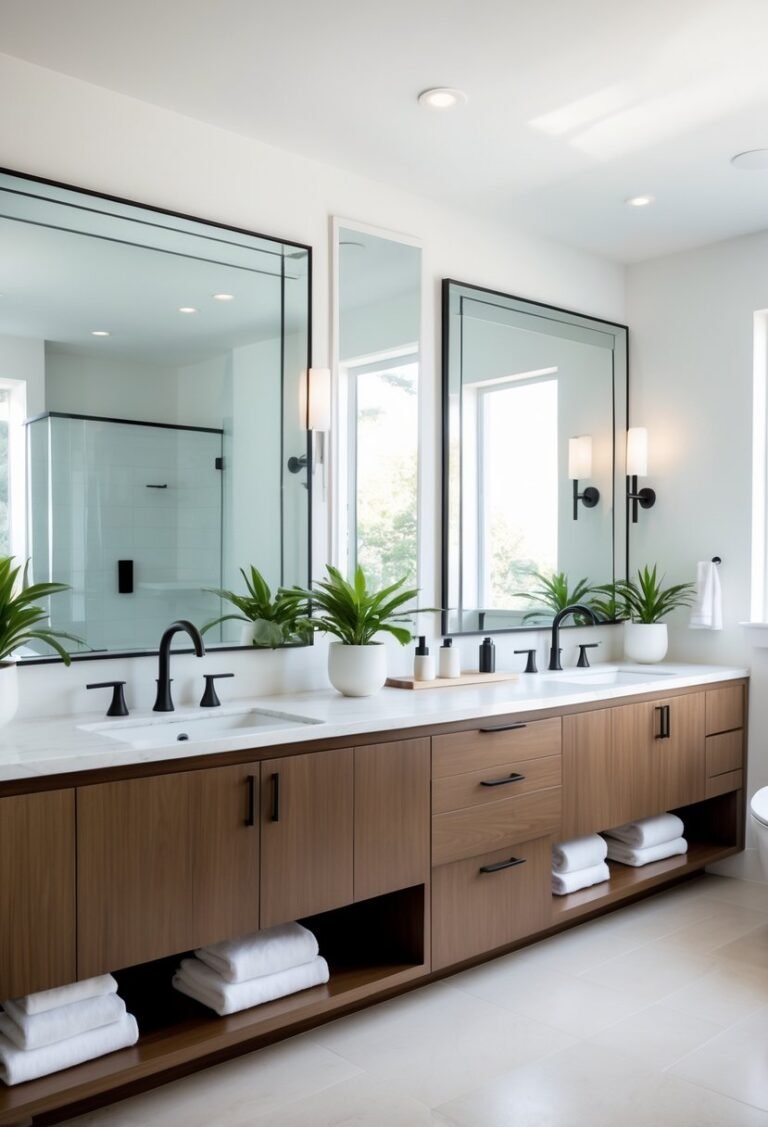
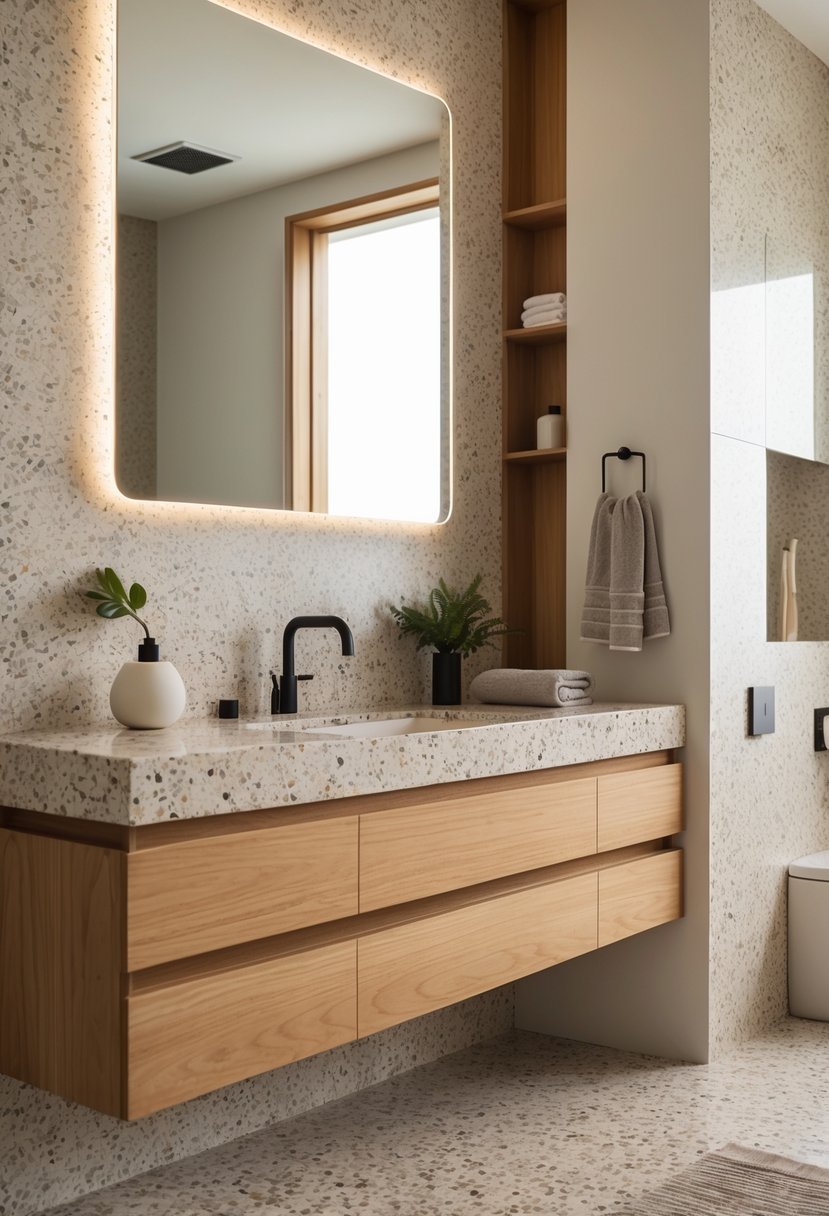
1) Use wall-mounted vanities to free floor space
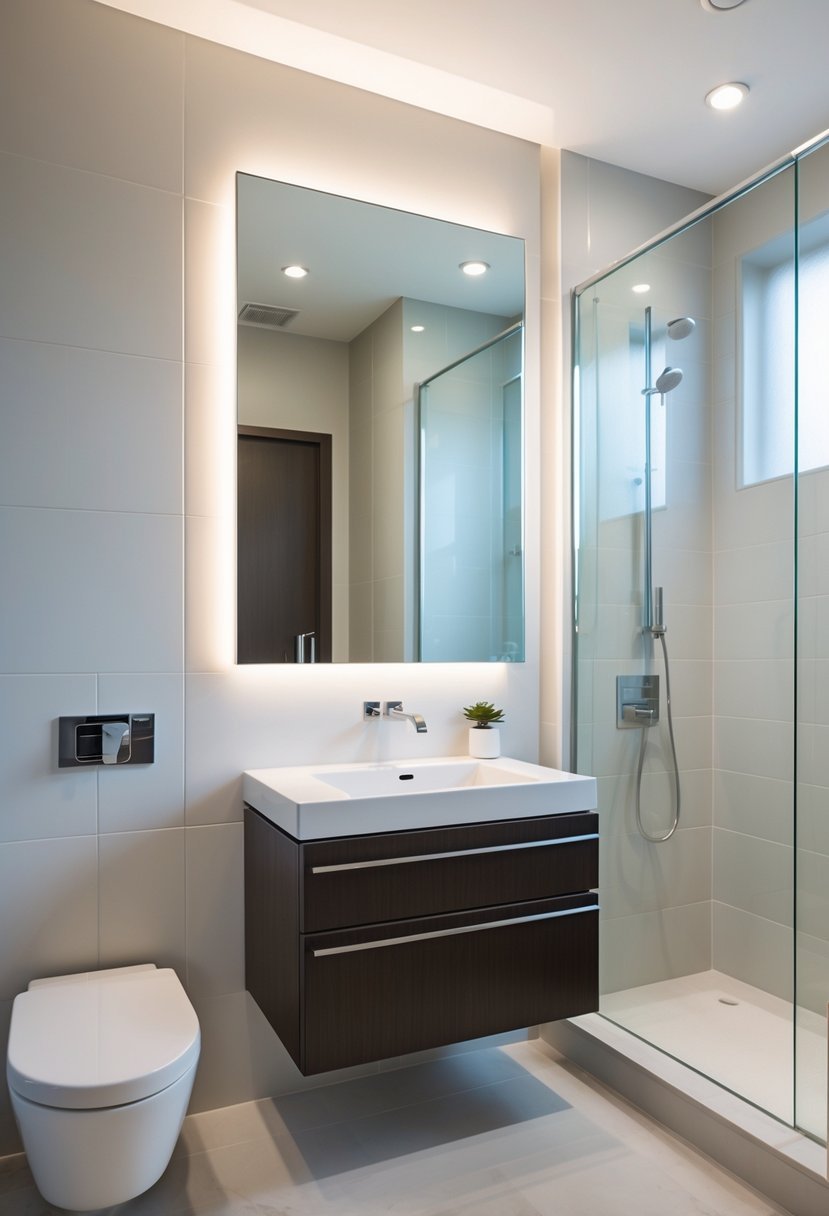
I prefer wall-mounted vanities because they open up the floor area, making the bathroom feel less cramped.
By attaching the vanity to the wall, I create a cleaner, more modern look that also makes cleaning easier.
These vanities often come with built-in drawers or shelves, so you don’t lose storage space.
They work well in small bathrooms, powder rooms, or guest baths where every inch counts.
Floating designs also give the illusion of a larger room by exposing more visible floor.
For me, they balance style and function without overwhelming limited space.
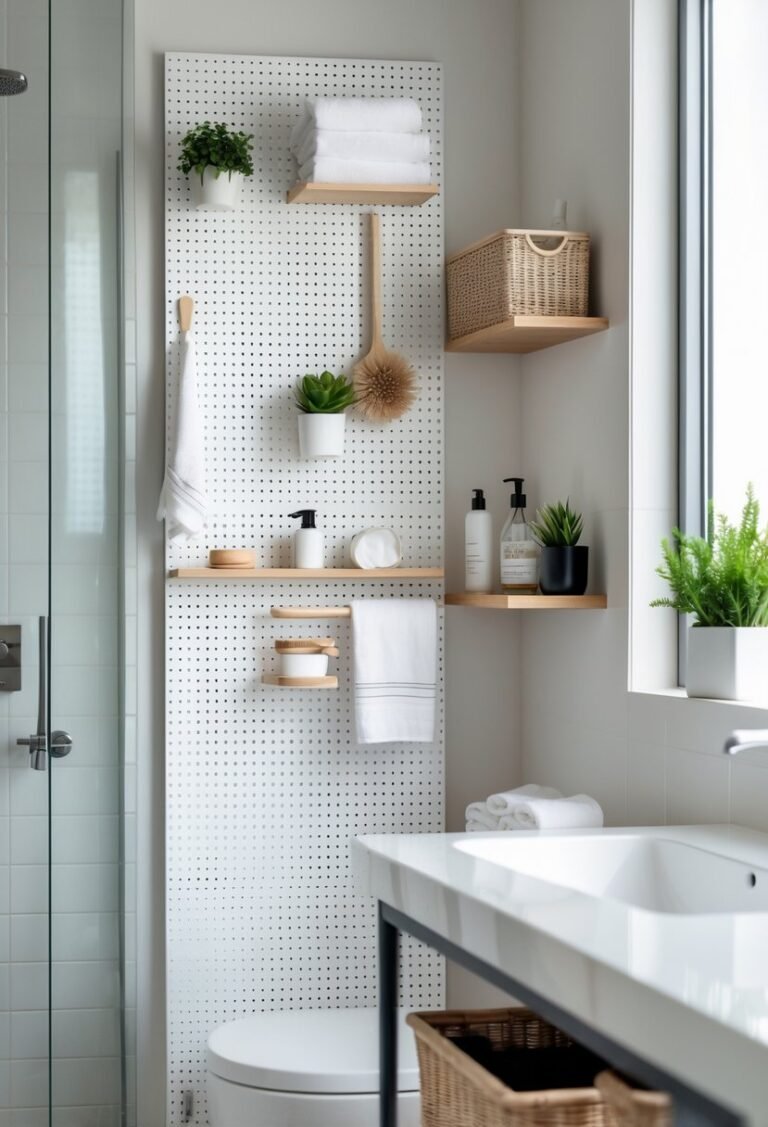
2) Install floating shelves for open storage
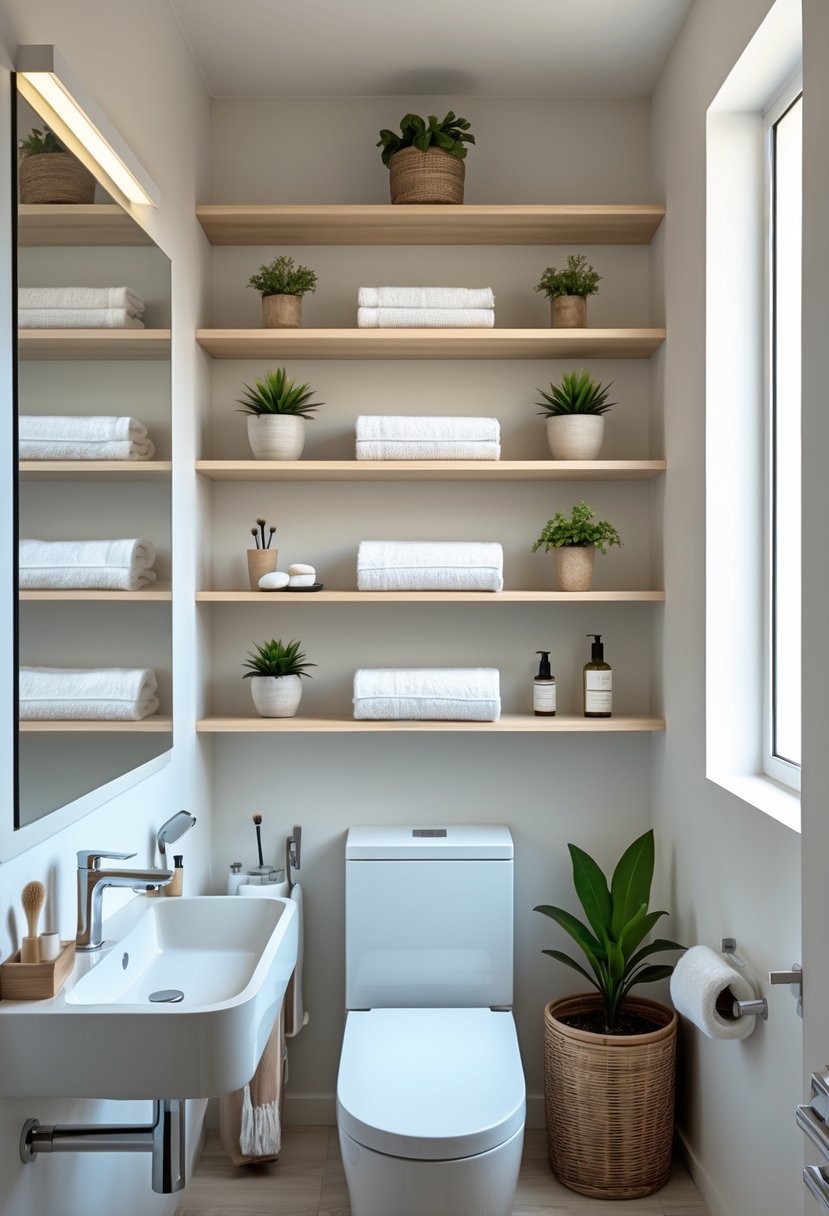
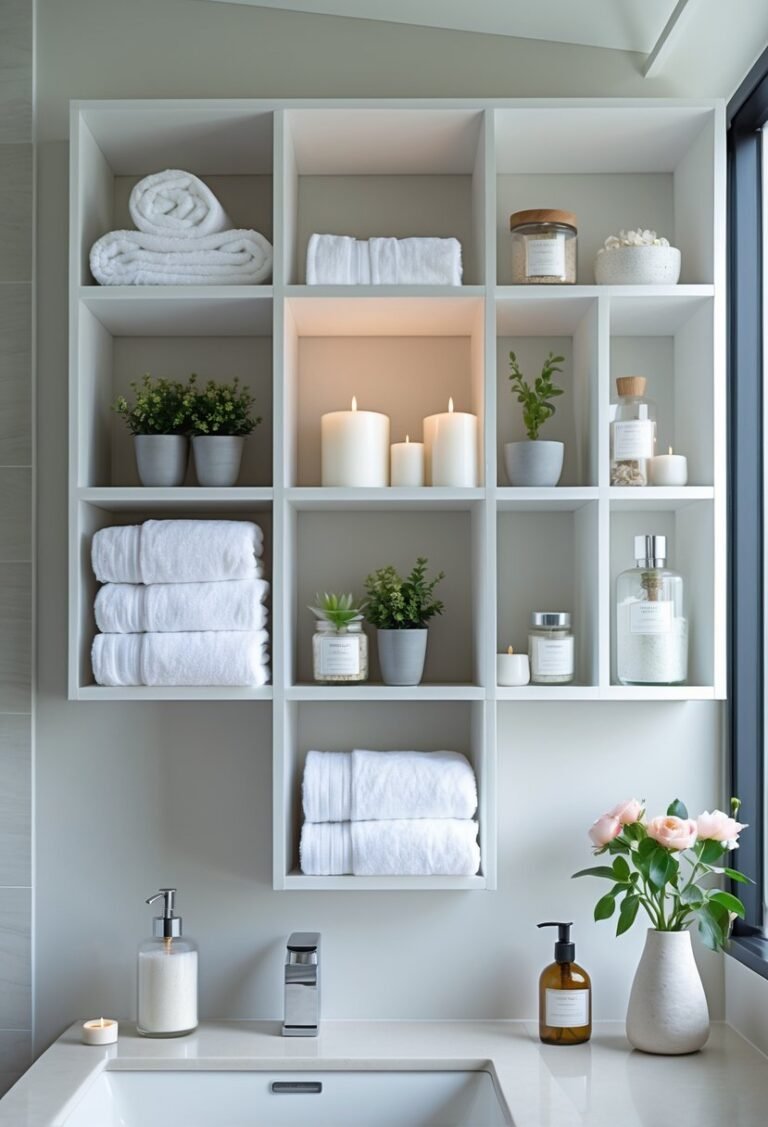
I find floating shelves to be one of the most effective ways to add storage without making a small bathroom feel crowded.
Because they are wall-mounted and bracket-free, they create an open, airy look.
This helps maintain a sense of space while keeping essentials within easy reach.
I prefer neutral colors and simple designs for floating shelves.
This approach keeps the bathroom looking clean and uncluttered.
Floating shelves can be placed in unused corners or above fixtures, maximizing every inch.
Choosing materials like wood or glass lets me match the shelves to the bathroom’s style.
3) Incorporate over-the-toilet storage cabinets
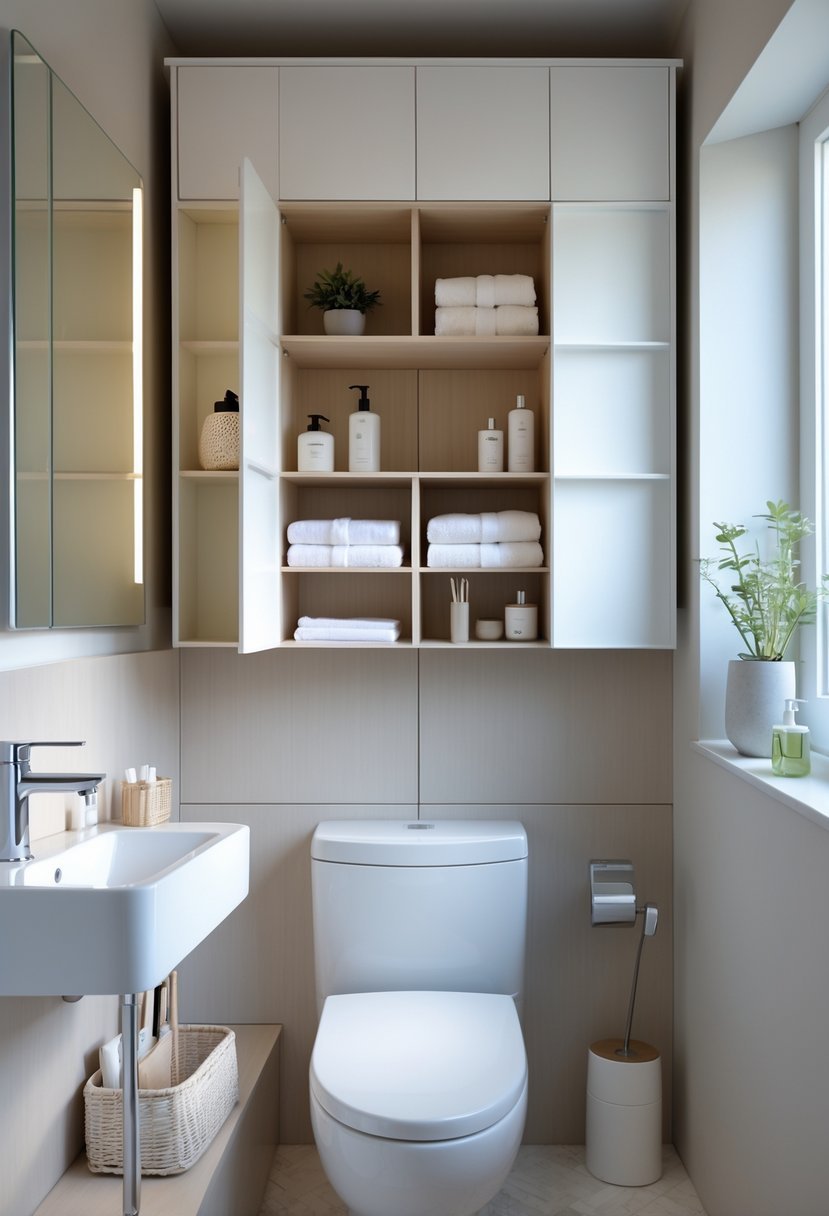
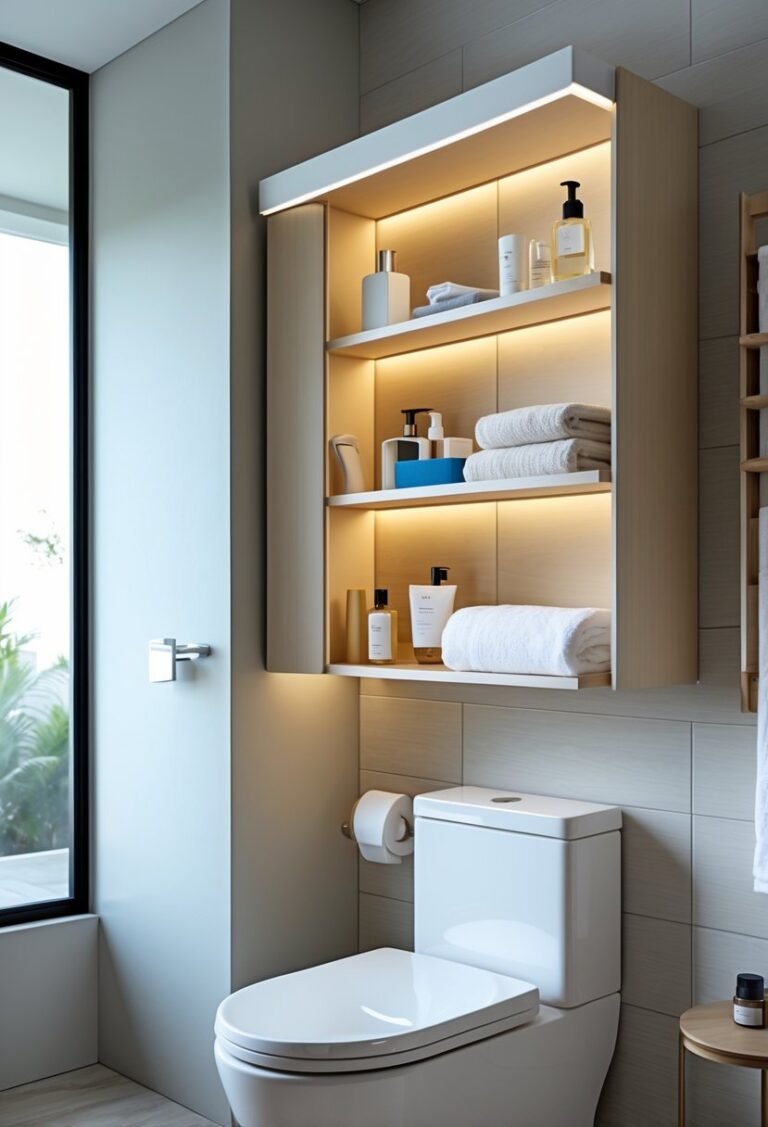
I find over-the-toilet storage cabinets to be a practical solution for small bathrooms.
This space above the toilet is often wasted, but with the right cabinet, it becomes valuable storage.
These cabinets hold towels, toiletries, and everyday items without taking up floor space.
They come in various styles, from sleek floating shelves to more traditional enclosed units.
Choosing a design that fits the room’s style and size is important.
It keeps the bathroom organized and prevents clutter, making the space feel larger and more functional.
4) Choose large mirrors to create depth
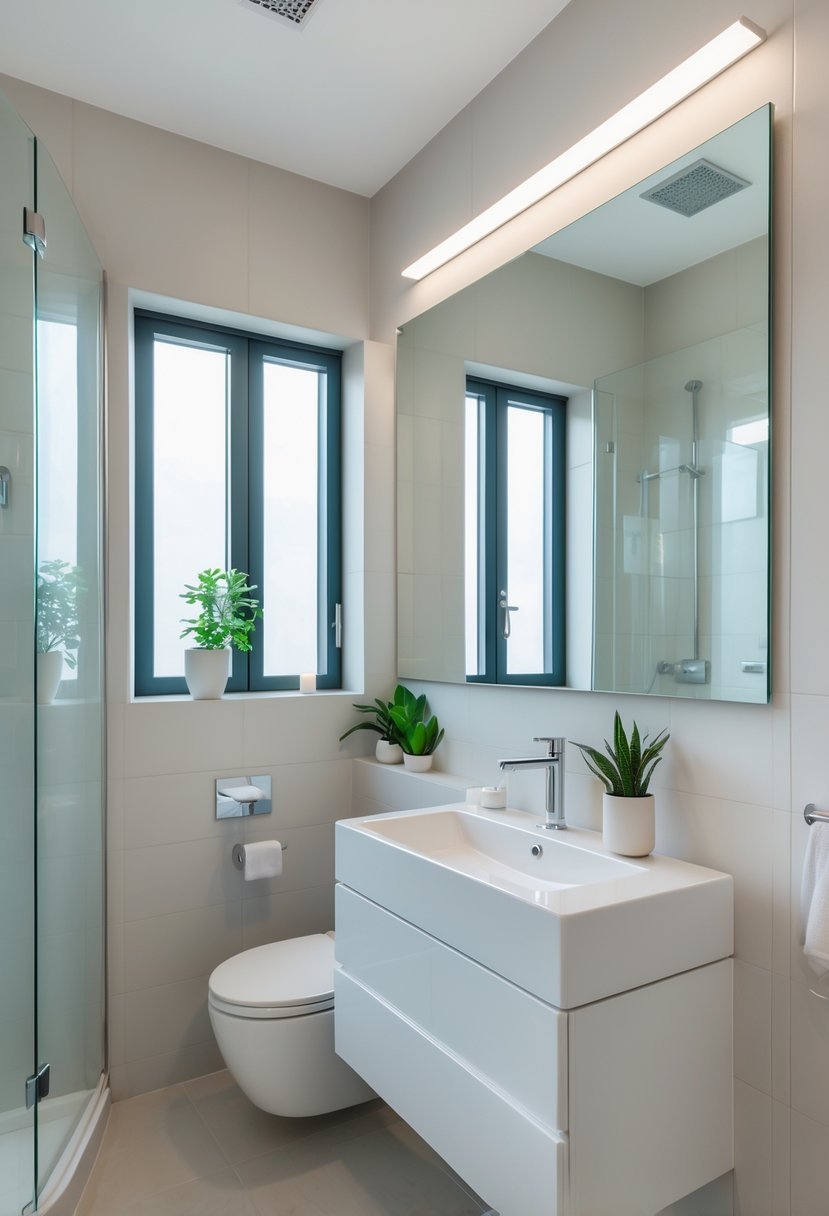
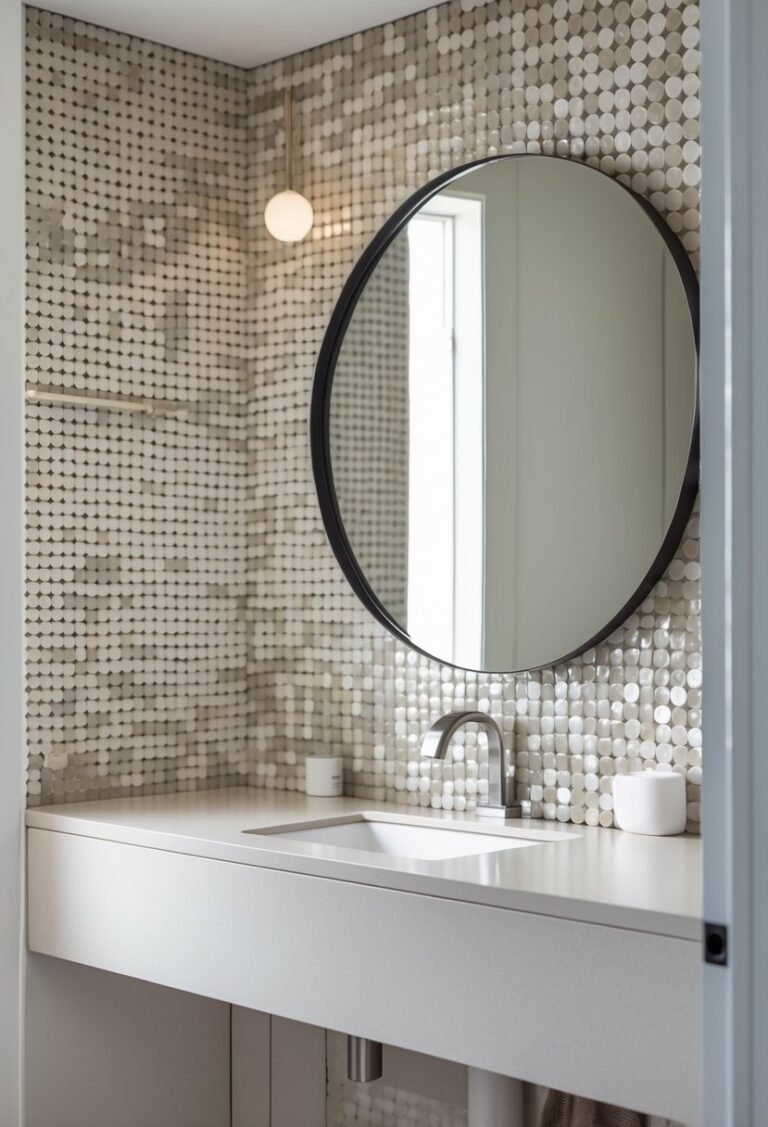
I recommend using large mirrors in small bathrooms to visually expand the space.
A mirror around 36-48 inches in diameter works well without overwhelming the room.
Placing the mirror above the vanity draws the eye upward, helping the ceiling feel higher.
This simple adjustment creates a sense of openness without any remodeling.
Mirrors amplify natural and artificial light, brightening the room significantly.
Positioning a large mirror opposite a window can maximize this effect, making the bathroom feel airier.
Selecting a frame with a sleek metallic finish adds style while keeping the design balanced.
5) Opt for clear glass shower enclosures
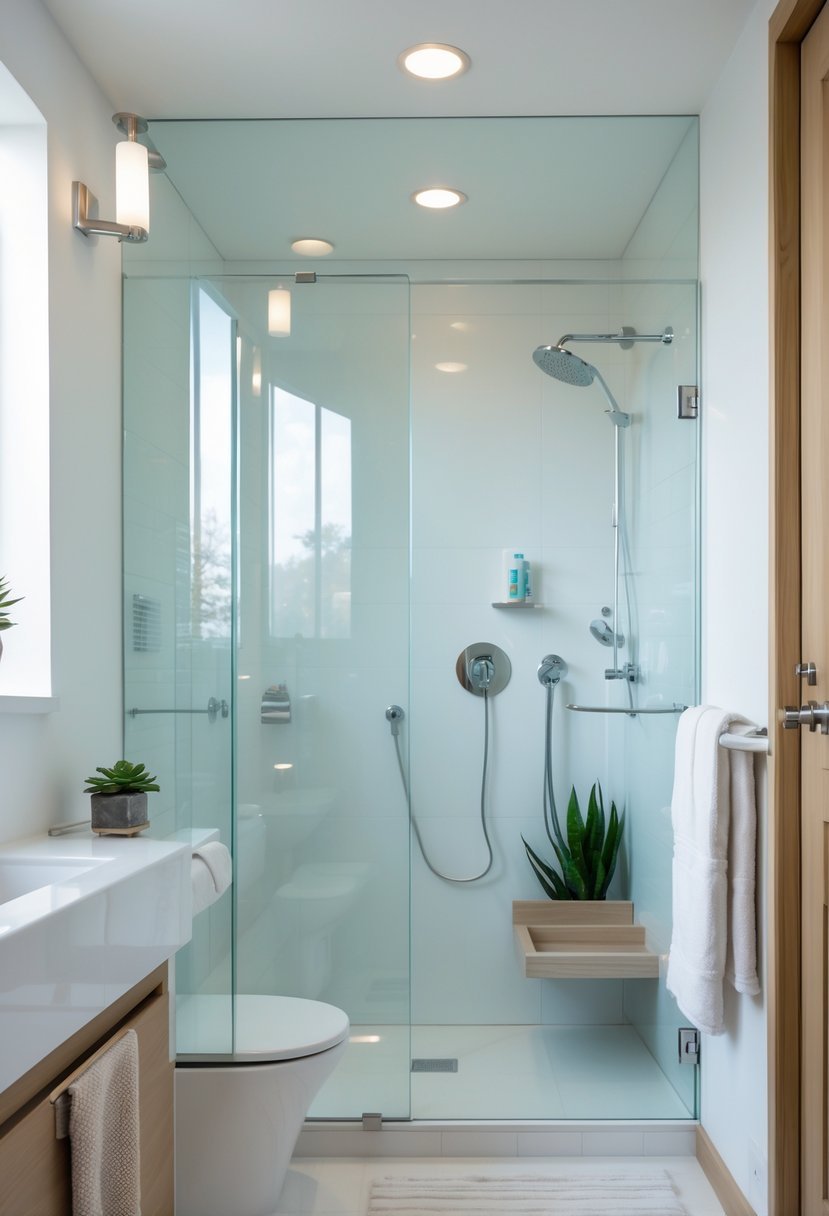
I recommend clear glass shower enclosures for small bathrooms because they create a sense of openness.
Unlike opaque or frosted glass, clear glass doesn’t block sightlines, making the entire space feel larger.
Installing glass from floor to ceiling increases light flow and reduces visual barriers.
This approach avoids the boxed-in feeling common in small bathrooms.
Clear glass also adds a modern, clean look.
It pairs well with neutral colors and simple fixtures, maintaining an uncluttered atmosphere.
Plus, it’s easier to clean than shower curtains, which can trap moisture and make the bathroom feel cramped.
6) Use light, neutral paint colors
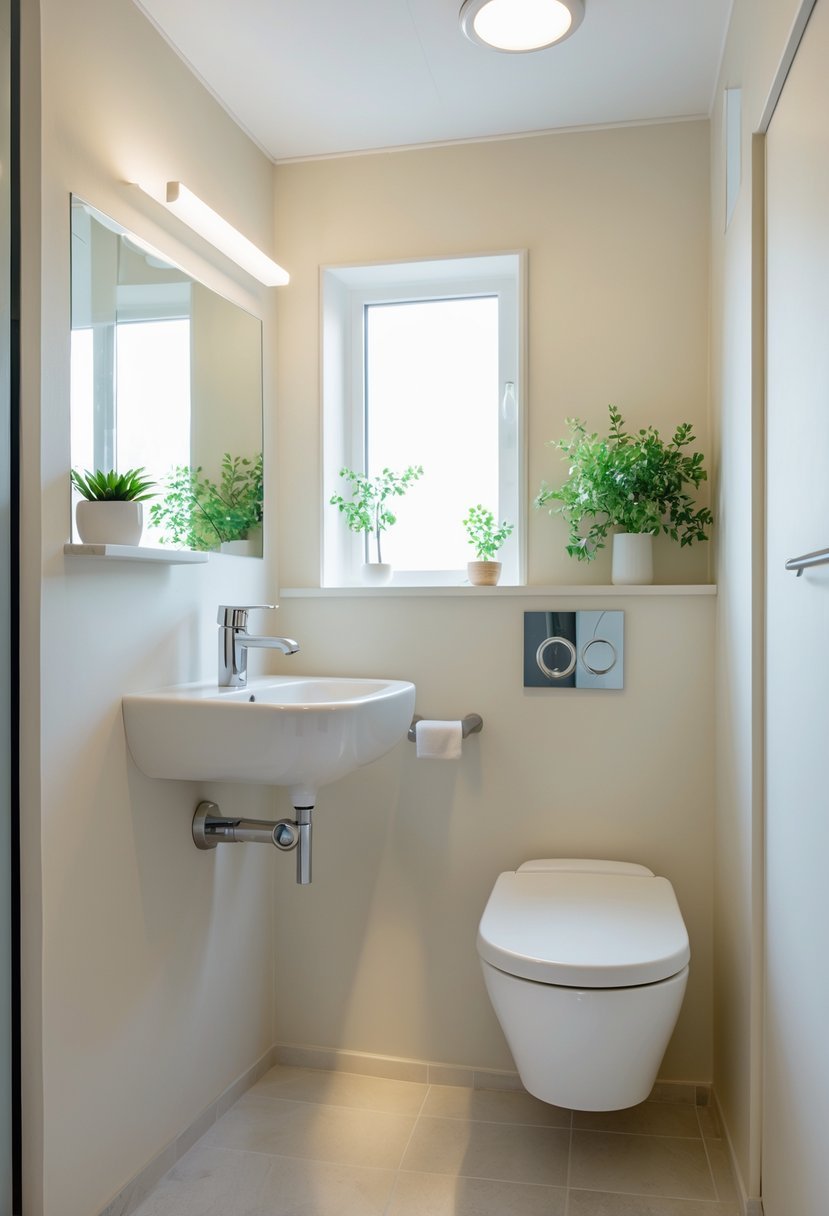
I find that light, neutral paint colors work best in small bathrooms.
Shades like soft beige, pale gray, or off-white reflect more light, which helps the space feel open and airy.
Choosing neutral tones also creates a clean, timeless look.
These colors easily complement fixtures and accessories, giving me flexibility with decor changes.
They enhance natural and artificial lighting, making every inch feel brighter.
For a compact bathroom, avoiding dark or overly bold colors is practical.
Light neutrals improve visual spaciousness without overwhelming the senses.
7) Add vertical tile patterns to elongate walls
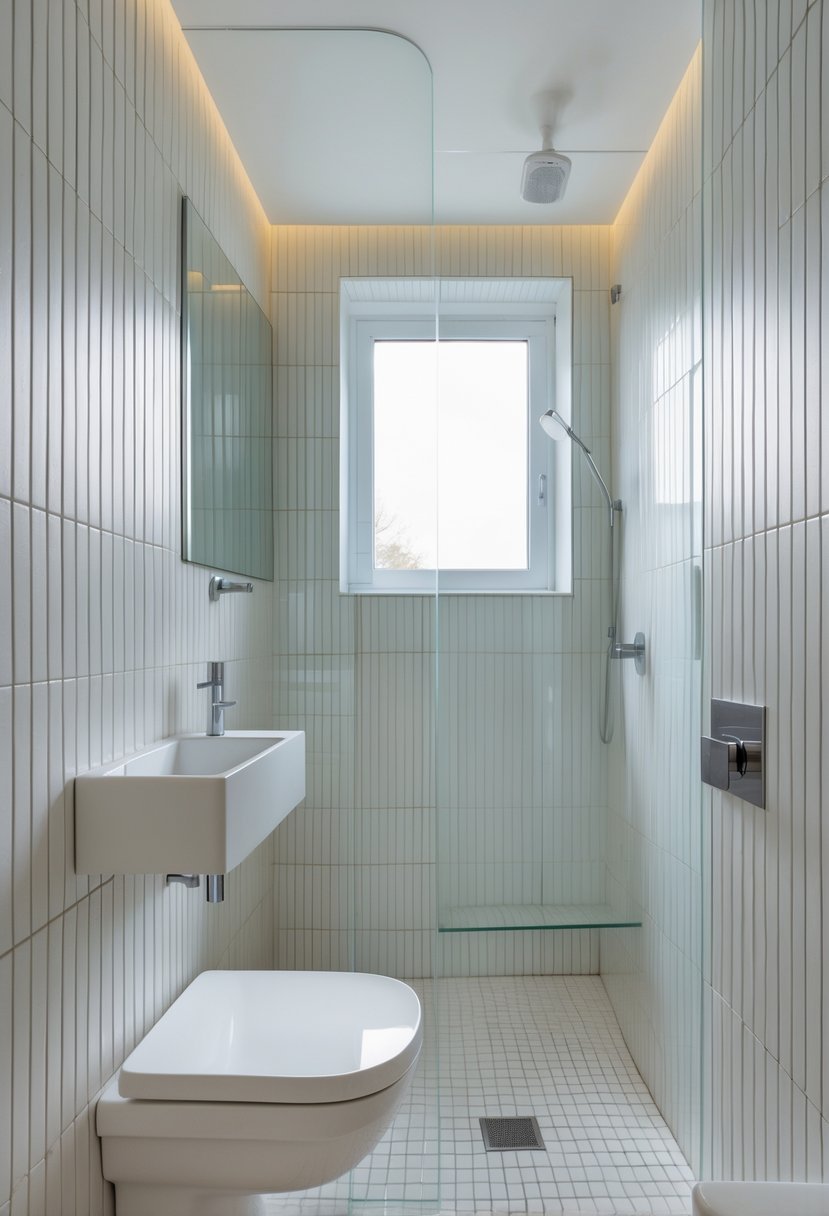
I find vertical tile patterns very effective for making small bathrooms feel taller.
The vertical lines naturally draw the eye upward, which helps elongate the walls without changing the actual space.
Using subway tiles stacked vertically is a simple way to achieve this effect.
It creates a clean, modern look while subtly increasing the perceived height of the room.
Choosing tiles with consistent sizing and colors helps maintain balance.
This avoids overwhelming the space and keeps everything visually harmonious.
8) Install recessed medicine cabinets
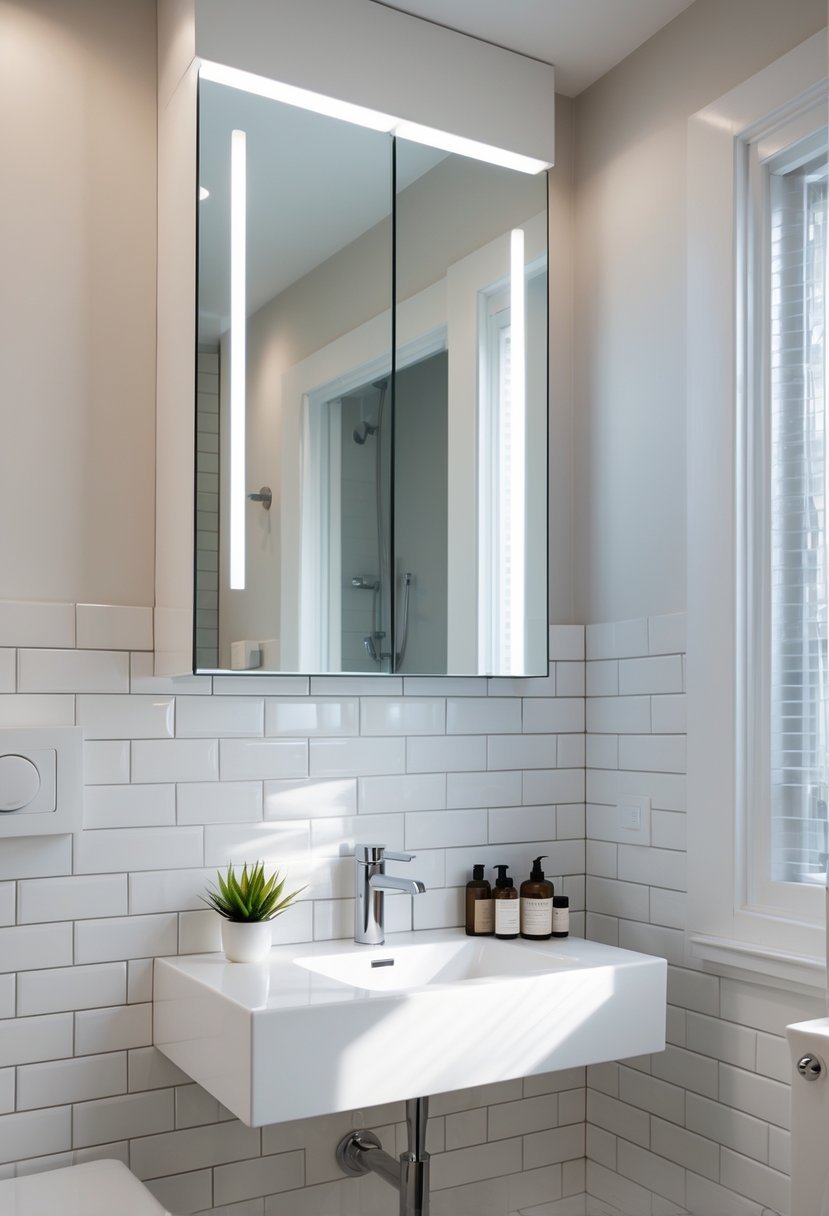
I recommend installing recessed medicine cabinets to save space in a small bathroom.
These cabinets fit directly into the wall, which keeps the room feeling open and less cluttered.
Cutting into the drywall between studs creates the perfect slot for the cabinet.
This approach gives you storage without the bulk of a projecting unit.
Recessed cabinets also offer a clean, streamlined look.
They blend neatly with your bathroom walls while keeping your toiletries easily accessible.
9) Use pocket doors to save space
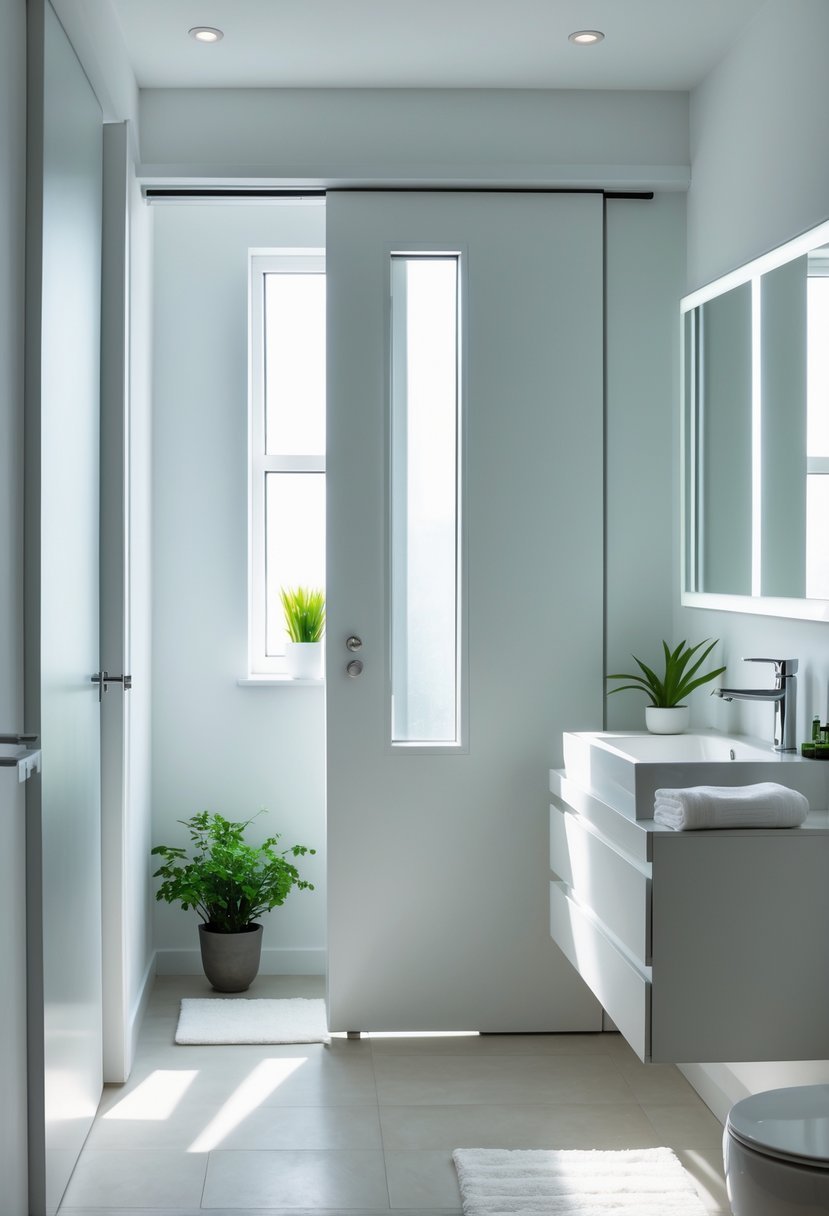
I find pocket doors to be one of the most effective space-saving solutions in small bathrooms.
Unlike traditional swinging doors, they slide into the wall, which means no clearance is needed for door movement.
This design allows me to maximize the usable floor area, making the bathroom feel less cramped.
Pocket doors also create a cleaner, more streamlined look because they disappear when opened.
Installing a pocket door requires some planning since it needs a wall cavity to slide into.
However, the space gained usually outweighs the initial effort, especially in tight layouts where every inch counts.
10) Mount towel racks on the back of the door
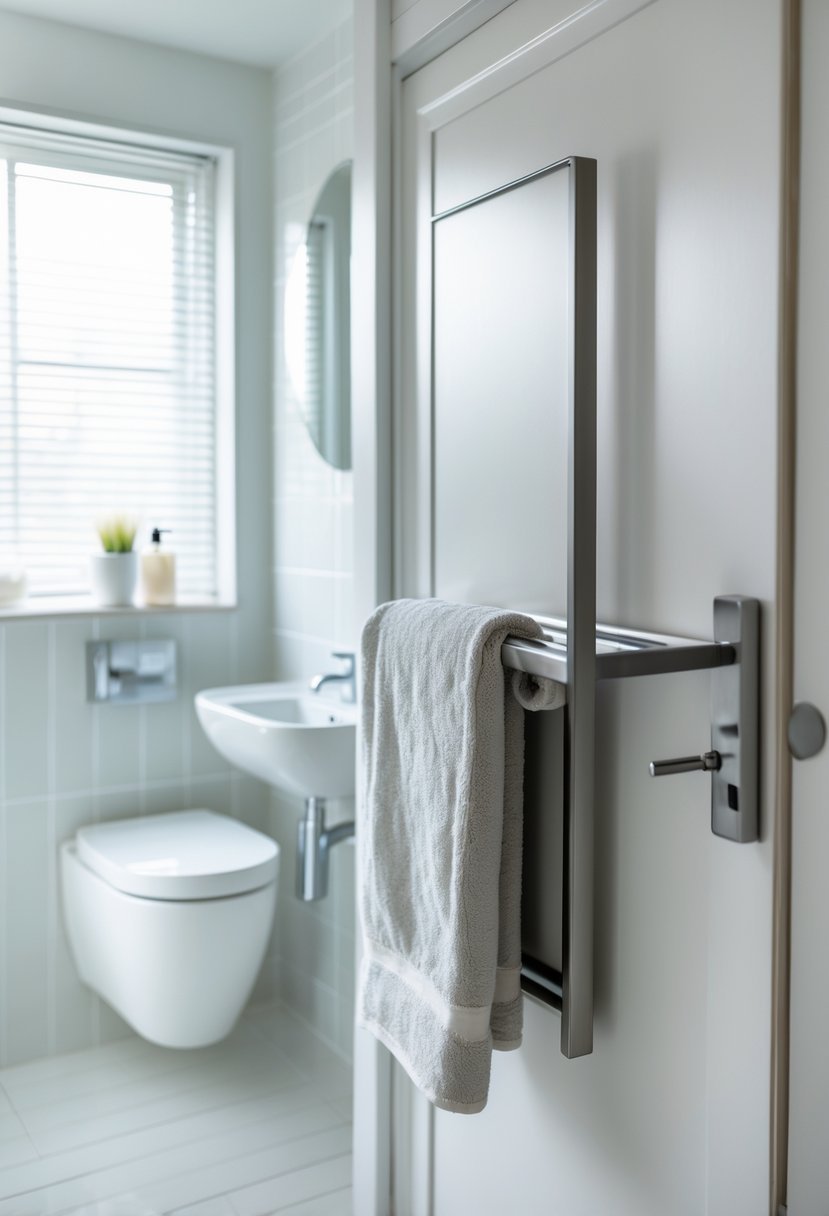
I find mounting towel racks on the back of the bathroom door to be one of the simplest space-saving solutions.
This area is often unused, yet it offers enough room for multiple bars or hooks.
Using an over-the-door rack, I can easily hang several towels without taking up wall or floor space.
It keeps towels accessible but out of sight, helping maintain a tidy look.
This setup works well in small bathrooms where every inch counts.
It’s practical, requires no permanent installation, and can be adjusted or removed without damage.
11) Integrate built-in niches in the shower
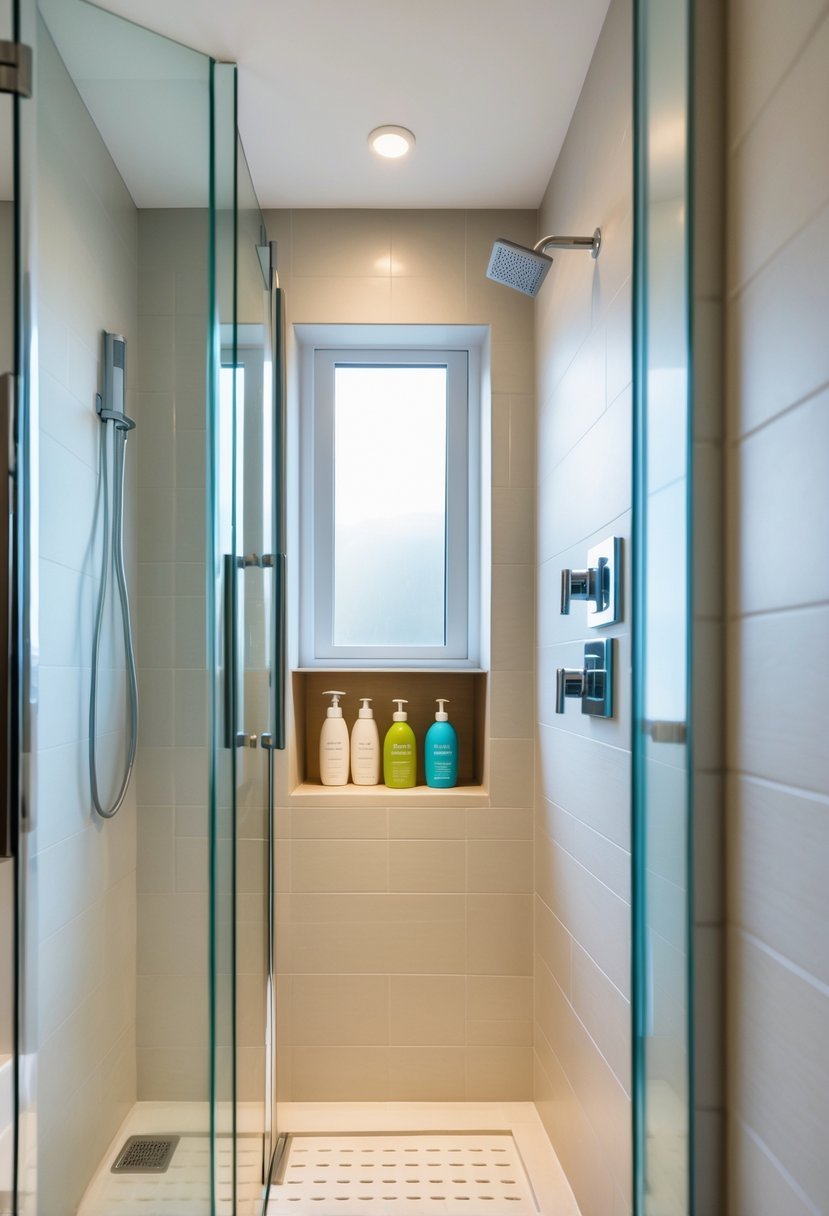
I find built-in niches to be an excellent way to save space and reduce clutter in small bathrooms.
These recessed shelves provide storage without sticking out, keeping the shower area streamlined.
A well-placed niche can hold shampoo, soap, and other essentials, making them easy to reach without taking up extra room.
I recommend choosing sizes and shapes that fit your storage needs, whether single or double niches.
Materials and finishes matter too.
I like to match the niche tiles with the shower walls or add a contrasting pattern for subtle style.
12) Select compact, space-saving toilets
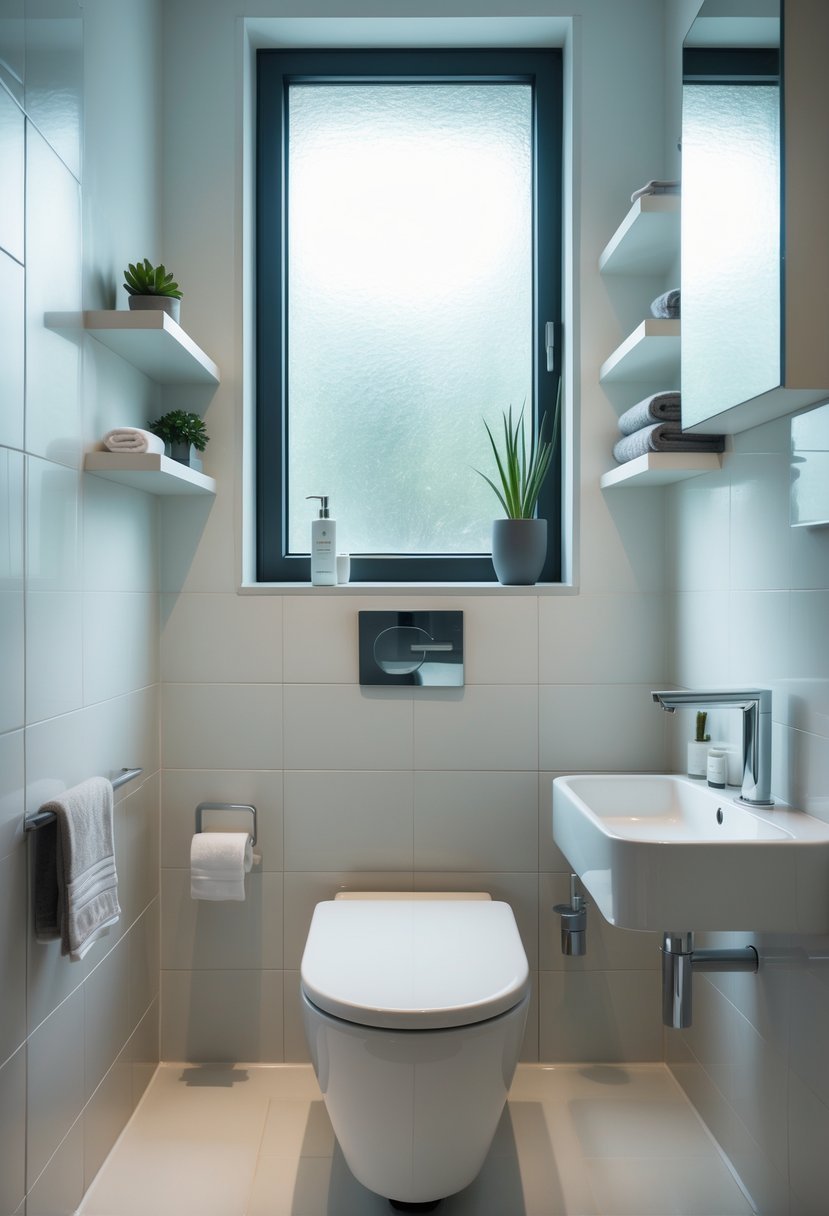
I recommend choosing toilets specifically designed to fit small bathrooms.
Compact models take up less floor space while maintaining comfort and functionality.
They can be wall-mounted or have a smaller footprint without sacrificing performance.
Space-saving toilets often include efficient flushing systems.
This helps reduce water use, which is important in smaller homes where sustainability matters.
I find dual-flush options practical for balancing efficiency with cleaning power.
In some cases, combining the toilet with a sink above the tank can save extra space.
This design maximizes utility in tight spots by reusing water from handwashing.
13) Use bright LED lighting with dimmers
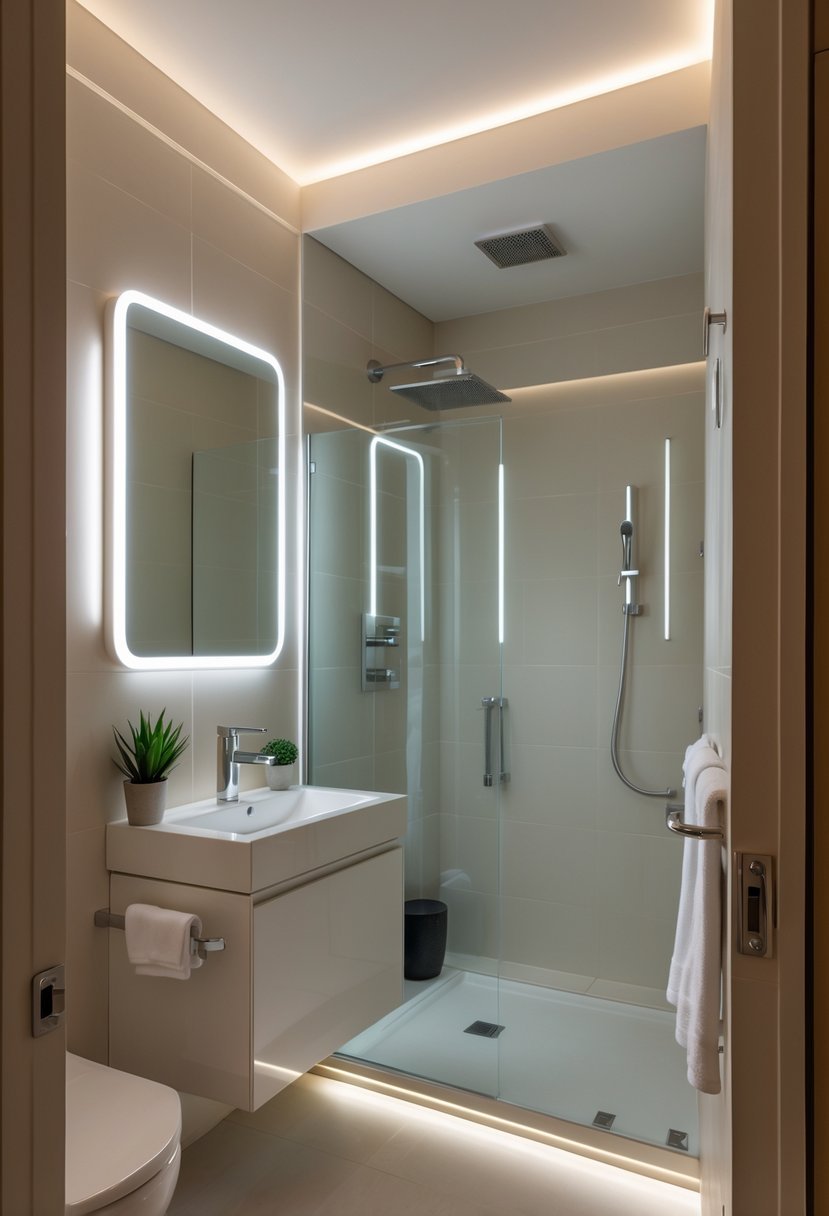
I recommend bright LED lighting for small bathrooms because it maximizes visibility without taking up space.
LEDs are energy-efficient and provide clear, consistent light that helps the room feel larger and more open.
Adding dimmers gives me control over the atmosphere.
I can switch from bright task lighting to softer ambient light quickly, depending on the time of day or mood.
Using dimmers also extends the life of the LEDs, making it a smart, practical choice.
14) Incorporate wallpaper with small, subtle patterns
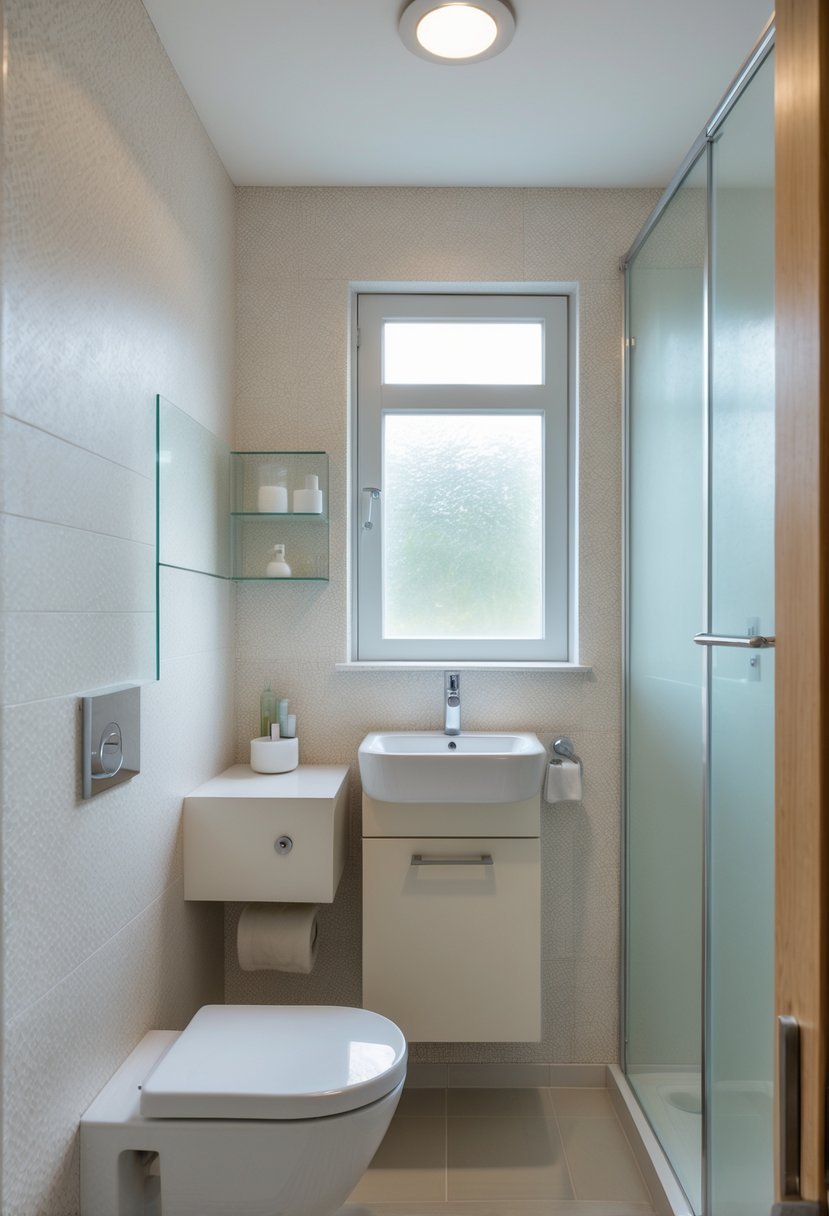
I find that wallpaper with small, subtle patterns works well in small bathrooms.
These patterns add texture and interest without overwhelming the space.
They create a sense of depth that can make the room feel larger.
Using light, muted tones enhances this effect.
I prefer designs that have clean lines or gentle repeats, which keep the look balanced.
It’s important to choose wallpaper that complements your existing fixtures and colors.
Subtle patterns also provide flexibility if you want to add other decorative elements later.
They create a calm backdrop rather than competing for attention.
15) Add a pedestal sink for a minimalist look
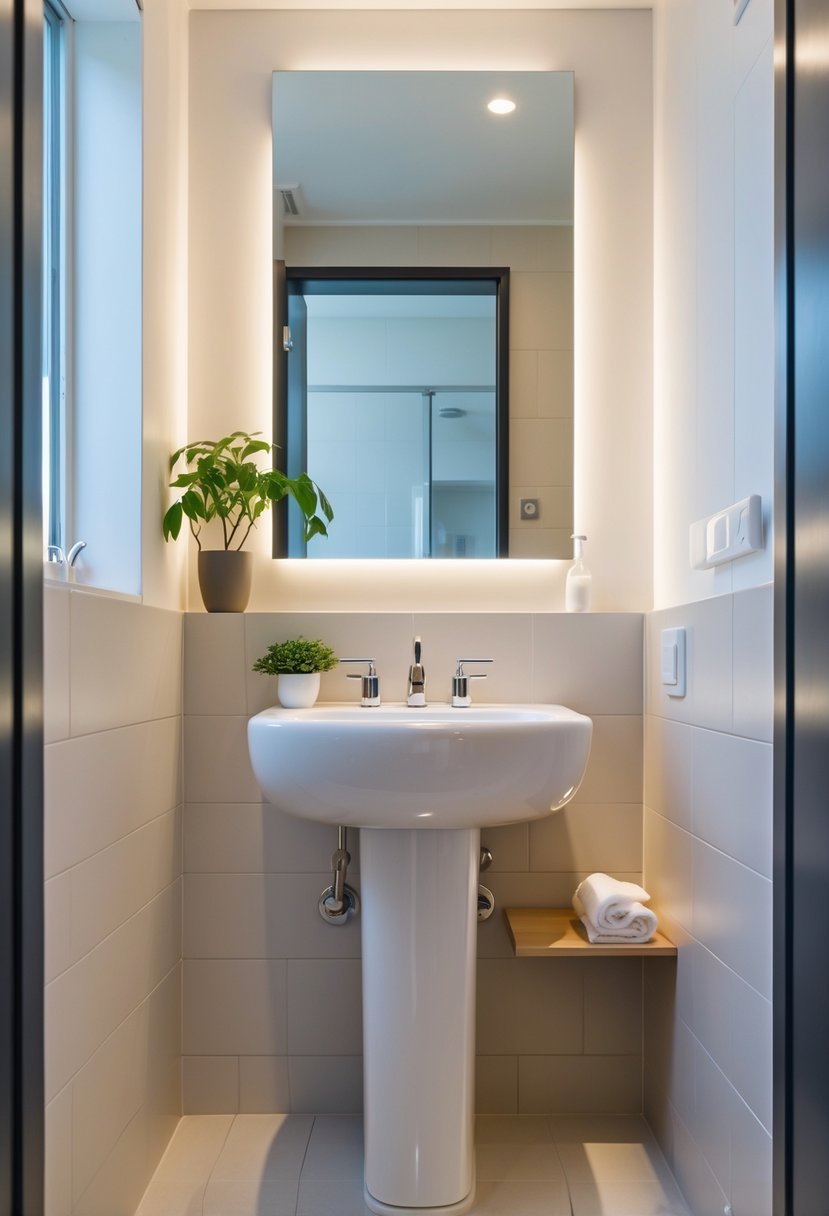
Pedestal sinks are a smart choice for small bathrooms because they take up minimal floor space. Their freestanding design leaves the area beneath the sink open, which helps the room feel less crowded.
A pedestal sink offers a clean and simple aesthetic. It can blend with many styles, from modern to classic.
While storage is limited, you can pair it with shelves or wall-mounted cabinets nearby. This keeps the minimalist look while providing practical storage options.
Conclusion
A small bathroom can actually be a big advantage. As we’ve seen, designing a compact space forces you to be intentional. You can’t hold onto clutter, and every element must earn its place. This often results in a room that is highly organized, efficient, and curated. Whether you chose a large-scale mirror to double the visual space, installed a pocket door to reclaim the swing radius, or embraced a monochromatic palette to blur the boundaries, you have proven that comfort isn’t defined by square footage.
Remember, the goal isn’t just to fit everything in—it’s to create a flow. Keep the floor as visible as possible, prioritize lighting to eliminate dark corners, and use glass where possible to keep sightlines open.
Don’t let the dimensions on the floor plan discourage you. With the right strategy, your petite bathroom can punch well above its weight class in both function and beauty.