30 Stunning Plant Room Ideas to Bring Nature Indoors
Welcome to the world where nature meets home décor—your ultimate guide to dreamy plant room ideas! Whether you’re a seasoned plant lover or just starting your green journey, creating a plant-filled space is more than just decorating—it’s about building a calming retreat where you can breathe easier, think clearer, and feel inspired every single day. From cascading vines to cozy reading nooks surrounded by lush leaves, a plant room transforms any corner of your home into a personal oasis. Ready to turn your space into a vibrant, living sanctuary? Dive into these creative plant room ideas and let nature take the lead!
Creating a dedicated plant room has become a popular way to bring a touch of nature indoors. It offers a calm, refreshing space where greenery enhances both the aesthetic and the atmosphere.
Having a well-designed plant room transforms everyday living by adding natural beauty and a sense of peace.
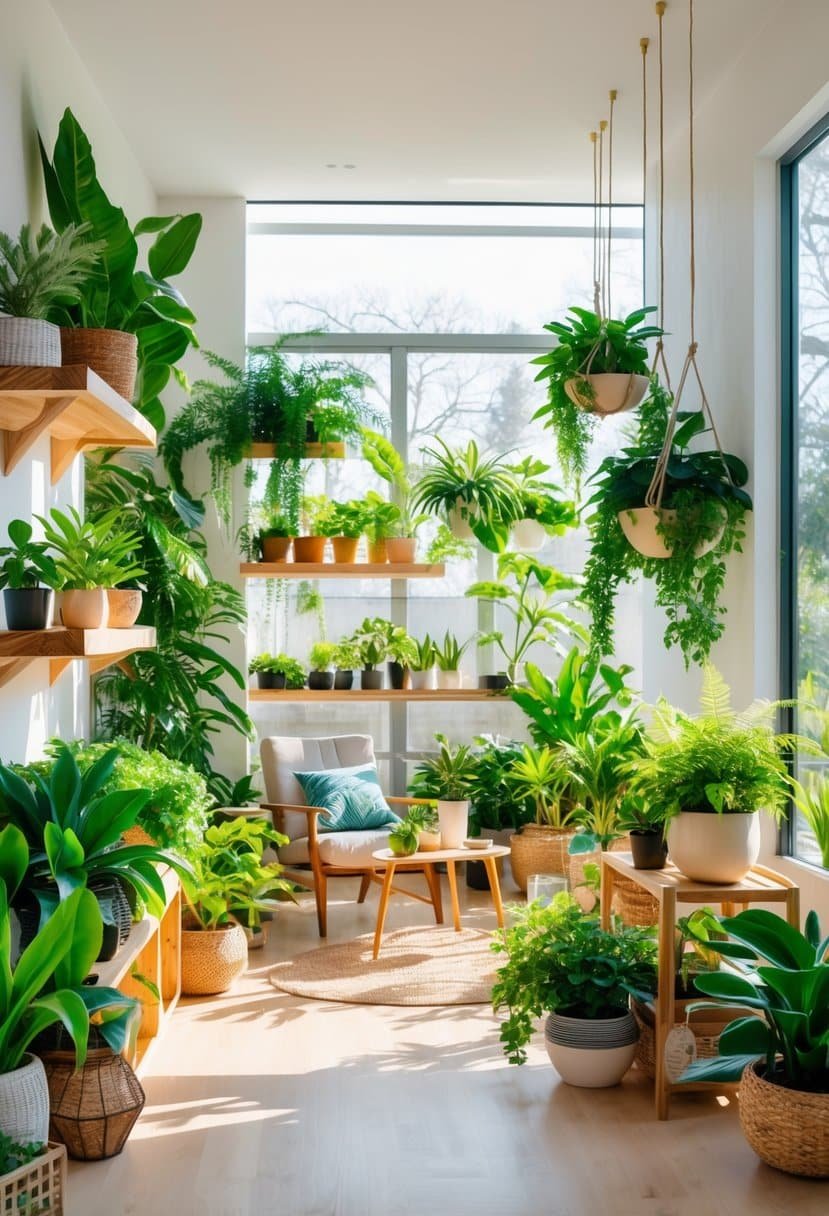
Whether you have a cozy corner or a larger room, thoughtful plant arrangements can make a noticeable difference in your home’s environment.
Table of Contents
1) Create a vertical garden using wall-mounted planters
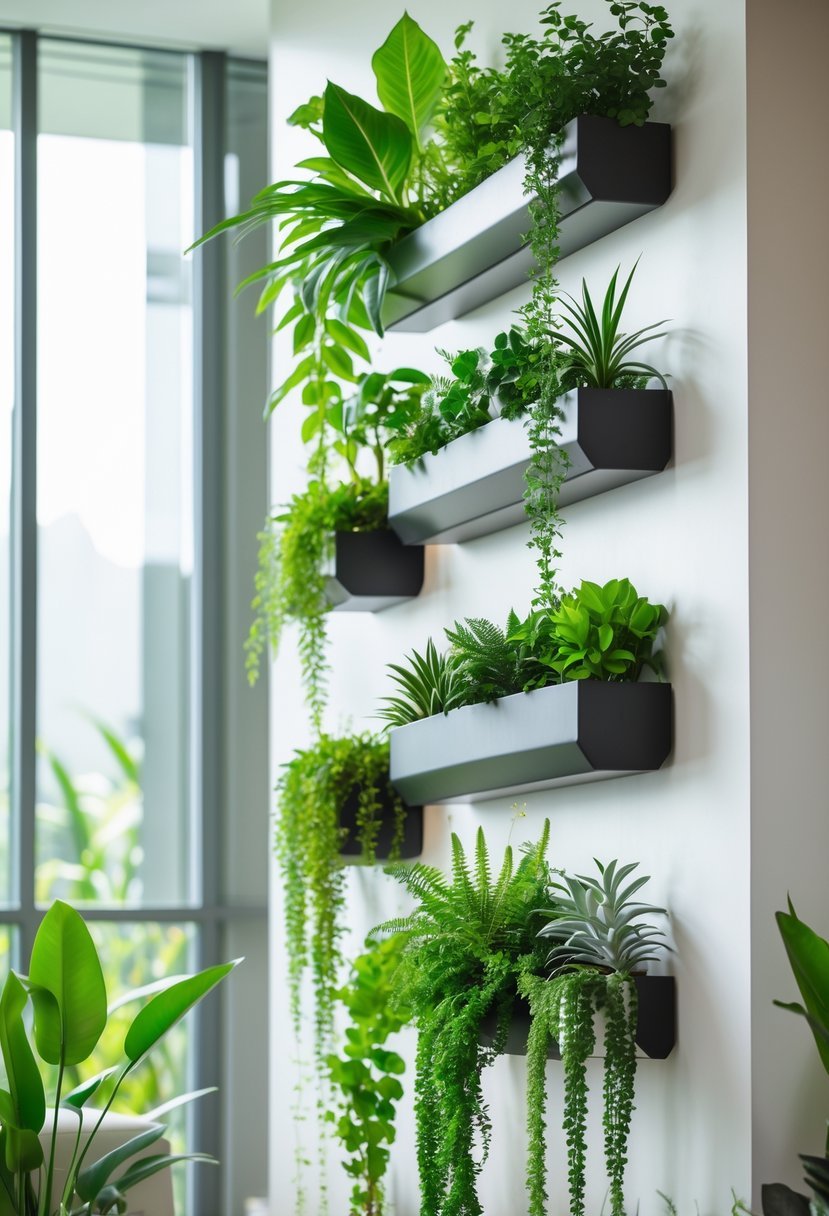
I find wall-mounted planters an excellent way to maximize space while adding greenery to any room. These planters allow me to build a vertical garden that turns bare walls into lively, natural features.
Using a sturdy mounting bracket, I can securely attach the planters to different surfaces. This setup is ideal for small spaces where floor or shelf space is limited.
I often arrange a mix of small pots or built-in planter boxes vertically. This gives flexibility to grow herbs, flowers, or succulents in an organized and attractive layout.
2) Incorporate hanging plants with macrame hangers
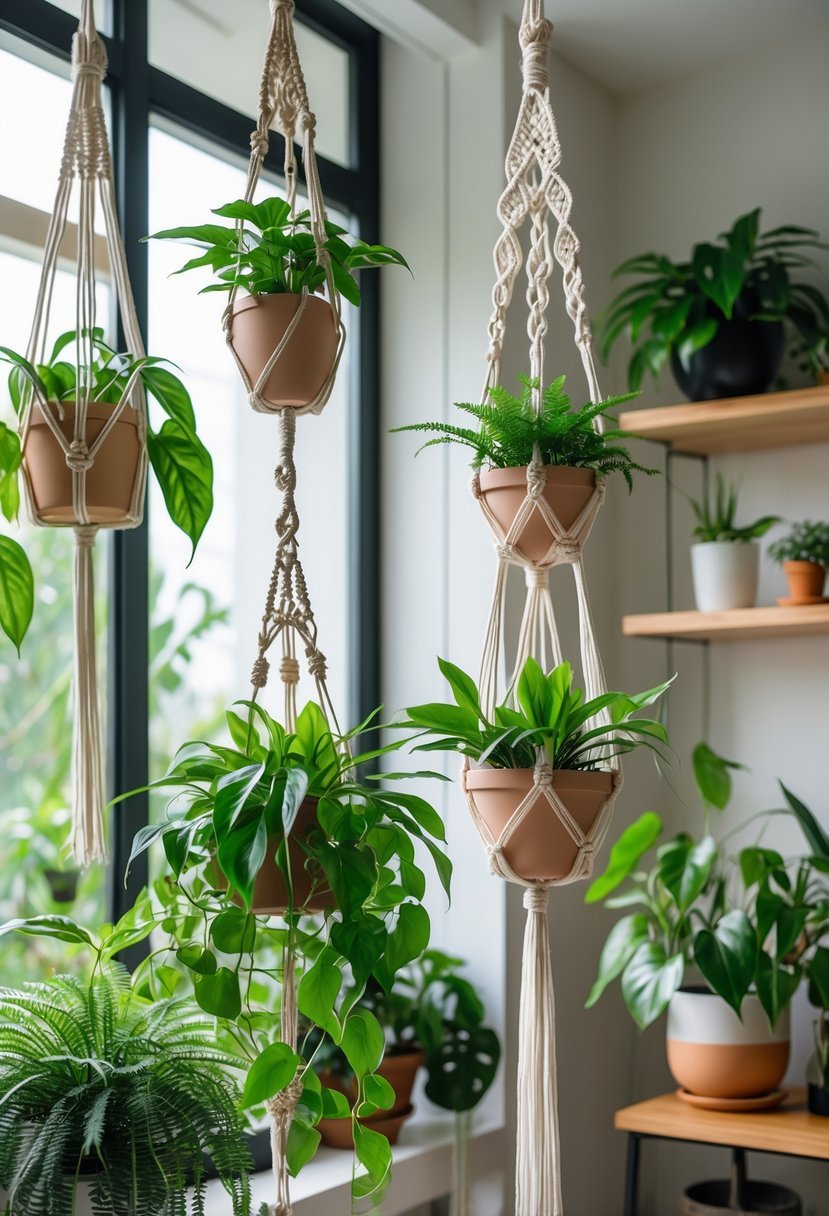
I find macrame hangers to be a stylish way to display hanging plants without taking up floor or shelf space. They add texture and visual interest through their intricate knots, which complement the natural beauty of the plants.
Using macrame hangers allows me to customize the height and style to fit any room, from small kitchens to cozy balconies. They also enhance a bohemian or earthy vibe.
The lightweight design makes it easy to hang various planter sizes. I enjoy experimenting with different cord colors to match the room’s decor.
3) Use a variety of plant sizes for depth and interest
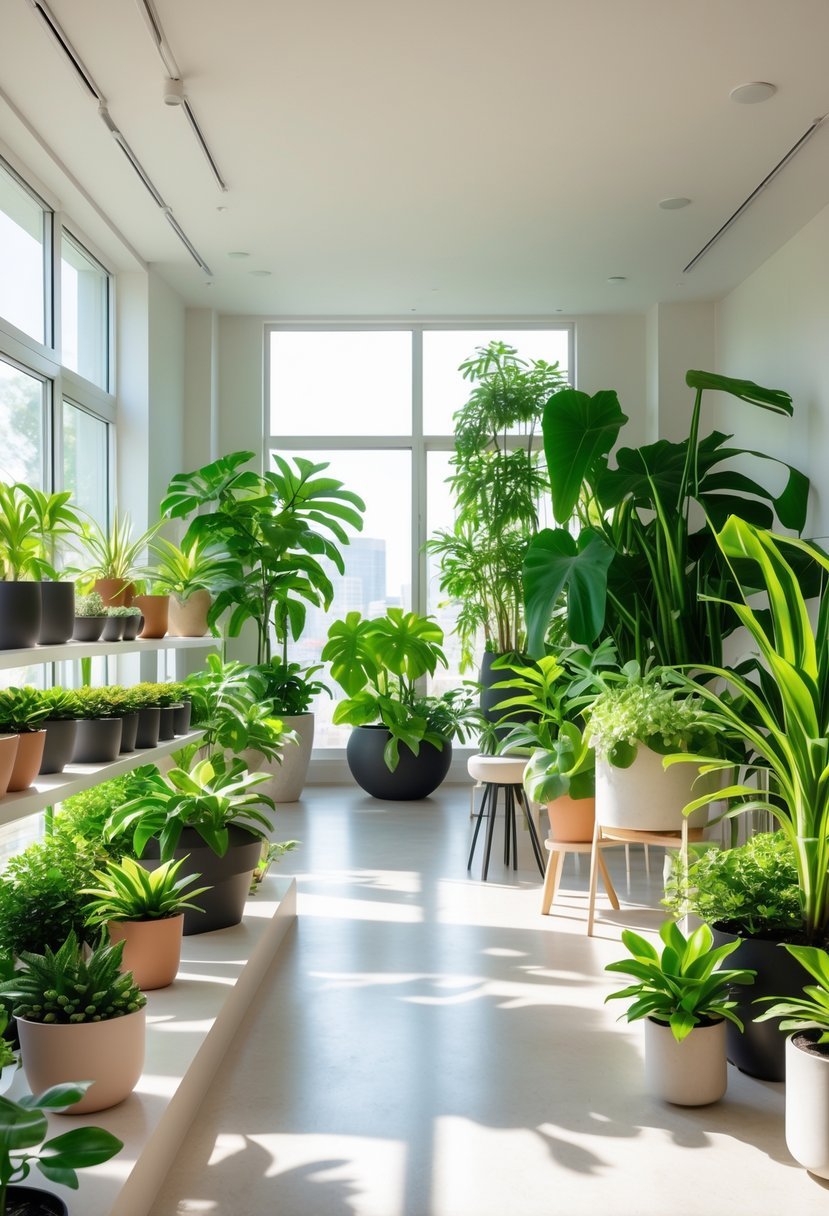
I find that mixing different plant sizes creates a more dynamic and visually engaging room. Smaller plants placed near larger ones add layers and texture.
Using tall plants alongside low-growing ones helps to balance the room’s dimensions. This variety guides the eye naturally.
I also like to pair broad-leafed plants with delicate succulents. The contrast in shapes and heights brings a sense of harmony.
4) Add a dedicated grow light to support low-light plants
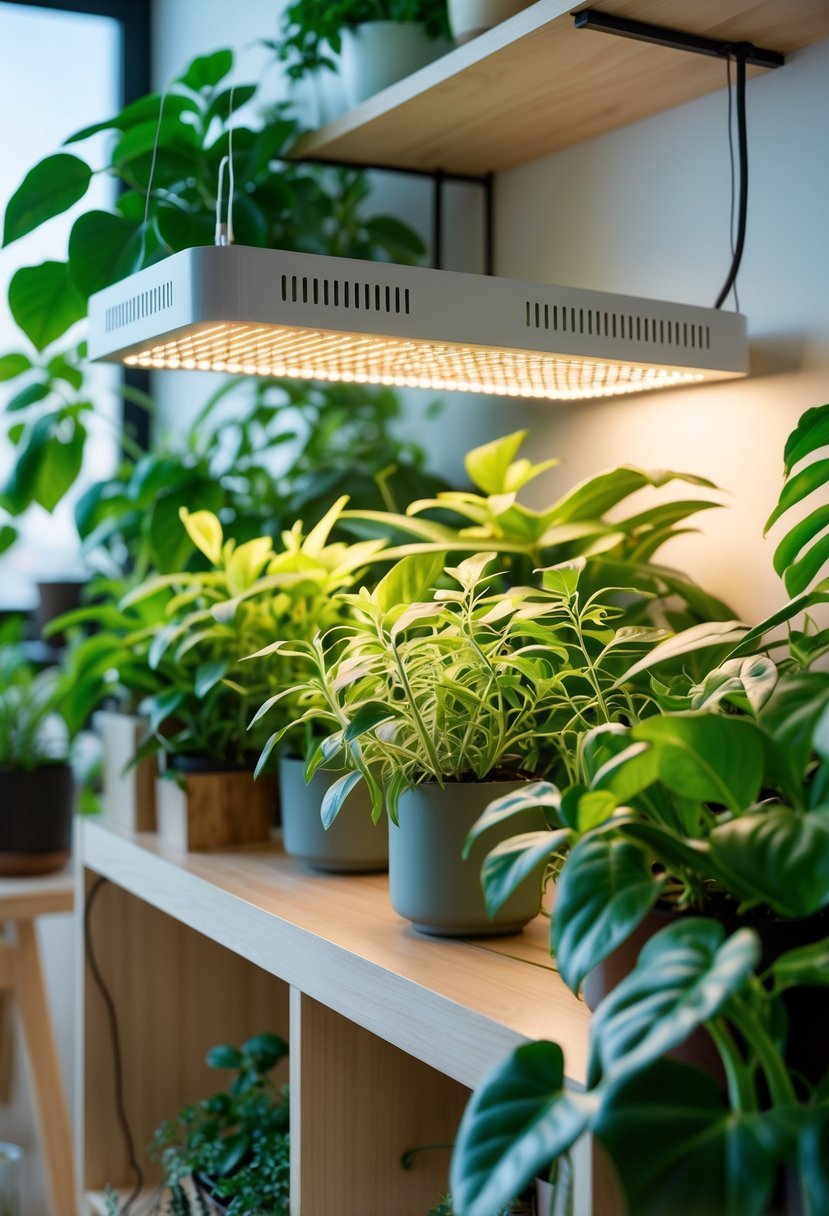
I find that adding a dedicated grow light makes a significant difference for plants in rooms with limited natural sunlight. These lights provide the specific light spectrum plants need for photosynthesis.
I usually position the grow light directly above the plants, mimicking natural sunlight. Most plants benefit from 6 to 10 hours of artificial light daily, depending on their species.
Modern LED grow lights are efficient and don’t generate excessive heat. They fit well into various room styles while helping plants thrive year-round.
5) Design a corner plant nook with a comfortable chair
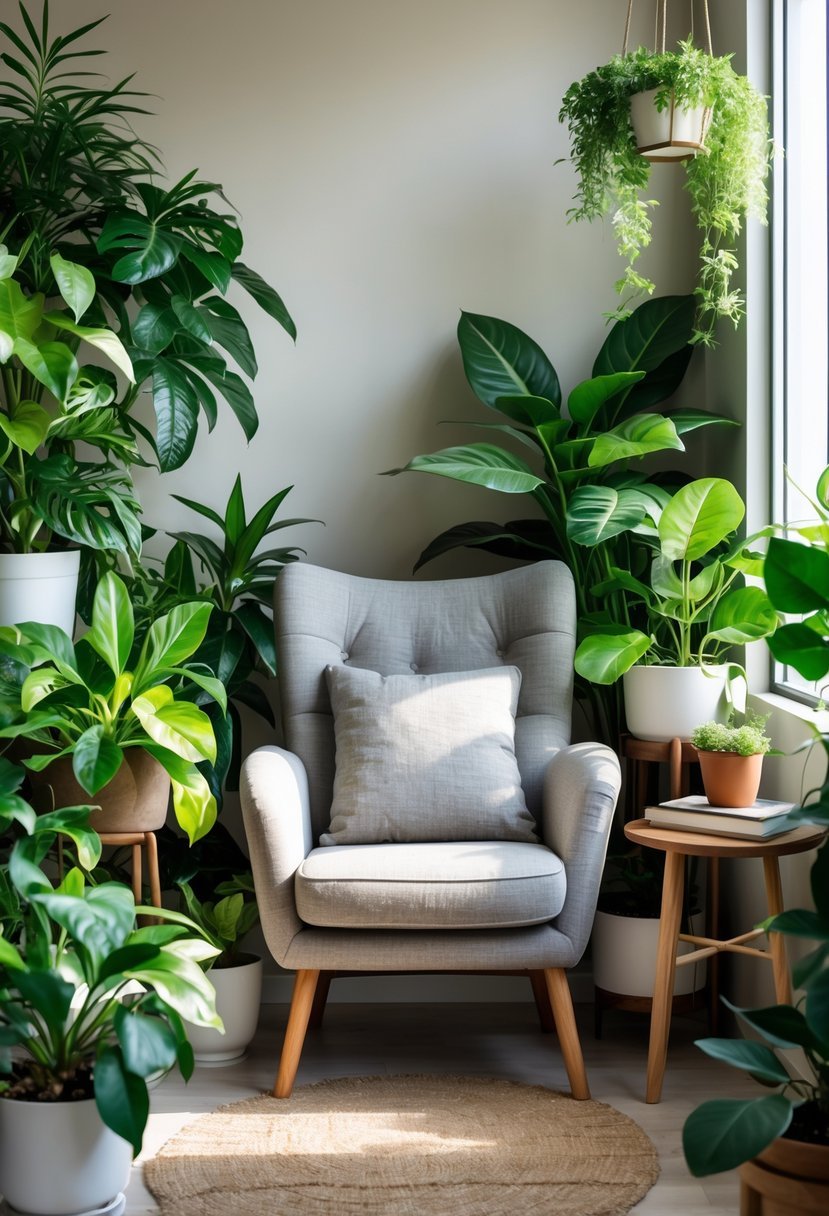
I like to create a small retreat by placing a cozy chair in a plant-filled corner. Surrounding the chair with a variety of plants adds both color and texture.
Choosing plants with different heights and leaf shapes makes the nook visually interesting. I often add cushions or a small throw to increase comfort.
I find that using unique pots or hanging plants helps define the area. The combination of greenery and a comfortable seat transforms an unused corner into a personal, calming space.
6) Install floating shelves for easy plant display
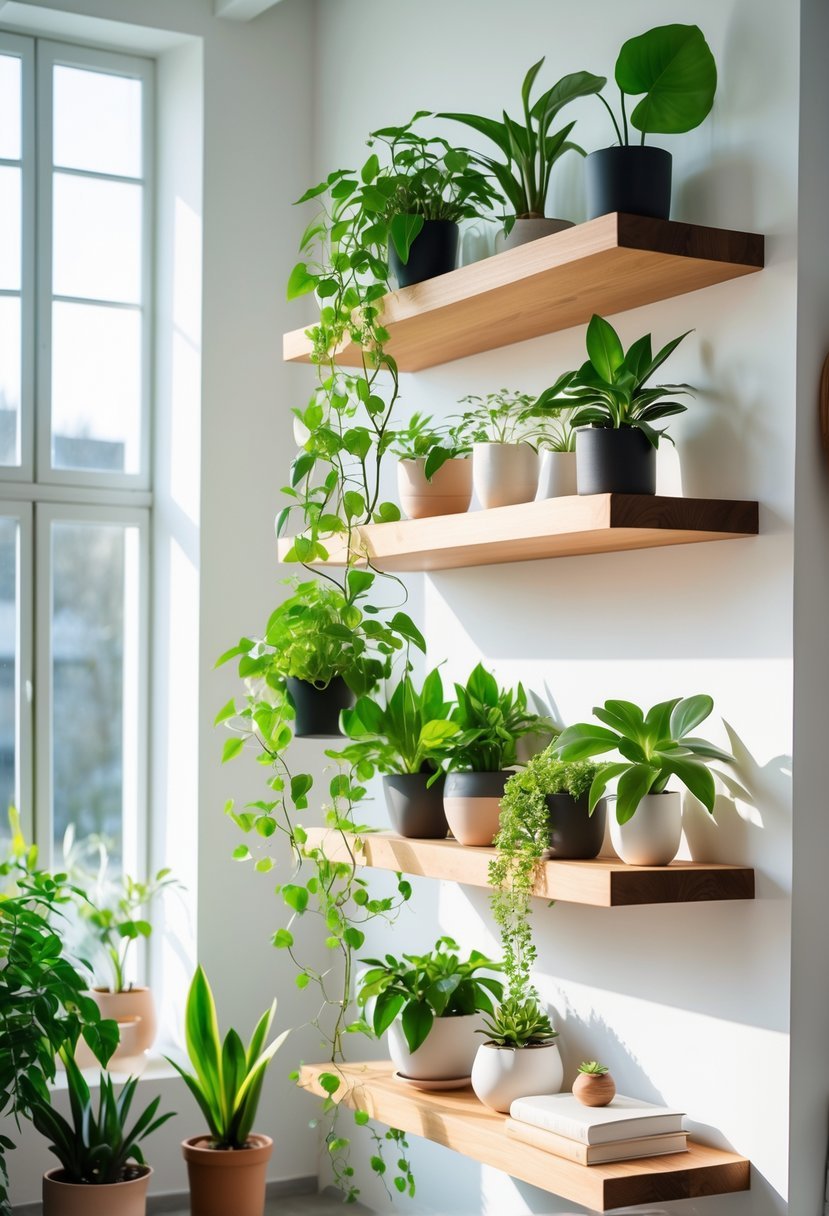
I find floating shelves to be a practical way to display plants without taking up floor space. They create an airy, minimal look that’s easy to maintain and stylish.
Installing them is straightforward. I choose sturdy materials and secure brackets to support the weight of my plants safely.
Floating shelves let me organize plants at different heights, which adds visual interest. Grouping plants with similar care needs makes watering easier.
This setup works well for small spaces or rooms where I want to highlight greenery without cluttering surfaces.
7) Use terrazzo or ceramic pots for a stylish look
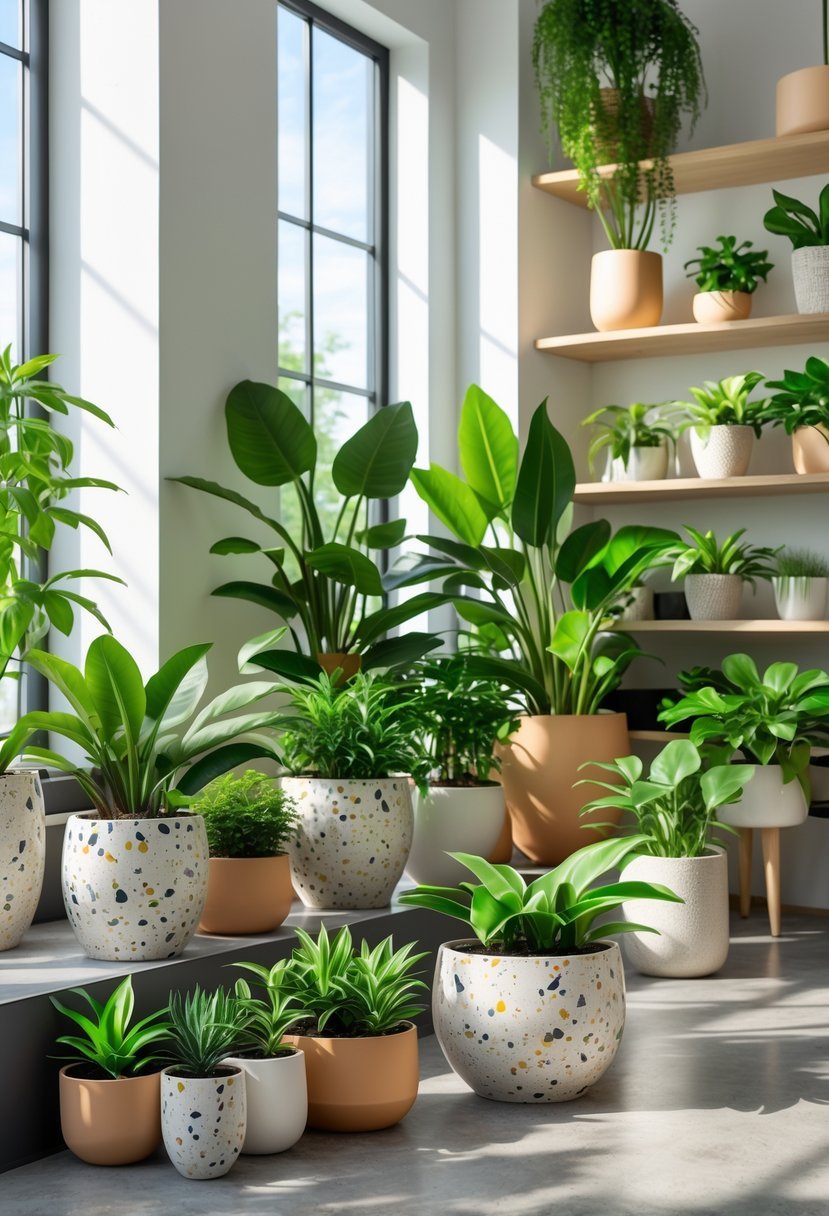
I find terrazzo and ceramic pots offer a clean, contemporary aesthetic that fits well in almost any room. Their textures and patterns add subtle visual interest.
Ceramic pots come in a variety of shapes and finishes, from matte neutrals to glossy glazes. They complement minimalist and modern styles by highlighting plants.
Terrazzo pots bring a unique mix of colors and speckled designs that can become a subtle focal point. I often use these pots to add a touch of sophistication.
8) Include a large statement plant like a fiddle leaf fig
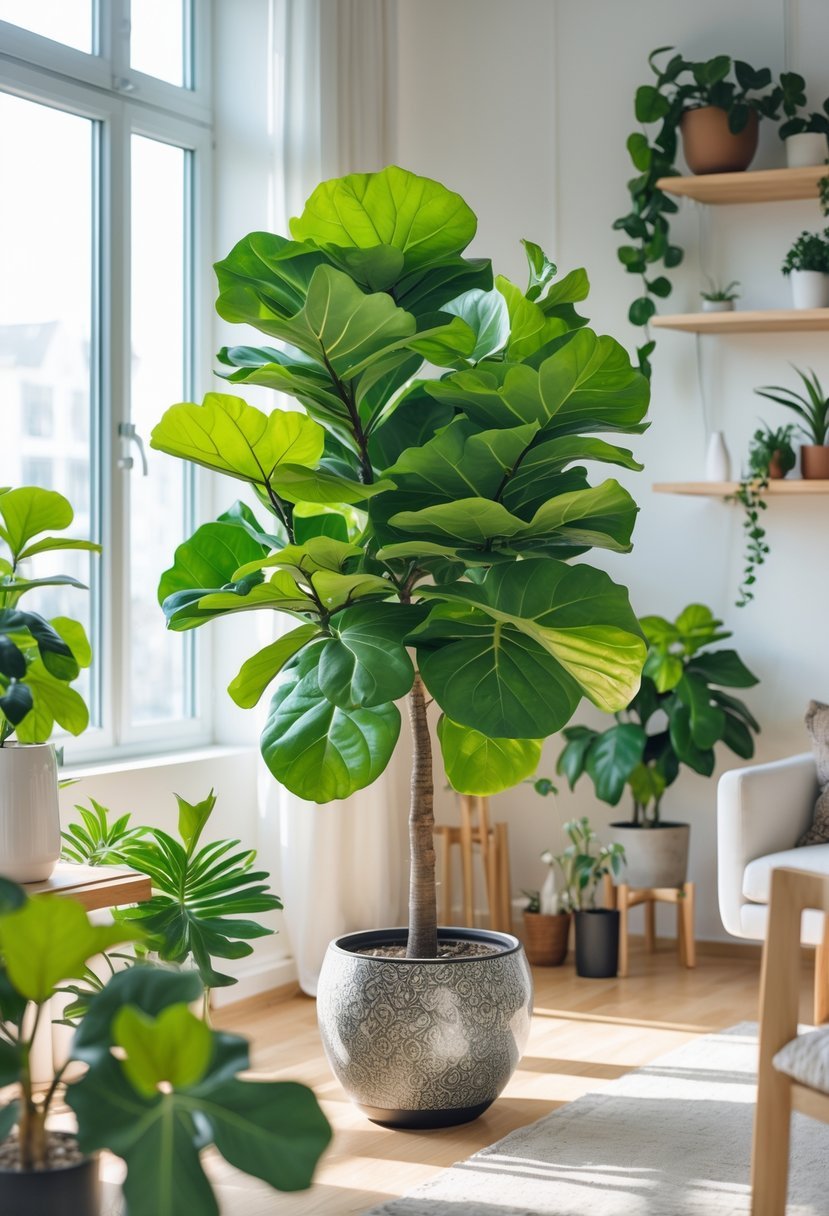
I find a large statement plant like a fiddle leaf fig can instantly enhance any room. Its broad, violin-shaped leaves create a bold focal point.
The fiddle leaf fig grows tall and adds a natural elegance, making it ideal for rooms with high ceilings or ample light. It’s relatively tough and can tolerate less-than-perfect conditions.
If you want a striking yet simple way to add greenery, this plant works perfectly. Just be aware it does require consistent care to keep its leaves healthy and vibrant.
9) Combine succulents and cacti for low maintenance
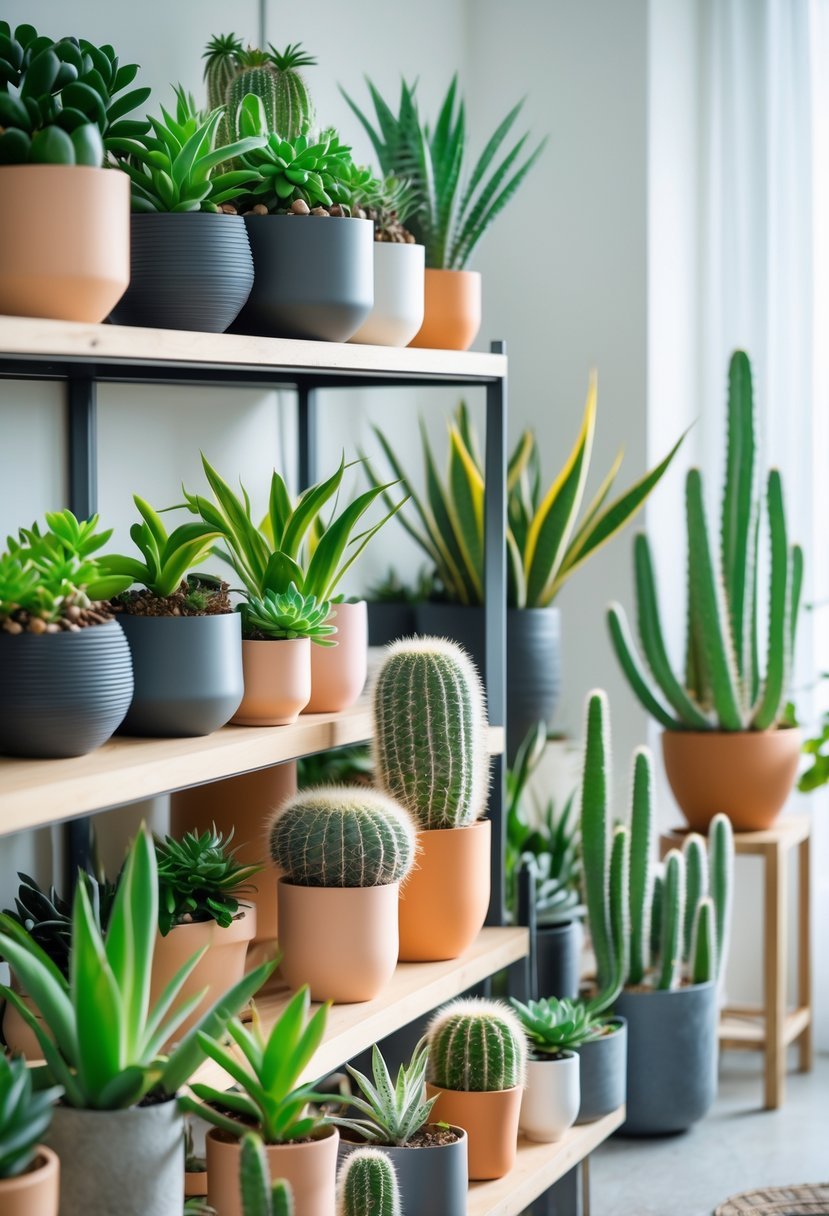
I prefer combining succulents and cacti because they both require minimal care. These plants thrive in similar conditions, needing well-draining soil and bright light.
Mixing different shapes and textures adds visual interest to the space. Pairing a round barrel cactus with rosette-shaped echeveria creates a balanced arrangement.
I often use shallow containers filled with pebbles to enhance their look and improve drainage. This combination also conserves water since both store moisture in their leaves or stems.
10) Create a terrarium shelf with glass containers
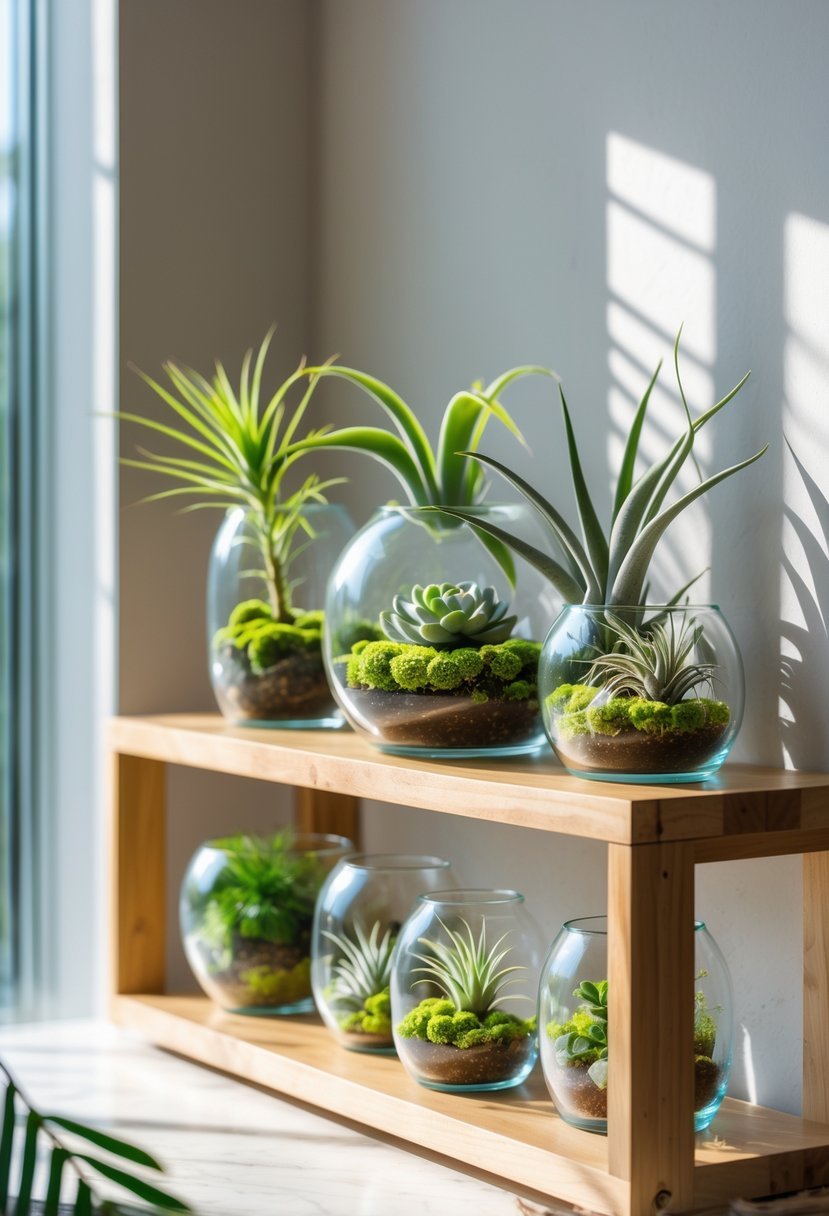
I find that building a terrarium shelf with glass containers can add a unique, natural touch to any room. Using clear glass lets me showcase the plants while maintaining an open, light feel.
Choosing different sizes and shapes of containers creates visual interest. I arrange them on a sturdy shelf where each terrarium can get enough light.
Glass containers also help control humidity, which is ideal for mosses or air plants. This setup feels like having a small indoor garden that’s easy to care for.
11) Use a small indoor water feature to enhance ambiance
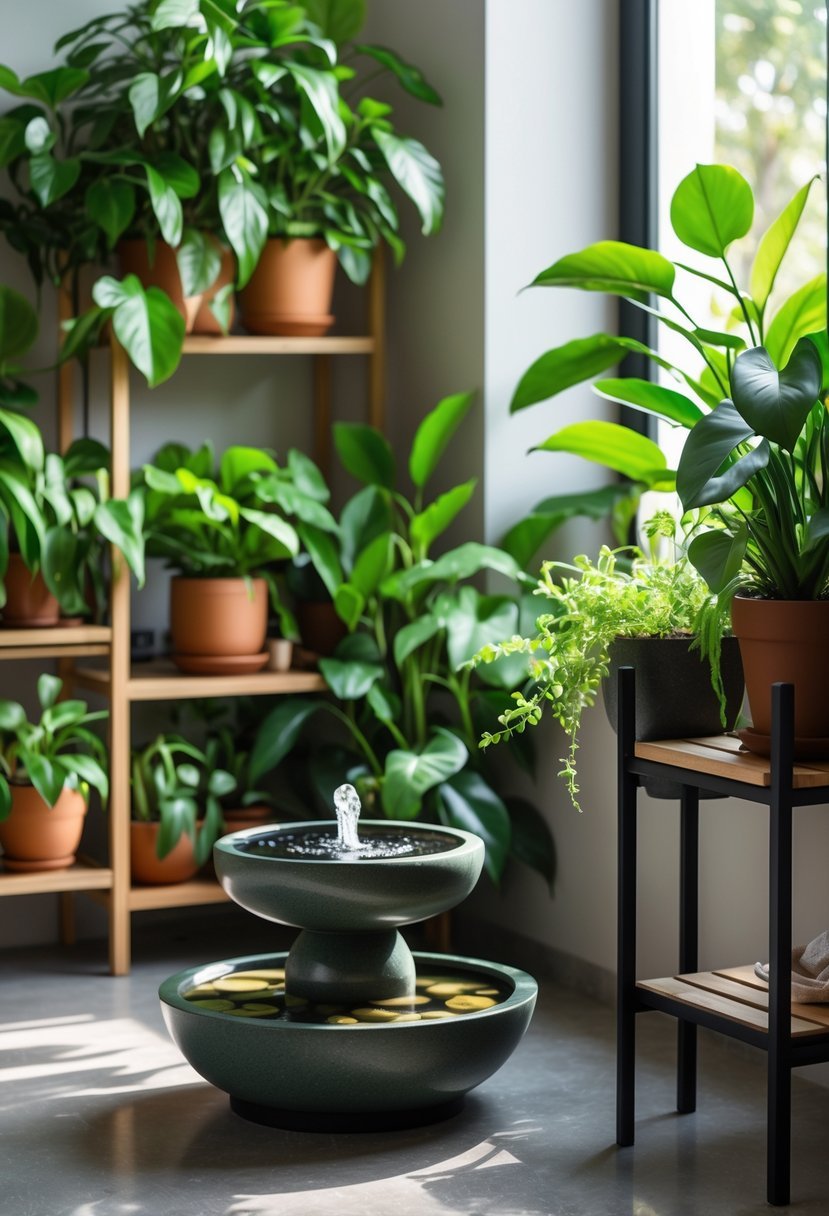
I find that adding a small indoor water feature can really change the atmosphere in a plant room. The gentle sound of trickling water creates a calming background noise that enhances relaxation.
Besides sound, water features help increase humidity, which benefits many types of plants. This makes the environment healthier, especially for tropical or moisture-loving species.
In my experience, even a compact fountain or tabletop water garden brings a touch of elegance and natural serenity.
12) Add air-purifying plants like snake plants and pothos
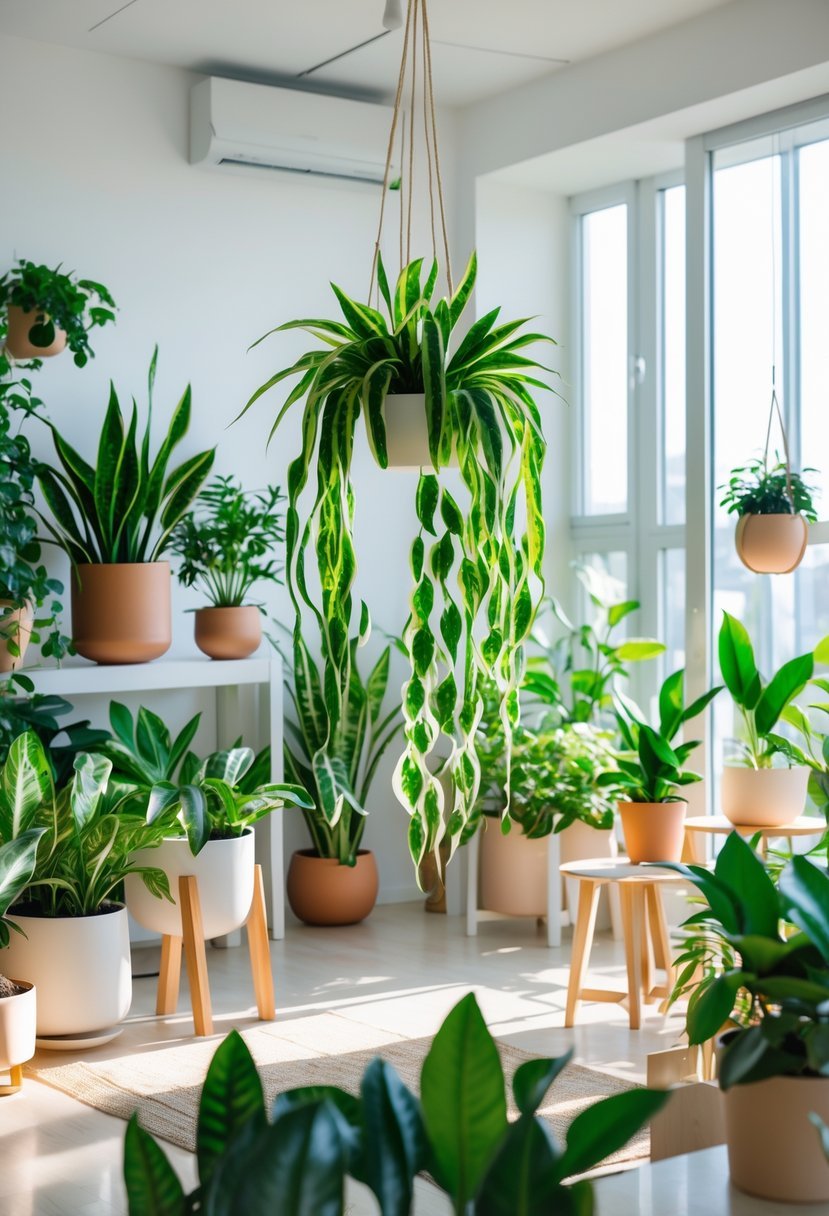
I recommend incorporating snake plants and pothos into your plant room for both style and function. These plants are known for filtering common indoor toxins and improving air quality.
Snake plants stand tall with rigid leaves, requiring minimal care and thriving in low light. Pothos, on the other hand, trails gracefully and adapts well to various lighting conditions.
Both plants are hardy and suitable for beginners. They add greenery without demanding much attention.
13) Use plant stands in varying heights to layer plants
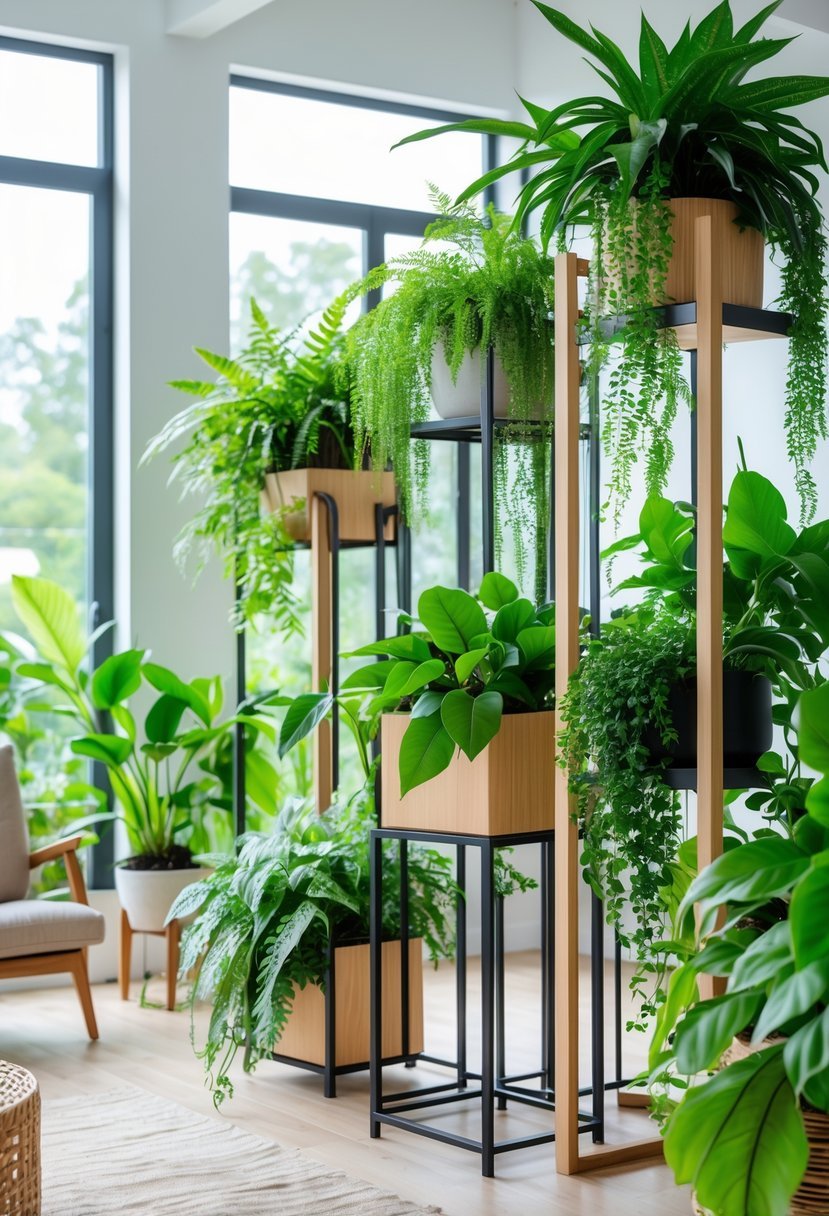
I find that using plant stands at different heights creates a dynamic and interesting visual effect. It adds depth by allowing plants to overlap naturally without crowding each other.
Placing taller plants on higher stands and shorter ones below helps me showcase each plant’s unique form. This approach also maximizes space, especially in corners or small rooms.
Choosing stands made of wood or metal adds texture and complements various décor styles. I make sure to position stands near light sources so plants can thrive while enhancing the room’s atmosphere.
14) Integrate a plant room with natural wooden furniture
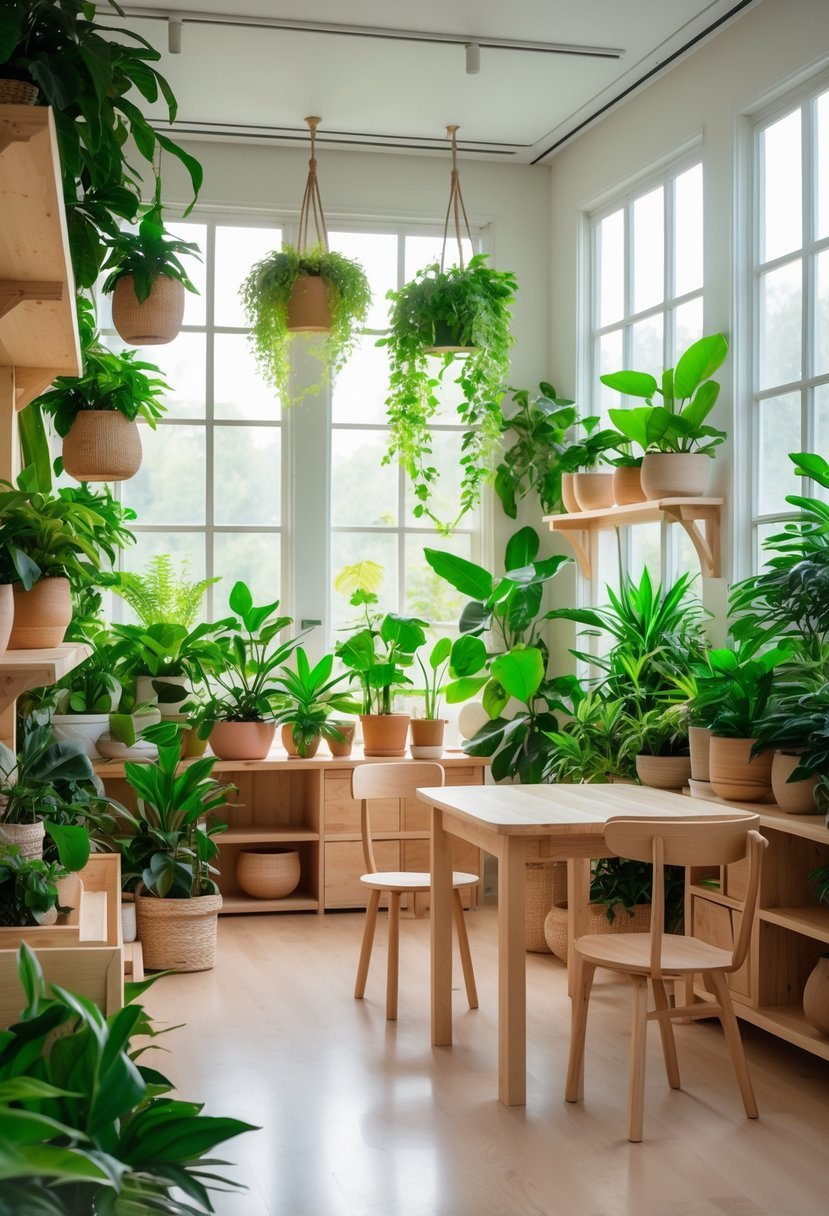
Pairing natural wooden furniture with plants creates a balanced and inviting space. Wood’s warm, organic texture complements greenery, making the room feel grounded and calm.
Using reclaimed or raw wood pieces adds rustic charm while supporting sustainability. I often choose shelves, tables, or storage units made from wood to display potted plants at different heights.
This mix improves the room’s visual interest by contrasting the plants’ soft leaves with the furniture’s solid structure. Wooden furniture enhances the natural theme without overpowering the plants.
15) Incorporate a plant wall with moss and ferns
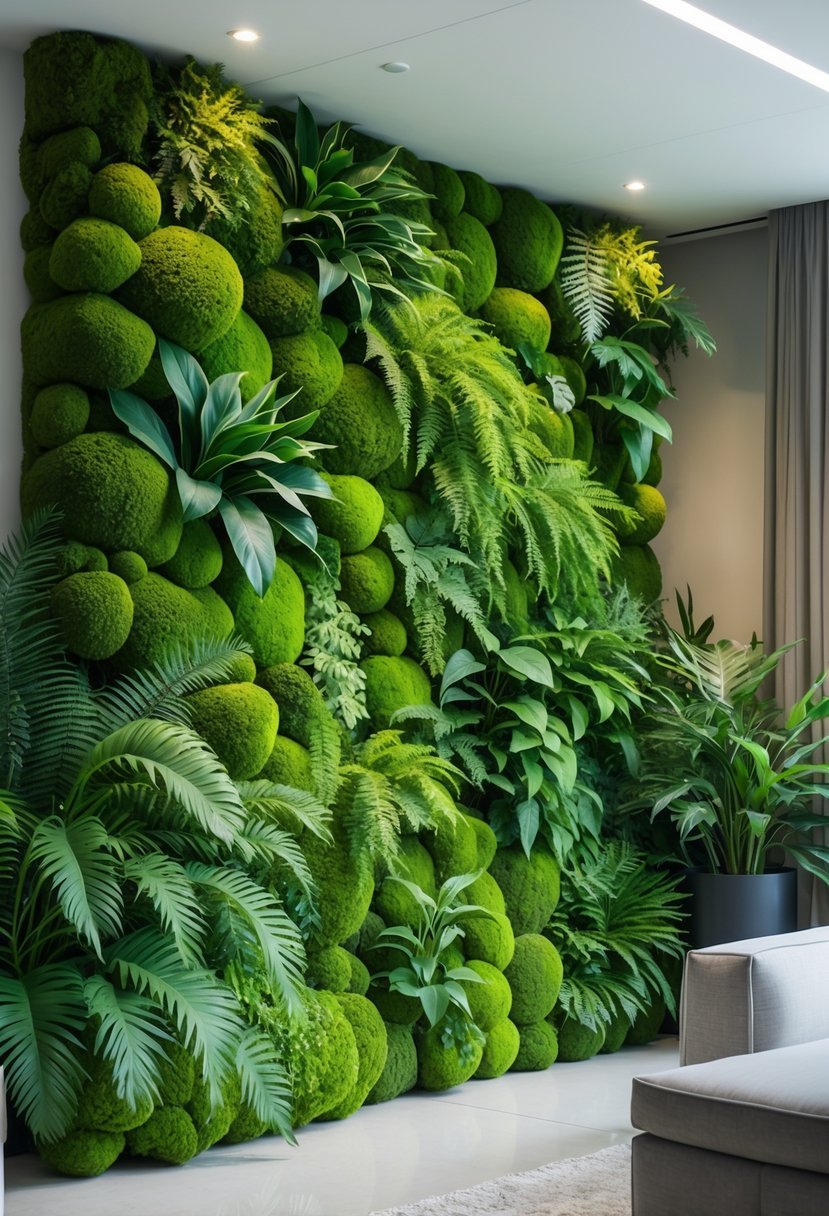
Combining moss and ferns on a plant wall adds rich texture and a calming green tone to any room. Moss provides a soft, natural backdrop that maintains its appearance with minimal care.
Ferns bring a delicate, airy quality with their intricate fronds, balancing the dense look of moss. Together, they create a living feature that feels fresh and grounded.
This type of plant wall suits various spaces because it doesn’t require much light or maintenance. Installing it can turn a dull wall into a vibrant, natural focal point.
16) Add trailing plants like string of pearls on shelves
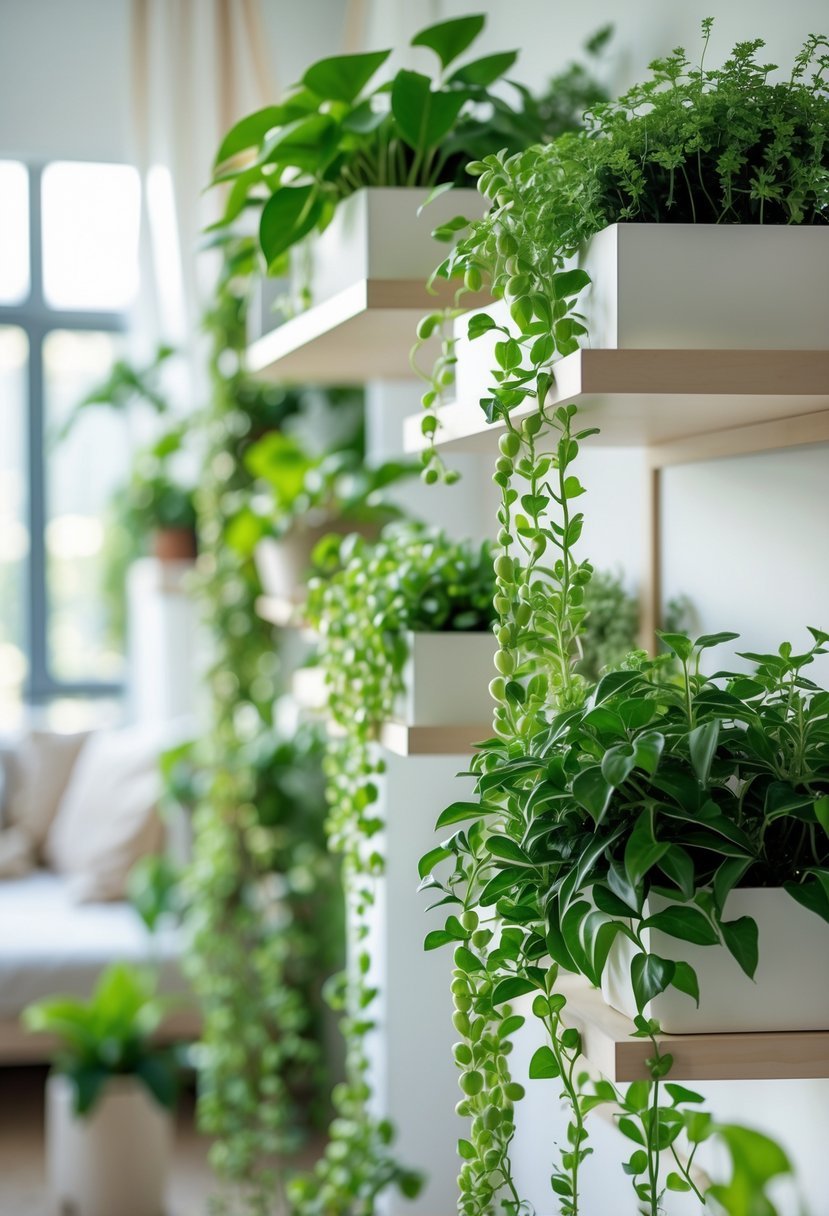
Trailing plants like string of pearls work perfectly on shelves, lending an elegant, natural flow to the space. Their cascading vines draw the eye and soften the rigid lines of furniture.
Placing them on wooden or metal shelves creates a modern, structured look while allowing the plants to drape beautifully. Arranging multiple trailing plants together builds visual interest and texture.
These plants thrive well in indirect light, so positioning them on shelves near windows often helps them grow healthy vines. They add life without taking up floor space, making them ideal for maximizing room functionality.
17) Place herbs near a sunny kitchen window
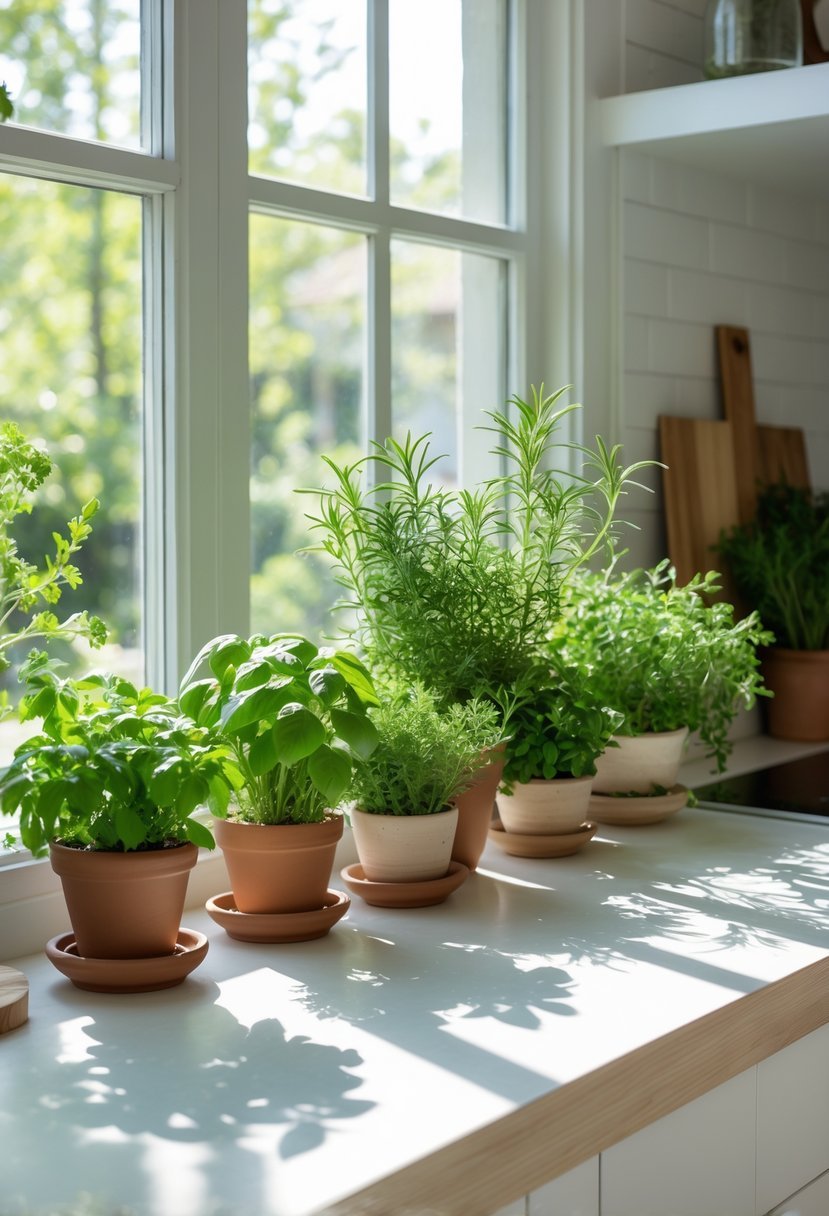
Placing herbs by a sunny kitchen window is both practical and visually appealing. The natural light helps herbs like basil, thyme, and parsley thrive, keeping fresh flavors within arm’s reach while cooking.
Choosing well-draining containers with holes is essential to prevent waterlogging. Make sure the herbs get at least six hours of sunlight daily for healthy growth.
This setup turns the kitchen into a small, productive garden. It adds greenery and provides fresh ingredients without needing much room.
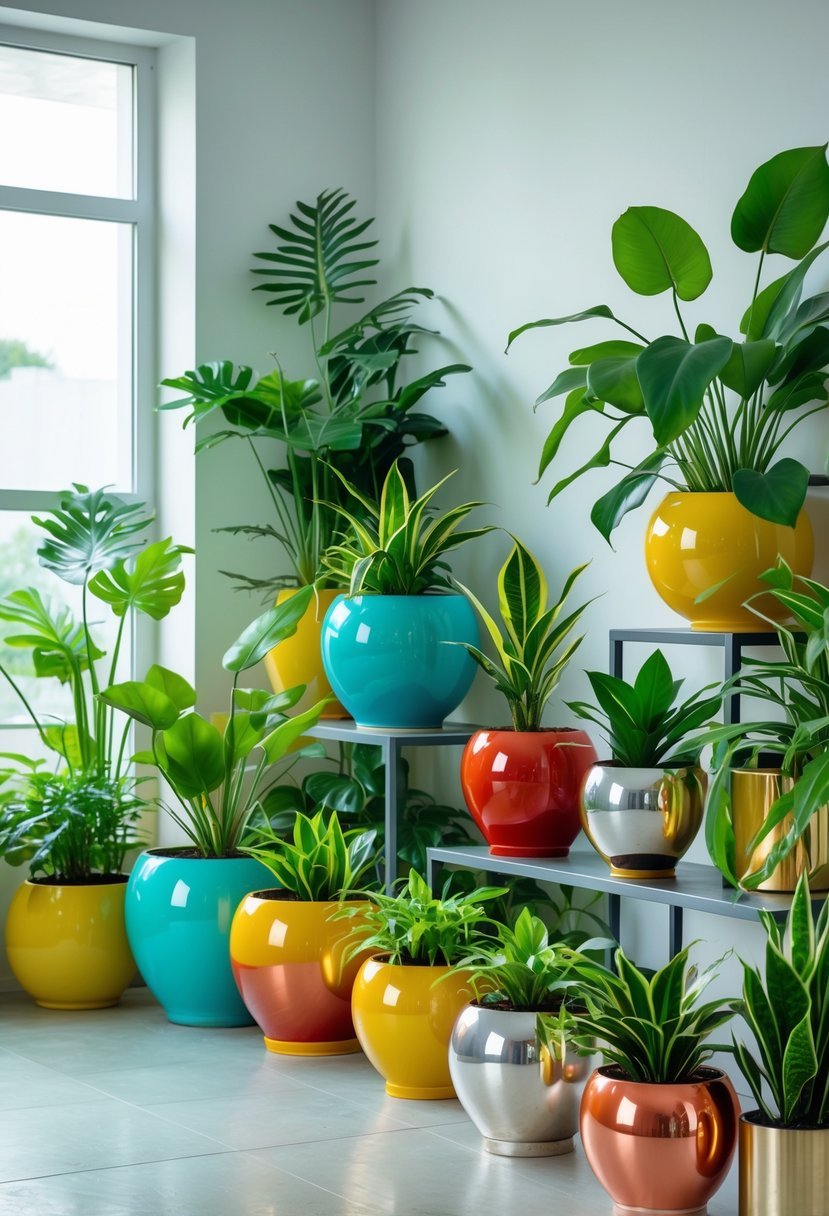
18) Use colorful ceramic or metallic planters for accent
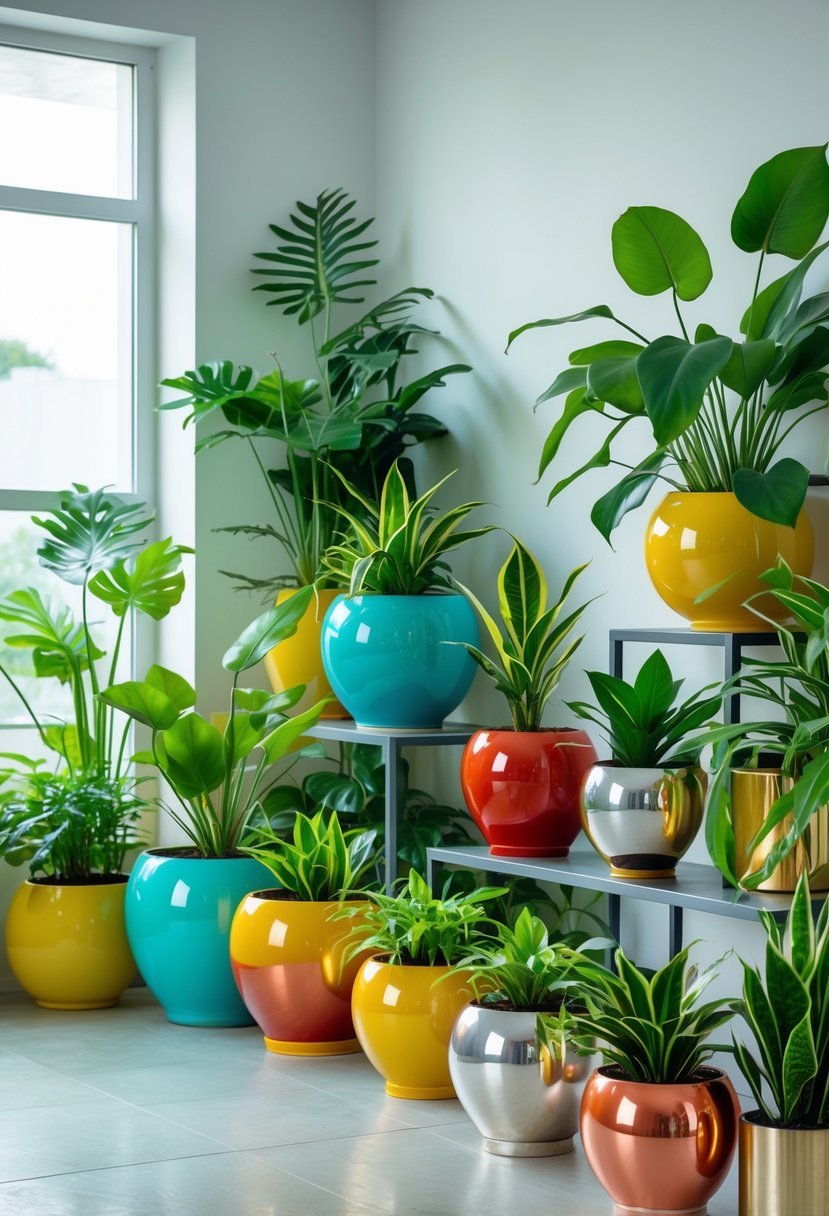
Colorful ceramic planters add a subtle yet effective pop of color to indoor spaces. Their smooth texture and clean lines fit well with both modern and traditional decor.
Using vibrant ceramics highlights plants without overwhelming the room. Metallic planters offer a different kind of appeal with their reflective surfaces and sleek finish.
They bring a modern charm and help brighten corners. Metallic pots work well for a fresh, stylish touch.
Both ceramic and metallic planters serve as accents that can complement greenery while enhancing the overall aesthetic. Choosing between them depends on the mood you want to create and the existing decor.
19) Design a minimalist plant display with monochrome pots
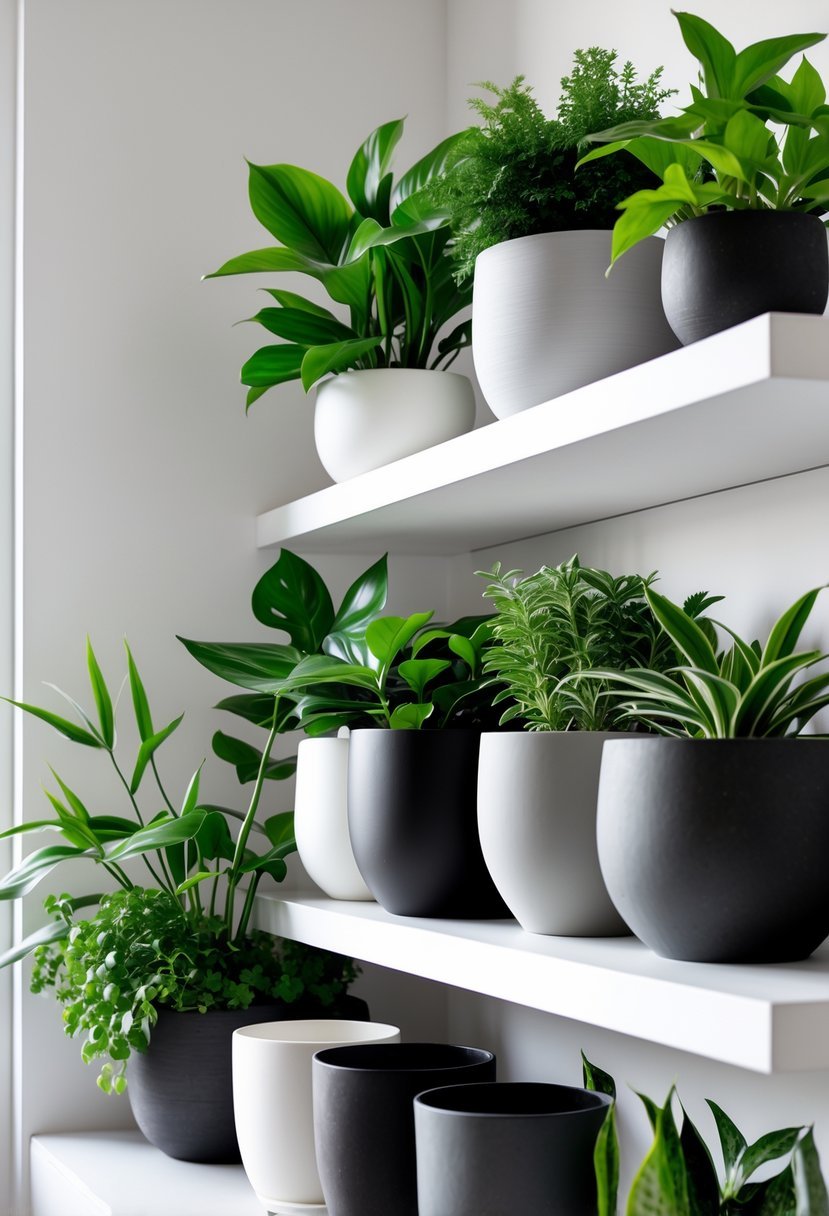
Using monochrome pots creates a sleek, cohesive look that emphasizes the plants. Pots in matte white, soft gray, or black keep the space calm and uncluttered.
This approach works well when you want the greenery to stand out without competing with colorful containers. Mixing plant sizes but keeping the pots uniform maintains simplicity.
Monochrome designs make arranging plants easier, as the consistent color palette ties everything together visually. It’s a simple way to bring a modern and minimalist vibe to any plant room.
20) Combine tropical plants like monstera and palms
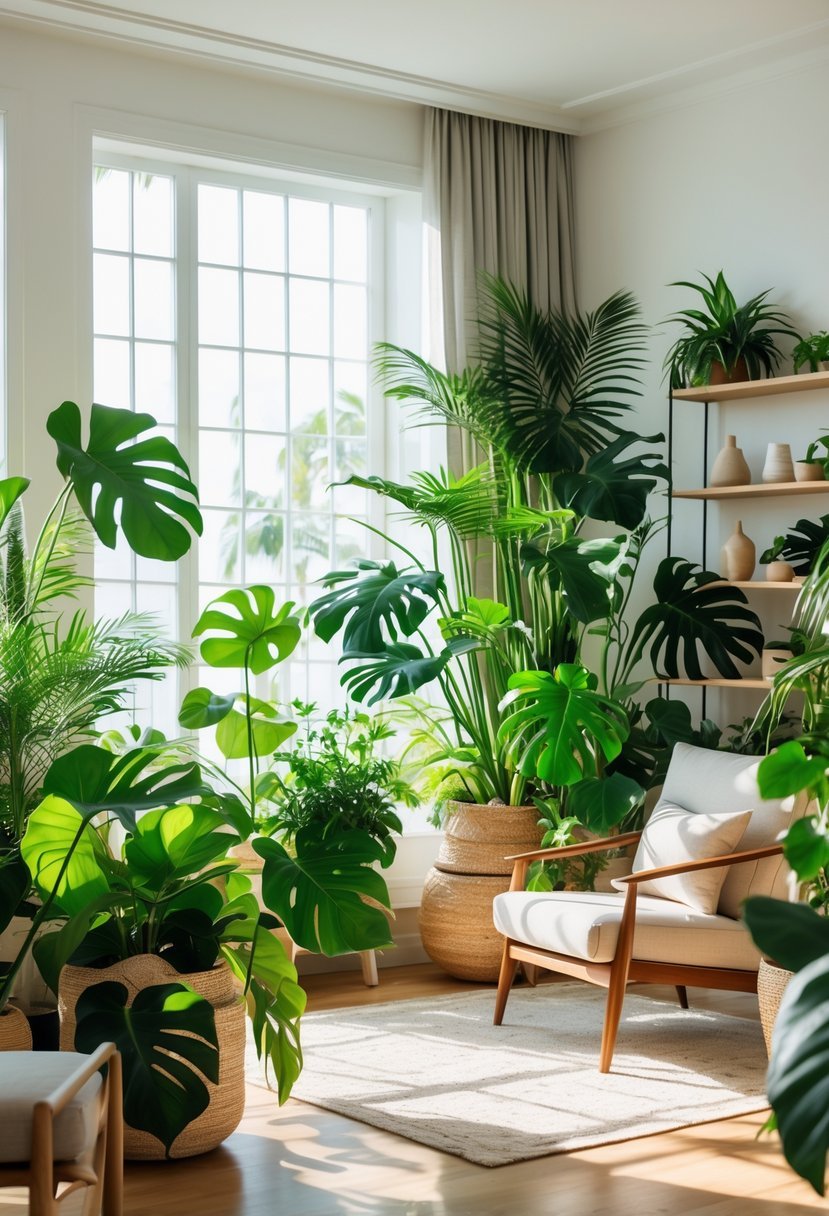
Combining tropical plants like monstera and palms brings a balanced depth to any room. The large, perforated leaves of the monstera contrast well with the slender, arching fronds of palms.
This mix creates natural layering, adding height and texture without overwhelming the space. Place the monstera where it gets indirect sunlight, while palms can adapt to slightly lower light.
Adding a few trailing vines or smaller tropicals completes the look. The space feels more dynamic and alive.
Vertical Gardens:
Transform any blank wall into a lush vertical garden bursting with greenery. Perfect for small spaces, these living walls create a breathtaking focal point while saving precious floor space. Mix ferns, pothos, and trailing ivy for layers of texture and vibrant shades of green. Add wooden or metal frames to elevate the aesthetic, or install a drip irrigation system for easy care. Whether it’s in your living room, bedroom, or even your office, a vertical garden brings the outdoors inside—purifying your air and lifting your mood every time you glance at your very own indoor jungle.
Terrariums:
Create your own miniature world of greenery with terrariums—tiny ecosystems that bring nature to any nook or shelf. Perfect for beginners and plant lovers alike, terrariums are low-maintenance yet endlessly charming. Choose a glass container, layer in pebbles, soil, moss, and your favorite succulents or air plants. Add decorative stones or miniature figurines for whimsy. The enclosed environment helps maintain humidity, making it ideal for tropical plants or moss varieties. Place terrariums on desks, coffee tables, or window ledges to add a pop of green serenity to your space. It’s a little garden you can admire up close every day!
Indoor Trellis:
Bring climbing plants indoors with a decorative trellis that adds architectural charm and a burst of green to your space. Imagine lush pothos or ivy winding their way up wooden or metal frames, creating a living art piece right inside your plant room. Whether freestanding or mounted, trellises allow you to grow vertically, maximizing space while adding texture and height. Paint it black for a modern touch or keep it rustic for farmhouse vibes. This setup not only adds visual interest but becomes a thriving, interactive element that changes as your plants grow—perfect for creating a serene, jungle-like atmosphere.
Potted Trees:
Make a bold, natural statement with a majestic potted tree as the focal point of your plant room. Indoor-friendly varieties like fiddle leaf figs, rubber plants, or olive trees add incredible height, texture, and elegance to any space. Place them in oversized baskets, ceramic pots, or modern planters to complement your style. Their large leaves filter air beautifully, while the tree’s silhouette brings a grounding, calming effect to the room. Whether placed in a corner or center stage, a potted tree instantly elevates the space, making your plant room feel like a luxurious, lush indoor forest retreat.
Succulent Arrangements:
Create an eye-catching succulent arrangement that’s equal parts art and nature. These hardy little plants come in endless shapes, colors, and textures—perfect for crafting miniature landscapes inside your plant room. Mix and match varieties like echeveria, haworthia, and jade plants in ceramic bowls, wooden boxes, or vintage containers for a unique touch. Succulents thrive on minimal care, making them ideal for beginners or busy plant parents. Add pebbles, sand, or driftwood for that desert-chic vibe. Compact yet visually striking, succulent arrangements bring a pop of life to shelves, desks, or coffee tables—proving that even the smallest plants make the biggest impact.
Plant Room Dividers:
Divide and conquer your space naturally with lush plant dividers that offer privacy, beauty, and fresh air. Tall plants like bamboo, fiddle leaf figs, or rubber plants double as living partitions—perfect for open layouts or creating cozy nooks. You can also craft a green wall using planters stacked on shelves or hanging systems. These botanical barriers soften hard lines and create a refreshing separation without sacrificing light or openness. Bonus: they absorb noise and improve air quality. Whether you’re sectioning off a reading nook or an office corner, plant dividers add a beautiful, functional layer of greenery to your room.
Sunrooms:
Transform your sunroom into the ultimate plant paradise, where golden sunlight streams in and greenery thrives. With large windows on every side, sunrooms provide the ideal environment for light-loving plants like bird of paradise, citrus trees, or vibrant blooms. Fill every corner with lush pots, hanging baskets, and climbing vines. Add cozy seating so you can sip your coffee surrounded by nature’s beauty. The result? A peaceful indoor garden oasis that feels like a vacation retreat every day. In a sunroom, plants grow happier and so will you—basking in the warmth, fresh air, and the tranquil energy of your green escape.
Zen Gardens:
Create a calming escape in your plant room with a minimalist indoor Zen garden. Combine smooth pebbles, soft moss, and bonsai trees to cultivate balance and tranquility. Add elements like bamboo, a small water feature, or a sand tray for raking soothing patterns. Choose neutral tones—white, gray, beige—to let the greenery pop while maintaining a peaceful aesthetic. This design isn’t just about looks—it’s about creating a mindful space where you can breathe deeply and relax. Your Zen garden becomes a daily retreat, perfect for meditation, journaling, or simply sitting quietly, surrounded by the grounding, serene beauty of nature.
Hanging Herb Dryers:
Give your plant room a rustic, functional twist by adding hanging herb dryers. Beautiful and practical, these ceiling-mounted racks let you dry freshly harvested herbs like lavender, rosemary, and thyme right where your greenery thrives. The result? A cozy, farmhouse vibe paired with the earthy aroma of drying herbs filling the air. Use twine, vintage metal racks, or wooden frames to hang bundles upside down—ready for cooking, tea-making, or homemade crafts. It’s a charming nod to traditional homesteading while keeping your space filled with nature’s textures and scents. Every glance feels like stepping into a countryside kitchen garden.
Plant-Filled Bathrooms:
Turn your bathroom into a tropical spa by filling it with humidity-loving plants. The natural steam creates the perfect environment for ferns, orchids, pothos, and peace lilies to flourish. Drape trailing plants over shelves, line the windows with leafy greens, or hang baskets from the ceiling. Not only does it add a lush, exotic vibe, but plants also help purify the air—perfect for unwinding after a long day. Imagine soaking in your tub, surrounded by cascading greenery, while soft light filters through leaves. A plant-filled bathroom transforms your daily routine into a calming, rejuvenating retreat right in your own home.
Reading Nooks:
Create the ultimate cozy retreat by surrounding your reading nook with lush greenery. Position a comfy chair or bench near a sunlit window and layer in potted plants, hanging vines, and leafy trees to build your personal jungle. Snake plants, monstera, and trailing philodendron create the perfect backdrop for getting lost in a book. Add soft textiles, a small side table, and a reading lamp for those cozy nights. Plants naturally soften the space, adding calm and tranquility—making every page turn feel more peaceful. Your plant-filled reading nook becomes the perfect escape, where stories and nature meet in harmony.
Air Plant Displays:
Add a whimsical, low-maintenance twist to your plant room with a creative air plant display. These soil-free wonders thrive perched in glass orbs, driftwood pieces, or hanging from minimalist frames—seeming to float mid-air. Arrange them in geometric holders, seashells, or wall-mounted installations for a modern, artistic vibe. Air plants (Tillandsia) need only occasional misting and indirect light, making them perfect for beginners or as delicate accents in tricky spots. Their unique shapes and textures add dimension and charm without cluttering your space. Air plant displays are both magical and functional—turning even the smallest corners into pockets of floating greenery.
DIY Plant Walls:
Turn any blank wall into a stunning green masterpiece with a DIY plant wall. Whether you use mounted pots, pocket planters, or a custom-built frame, a vertical garden adds incredible depth and texture. Mix trailing vines, bold-leafed plants, and colorful blooms for a dynamic display. It’s perfect for small spaces or creating a focal point in your plant room. Plus, caring for a living wall becomes a rewarding ritual—watching it grow and change with the seasons. A DIY plant wall isn’t just decor—it’s living, breathing art that transforms your space into a vibrant indoor jungle full of life.
Glasshouses or Greenhouses:
Take your plant obsession to the next level by creating a glasshouse or indoor greenhouse right at home. Whether it’s a full room or a cabinet-style greenhouse, these light-filled sanctuaries protect your tropical plants, succulents, and rare species while putting them on glorious display. The glass walls and shelves create a sleek, organized vibe, while humidity control keeps your plant babies thriving. Line your greenhouse with grow lights or fairy lights for a magical touch. Perfect for collectors, it’s a dream space where greenery thrives year-round. It’s more than storage—it’s a lush, elegant shrine dedicated to your love for plants.
Fairy Garden Corners:
Add a sprinkle of magic to your plant room with an enchanting fairy garden corner. Use miniature houses, tiny figurines, and moss-covered stones nestled among your plants to create a whimsical woodland scene. Choose delicate ferns, bonsai, and flowering plants for a soft, magical vibe. Arrange them in a large pot, a terrarium, or a dedicated floor space—perfect for sparking imagination and wonder. This playful setup is great for kids or the young-at-heart, bringing storytelling and nature together. Every glance at your fairy garden feels like peeking into a hidden world—adding charm, creativity, and a bit of enchantment to your space.
Also Read:
30 Best Green Kitchen Ideas to Freshen Up Your Cooking Space
Evergreen Elegance: 39 Stunning Green Living Room Ideas
Design Principles for Plant Rooms
Creating a successful plant room involves understanding how to optimize light, maintain a practical layout, and choose colors that enhance both the plants and the room. Each factor plays a crucial role in making the space thrive and feel inviting.
Maximizing Natural Light
Natural light is essential for most houseplants to grow well. Position the plant room near large windows or glass doors that offer at least 4 to 6 hours of indirect sunlight daily.
Direct sunlight often burns leaves, so filtered light with sheer curtains or placing plants a few feet from the window works best. If natural light is limited, supplement with full-spectrum grow lights, choosing LED panels that emit light similar to sunlight without excessive heat.
Rotating plants regularly ensures all sides receive light evenly, preventing uneven growth. Arrange plants by their light tolerance—placing low-light species farther from windows and sun-loving ones closer.
Balancing Aesthetics and Functionality
Blend beauty and practicality in plant rooms. Adjustable shelving and plant stands let you change layouts as needed to accommodate growth or new acquisitions.
Consistent maintenance access is vital, so leave clear pathways for watering and pruning. Grouping plants by size and water needs creates a balanced environment and simplifies care routines.
Combining hanging plants with floor pots adds vertical interest and maximizes space. Include decorative elements like stylish planters or natural textures—wood or terracotta—to complement greenery.
Choosing Complimentary Color Palettes
The right color palette enhances a plant room’s atmosphere and highlights plant features. Start with neutral tones like soft beige, gray, or white on walls to create a calm backdrop.
This helps leaves stand out while keeping the room feeling open. Accent colors inspired by nature—such as deep greens, earthy browns, or muted blues—work well in planters, cushions, or wall art.
Avoid overly bright or clashing colors that compete with plants visually. For planters, matte finishes often feel more organic than glossy ones, reinforcing a natural vibe.
Plant Care in Interior Spaces
Maintaining healthy plants indoors requires attention to the environment and choosing suitable species. Proper humidity and temperature, along with selecting plants that match your lifestyle, help ensure your indoor garden thrives.
Humidity and Temperature Control
Indoor plants often need higher humidity than what many homes naturally provide. Use a humidifier or group plants together to create a microclimate that retains moisture.
Regular misting can help, but it’s less effective if the air is dry for long periods. Keep temperatures stable, ideally between 65°F and 75°F (18°C–24°C).
Avoid placing plants near drafts, heating vents, or air conditioners, as sudden temperature changes stress them. Monitoring with a simple thermometer and adjusting with a humidifier or fan can make a big difference in plant health.
Selecting Low-Maintenance Plants
For busy or beginner plant owners like me, low-maintenance plants are crucial. Species such as snake plants, pothos, and ZZ plants tolerate a range of light and humidity levels and don’t require frequent watering.
I prefer plants that can survive occasional neglect. Succulents and cacti are also good options but need bright light. Succulents and cacti are also good options but need bright light. When choosing plants, consider their light needs, growth rate, and watering frequency.