20 Modern Kitchen Ceiling Design Ideas for Sleek, Functional Spaces
The difference between a standard builder-grade room and a custom luxury space often lies in the details you don’t immediately notice—until you look up. While cabinetry and countertops usually steal the spotlight, a well-executed modern kitchen ceiling design is the secret weapon for defining your home’s atmosphere. It dictates how light travels through the room, influences acoustics, and creates the illusion of more space.
From geometric gypsum patterns that house ambient LED strips to rustic-industrial exposed beams that add warmth to a sleek white palette, the ceiling sets the stage for everything below it. In this article, we break down the most innovative trends and practical solutions to help you transform that blank canvas above your head into a stunning architectural feature.
I often find that the ceiling in a kitchen is an overlooked design element, yet it holds great potential to change the overall feel of the space.
Modern kitchen ceilings can range from simple, clean finishes to more complex architectural features, each contributing to the room’s atmosphere and style.
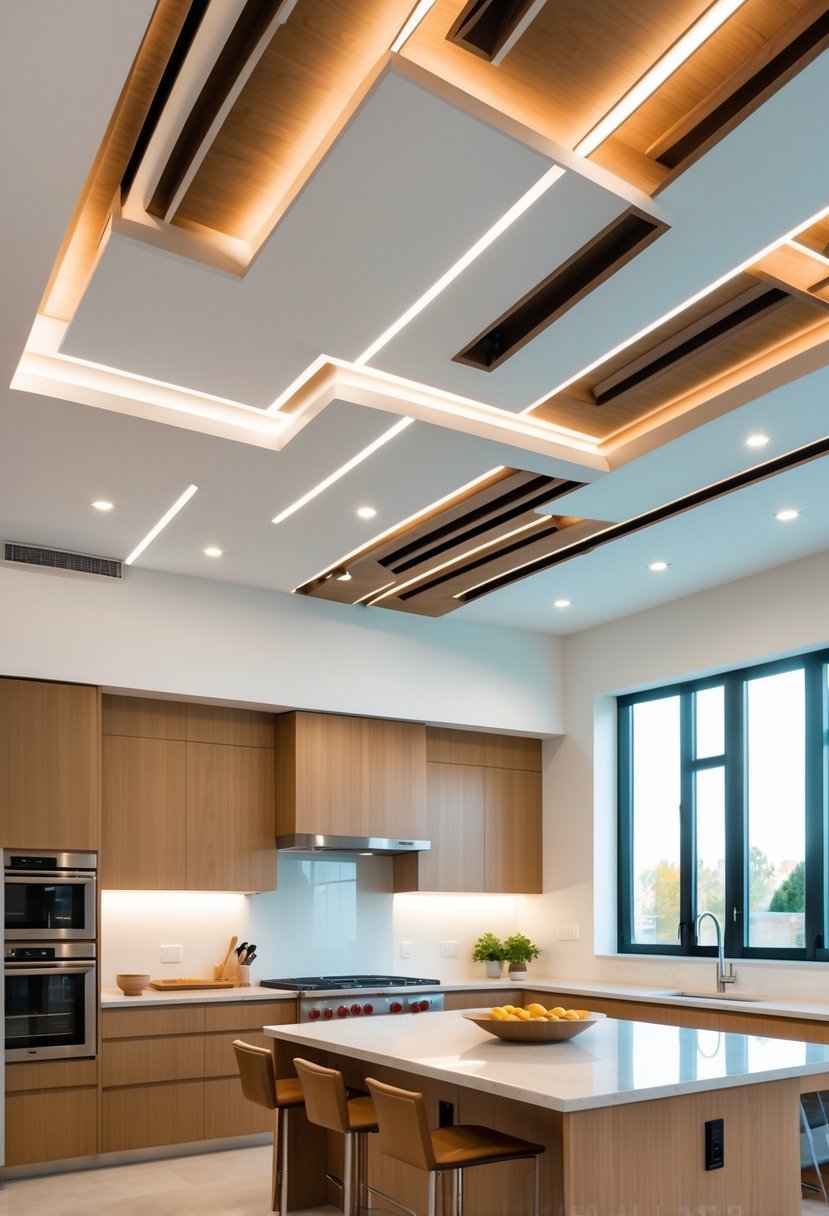
The right ceiling design can elevate a kitchen, making it both visually appealing and functionally enhanced. In this article, I’ll share 20 modern kitchen ceiling ideas that can inspire your next renovation or update.
Table of Contents
1) Coffered ceilings with recessed lighting
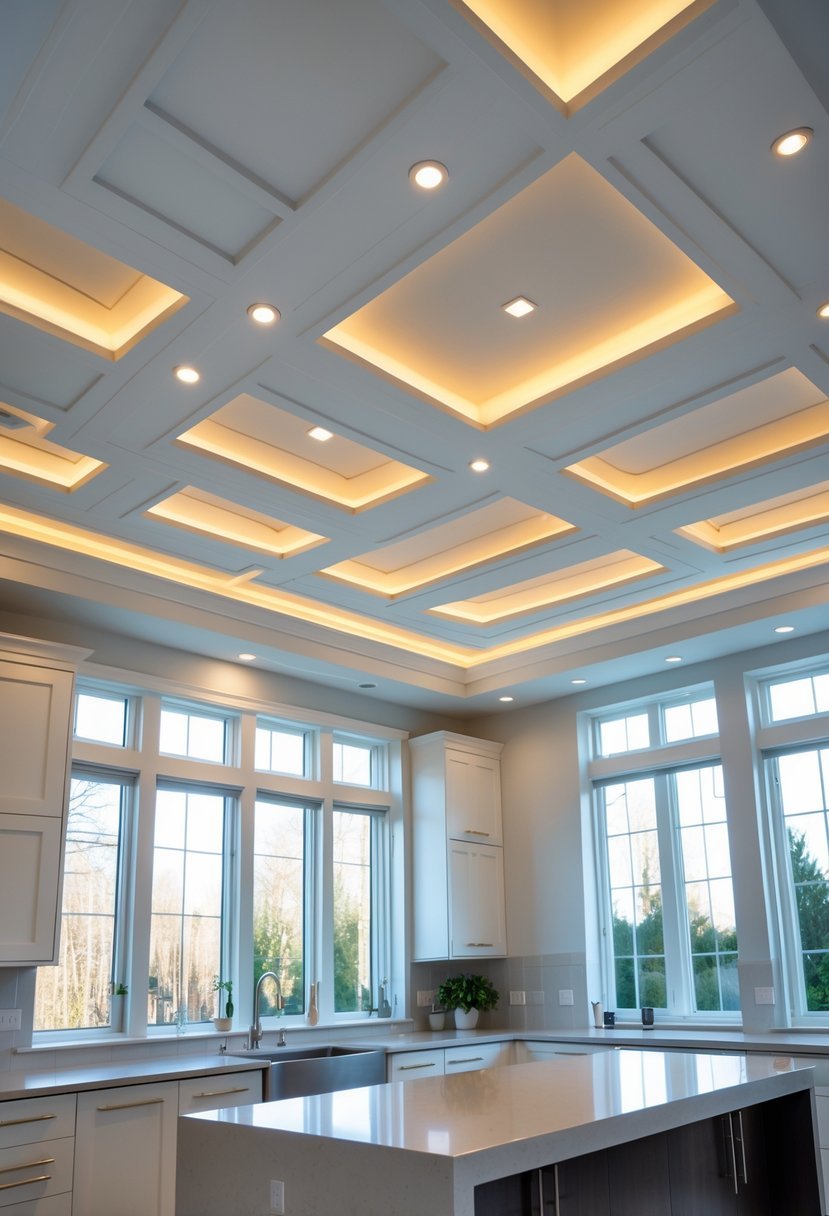
I find coffered ceilings create a striking architectural detail in modern kitchens.
Their grid-like pattern of recessed panels adds depth without overwhelming the space.
Pairing coffered ceilings with recessed lighting enhances both form and function.
The lights fit neatly into the panels, providing focused illumination for cooking tasks.
This combination also offers subtle ambient light that softens the room.
It blends classic design with modern practicality, making the kitchen feel open yet refined.
2) Exposed wooden beams painted white
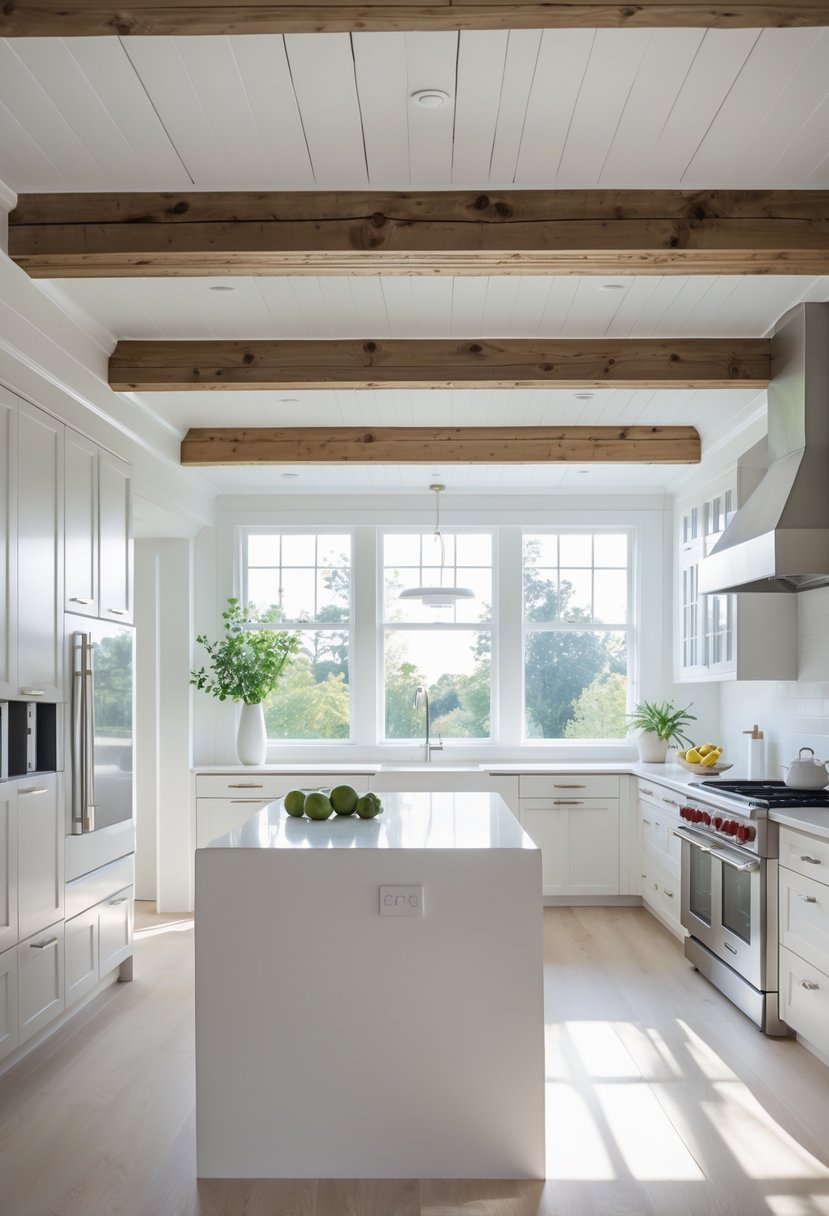
I find that painting exposed wooden beams white adds a sleek, modern touch while preserving their architectural interest.
It brightens the space and creates a clean contrast with ceilings or walls in complementary colors.
White beams soften the heaviness often associated with raw wood, making the kitchen feel more open and airy.
This approach works well in both minimalist and transitional kitchen styles.
By choosing white, I maintain the texture and form of the beams, allowing them to frame the kitchen subtly.
It’s a smart way to balance warmth and a fresh, contemporary look without overwhelming the room.
3) Glossy high-gloss stretch ceilings
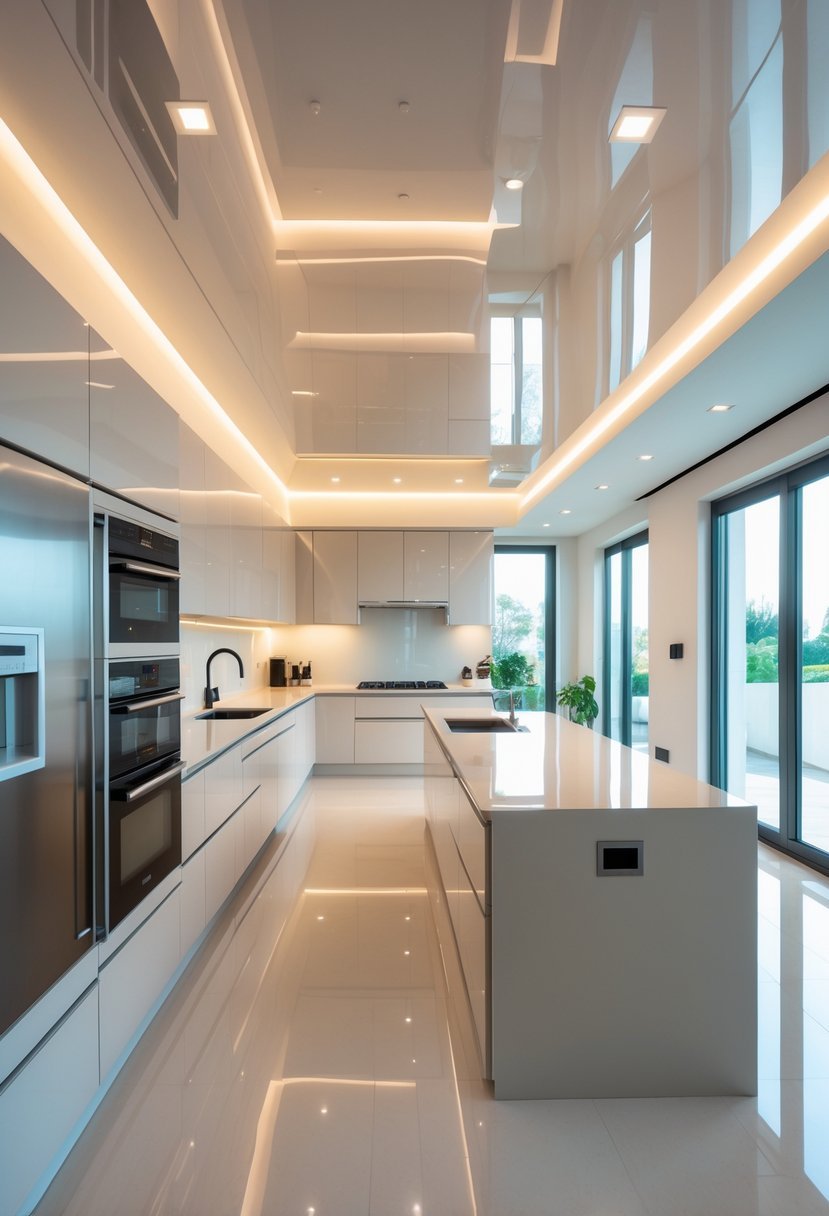
I find high-gloss stretch ceilings to be a sleek and modern option for kitchen design.
They create a smooth, reflective surface that enhances light and makes the room feel more spacious.
This finish works well in contemporary kitchens where clean lines and brightness are priorities.
The ceiling is made from a tensioned membrane stretched over a frame, which allows for a flawless look.
It’s practical too, as it’s easy to clean and resistant to moisture, making it suitable for kitchen environments.
Adding LED strip lighting can further amplify the glossy effect, bringing warmth without compromising the modern appeal.
4) Integrated LED strip lighting
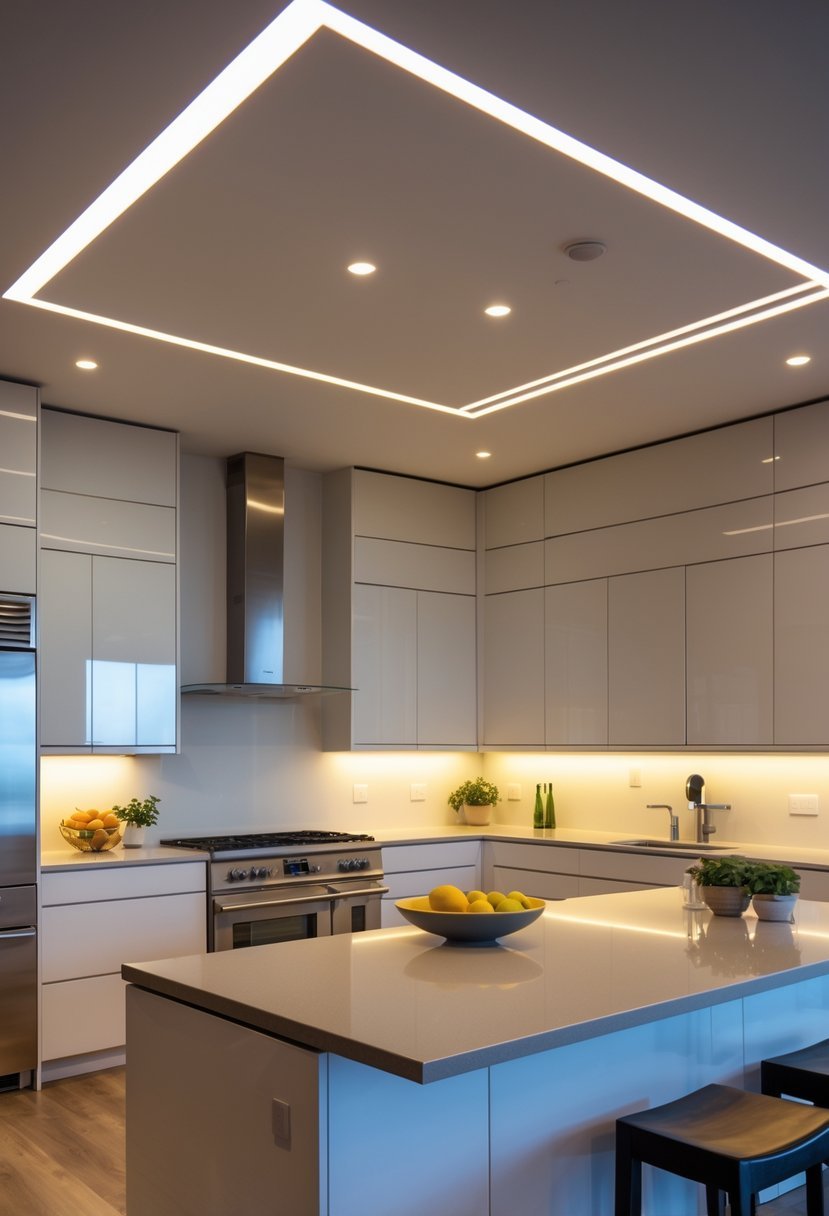
I find integrated LED strip lighting to be one of the most versatile options for modern kitchen ceilings.
These lights fit seamlessly into false ceilings or coves, providing a clean, contemporary look without bulky fixtures.
They create a subtle glow that highlights architectural features without overpowering the space.
I especially like how they can be installed to accent wooden paneling or sleek surfaces, adding warmth and depth.
LED strips also offer practical benefits.
They are energy-efficient and provide even illumination that helps brighten the kitchen without harsh shadows.
For me, this combination of style and function makes integrated LED strips an excellent choice in kitchen ceiling design.
5) Metal grid ceilings with geometric patterns
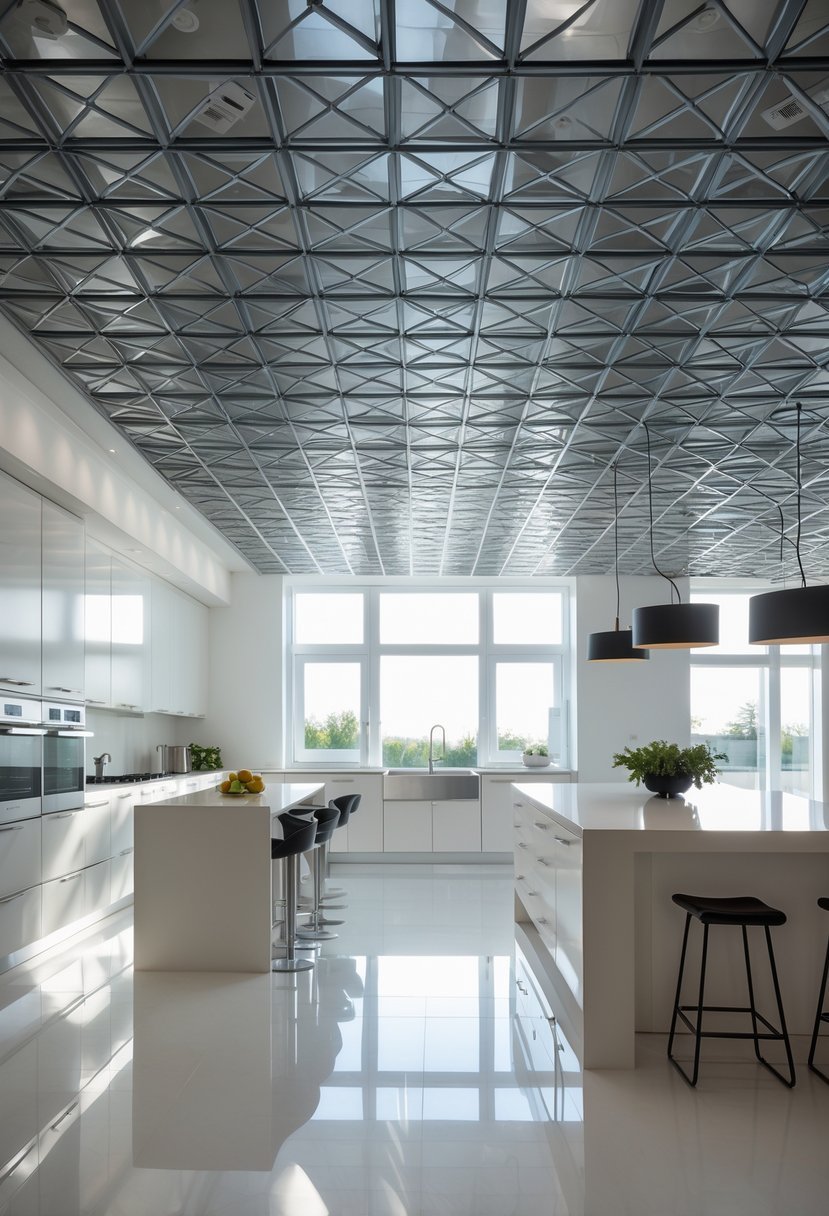
I appreciate how metal grid ceilings bring a crisp, modern edge to kitchen spaces.
The geometric patterns, often featuring sharp lines and repeated shapes, add structure without overwhelming the room.
The metal grids not only look sleek but also create interesting plays of light and shadow.
This effect can enhance the room’s depth and texture subtly.
I find that these ceilings work well in both minimalist and industrial-inspired kitchens.
Their durability and ease of maintenance are practical benefits that make them a solid choice too.
Using metal grid ceilings with geometric designs can elevate the ceiling into a focal point, balancing style with function effortlessly.
6) Textured plaster finishes
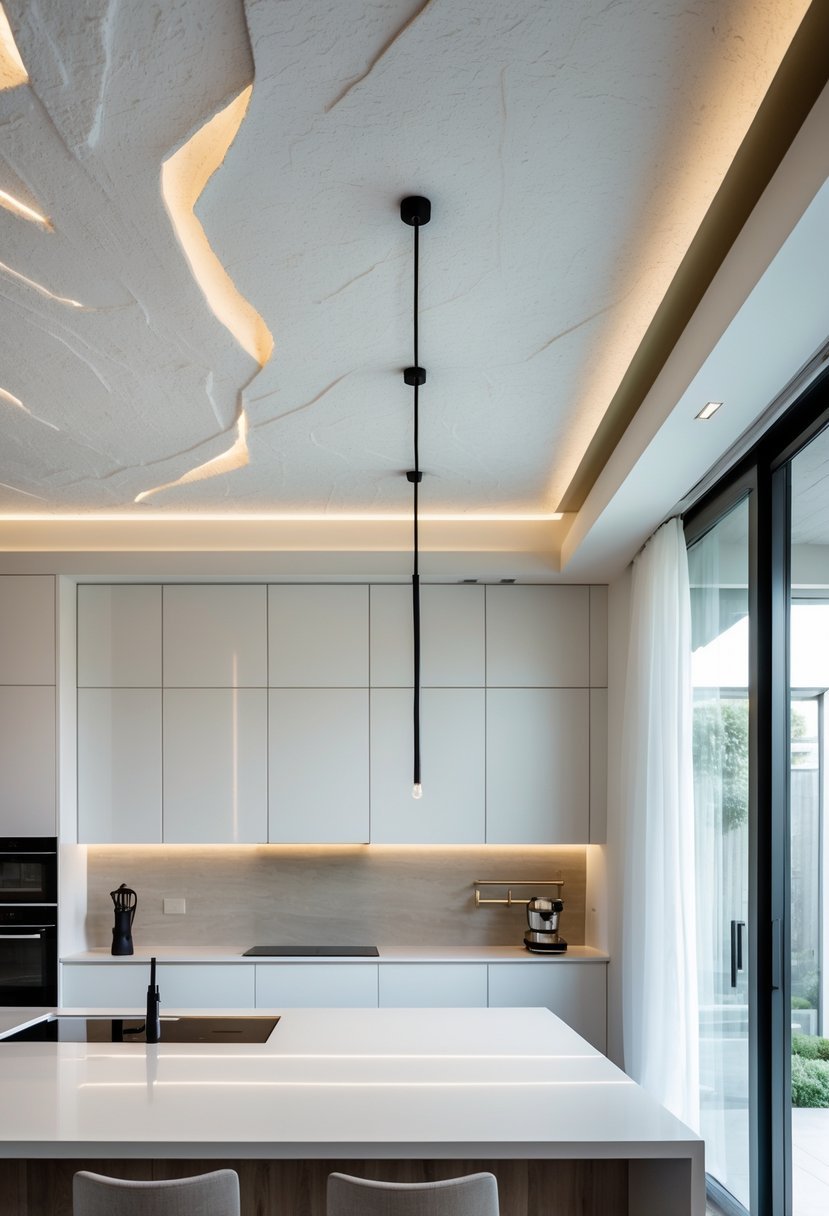
I find textured plaster finishes add depth and character to modern kitchen ceilings.
They work well with various styles, from sleek minimalist to more intricate geometric patterns.
Plaster allows for customization in texture and layering, making it possible to create unique surfaces that catch light in interesting ways.
This can enhance the visual appeal without overwhelming the space.
In addition, plaster finishes can subtly improve acoustics by softening sound reflections.
For me, that balance of aesthetics and function makes textured plaster an excellent choice for kitchen ceilings.
7) Vaulted ceilings with skylights
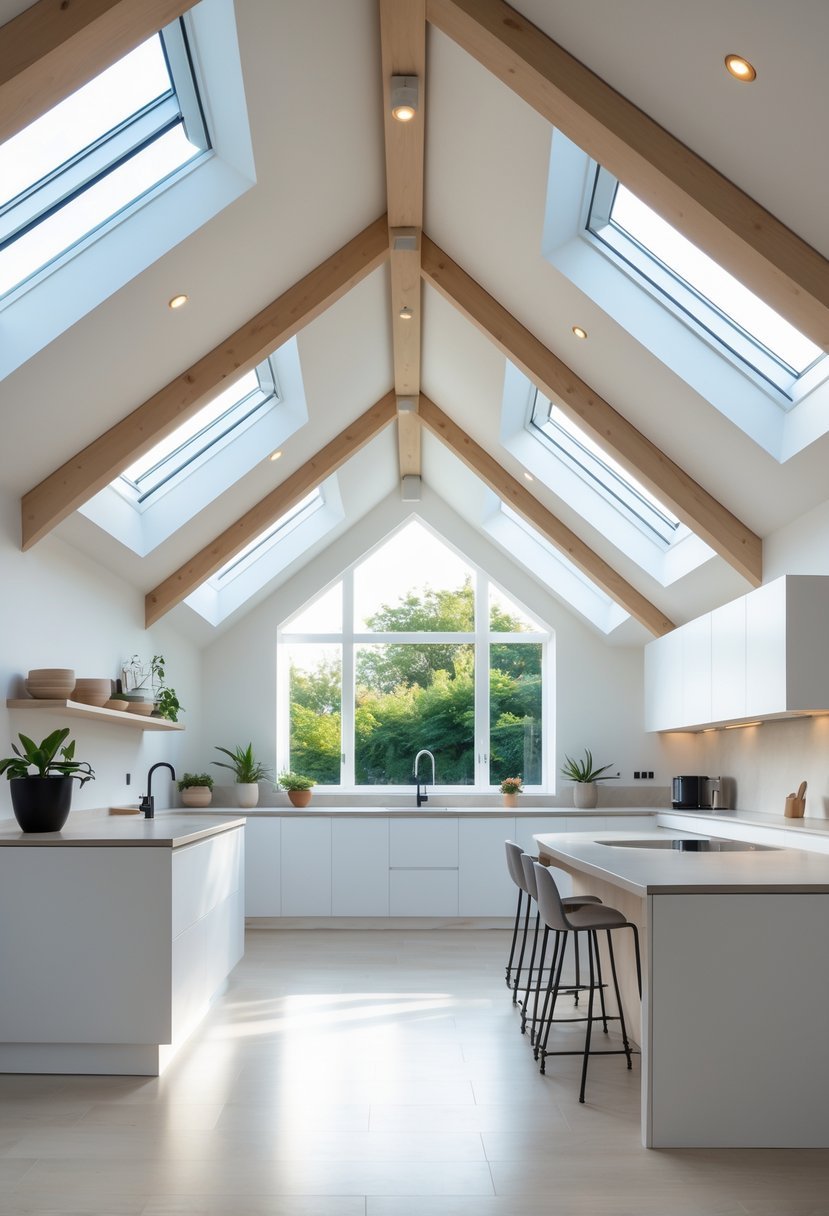
I find vaulted ceilings with skylights to be an excellent way to open up a kitchen and invite abundant natural light.
The height adds spaciousness, while skylights bring light directly from above, making the room feel brighter and more inviting.
In my experience, this combination works well with modern kitchens that emphasize clean lines and open layouts.
Pendant lighting often complements vaulted ceilings nicely, adding both function and style without overcrowding the space.
Using materials like exposed beams or whitewashed finishes can highlight the architectural features without overwhelming the kitchen design.
Skylights not only improve light but can also help with ventilation, enhancing comfort during cooking.
8) Floating ceiling panels
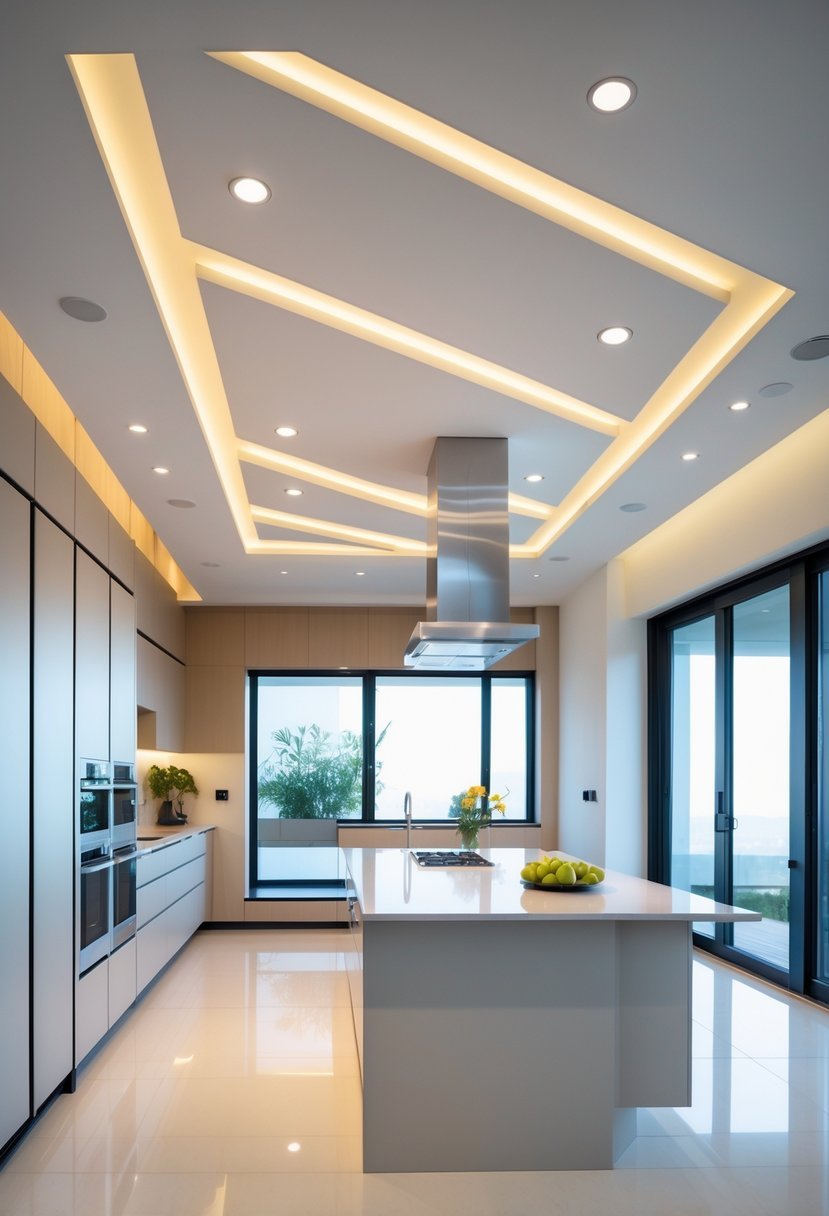
I find floating ceiling panels offer a sleek, modern look that adds depth to any kitchen.
The panels appear to hover below the main ceiling, creating a layered effect that can define the space without overwhelming it.
In my experience, these panels work well with integrated LED or cove lighting.
The soft glow highlights the design and adds ambient light, making the kitchen feel inviting and contemporary.
Maintenance is simple since the panels are modular.
If needed, you can easily access wiring or fixtures above without major disruptions.
For a minimalist or elegant style, floating panels are a smart choice.
9) Wood slat ceilings with concealed lights
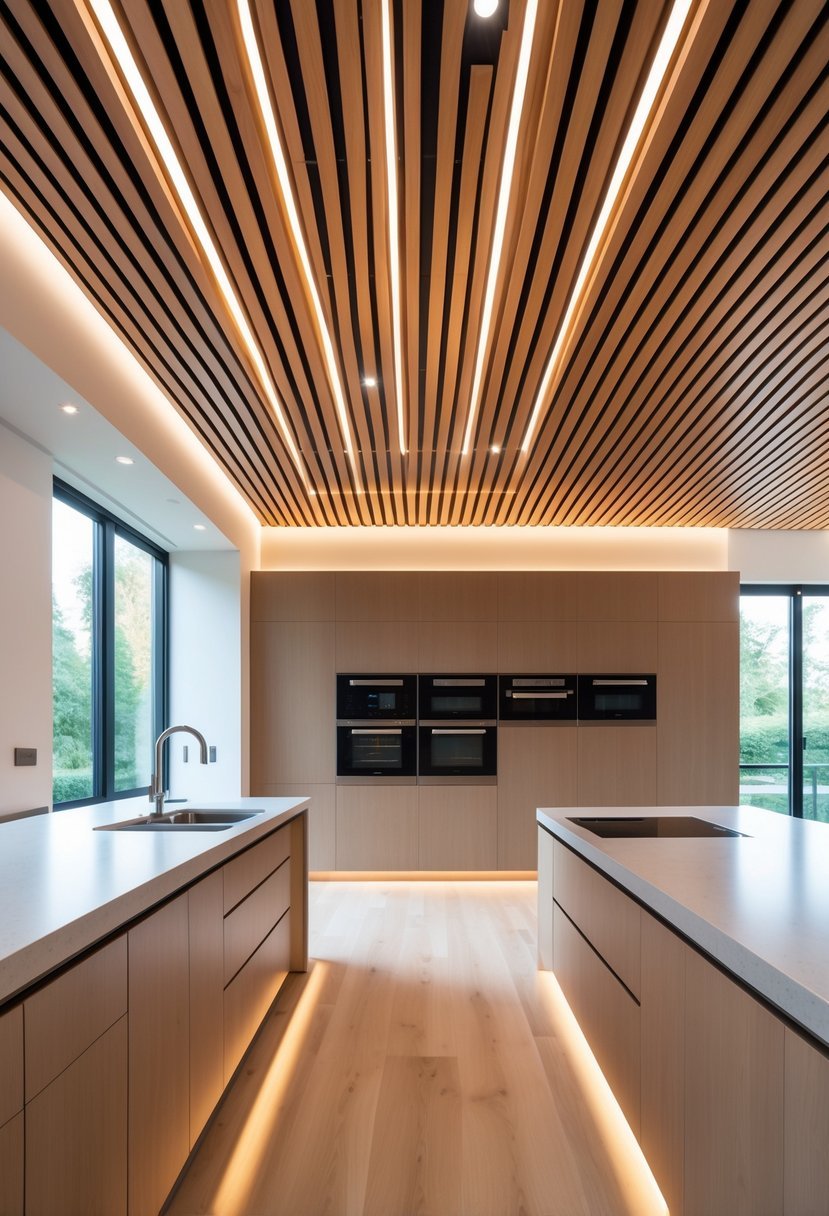
I appreciate how wood slat ceilings bring warmth and texture to a kitchen without overwhelming the space.
Adding concealed lighting behind the slats creates a soft, ambient glow that enhances the natural tones of the wood.
This combination not only highlights the ceiling’s architectural detail but also improves the kitchen’s overall lighting.
The hidden lights reduce glare and create a calm atmosphere, perfect for cooking or dining.
I find that this design merges modern functionality with timeless materials.
It’s a subtle way to add interest and depth to your ceiling while maintaining a clean, streamlined look.
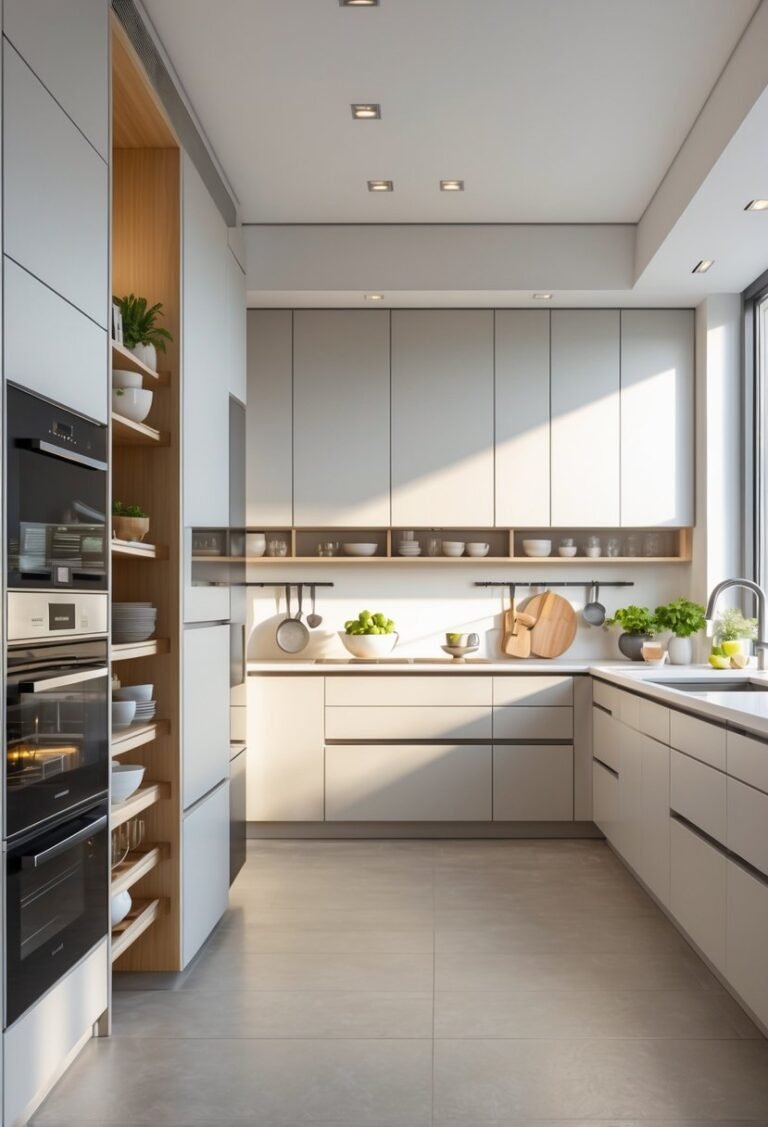
10) Minimalist flat ceilings with spotlights
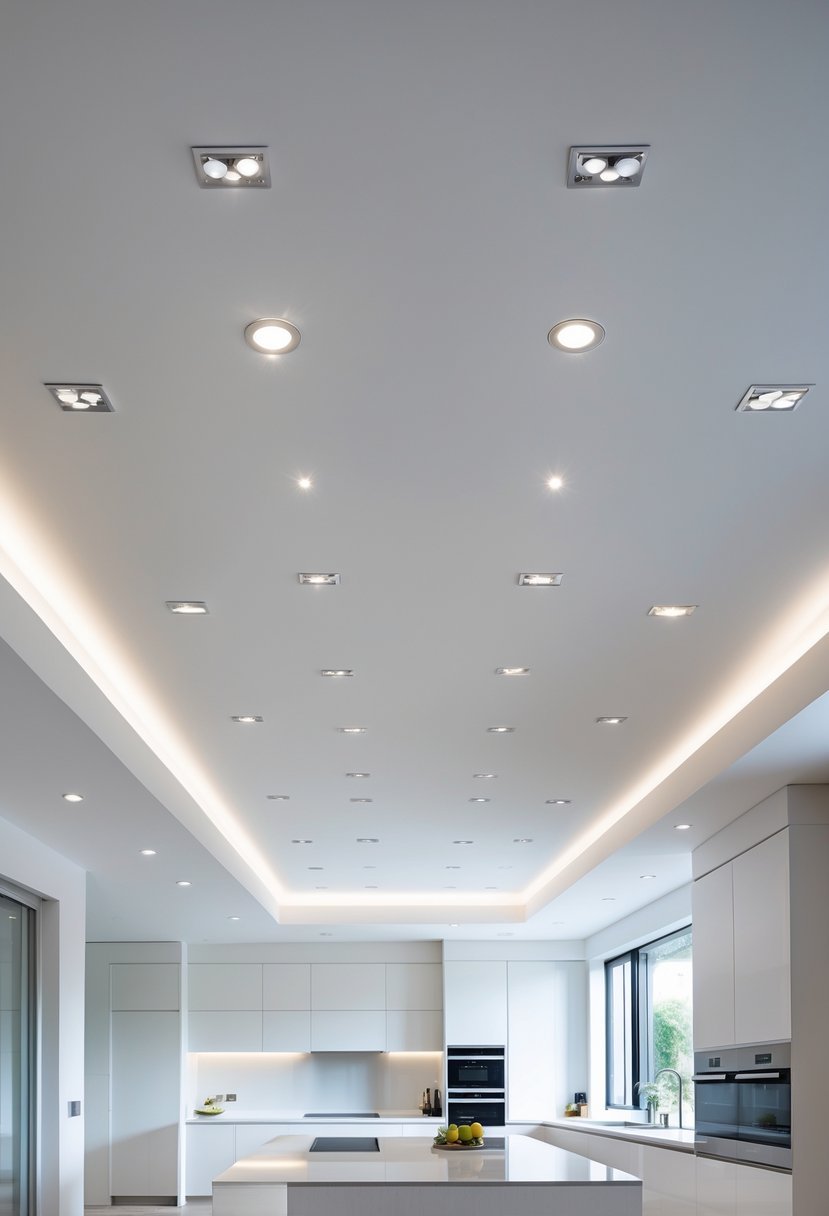
I appreciate how minimalist flat ceilings create a clean and uncluttered look in the kitchen.
The simplicity of a smooth, flat surface helps maintain a sense of openness and calm.
Spotlights integrated into the ceiling add focused lighting without disrupting the sleek design.
They provide practical illumination where I need it most, like over countertops or the cooking area.
This design suits modern kitchens well, balancing function and style.
It avoids unnecessary ornamentation while offering flexibility in lighting arrangements.
For me, it’s an effective way to keep the ceiling subtle but thoughtfully designed.
11) Suspended ceilings with acoustic panels
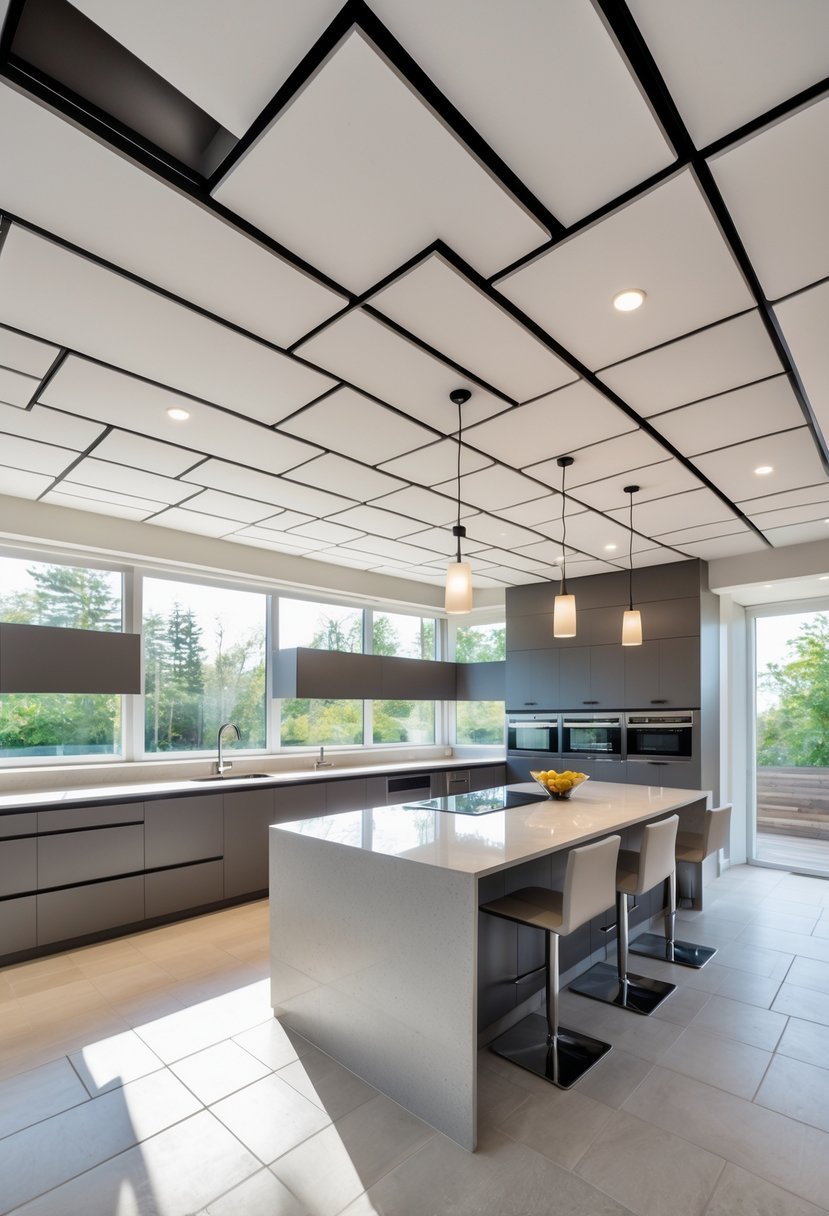
I find suspended ceilings with acoustic panels to be a practical choice for modern kitchens.
They effectively reduce noise and echo, which is especially helpful in busy cooking spaces.
The modular design makes maintenance easier, allowing quick access to plumbing or wiring above the ceiling.
I also appreciate how integrated lighting can be seamlessly installed within these ceilings to enhance the overall look.
Using materials like wood or metal acoustic panels adds texture and style, creating depth in the kitchen.
This combination of functionality and design makes suspended acoustic ceilings a smart way to improve both comfort and aesthetics.
12) Black matte painted ceilings
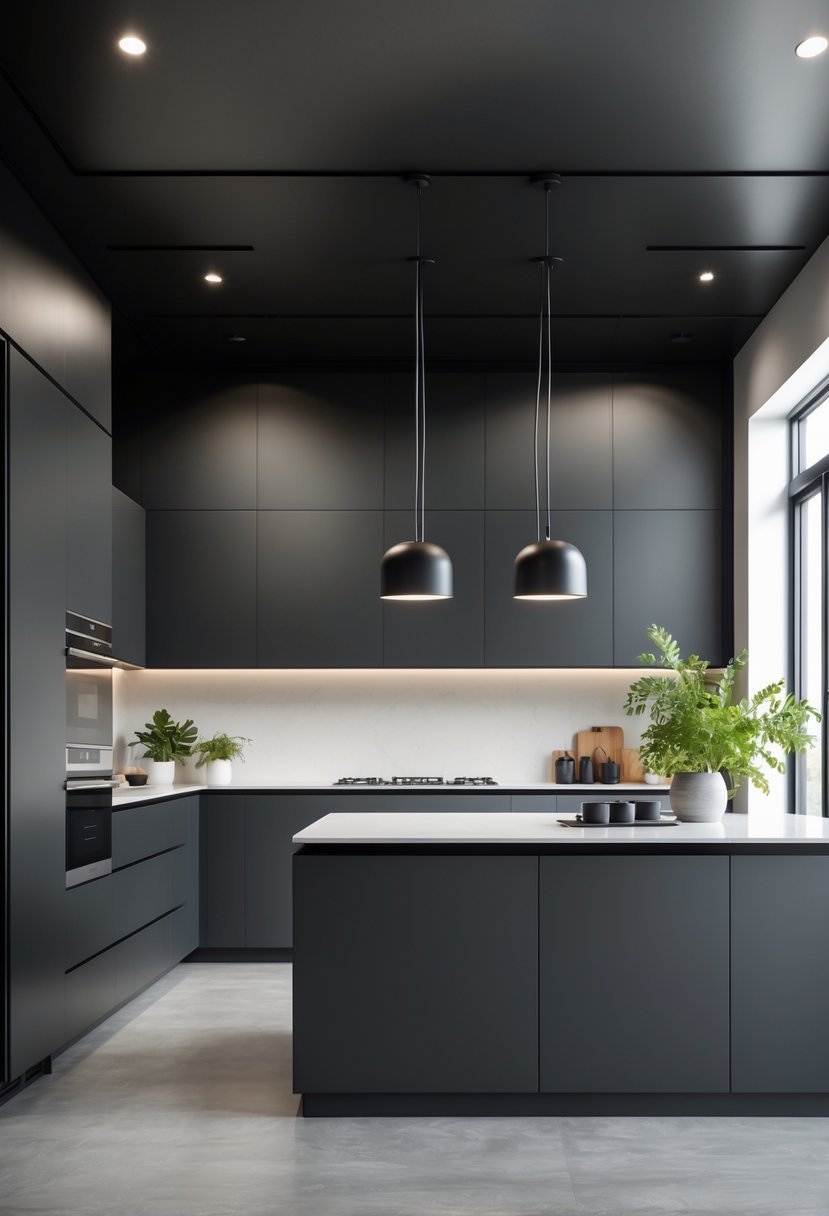
I find black matte ceilings bring a subtle elegance to modern kitchens.
The non-reflective finish reduces glare, creating a calming atmosphere that balances bold fixtures and cabinetry.
This finish works well to define the kitchen space, especially when paired with lighter walls or wooden beams.
It adds depth without overwhelming the room, making it feel both cozy and sophisticated.
Lighting is crucial with black matte ceilings.
Properly positioned lights can enhance the ceiling’s texture and prevent the space from feeling too dark or cramped.
This design choice suits those who prefer understated yet impactful details.
13) Mirrored ceiling tiles
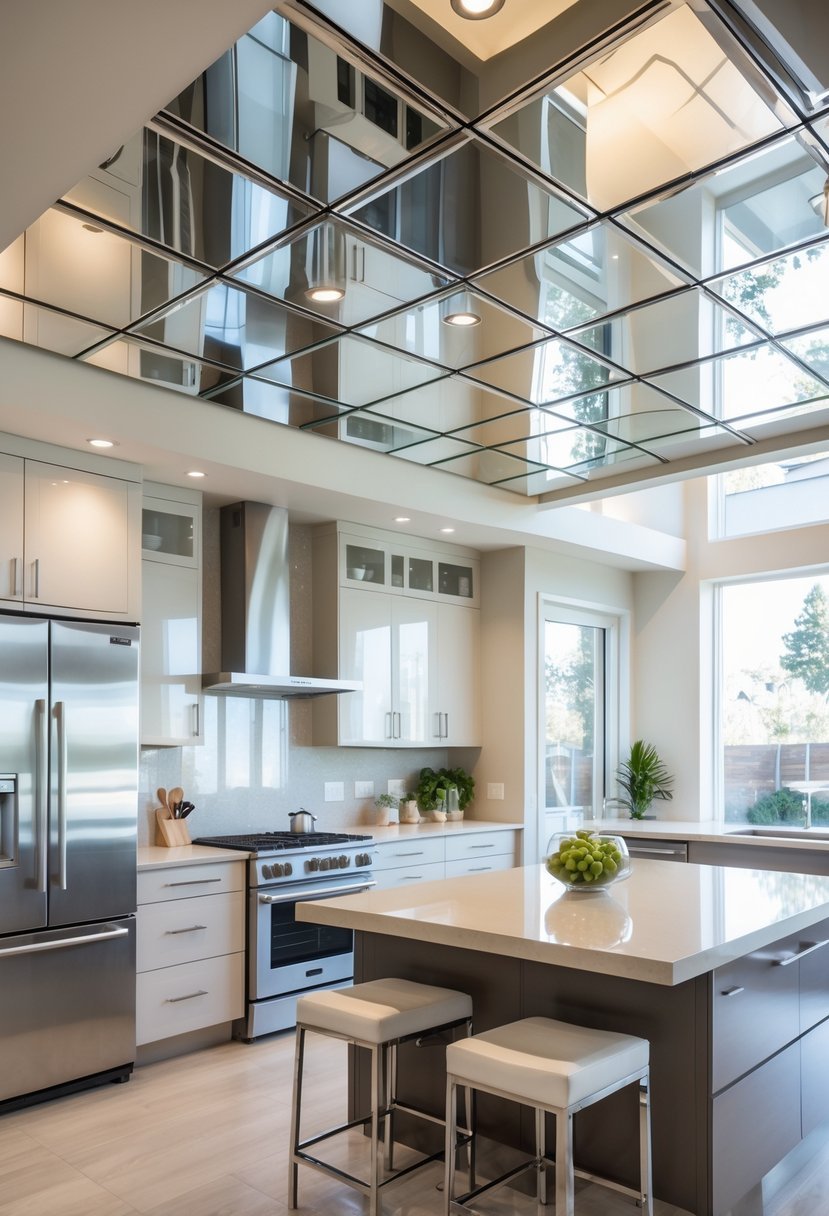
I find mirrored ceiling tiles to be an effective way to brighten a kitchen.
They reflect natural and artificial light, making the space feel larger and more open.
Installing adhesive mirror panels is simple and adds a modern touch without major renovations.
This design works especially well in smaller kitchens where enhancing light is key.
Mirrored ceilings also bring a unique aesthetic, blending functionality with style.
I appreciate how they turn the ceiling into a subtle focal point, elevating the overall kitchen atmosphere.
14) Industrial concrete finish ceilings
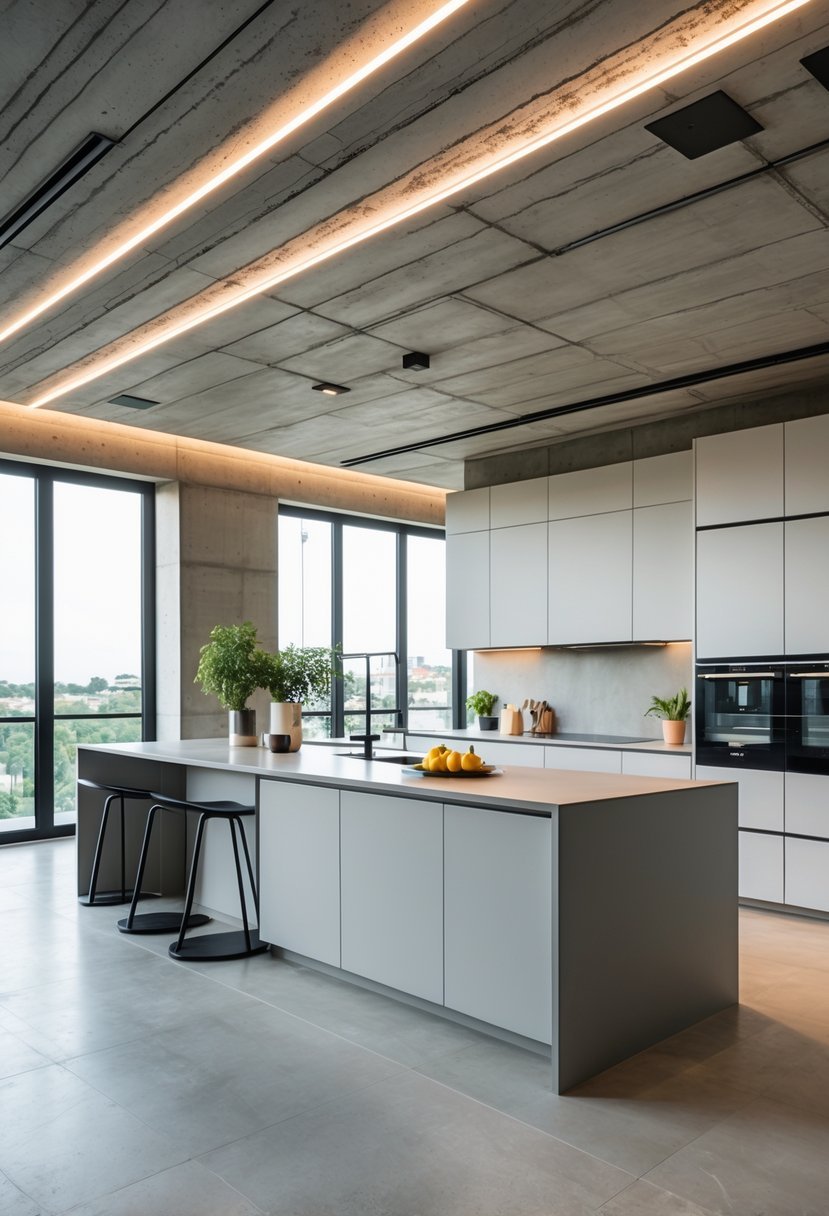
I find industrial concrete finish ceilings to be a strong choice for modern kitchens.
They add a raw texture and robustness that supports an industrial aesthetic without overwhelming the space.
The concrete’s natural gray tone works well with black cabinets or wood accents, creating a balanced look.
This type of ceiling also emphasizes structural elements, making the kitchen feel spacious and open.
High ceilings paired with concrete finishes bring in an urban, loft-like vibe.
I appreciate how versatile concrete is; it complements both minimalist and more rustic kitchen designs effectively.
Lighting plays a key role here—I usually recommend installing modern fixtures that contrast with the rough texture for a sleek finish.
15) Glass ceiling panels for open feel
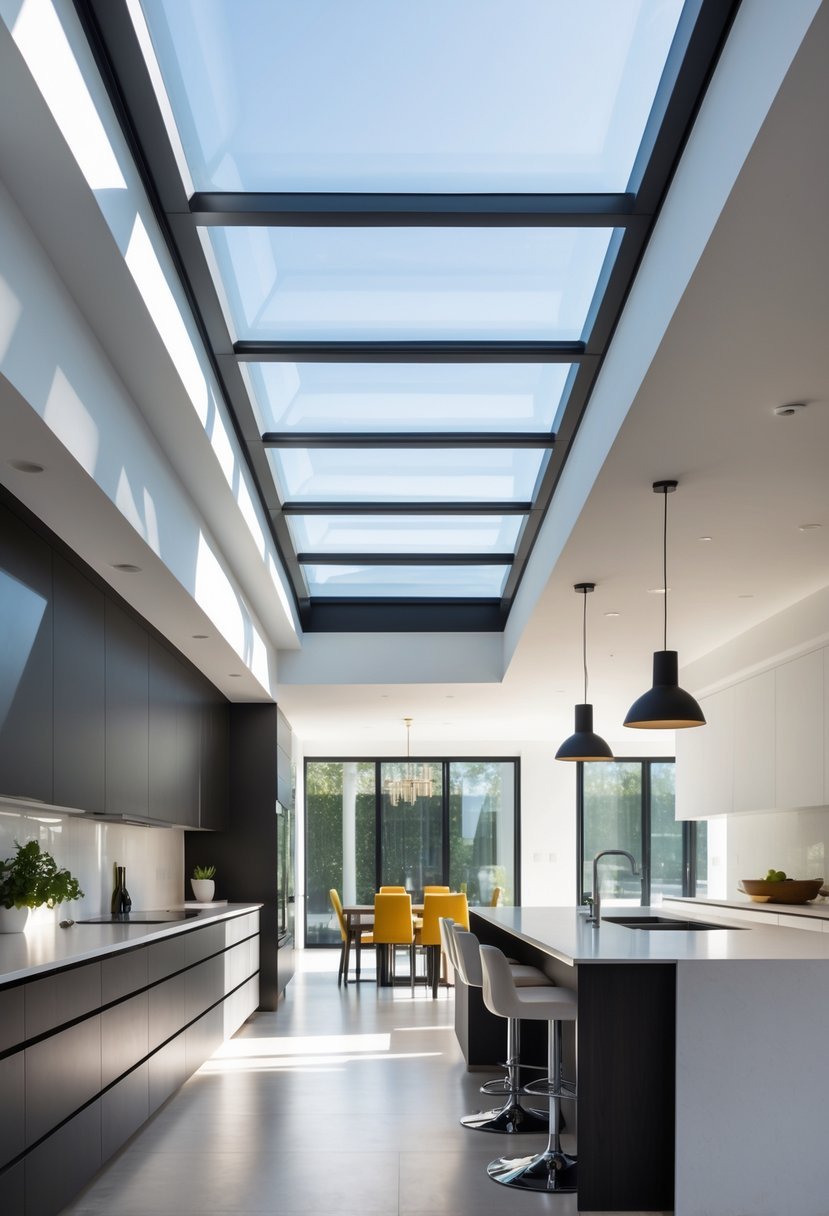
I find glass ceiling panels a smart choice to create an open, airy atmosphere in the kitchen.
They allow natural light to flow freely, making the space feel larger and brighter without adding clutter.
Using frosted or stained glass can add subtle texture while maintaining privacy.
This design also works well if you want to visually separate areas without closing them off.
In my experience, glass panels blur boundaries between indoor and outdoor spaces, enhancing the kitchen’s connection to the home and nature.
The result is a sleek, modern look that remains functional and easy to maintain.
16) Bold color accent ceilings
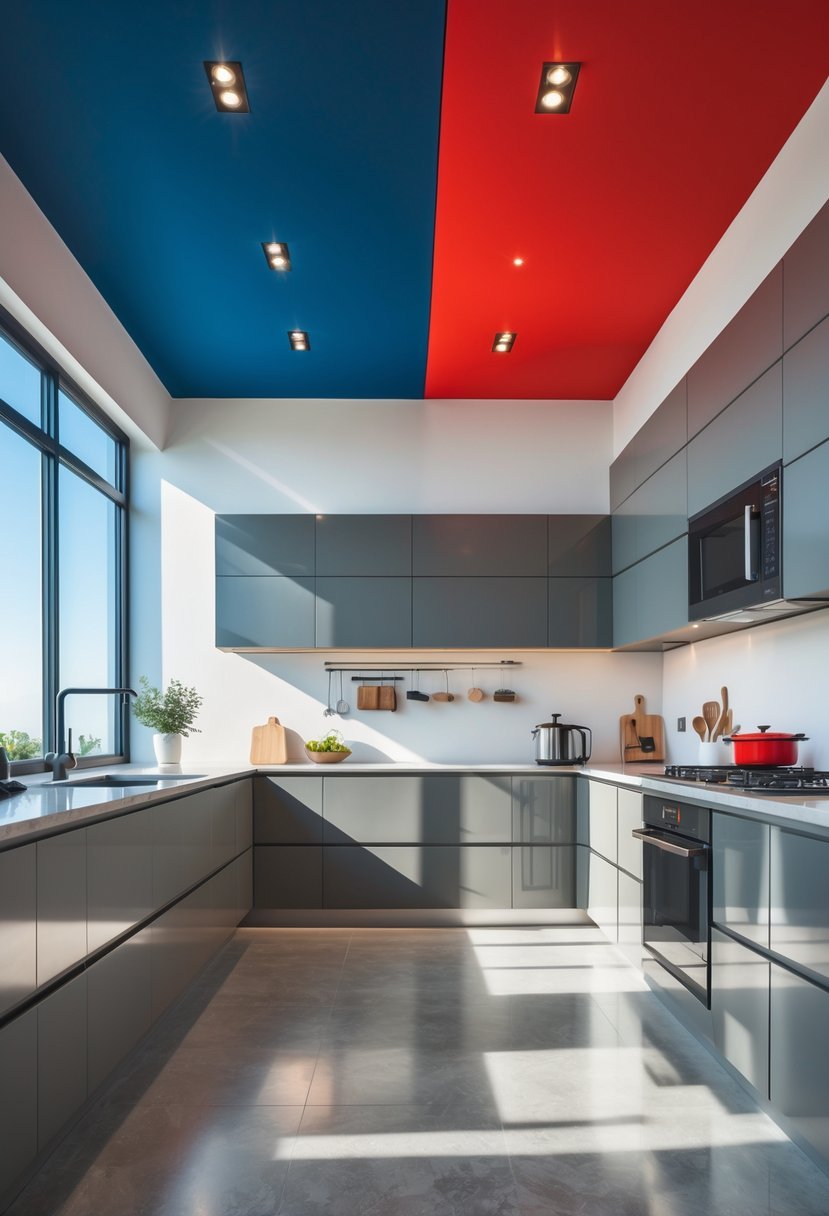
I find bold color accent ceilings a powerful way to add personality to a kitchen. Choosing a vibrant hue can turn an often overlooked surface into a focal point.
In smaller kitchens, a high-gloss or bright ceiling color can reflect light and make the space feel more dynamic. It works well when coordinated with cabinetry or decor elements for a balanced look.
Bold colors don’t have to overwhelm the room. Even a deep blue or rich green can offer depth without clashing.
17) Laser-cut metal panels
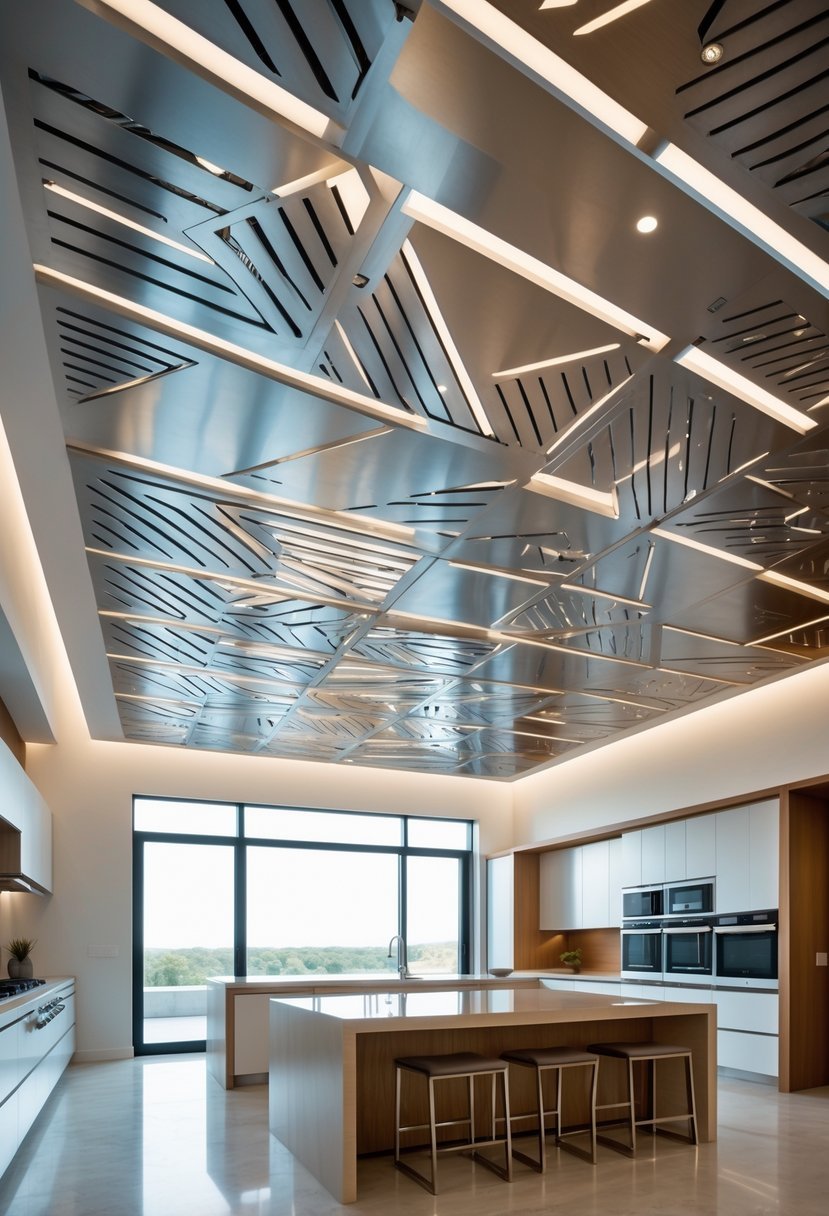
I appreciate how laser-cut metal panels bring a sleek, modern element to kitchen ceilings. They offer a balance between form and functionality, allowing light to diffuse softly while adding texture and depth.
These panels come in a variety of designs, from geometric patterns to organic shapes, which means you can easily customize them to suit your kitchen’s style. I also value their durability and low maintenance, especially in busy kitchen environments.
Beyond aesthetics, laser-cut metal can help with acoustics, reducing noise and echo.
18) Combination of wood and metal trim
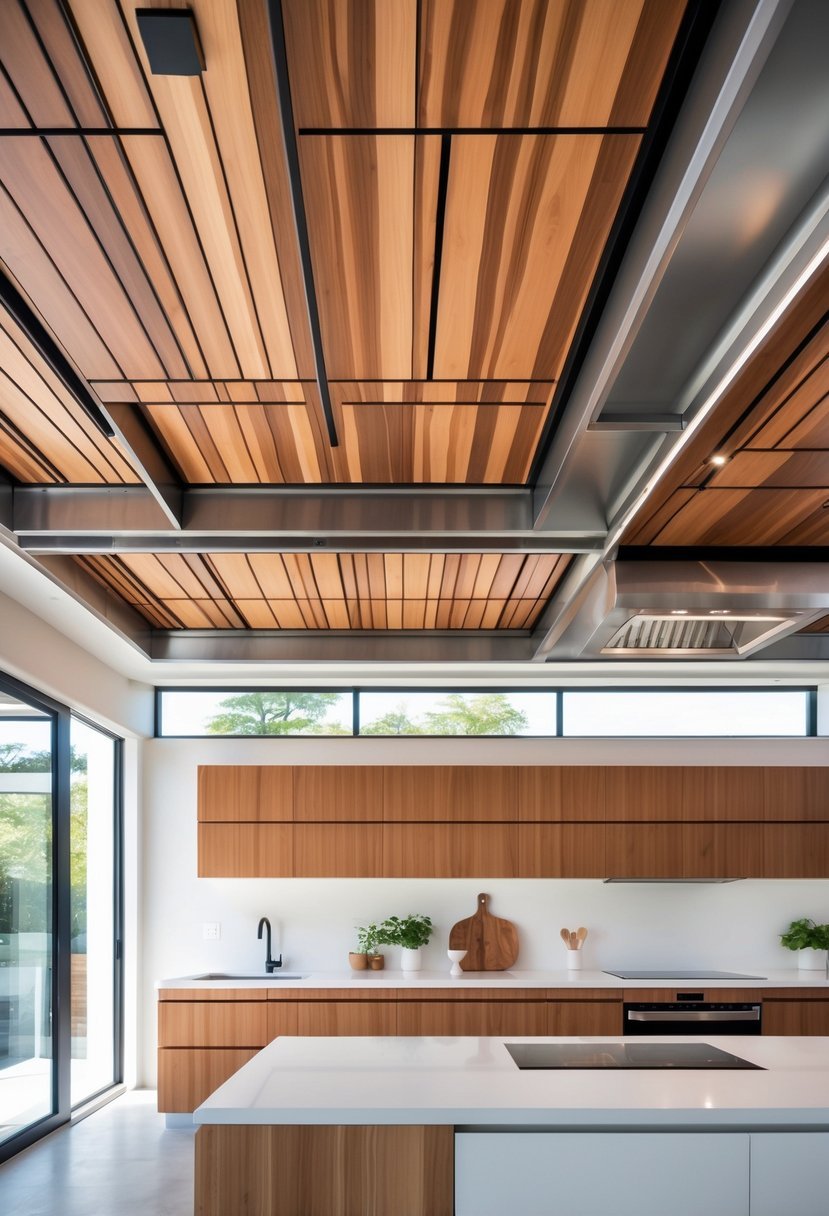
I find that combining wood and metal trim in kitchen ceilings creates an interesting contrast. The warmth of wood pairs well with the sleekness of metal, adding depth to the space.
Using metal accents along wood beams or edges can highlight architectural details without overwhelming the room. It adds a subtle industrial touch while maintaining a modern aesthetic.
This mix works well in both minimalist and more textured designs.
19) Hidden ventilation integrated ceilings
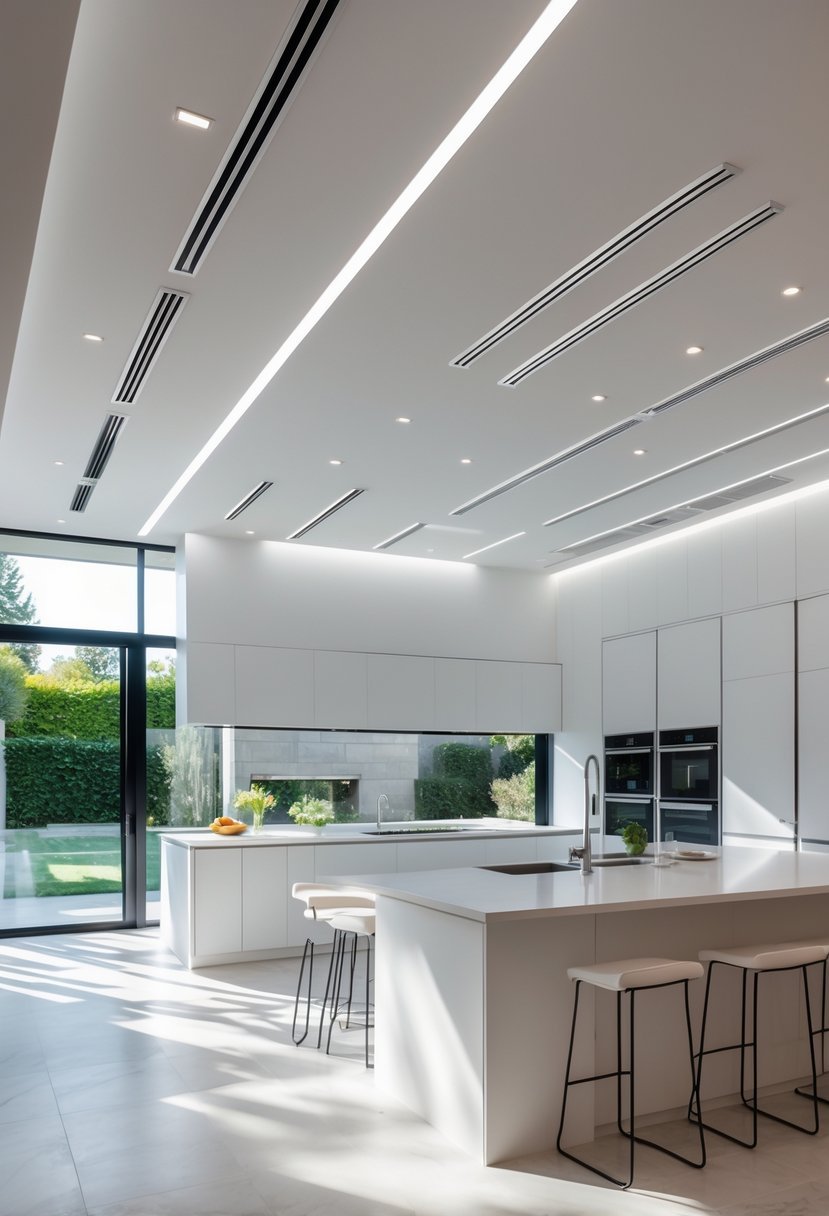
I appreciate how hidden ventilation integrated ceilings keep the kitchen design sleek and uncluttered. By concealing range hoods and vents within the ceiling, these systems maintain a consistent visual flow.
This approach works well with various styles, from modern to rustic, because the ventilation doesn’t interrupt the overall aesthetic. It also improves air circulation efficiently without bulky fixtures.
Installing concealed ventilation requires careful planning to ensure proper airflow and easy maintenance access.
20) Curved drywall ceilings
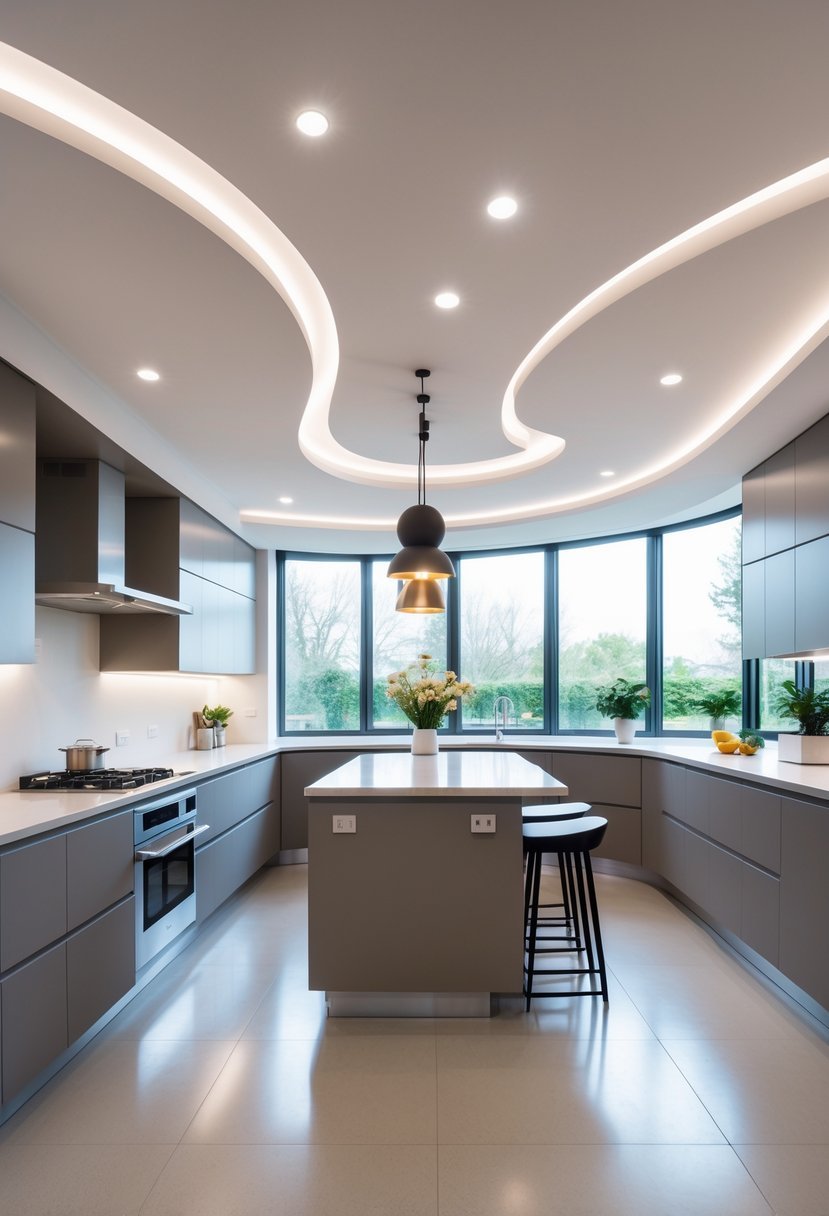
Curved drywall ceilings offer a unique way to soften the look of a kitchen. Their gentle, flowing lines can add subtle movement and break away from traditional flat surfaces.
These ceilings work well in modern kitchens. Pairing them with hidden LED lighting that follows the curve creates a smooth, continuous glow that enhances the room’s atmosphere. Installing curved drywall requires precision. The result can be a striking architectural feature.
Conclusion
As you plan your renovation, remember that the most impactful interiors are those that utilize every inch of available surface area. These modern kitchen ceiling design ideas demonstrate that you don’t need cathedral heights to make a dramatic statement; you simply need creativity.
Whether you chose a subtle tray ceiling to hide ventilation or a bold color block to define the cooking zone, your choice effectively anchors the room. We hope this gallery has emboldened you to take a risk and move beyond plain white drywall. Now, it is time to look up, visualize the possibilities, and give your kitchen the polished, high-end finish it has been missing.