21 Mediterranean Kitchen Design Ideas For Timeless Style
Are you tired of grey cabinets and stainless steel everything? It might be time to look south for inspiration. Mediterranean kitchen design is a celebration of texture, color, and craftsmanship. It’s a style defined by natural materials—think rough-hewn wooden beams, cool limestone floors, intricate wrought iron, and vibrant patterned tiles.
Whether you lean more towards the deep ochres of a Tuscan villa or the bright whites and blues of a Greek island, this aesthetic creates a space that feels grounded and alive. In this list, we are exploring 21 stunning ways to incorporate these timeless elements into your modern home.
Mediterranean kitchen design has become a popular choice for those seeking a warm and inviting space that blends natural materials with timeless elegance.
The appeal lies in its balance of rustic charm and functional comfort, making it suitable for a variety of home styles.
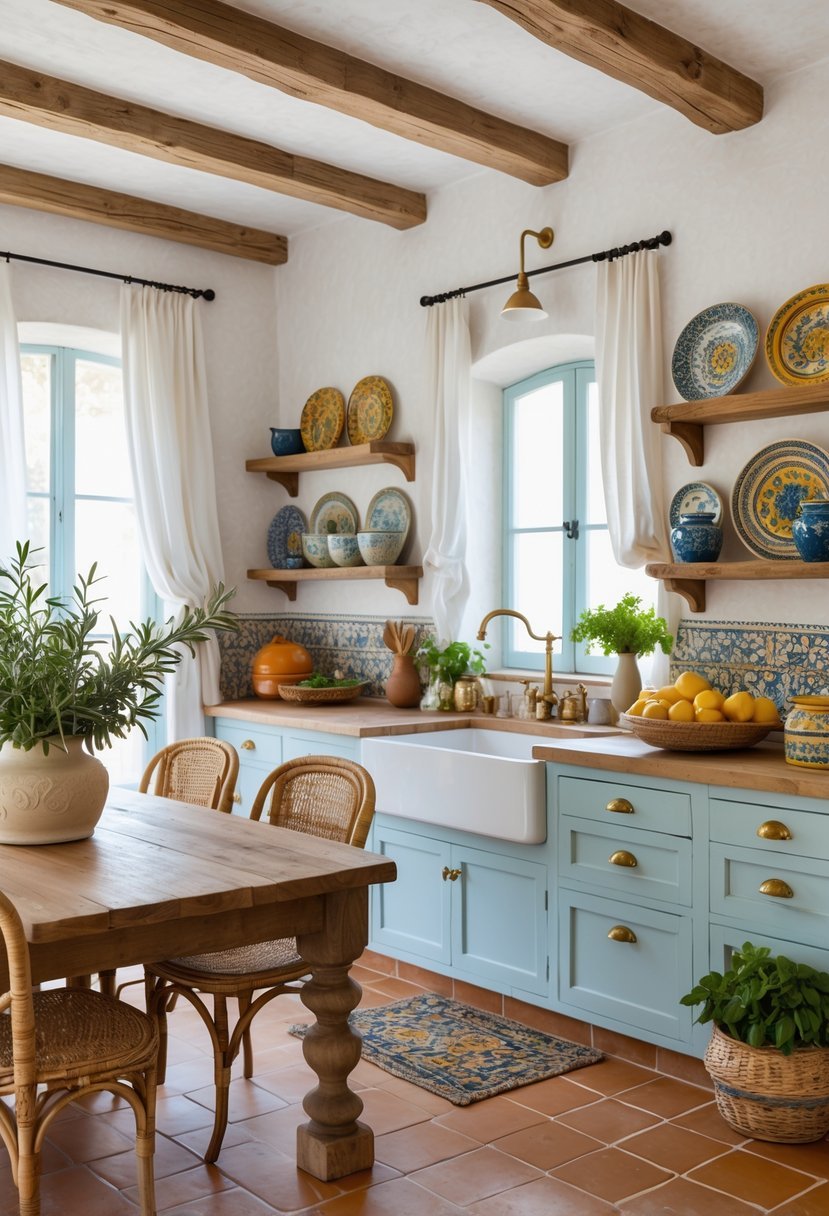
Whether you prefer earthy tones or vibrant accents, these ideas can help you bring a subtle Mediterranean touch to your kitchen.
Table of Contents
1) Terracotta tile flooring for authentic warmth
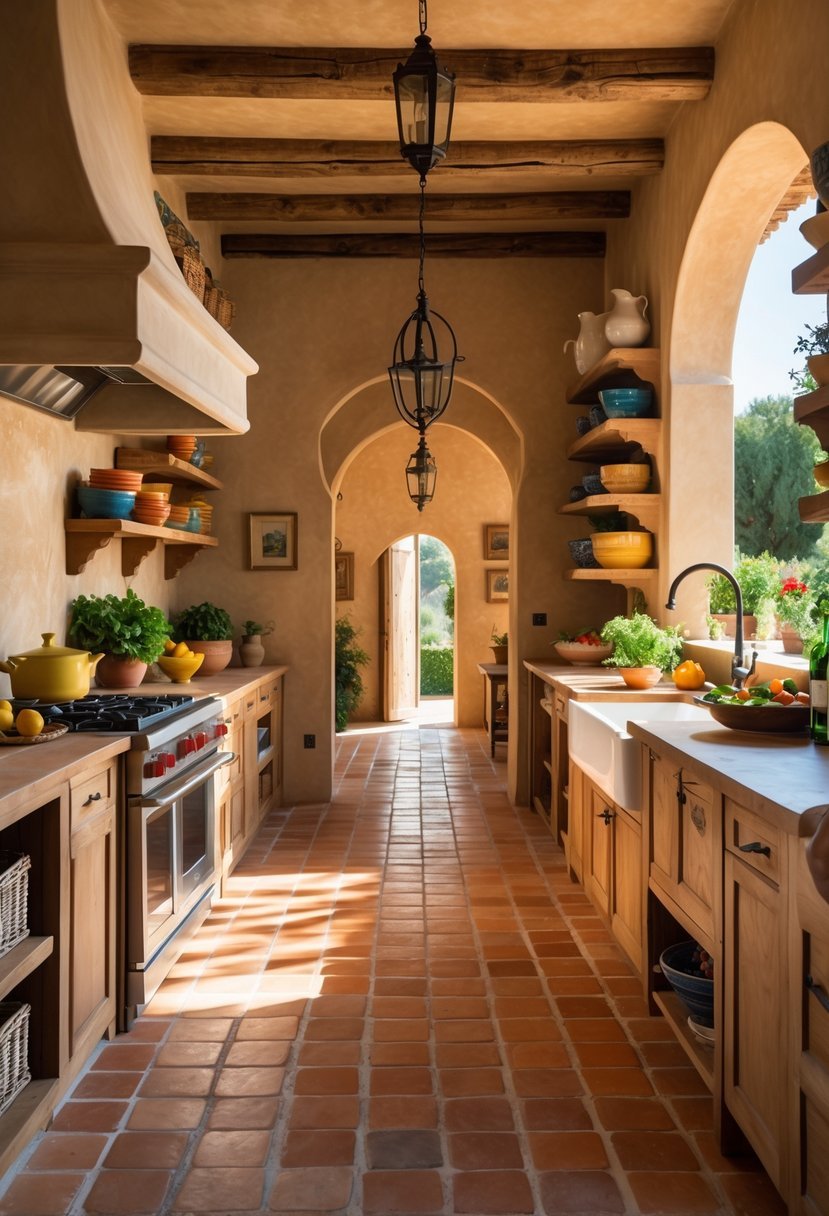
I find terracotta tile flooring essential for achieving an authentic Mediterranean kitchen.
Its natural, earthy tones bring warmth and character that other materials struggle to match.
The handcrafted quality of terracotta tiles adds subtle texture and organic variations, enhancing the room’s rustic charm.
When paired with exposed wooden beams or natural stone countertops, terracotta flooring creates a cohesive, inviting space.
I appreciate how these tiles age gracefully, developing a rich patina that deepens their appeal over time.
Choosing terracotta is not just about style; it’s an investment in timeless durability and genuine warmth for my kitchen.
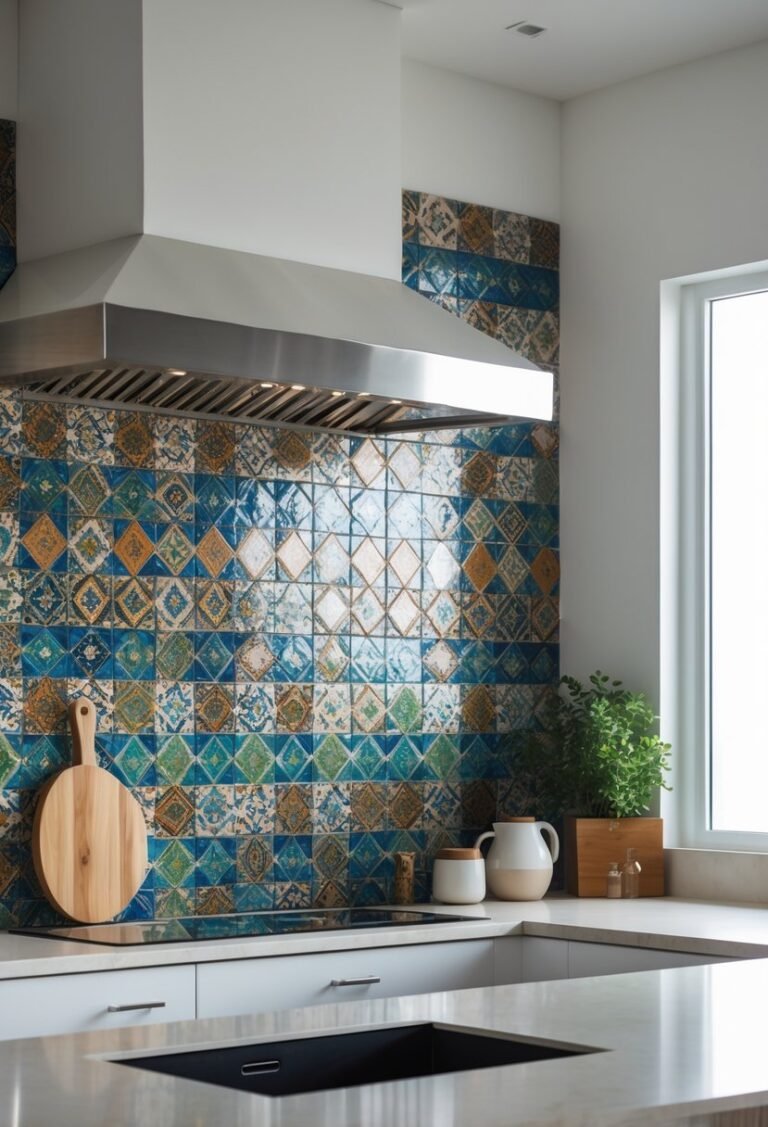
2) Hand-painted ceramic backsplash tiles
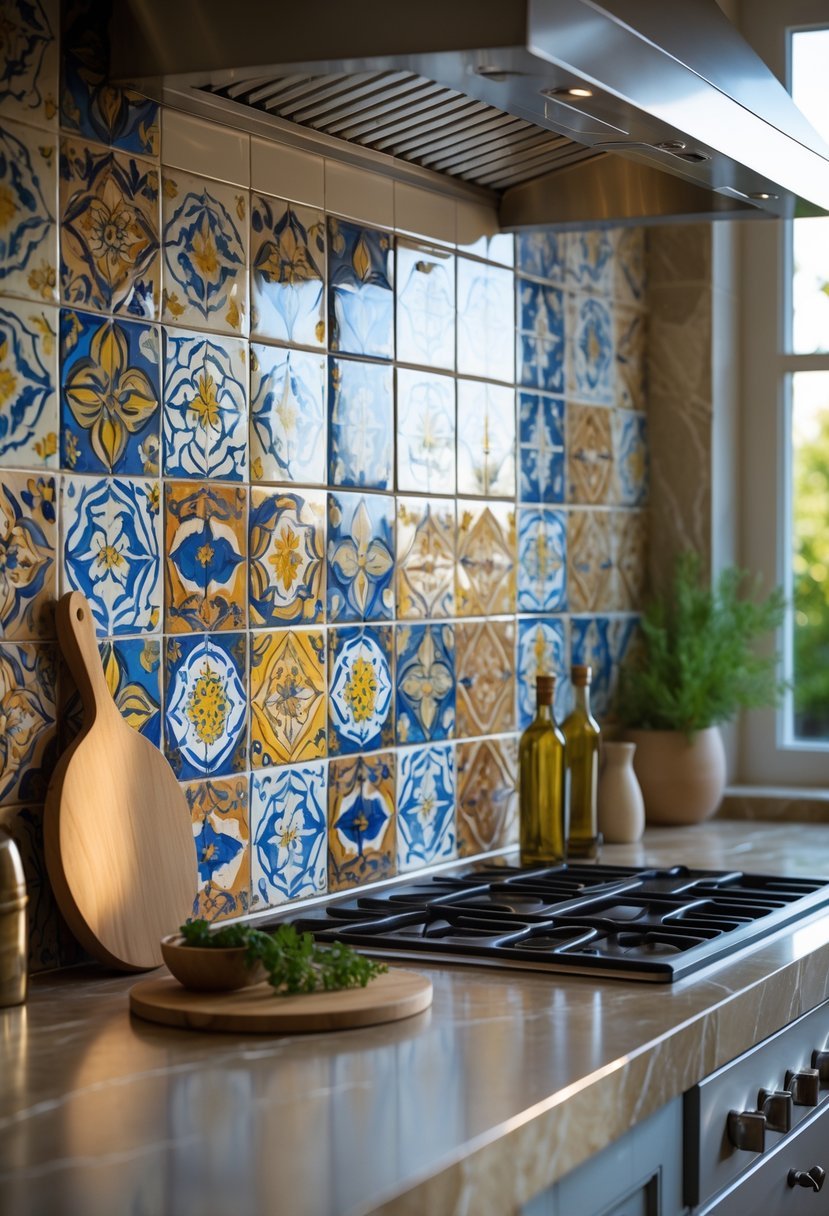
I find hand-painted ceramic tiles bring authentic Mediterranean charm to any kitchen.
Their intricate designs add character and a personal touch that mass-produced tiles often lack.
These tiles are practical too; they are easy to clean and durable enough to handle kitchen wear.
I like how a single hand-painted mural or accent band can transform an ordinary wall into a focal point.
Using hand-painted tiles lets you mix colors and patterns without overwhelming the space.
It’s an effective way to incorporate traditional craftsmanship while keeping the kitchen fresh and practical.
3) Exposed wooden ceiling beams
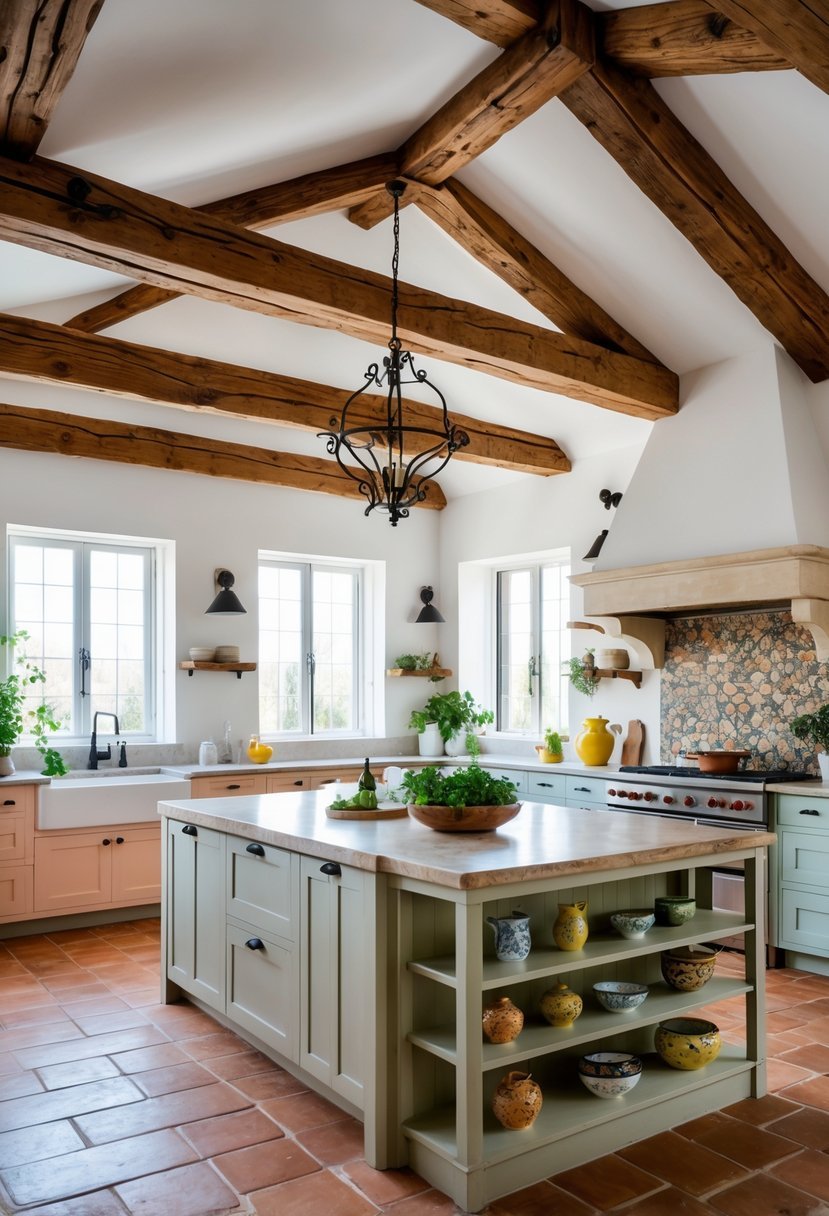
I find exposed wooden ceiling beams essential in achieving an authentic Mediterranean kitchen look.
They add warmth and a natural texture that complements both rustic and modern styles.
The beams draw the eye upward, creating a sense of space and architectural interest.
Whether left raw or stained in medium tones, they contribute to a cozy, inviting atmosphere.
In my experience, pairing these beams with light wood floors or white cabinetry enhances brightness while maintaining that natural, organic feel.
They work well with vaulted ceilings too, highlighting structural elegance without overwhelming the room.
4) Open shelving with wrought iron brackets
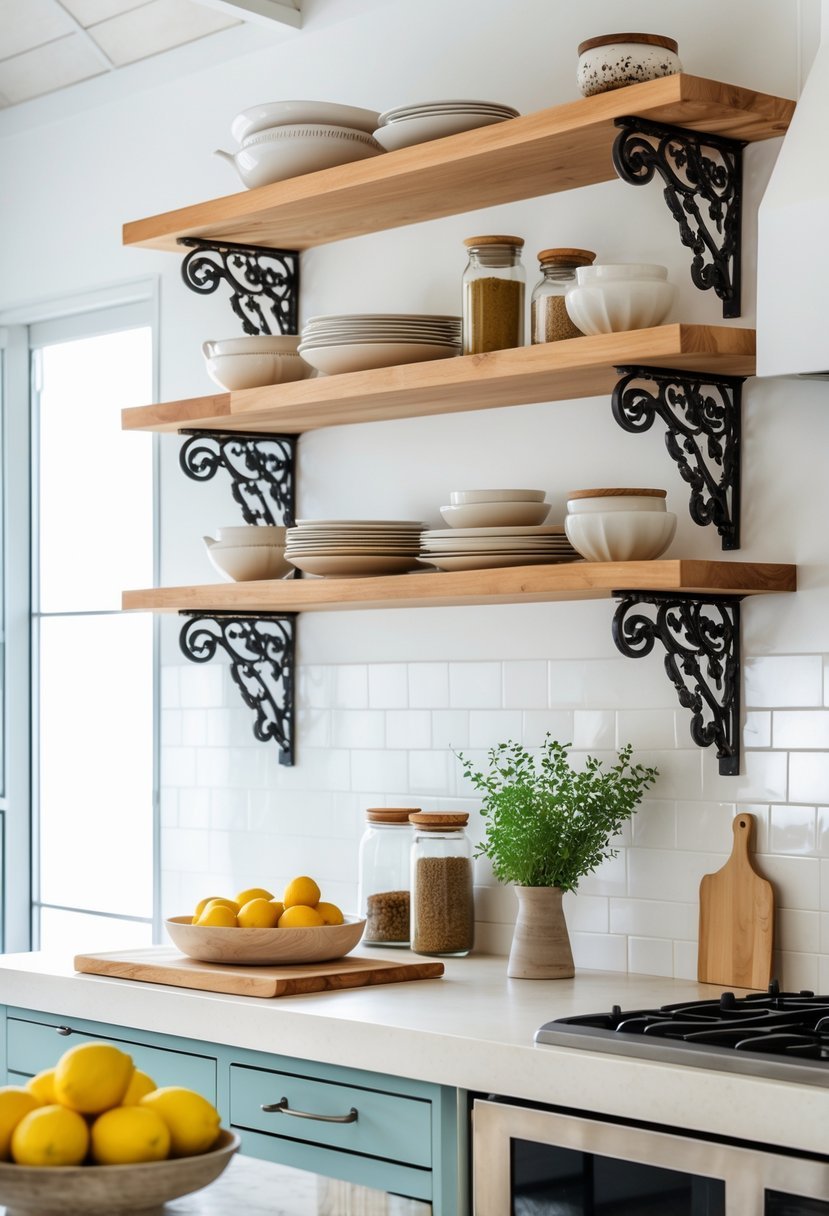
I find open shelving with wrought iron brackets essential for a Mediterranean kitchen.
The wrought iron adds a subtle, traditional touch that complements the rustic wood shelves.
This combination creates a sturdy, stylish display space.
Open shelves let me showcase ceramics, glassware, and other kitchen items.
It keeps essentials accessible without cluttering the countertops.
The wrought iron brackets also bring an artistic detail that feels authentic and timeless.
Using open shelving this way helps maintain an airy and inviting atmosphere.
The materials and design balance durability with visual appeal, which is important in Mediterranean kitchens.
It’s both practical and decorative.
5) Earth-toned stucco walls
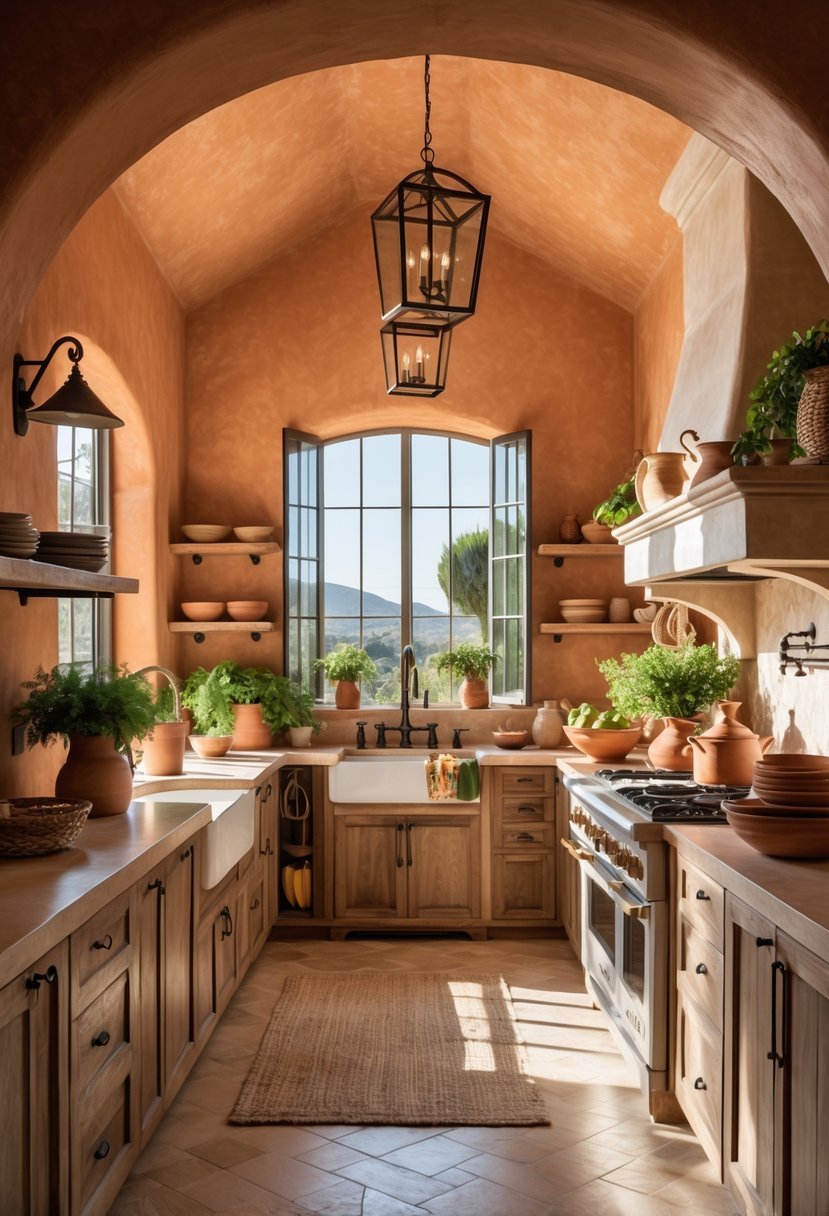
I find that earth-toned stucco walls bring a warm, rustic character to a Mediterranean kitchen.
The textured surface adds depth, breaking the monotony of flat walls and creating visual interest.
Choosing earthy shades like terracotta, muted ochres, or soft browns helps to ground the space and complement natural materials like wood and stone.
These colors also enhance the inviting, lived-in feel typical of Mediterranean design.
I often use stucco as an accent on one or two walls to avoid overwhelming the kitchen.
This approach balances warmth and texture while maintaining a clean, open atmosphere.
6) Natural stone countertops
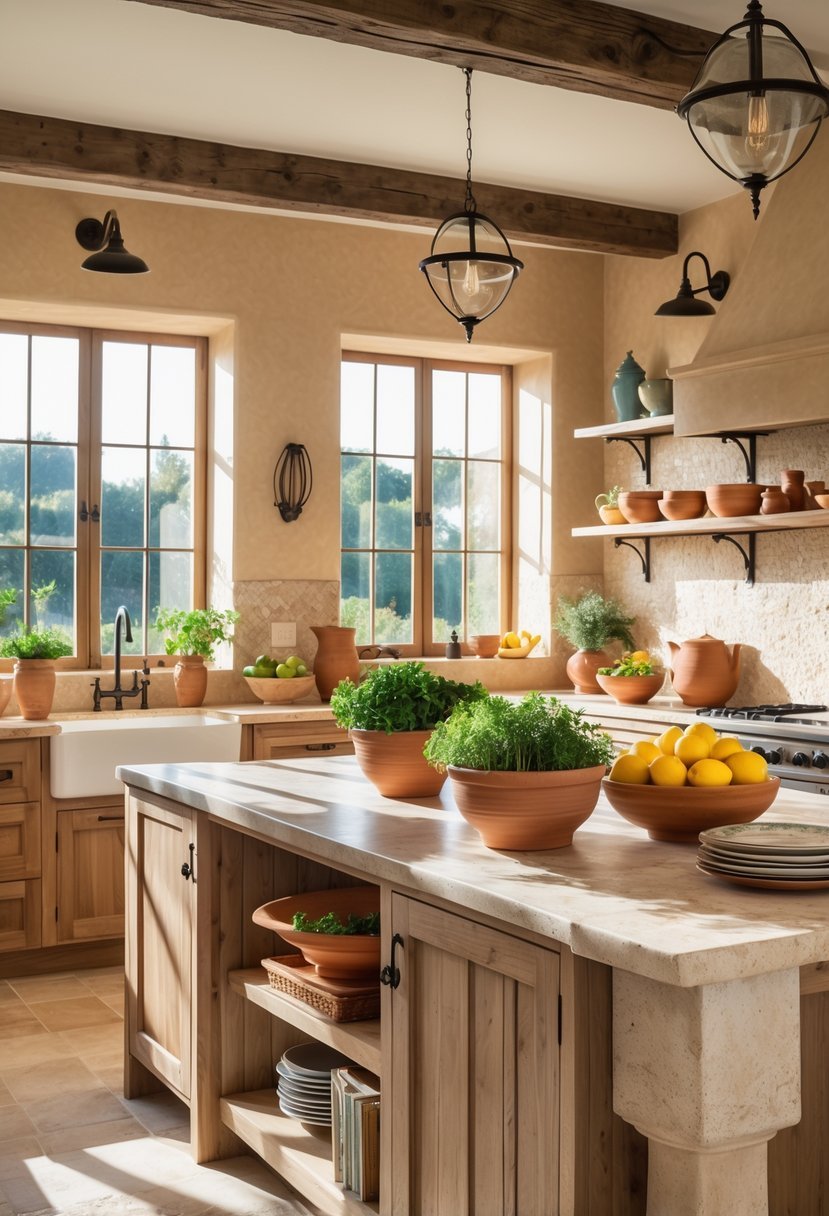
I find natural stone countertops essential to Mediterranean kitchen design.
Materials like marble, limestone, and travertine provide warmth and subtle texture, creating a timeless look.
The cool, smooth surface of marble is not only visually appealing but also practical for cooking and food preparation.
Stone adds an authentic, earthy element that complements the wood and plaster commonly used in this style.
Using natural stone, I focus on balancing elegance with rustic charm.
It elevates the kitchen while maintaining the inviting and grounded atmosphere typical of Mediterranean interiors.
7) Rustic wooden cabinetry with distressed finish
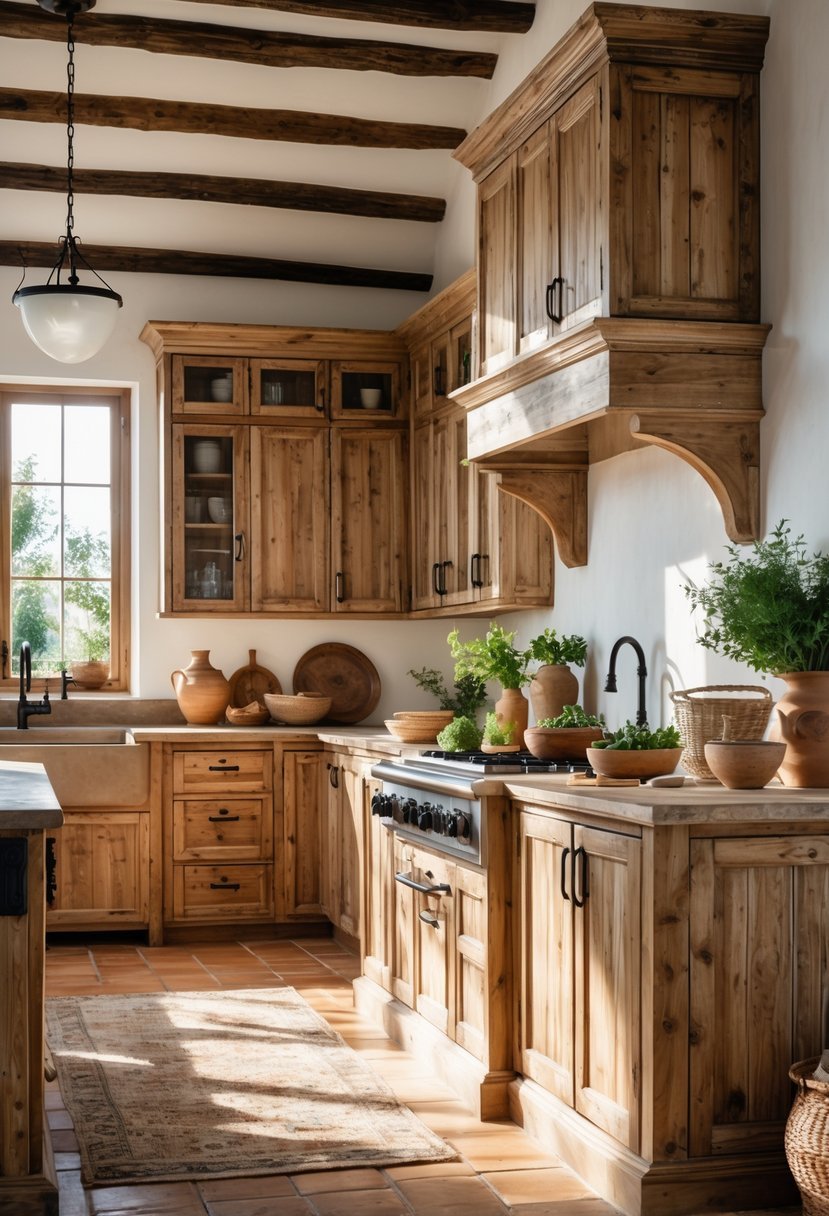
I find that rustic wooden cabinetry with a distressed finish adds authentic character to a Mediterranean kitchen.
The weathered textures create a warm, lived-in feeling that blends well with natural materials like stone and terracotta.
In my experience, these cabinets balance old-world charm with practical modern use.
The imperfect edges and fading bring a sense of history, making the space feel inviting without sacrificing function.
Choosing soft pastel paints or natural wood tones for the distressed finish can soften the overall look.
This style never feels too polished, which suits the relaxed and earthy vibes typical of Mediterranean design.
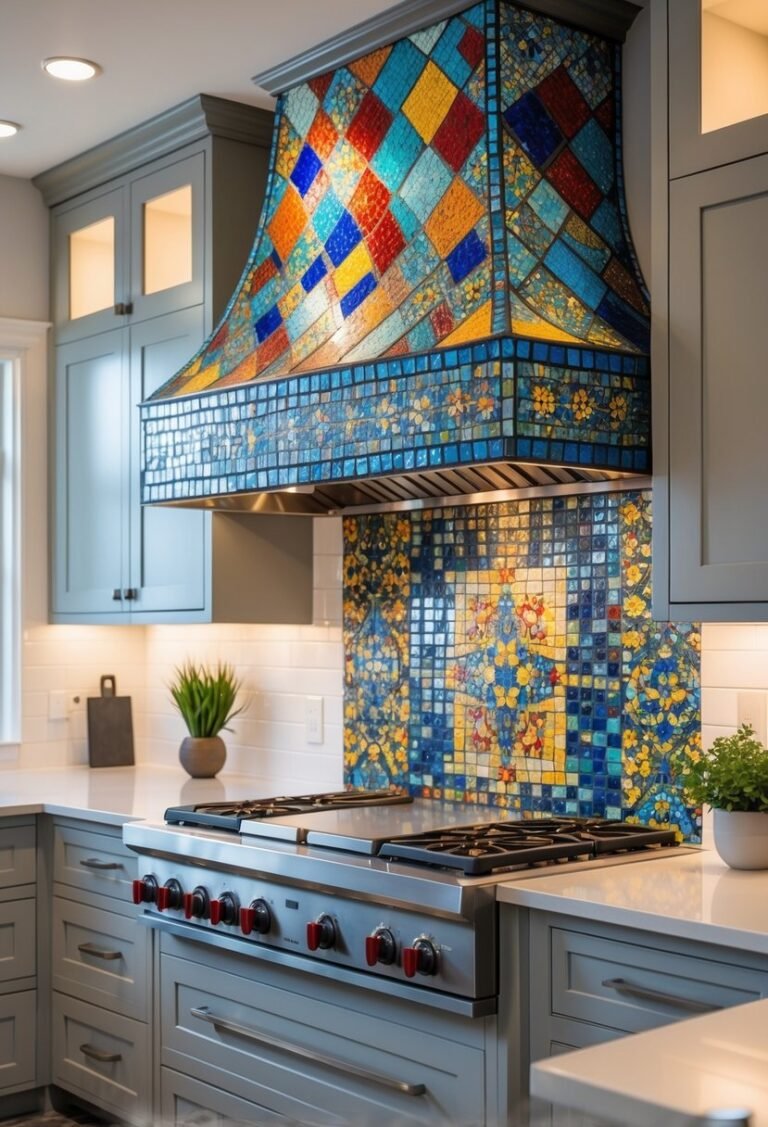
8) Colorful mosaic tile accents
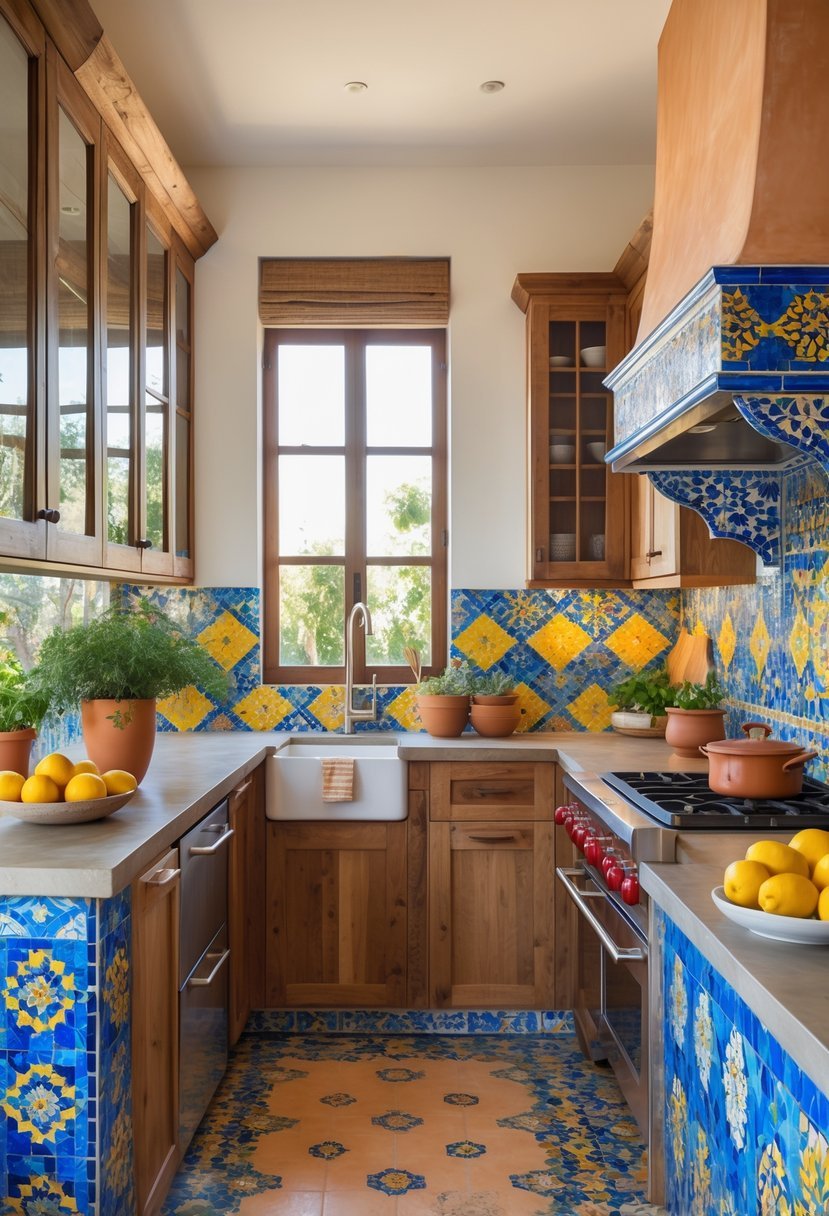
I find colorful mosaic tile accents create a vibrant focal point in Mediterranean kitchens.
These tiles often feature intricate patterns and bright hues like blue, yellow, and terracotta, adding a lively touch to walls or backsplashes.
Mosaic tiles blend well with rustic cabinetry and wooden shelves, balancing warmth and color.
Using a grout and adhesive kit makes installation straightforward, ensuring the tiles stay secure and last long.
In my experience, these accents bring artistic charm without overwhelming the space.
They provide an authentic Mediterranean feel that complements both traditional and modern kitchen designs.
9) Mediterranean farmhouse-style pendant lighting
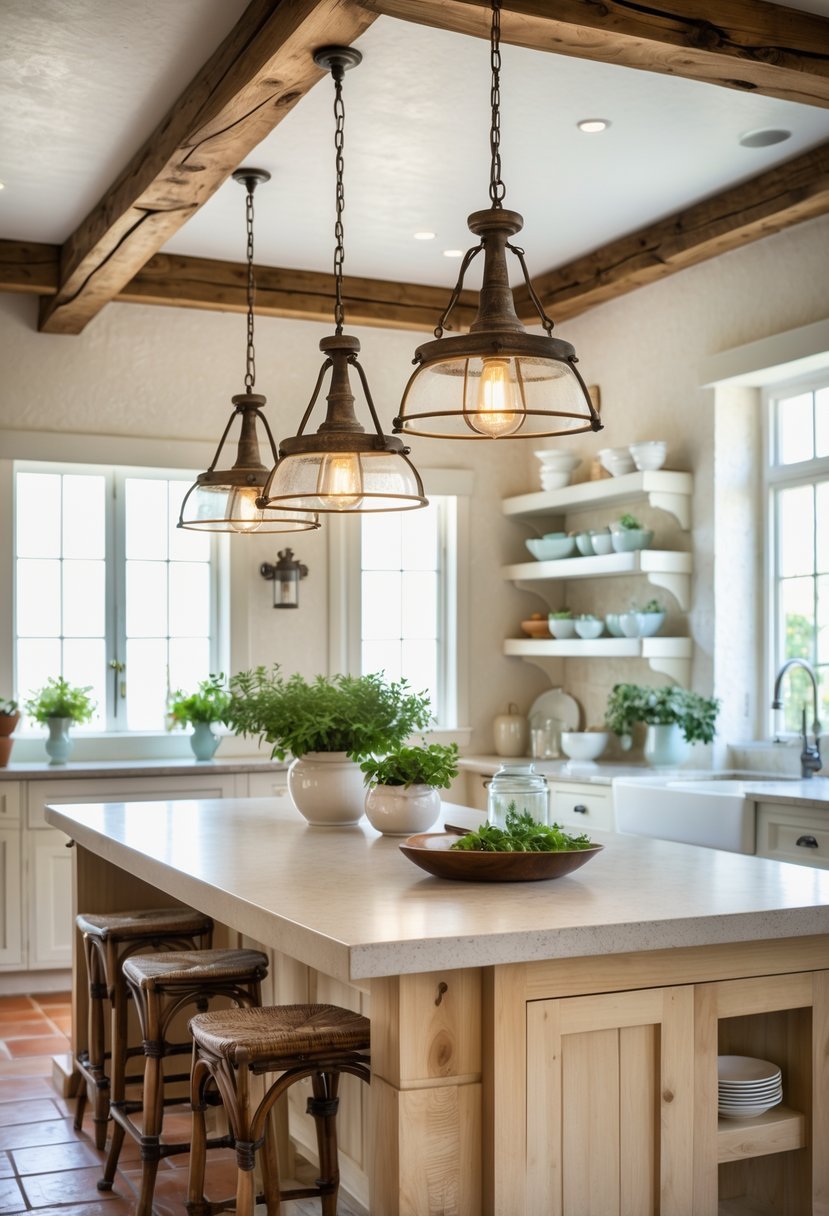
I find that combining Mediterranean warmth with farmhouse charm creates a unique look for kitchen lighting.
Pendant lights with rustic finishes like wrought iron or distressed metals add character without overwhelming the space.
Natural materials such as wood or clay often feature in these fixtures, emphasizing a handcrafted feel.
I like how this blend brings a cozy yet elegant touch over kitchen islands or dining areas.
The soft, warm glow from these pendants enhances the welcoming atmosphere typical of both styles.
For me, it’s about balancing simplicity with subtle decorative details to reflect both Mediterranean lightness and farmhouse comfort.
10) Copper or wrought iron kitchen fixtures
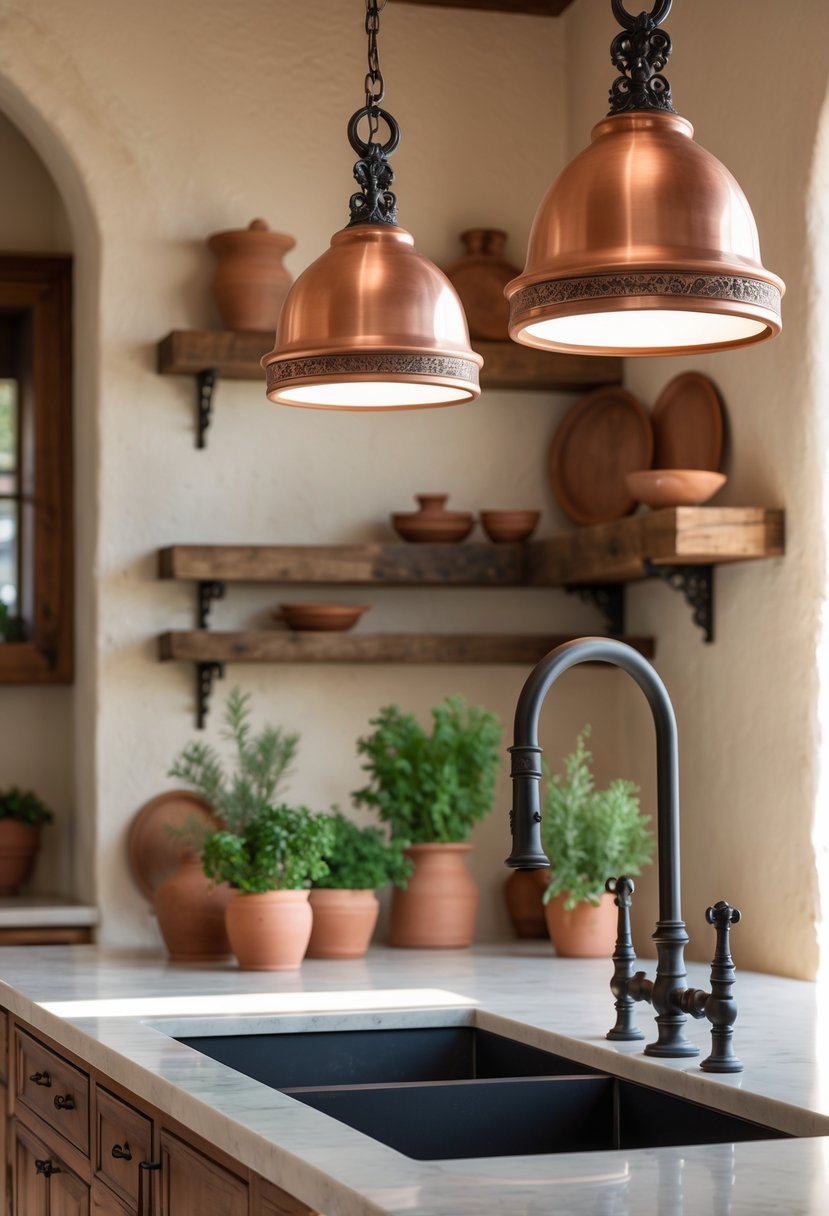
I find that copper and wrought iron fixtures add authentic character to a Mediterranean kitchen.
Copper offers a warm glow that complements earthy tones and natural materials typically found in this style.
Wrought iron, on the other hand, brings a handcrafted, durable element.
I often use wrought iron for light fixtures, pot racks, and cabinet handles because it balances elegance with rustic charm.
Both materials work well with wooden surfaces and terracotta tiles.
Their textures and finishes provide visual interest without overwhelming the space.
Integrating copper or wrought iron fixtures creates a cohesive, timeless look that feels both functional and inviting.
11) Terracotta or clay cookware displays
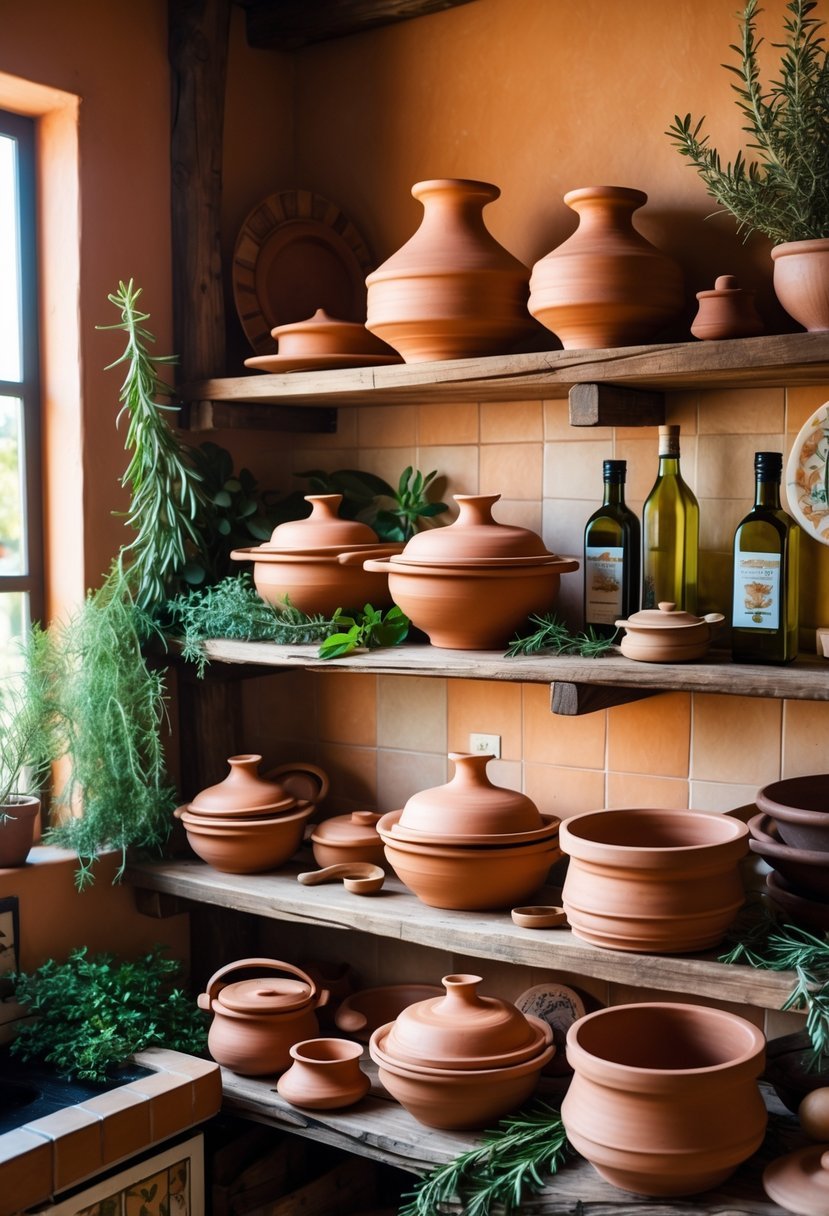
I find that displaying terracotta or clay cookware adds an authentic Mediterranean touch.
These pieces bring warmth through their natural textures and earthy tones.
Using open shelves or wall-mounted racks lets me showcase hand-thrown pots and bowls.
This approach doubles as functional storage and decorative elements.
Clay cookware also complements a variety of color palettes, especially warm whites, clays, and earth tones.
Their rustic look contrasts well with smooth countertops, creating balance in the kitchen space.
Displaying these items encourages a connection to traditional cooking methods.
It’s a simple way to inject character without overwhelming the design.
12) Arched doorways connecting kitchen and dining
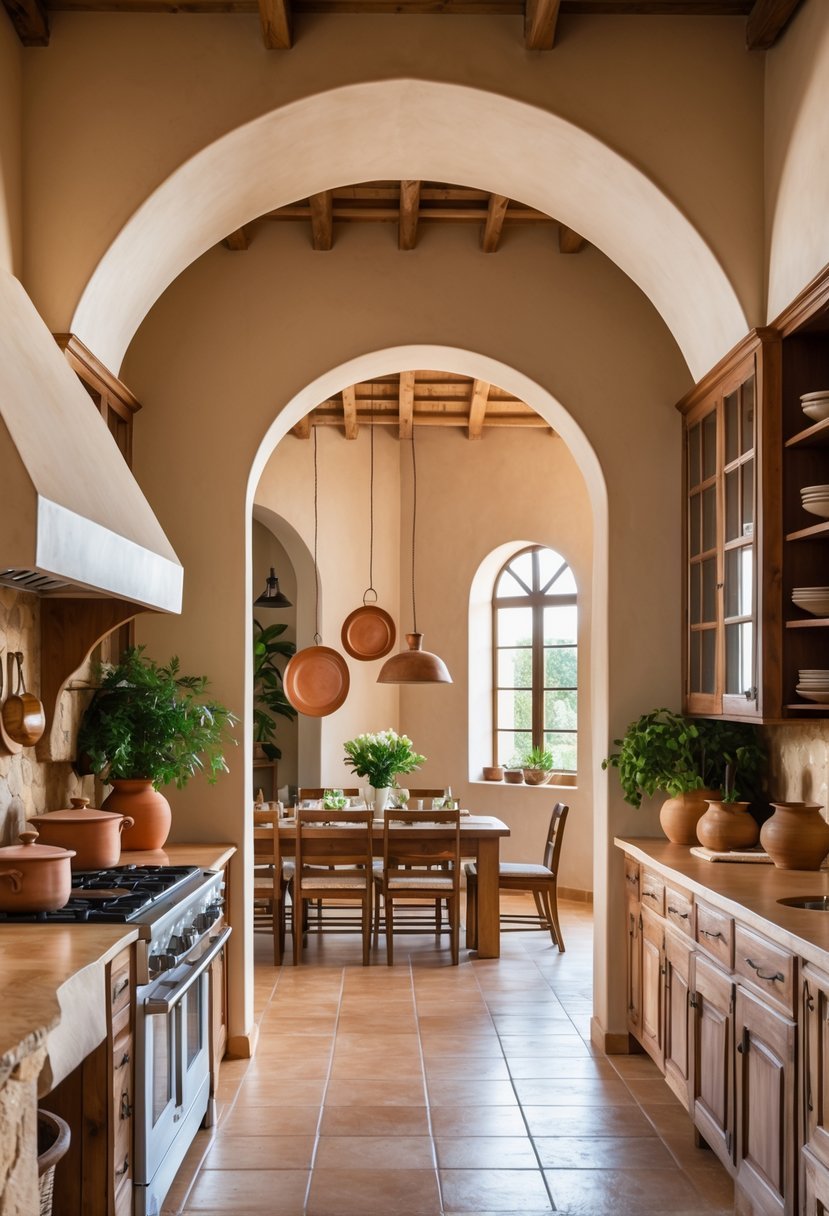
I find arched doorways to be a distinctive feature that adds both charm and fluidity between the kitchen and dining areas.
They create a natural transition without closing off the space, maintaining openness while defining each room’s purpose.
The curves soften the hard lines typically seen in kitchens, inviting a sense of warmth and elegance.
When I incorporate arched doorways, the flow of light and movement improves, making the home feel more cohesive.
These doorways also highlight Mediterranean style’s focus on architectural detail.
They work well alongside rustic materials like terracotta floors and exposed wood, enhancing a timeless and authentic atmosphere.
13) Herb garden window sills
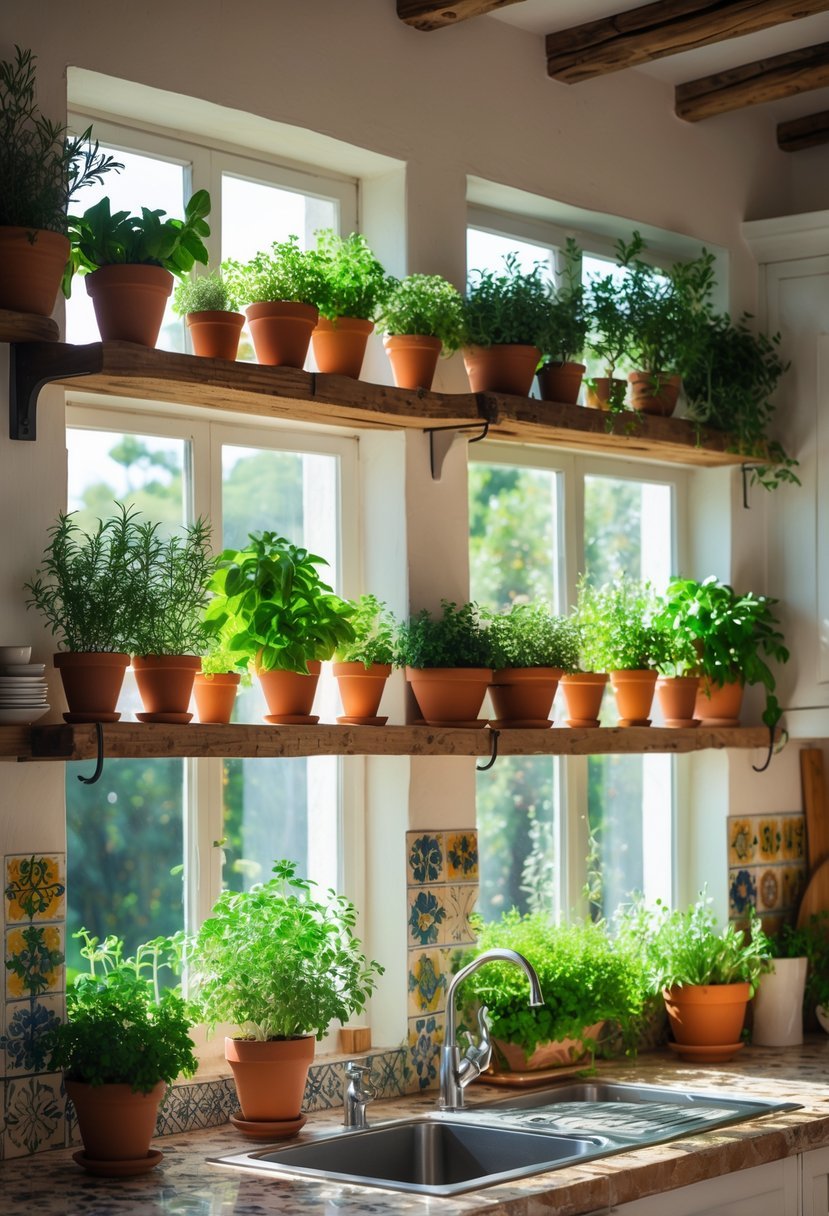
I find that herb garden window sills are a practical and aesthetic addition to a Mediterranean kitchen.
They bring fresh flavors within easy reach and add a touch of greenery that complements natural materials like wood and stone.
Sunny windowsills work best since herbs like basil, thyme, and rosemary need plenty of light.
I recommend using simple containers to keep the look clean and unobtrusive.
Maintaining these herbs is straightforward.
Regular watering and occasional pruning keep the plants healthy and productive without taking up extra space.
It’s an efficient way to blend nature and function in your kitchen.
14) Textured plaster walls
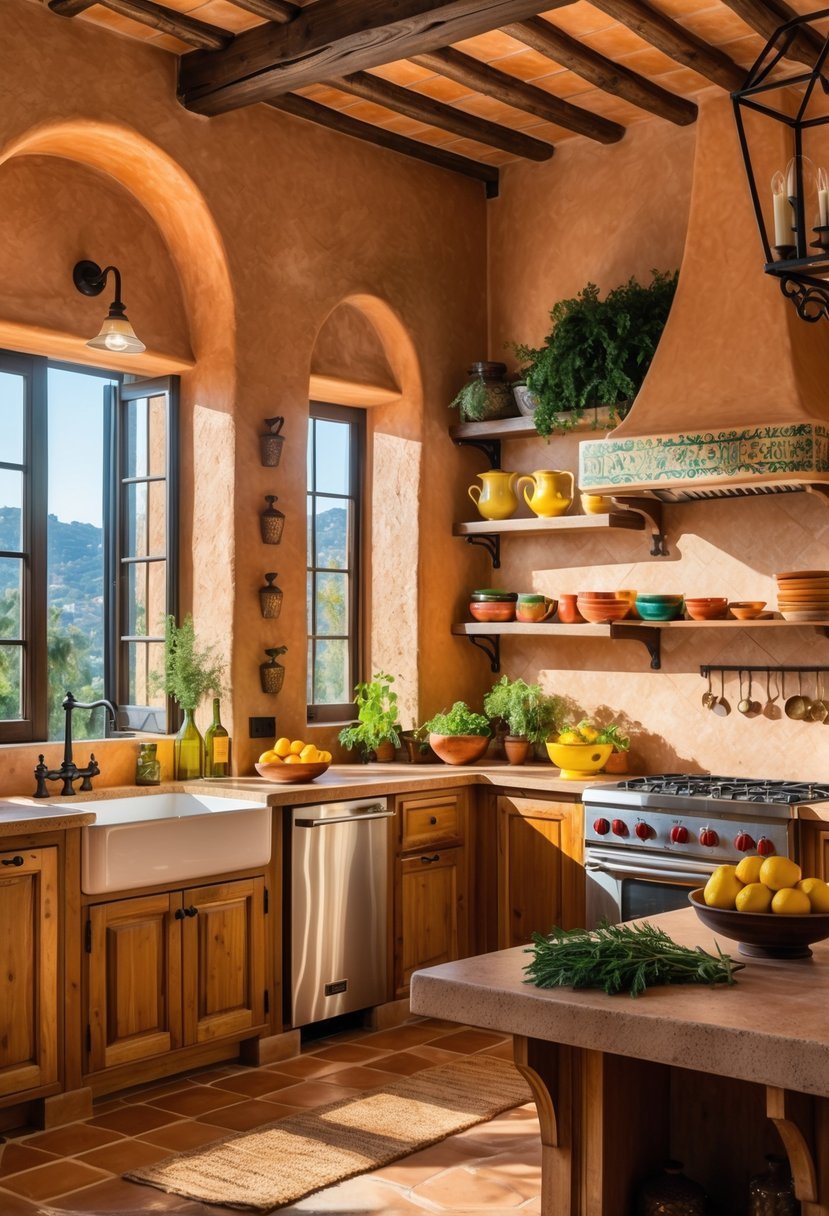
I appreciate how textured plaster walls bring an authentic Mediterranean feel to a kitchen.
The natural imperfections in the plaster add depth and character, creating a warm, inviting atmosphere.
Using a soft, sun-kissed beige or earthy tone enhances the rustic charm without overwhelming the space.
I find this finish works well with wooden cabinetry and stone countertops, anchoring the design with natural materials.
Textured plaster also offers practical benefits.
It’s durable and masks minor wall flaws, which is helpful in busy kitchen environments.
Applying it requires some skill, but the result is a timeless look that feels both elegant and grounded.
15) Large farmhouse sink with apron front
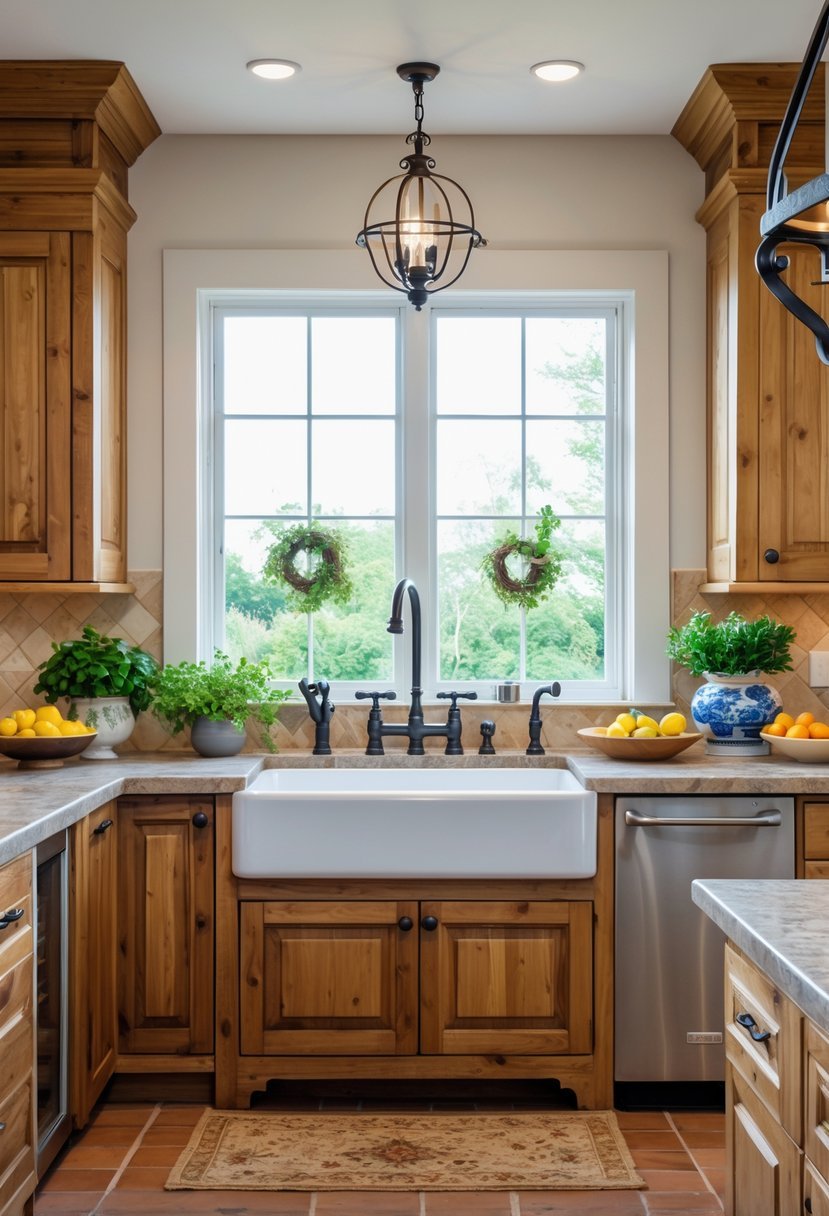
I find that a large farmhouse sink with an apron front adds both function and style to a Mediterranean kitchen.
Its size makes washing large pots and pans easier, which is practical for cooking Mediterranean meals.
The apron front design creates a strong focal point.
It complements textured tiles and natural materials often seen in this style.
I prefer sinks in materials like fireclay or porcelain for durability and a clean look.
The bold shape contrasts well with warm wood cabinets or colorful mosaics, enhancing the kitchen’s charm without overpowering it.
16) Patterned encaustic cement tiles
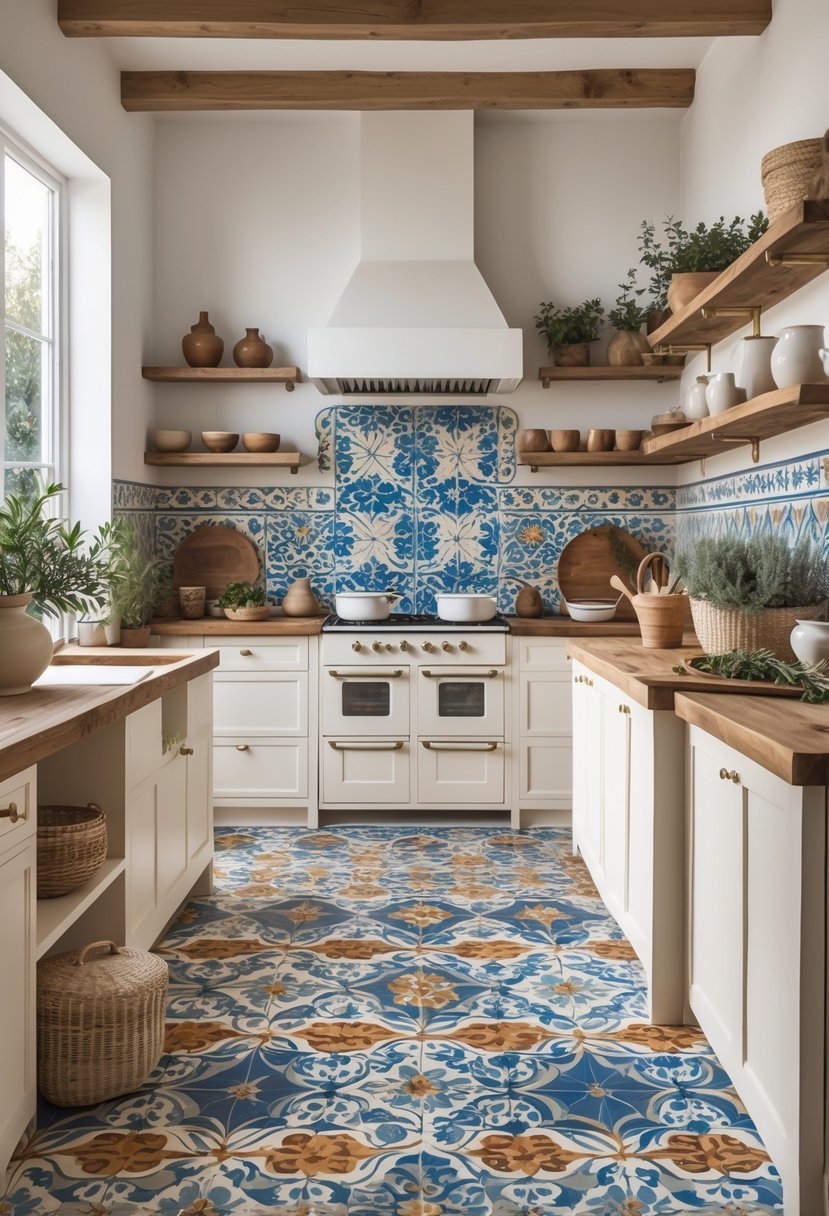
I find patterned encaustic cement tiles to be an excellent choice for adding character to a Mediterranean kitchen. These tiles have a rich history dating back to the 19th century, originating in southern France, where craftsmen developed a method to create durable, pigmented designs that run through the tile itself.
Their geometric shapes and vibrant colors bring depth and texture to floors and backsplashes alike. I appreciate how these tiles combine artistic detail with functionality.
They are suitable for both walls and floors without losing their pattern over time. Using encaustic tiles, I can create a focal point that blends traditional Mediterranean style with a modern touch.
They work well in eclectic settings or paired with simpler materials to balance visual interest.
17) Open kitchen layout blending indoor and outdoor spaces
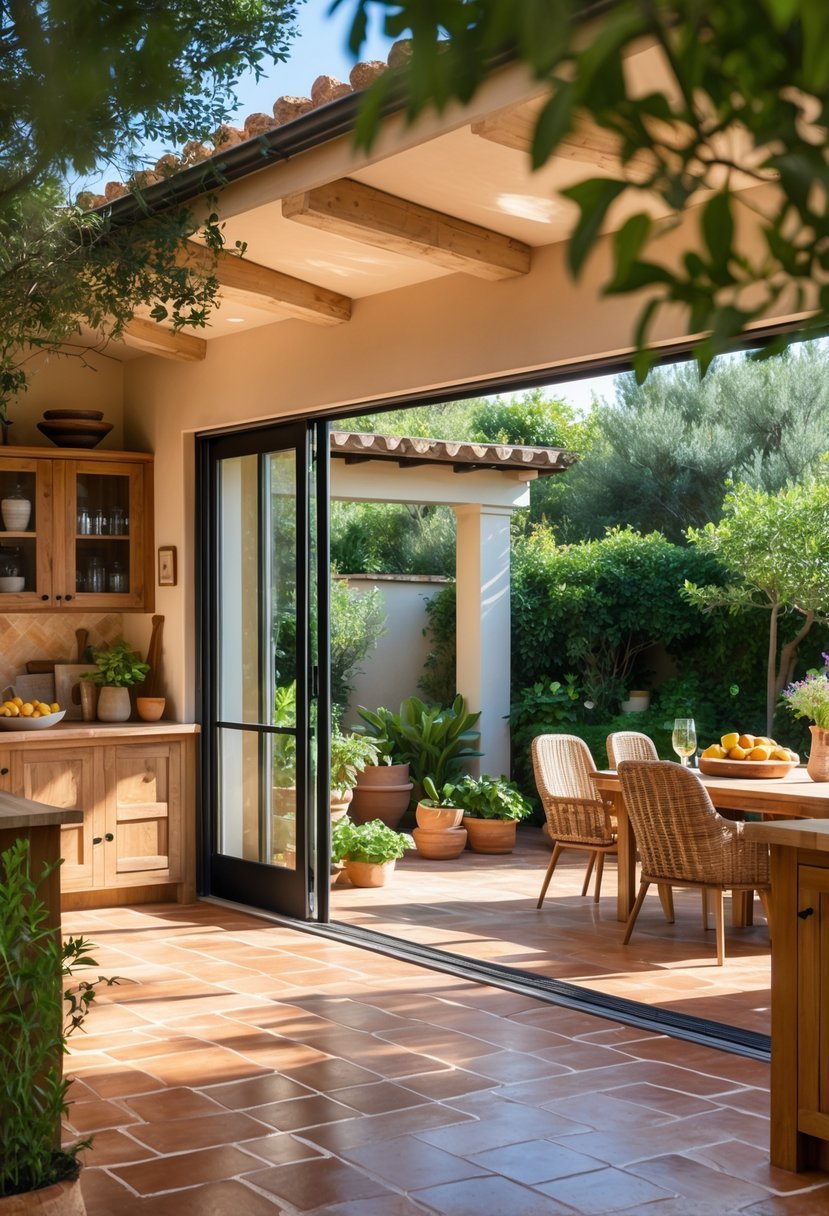
I appreciate how an open kitchen layout can extend seamlessly into outdoor living areas, creating a cohesive and functional environment. This design enhances natural light and ventilation, making the kitchen feel airy and inviting.
Using materials like terracotta tiles and wrought iron fixtures helps unify the indoor and outdoor spaces with a Mediterranean touch. Including features such as a built-in grill or an herb garden nearby strengthens the connection between cooking and nature.
This layout encourages social interaction by allowing easy movement between the kitchen and outdoor dining areas.
18) Warm, muted color palette with ochre and burnt sienna
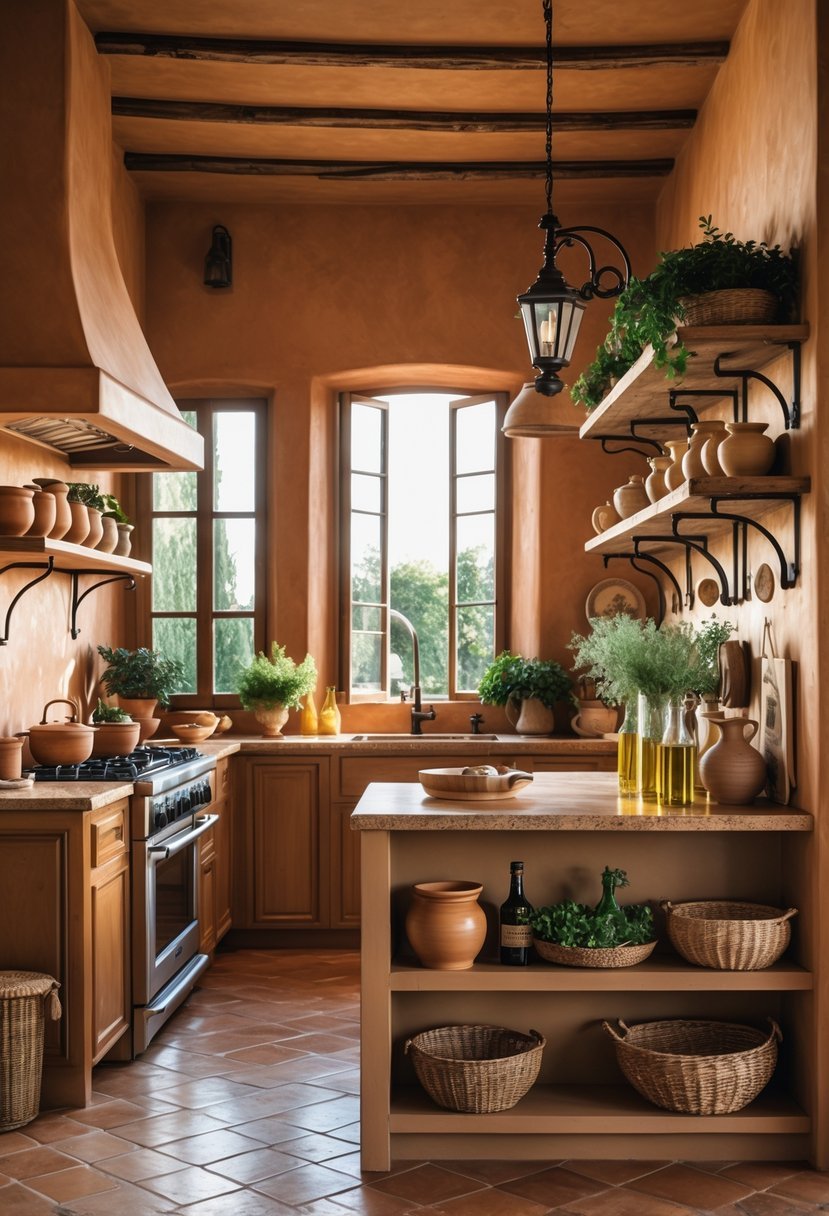
I find that combining ochre with burnt sienna creates a warm, earthy atmosphere perfect for a Mediterranean kitchen. These muted tones provide a sense of understated elegance without overwhelming the space.
Burnt sienna’s reddish-brown hue blends smoothly with ochre’s golden yellow, evoking natural elements like sunbaked clay and aged pottery. Together, they form a grounded palette that feels both inviting and timeless.
Adding charcoal gray as an accent can modernize this combination while maintaining its natural aesthetic.
19) Handcrafted pottery used as decor
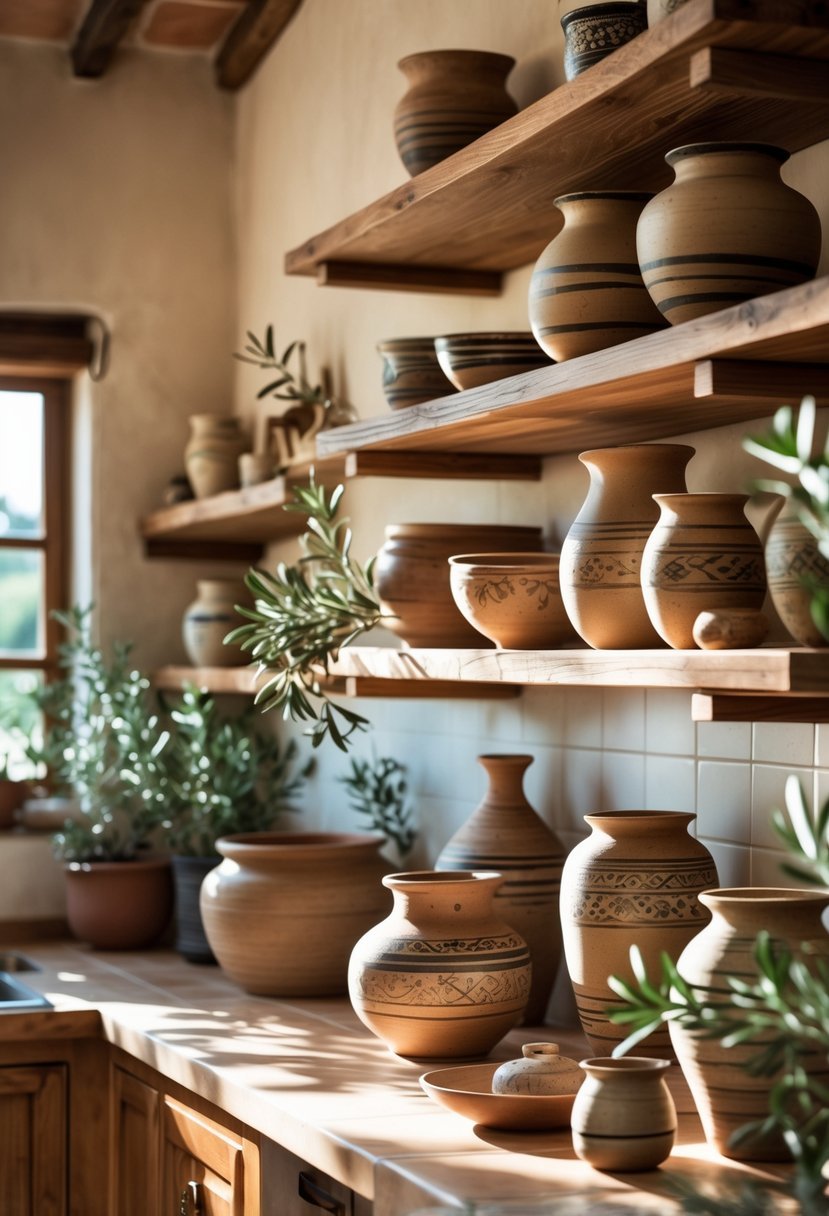
I often use handcrafted pottery to add authentic charm to my Mediterranean kitchen. These pieces bring texture and color that reflect traditional craftsmanship.
Plates, bowls, and pitchers with intricate patterns create a warm and inviting atmosphere. Displaying them on open shelves highlights their artistry.
Terracotta pots also work well as accents or planters. They add an earthy feel and connect the kitchen to natural materials often found in Mediterranean design.
Conclusion
As we’ve seen across these 21 examples, the magic of a Mediterranean kitchen lies in the details. It is the contrast between a smooth plaster wall and a rough iron chandelier, or the pop of a hand-painted tile against a dark wood cabinet. This design philosophy prioritizes warmth and hospitality above all else. We hope this list has inspired you to be bold with color and texture. Now, take these ideas, mix in your own personal flair, and create a kitchen that feels like it has been part of your family for generations.