21 Farmhouse Kitchen Design Ideas for Timeless Elegance
The modern farmhouse style has taken the interior design world by storm, and it is easy to see why. It strikes the perfect balance between the rugged charm of rural living and the clean lines of contemporary design. You don’t need to live on an actual farm to appreciate the warmth of reclaimed wood, the utility of a deep apron-front sink, or the brightness of shiplap walls.
Whether you are aiming for a sleek “Fixer Upper” vibe or a more authentic, lived-in country look, this style is incredibly versatile. Here are 21 farmhouse kitchen design ideas that blend comfort with class to help you create the heart of your home.
I’ve always appreciated the timeless appeal of farmhouse kitchens, where rustic charm meets practical design. They offer a balance of warmth and functionality that suits both traditional and modern lifestyles.
Whether you’re drawn to cozy elements or the simplicity of a neutral palette with wooden accents, farmhouse kitchens provide a versatile framework. My goal is to help you explore a variety of styles that bring comfort and style to one of the most important spaces in your home.
Table of Contents
1) Apron-front farmhouse sink
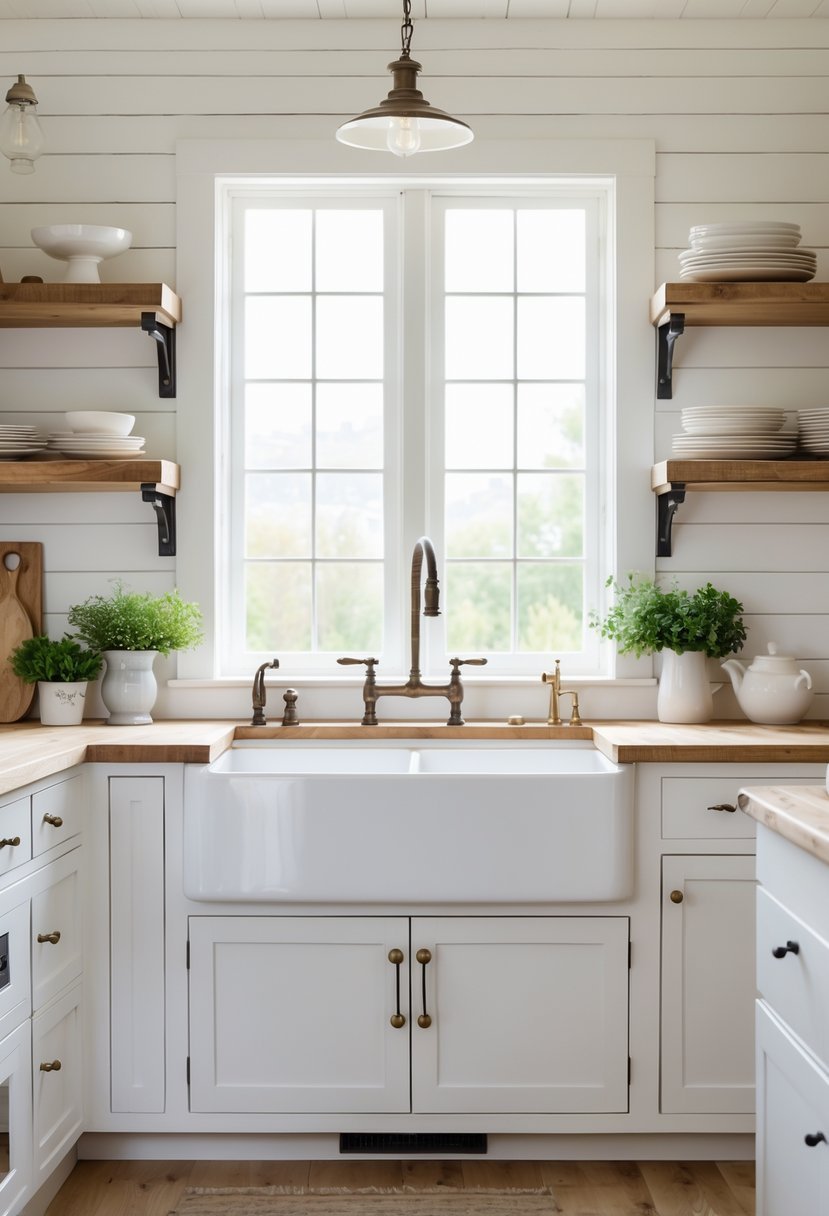
I chose an apron-front farmhouse sink because of its practical design and timeless look. The deep basin offers ample space for washing large pots and pans, which suits my busy kitchen needs.
The visible front panel adds character, creating a focal point that complements rustic or modern styles. The overhanging edge helps protect countertop corners, reducing wear and tear over time.
Materials vary from fireclay to granite composite, giving options for durability and style. This sink style blends charm with function, making it a reliable choice for farmhouse kitchens.
2) Open wooden shelving
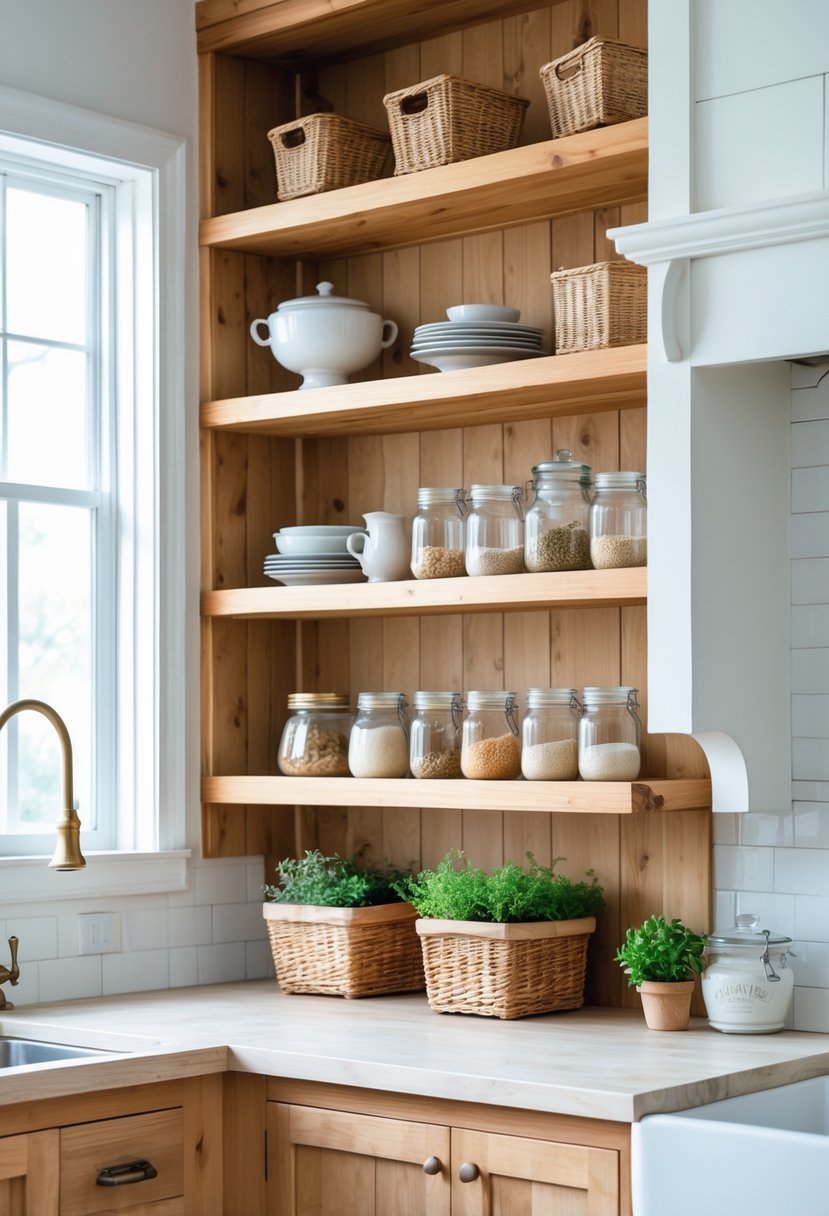
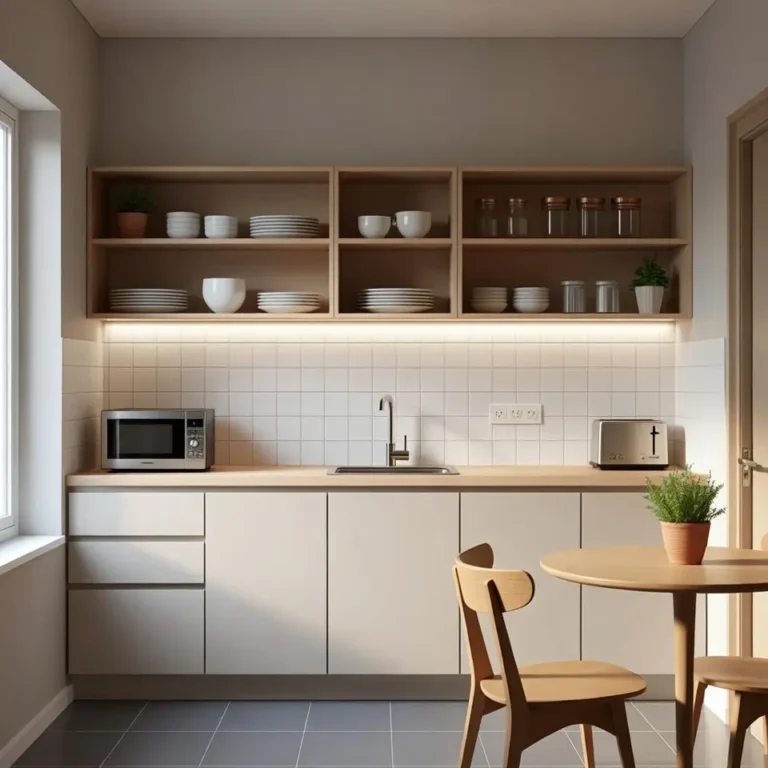
I find open wooden shelving to be a central element in farmhouse kitchen design. Using natural or unfinished wood enhances the rustic feel and adds warmth to the space.
These shelves provide practical storage while allowing me to display everyday dishes and decor. Open shelving creates an airy atmosphere that brightens the kitchen.
It eliminates the bulkiness of upper cabinets, making the room feel more open. I also appreciate how it makes frequently used items easy to grab.
Styling the shelves with a mix of functional pieces and simple decor brings personality to the kitchen. I often include wooden cutting boards, mugs, and farmhouse art to complete the look while keeping it intentional and practical.
3) Reclaimed wood cabinets
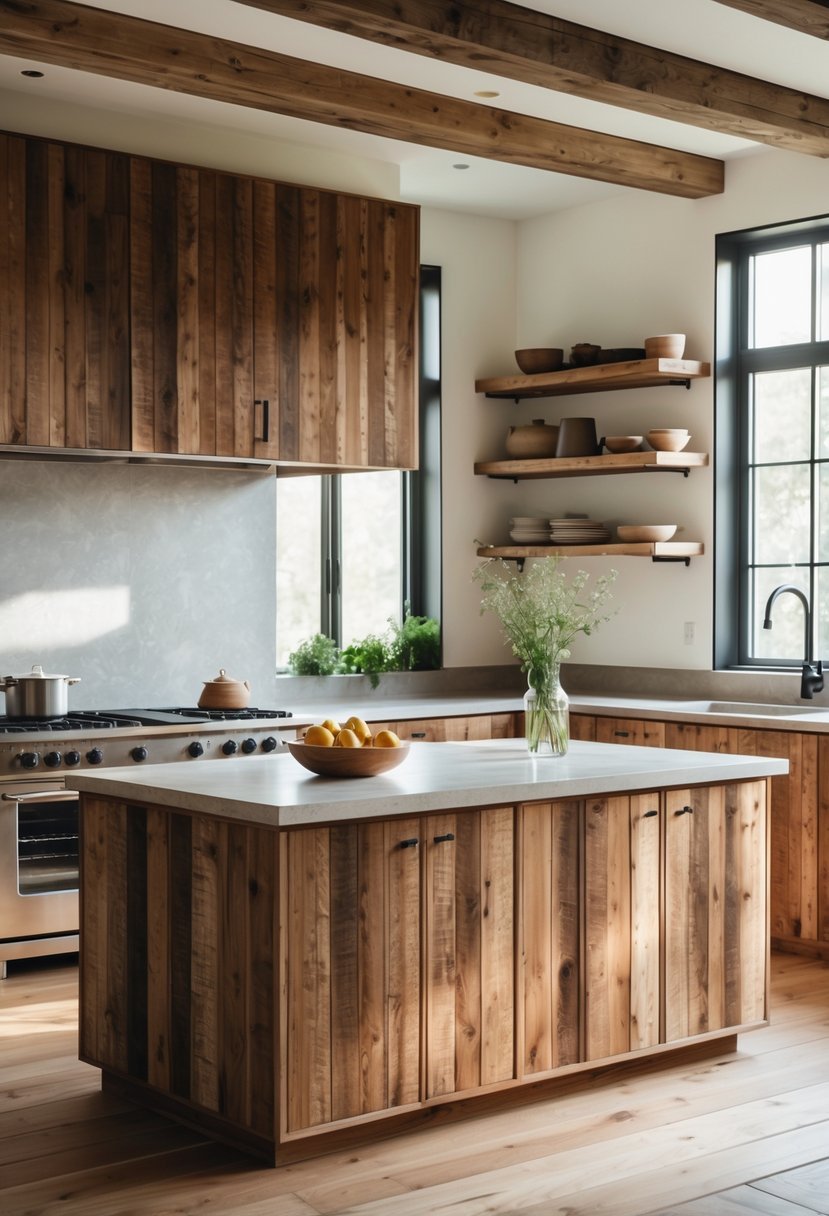
I find reclaimed wood cabinets to be a compelling choice for farmhouse kitchens. They bring authentic texture and warmth that new materials often lack.
Each piece of wood carries its own history, making the cabinets unique. Using reclaimed wood also supports sustainability, which is an important factor for me.
These cabinets blend well with rustic and vintage design elements, adding character without overwhelming the space. The natural imperfections in reclaimed wood create a lived-in feel that enhances the farmhouse aesthetic.
I recommend pairing them with simple hardware to maintain their timeless appeal. This approach balances both function and style efficiently.
4) Shiplap walls
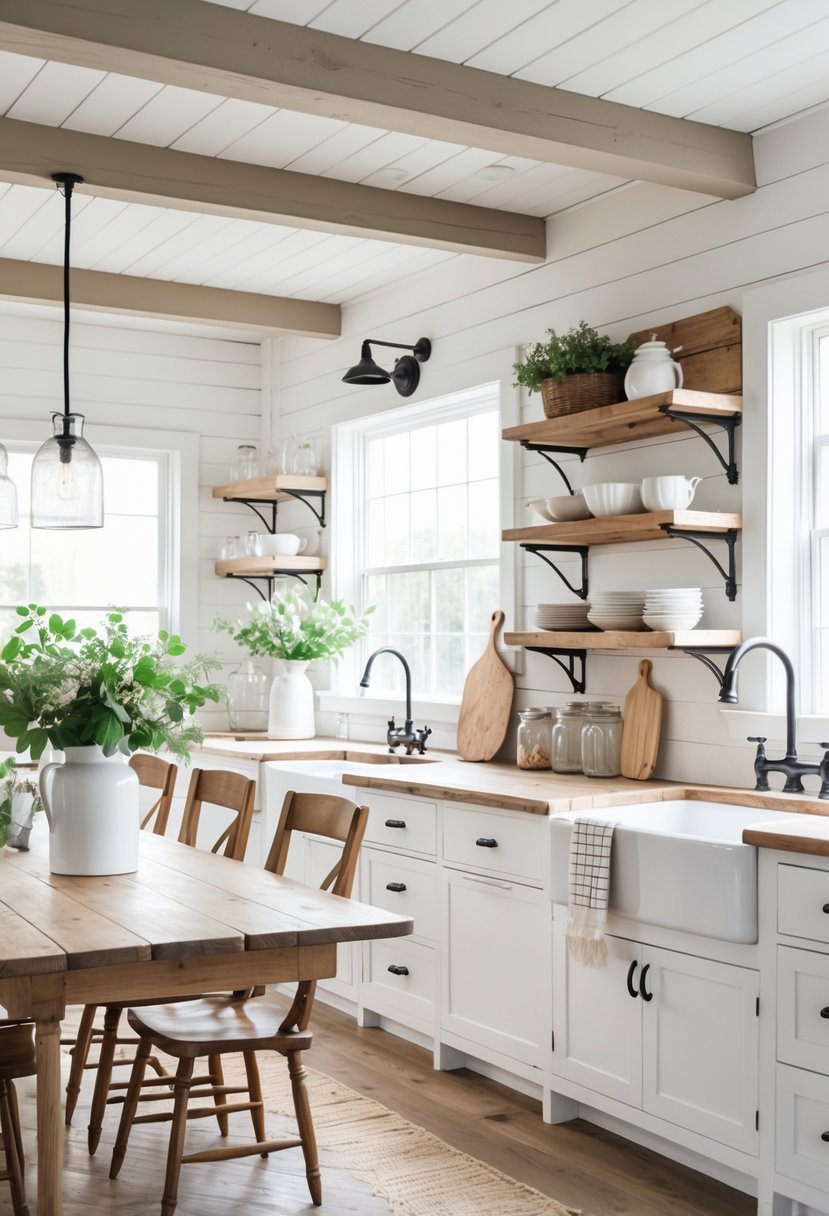
I find shiplap walls to be a simple yet effective way to add texture and warmth to a farmhouse kitchen. The clean lines of the wooden panels create a subtle visual interest without overwhelming the space.
Using shiplap can give your kitchen that classic farmhouse feel while remaining versatile enough to fit modern or rustic decor. I like how it pairs well with natural wood cabinets and open shelving.
Whitewashed shiplap walls often bring an airy freshness, making a kitchen feel brighter and more inviting. It’s a budget-friendly upgrade that can instantly change the atmosphere in a practical way.
5) Vintage-style pendant lighting
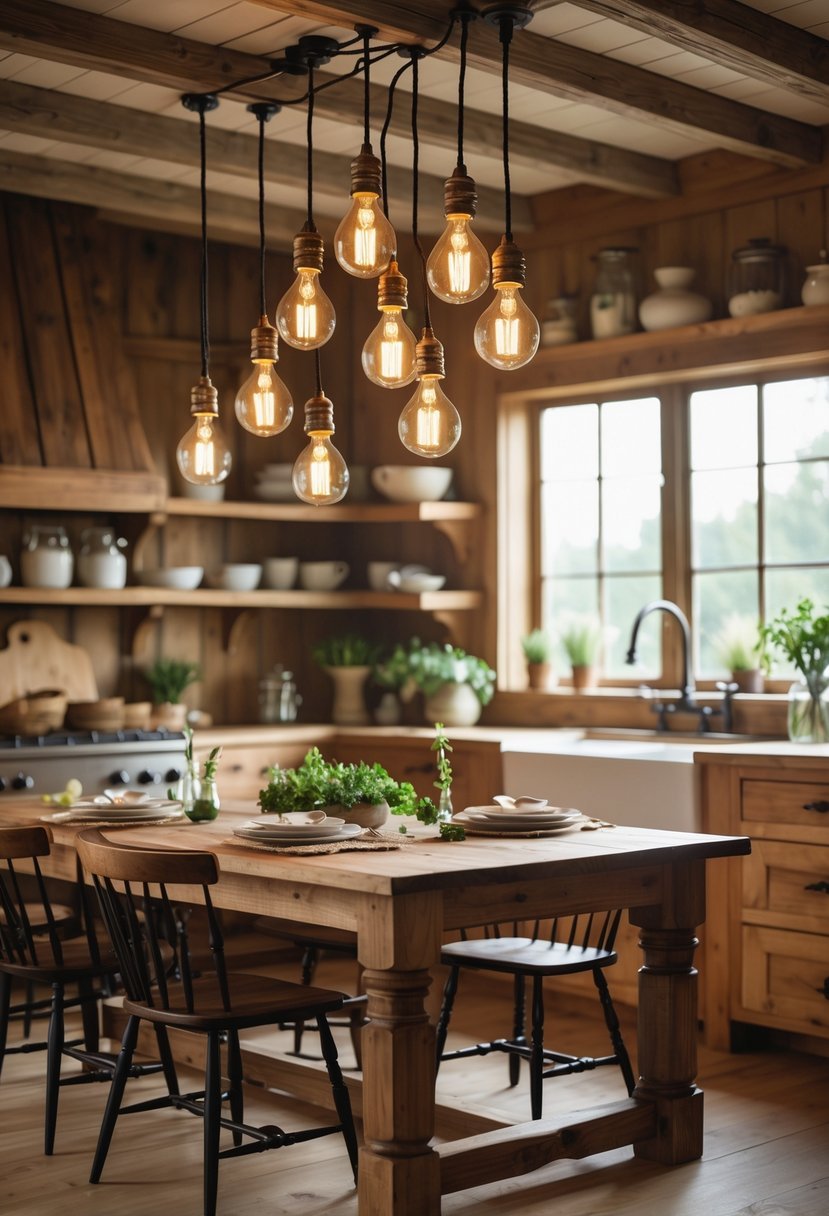
I find vintage-style pendant lighting adds a timeless charm to farmhouse kitchens. These fixtures often feature metal or glass materials, reflecting the practical designs of early rural life.
Their simple, durable construction suits both task lighting and creating cozy atmospheres. Hanging a few over an island or sink can provide focused light while enhancing the rustic vibe.
In my experience, vintage pendants complement wood and stone elements well. They bring warmth without overwhelming the space, balancing function and style seamlessly.
6) Butcher block countertops
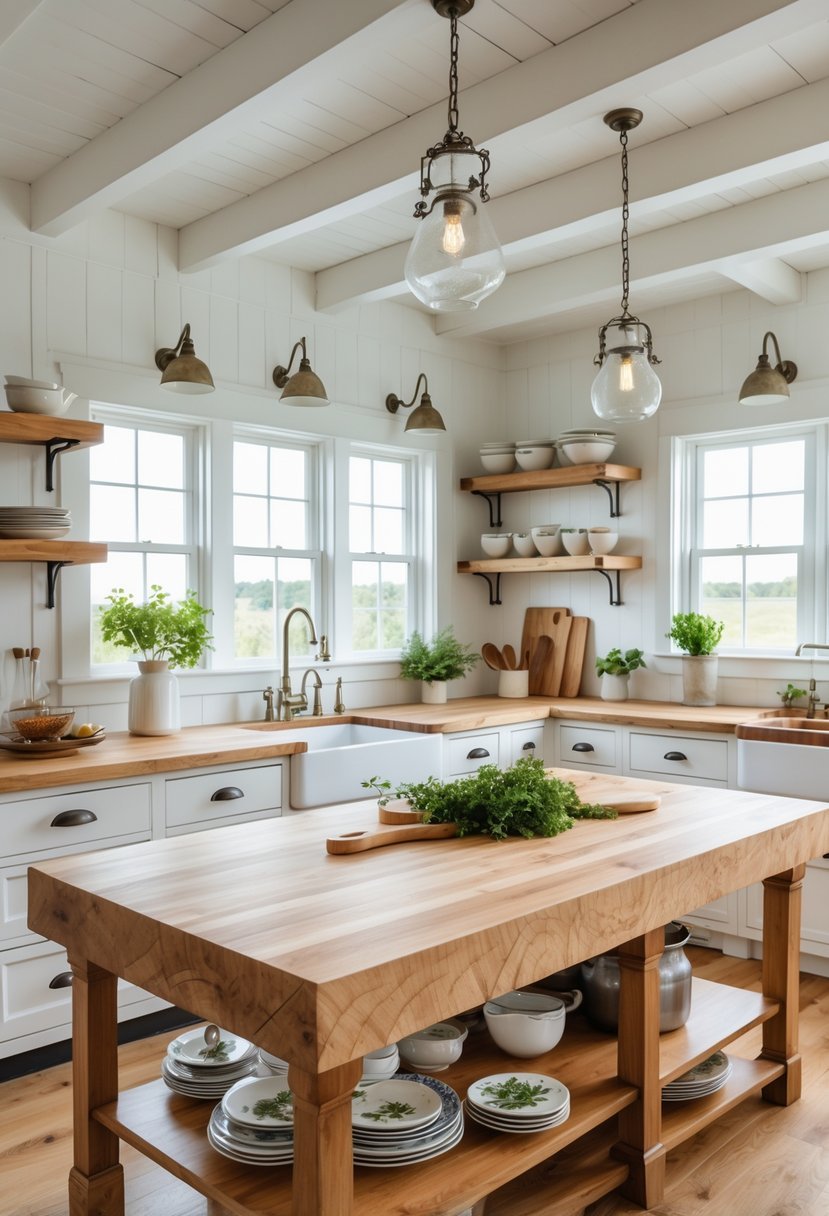
I appreciate butcher block countertops for their natural warmth and practicality in farmhouse kitchens. They add texture and a welcoming feel that complements rustic designs without overwhelming the space.
Butcher block surfaces are versatile, functioning well as both durable prep areas and attractive features. I find that their wood grain brings character, making each countertop unique.
Cost-wise, butcher block is often more affordable than stone options like granite or marble. Maintenance requires regular oiling but preserves the wood’s durability and appearance over time.
7) Rustic wood beam ceiling
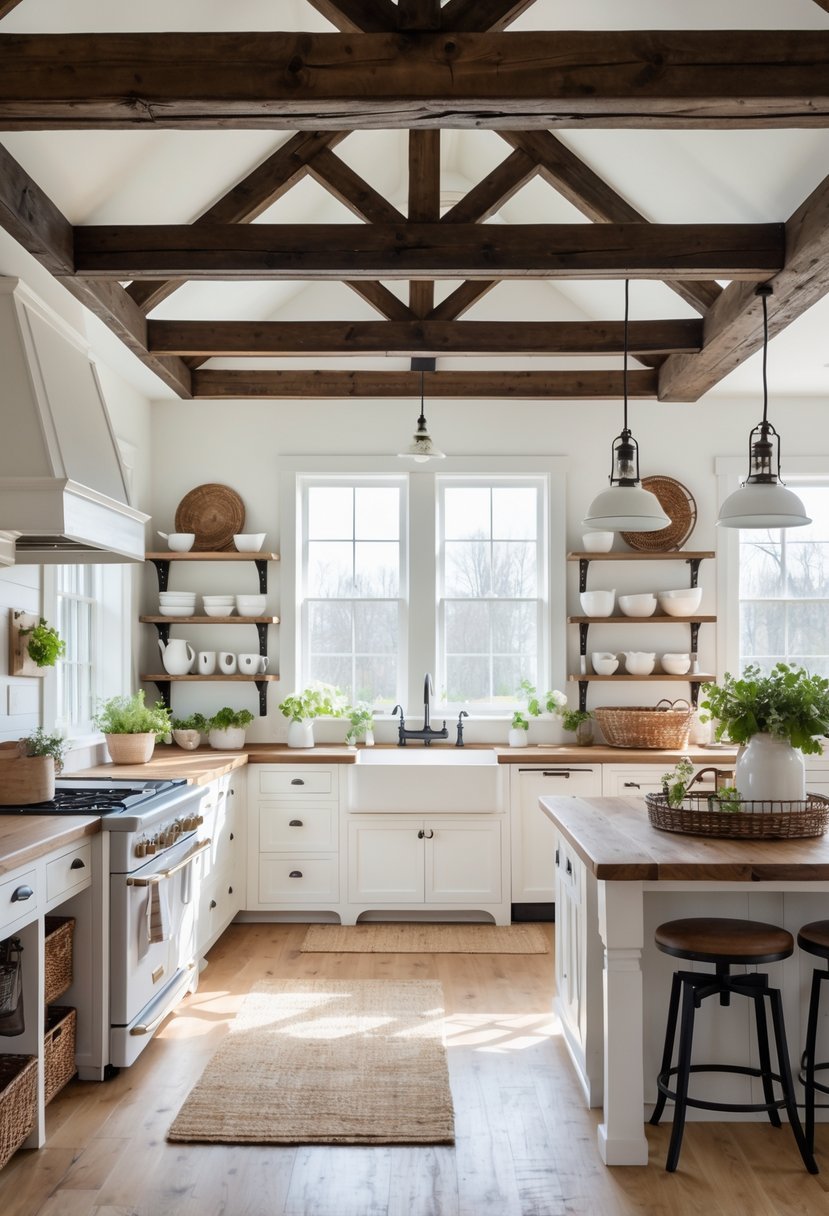
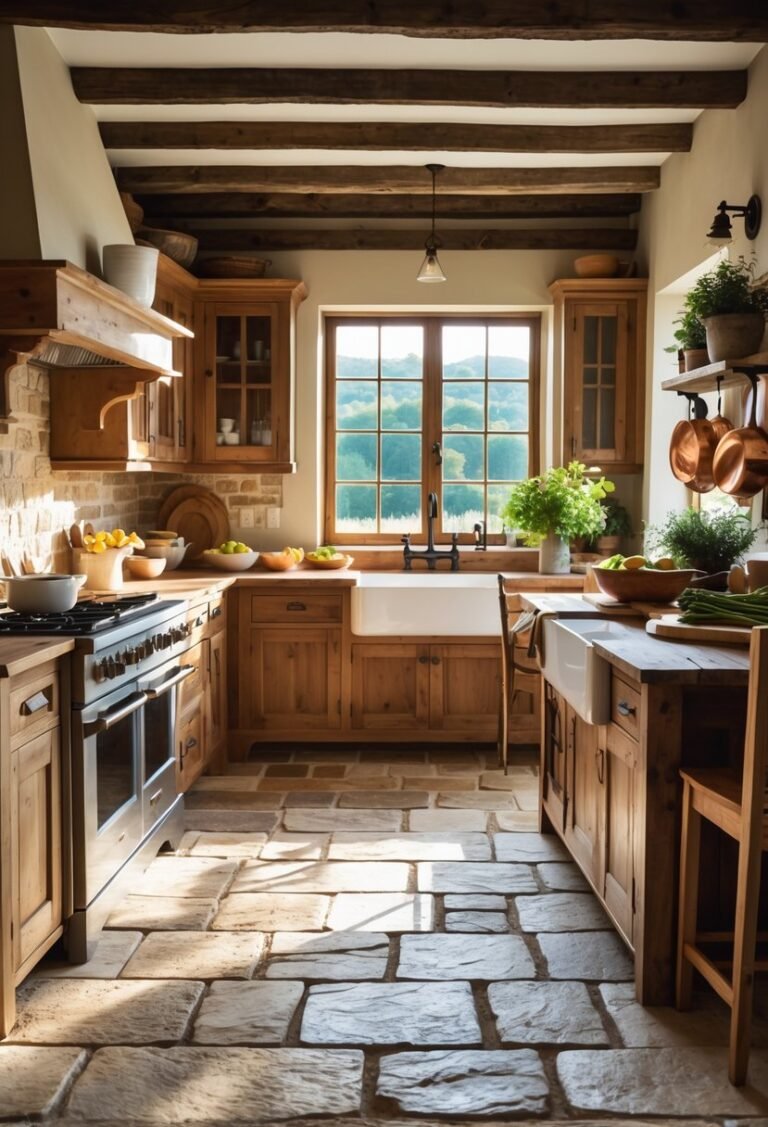
I find that a rustic wood beam ceiling instantly adds warmth and character to a farmhouse kitchen. The exposed beams create a sense of history and craftsmanship that feels authentic and grounded.
Using reclaimed wood or natural timber beams works well to reinforce the rustic aesthetic. These materials introduce natural textures and tones that complement other farmhouse elements like shiplap or vintage cabinetry.
The ceiling becomes a focal point without overwhelming the space. It draws the eye upward, making the kitchen feel cozier and more inviting.
I recommend pairing wood beams with lighter walls or floors to maintain balance and prevent the room from feeling too dark.
8) Subway tile backsplash
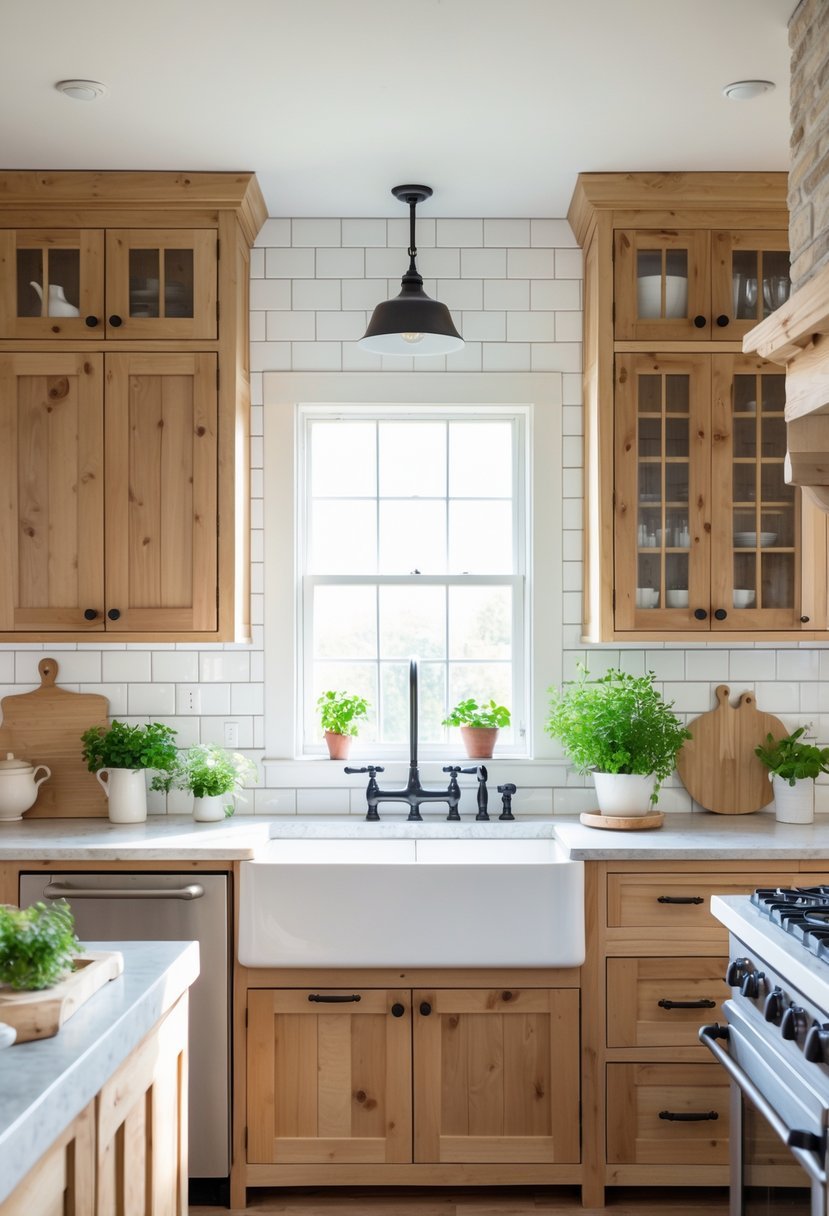
I find subway tile backsplashes are a classic choice for farmhouse kitchens. Their clean lines and simple design create a timeless look that fits both rustic and modern spaces.
White subway tiles are the most common, lending brightness and a sense of openness. However, I’ve seen beautiful variations using soft colors like greens or blues to add subtle personality.
The grout color also plays a role. I prefer a slightly contrasting grout to highlight the pattern, but a matching grout offers a seamless, minimalist effect.
Either way, subway tiles provide flexibility and durability for a kitchen backsplash.
9) Shaker-style cabinetry
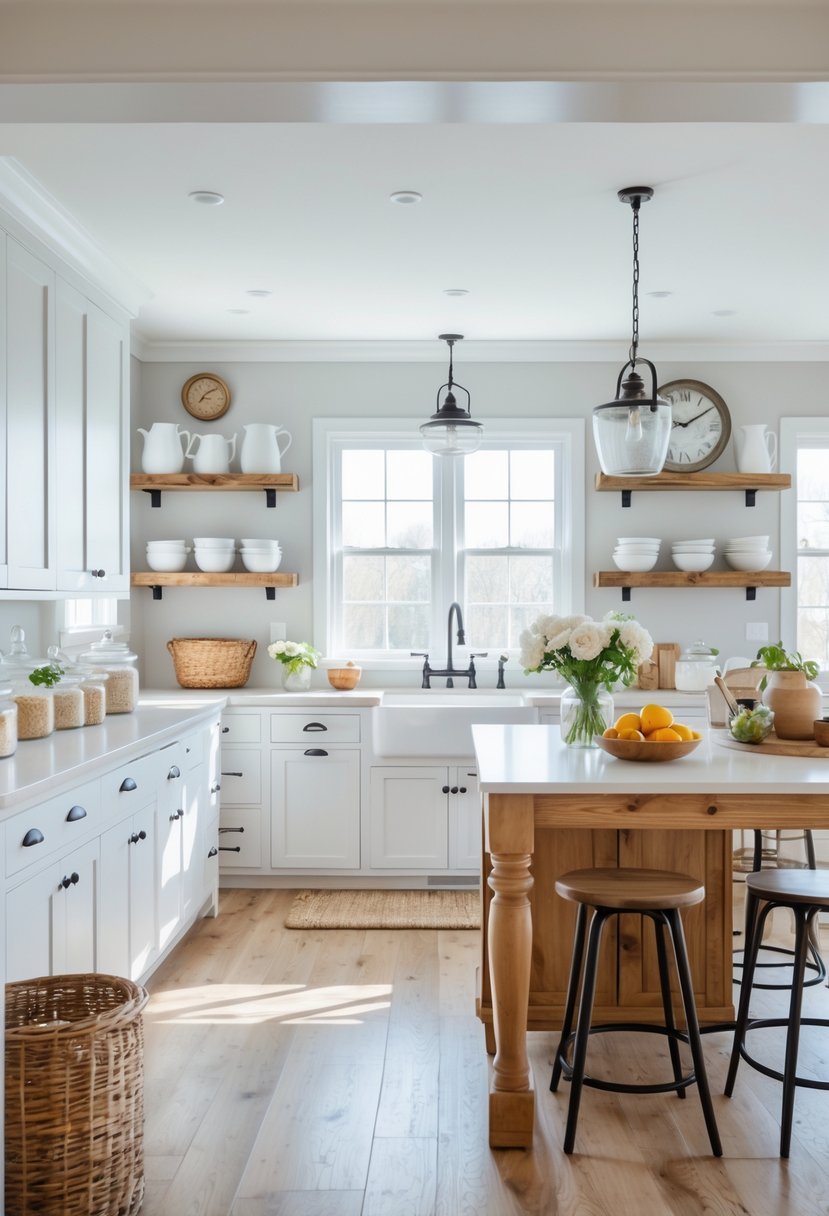
I appreciate Shaker-style cabinetry for its clean lines and timeless simplicity. This design fits well in farmhouse kitchens because it balances rustic charm with modern practicality.
The minimalist look of Shaker cabinets provides a versatile backdrop. Whether painted white or stained in warm wood tones, they work seamlessly with other farmhouse elements like distressed beams or open shelving.
Shaker cabinets make the kitchen feel both organized and welcoming. Their straightforward design helps keep the space functional without sacrificing style.
10) Sky blue kitchen island
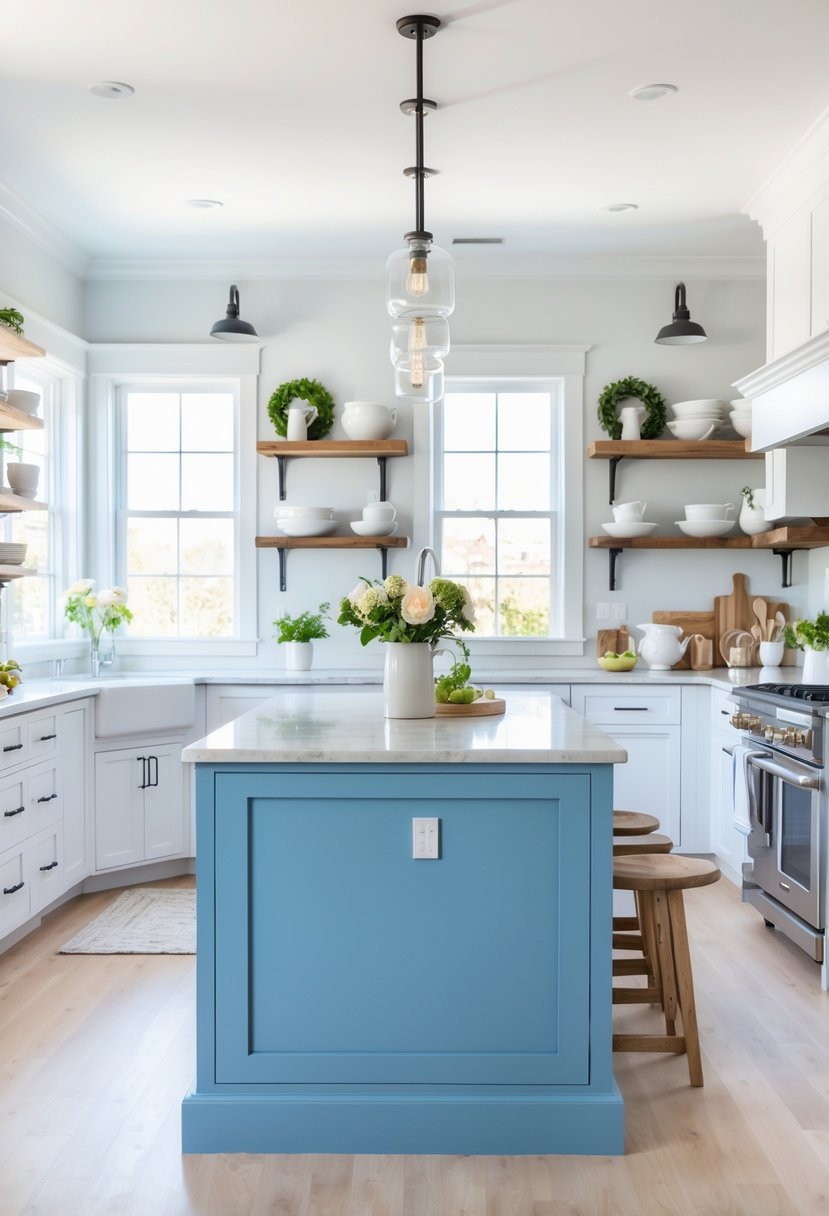
I find a sky blue kitchen island adds a fresh and inviting touch to farmhouse kitchens. This soft shade brings subtle color without overwhelming the rustic elements typically found in farmhouse design.
Choosing sky blue creates a calming focal point, perfect for both cooking and social gatherings. It contrasts nicely with natural wood tones and white cabinetry, enhancing the overall warmth of the space.
A sky blue island can balance function and style, offering both practicality and a gentle pop of color. It fits well in kitchens seeking a light, airy atmosphere while maintaining a classic farmhouse feel.
11) Gold pendant light fixtures
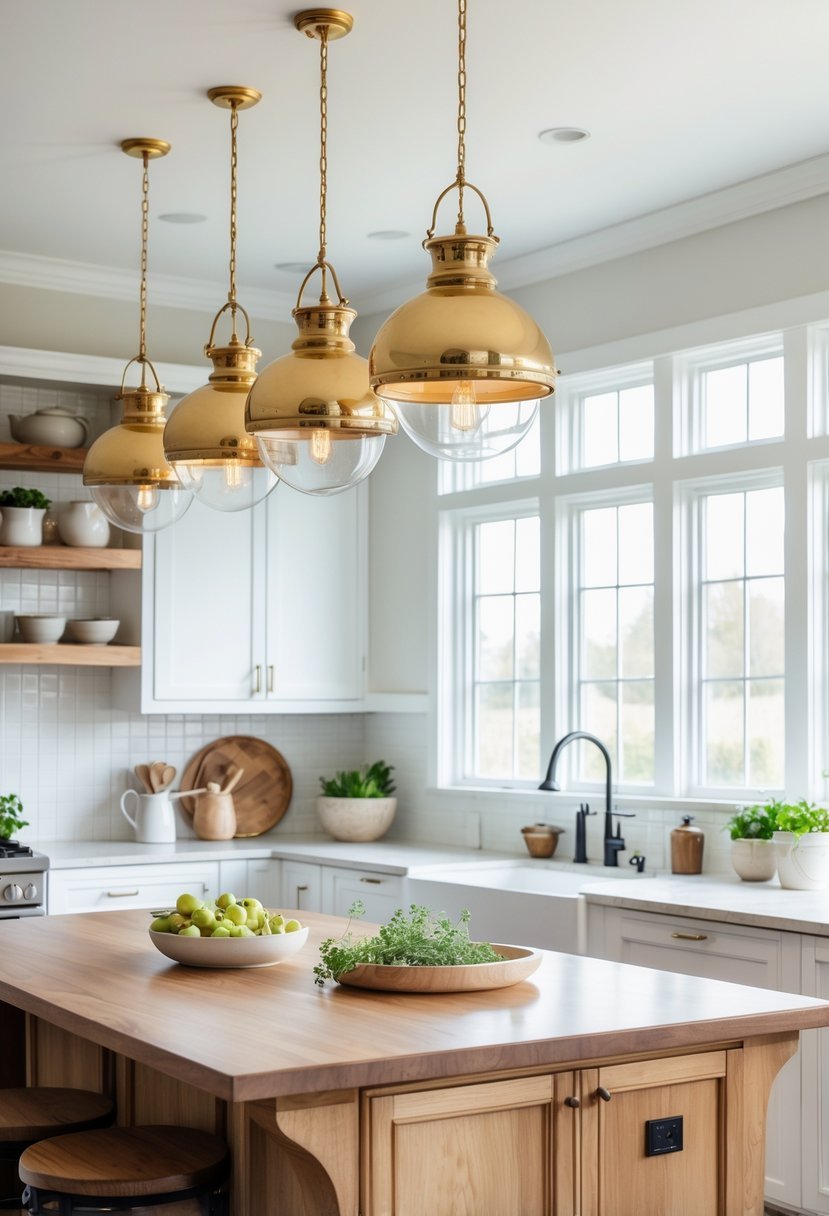
I find gold pendant light fixtures add a warm, inviting glow to farmhouse kitchens. Their subtle shine creates a sense of elegance without overpowering the rustic charm.
Using gold pendants above kitchen islands or work areas balances warmth and modern style. They often pair well with matte gray or wooden elements, creating a cohesive look.
These fixtures bring a touch of luxury while staying practical. They not only illuminate but also enhance the overall aesthetic, making the space welcoming and visually appealing.
12) Farmhouse style dining nook
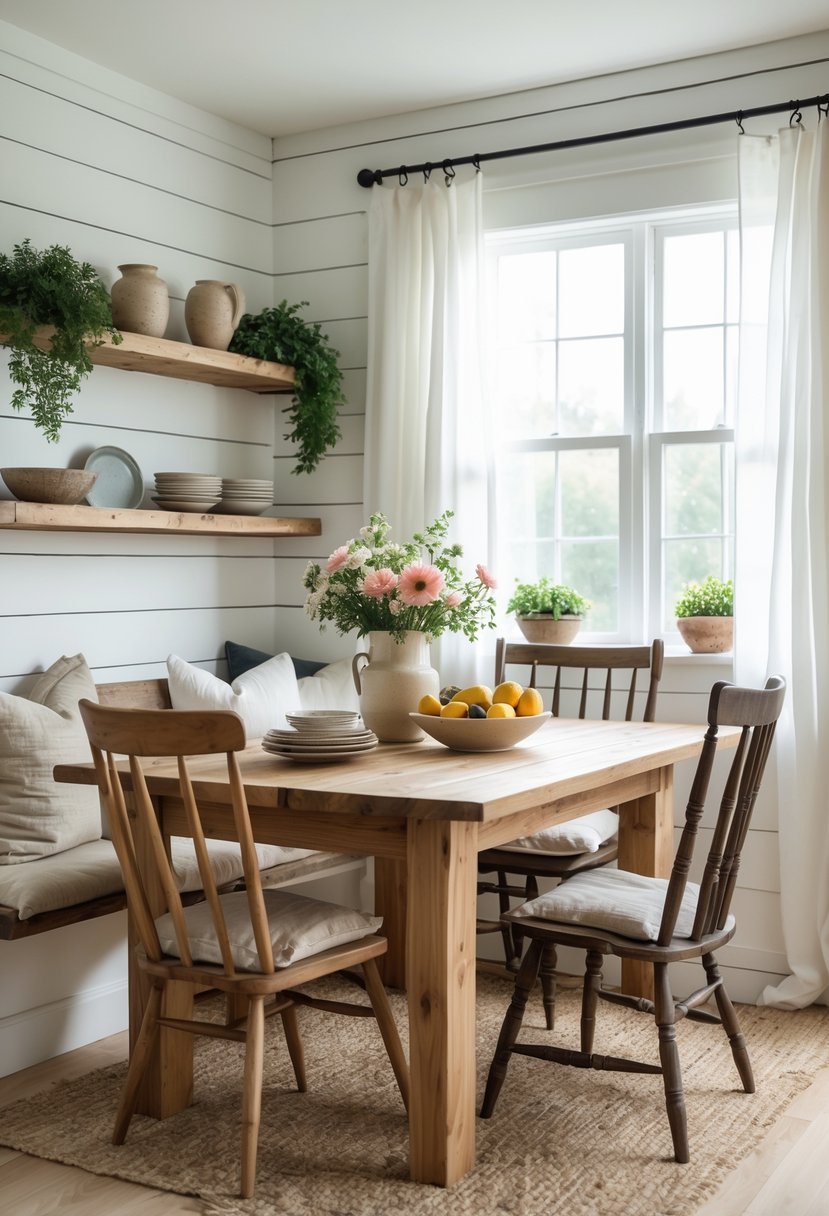
I find a farmhouse style dining nook is perfect for creating a cozy spot that invites you to linger. It blends rustic elegance with practical comfort, making the space feel warm without being cluttered.
To achieve this, I focus on natural materials like wood and incorporate soft textures. A built-in bench or a small table near a window can make the nook both functional and inviting.
Lighting plays an important role too. I prefer warm, soft lights that enhance the farmhouse feel without overpowering the space.
13) Antique accent pieces
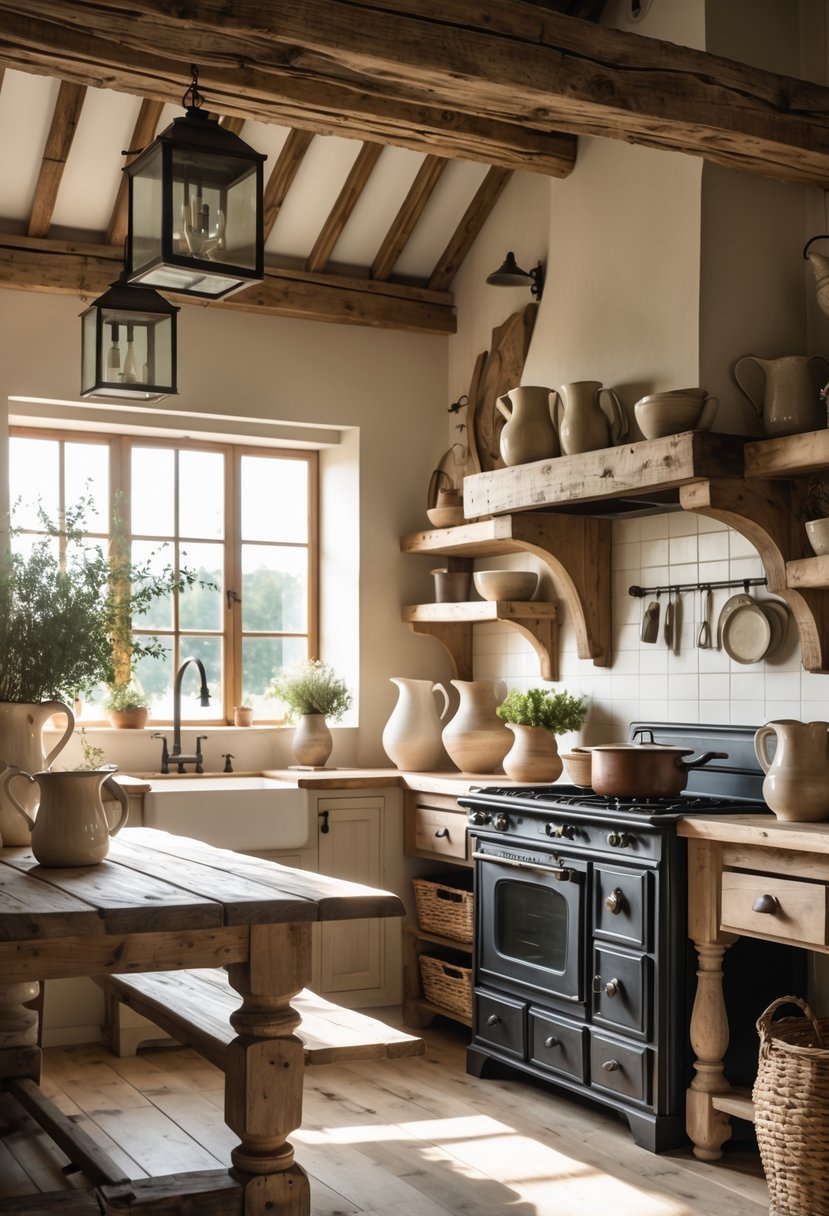
I find that antique accent pieces add a distinct character to a farmhouse kitchen. Items like weathered wood signs, vintage kitchenware, or old glass jars bring subtle history into the space.
Using these pieces thoughtfully creates visual interest and a warm, lived-in feel. I often pair antique cabinet hardware or rustic lighting fixtures with modern elements for balance.
Each item tells a story, and integrating them lets me connect with the kitchen’s past. It’s an effective way to introduce charm while maintaining functionality in the space.
14) Barn door pantry
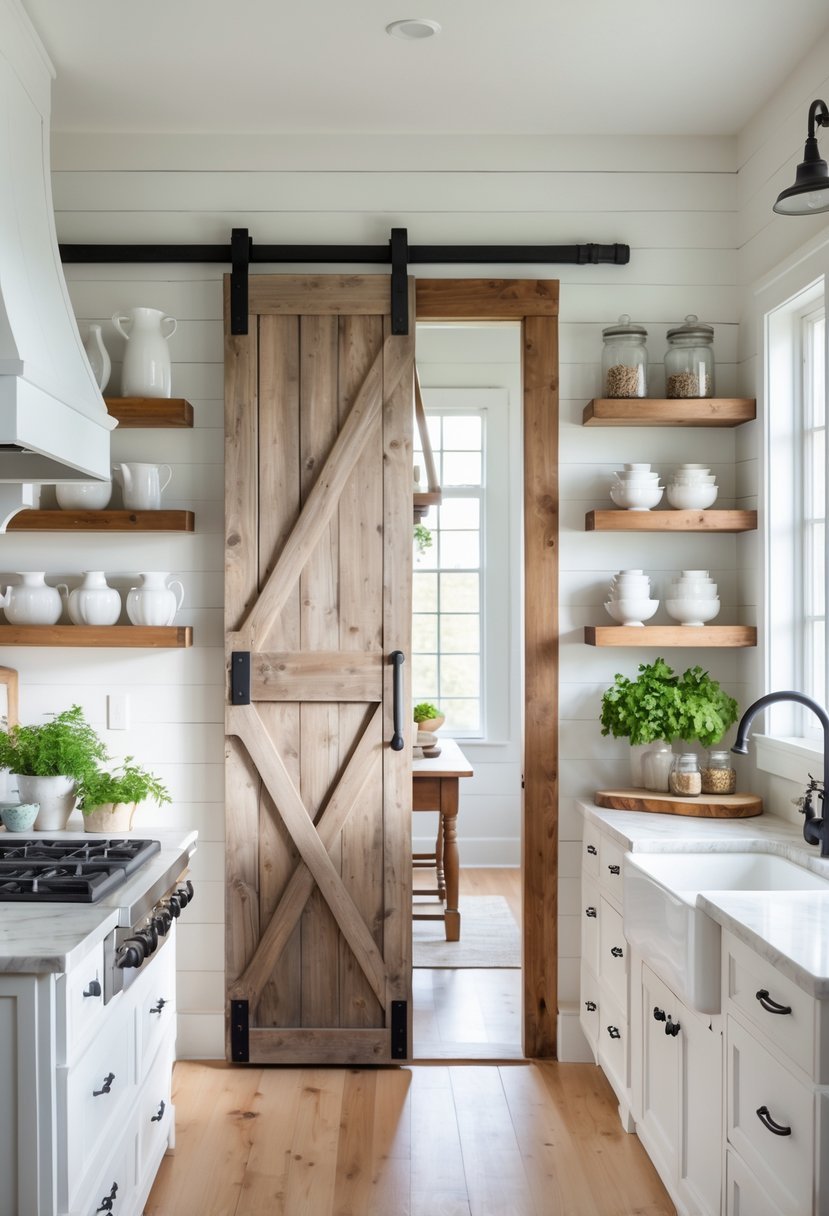
I find barn door pantries to be an excellent blend of style and function. They save space since the door slides instead of swinging open, which is great for smaller kitchens.
The rustic look adds warmth and character, especially with reclaimed wood or weathered finishes. I often recommend choosing a barn door with visible hardware to enhance the farmhouse aesthetic.
Stenciled patterns or vintage accents can personalize the door without overwhelming the space. The right barn door elevates a simple pantry into a design feature that complements the rest of the kitchen.
15) Mason jar storage jars
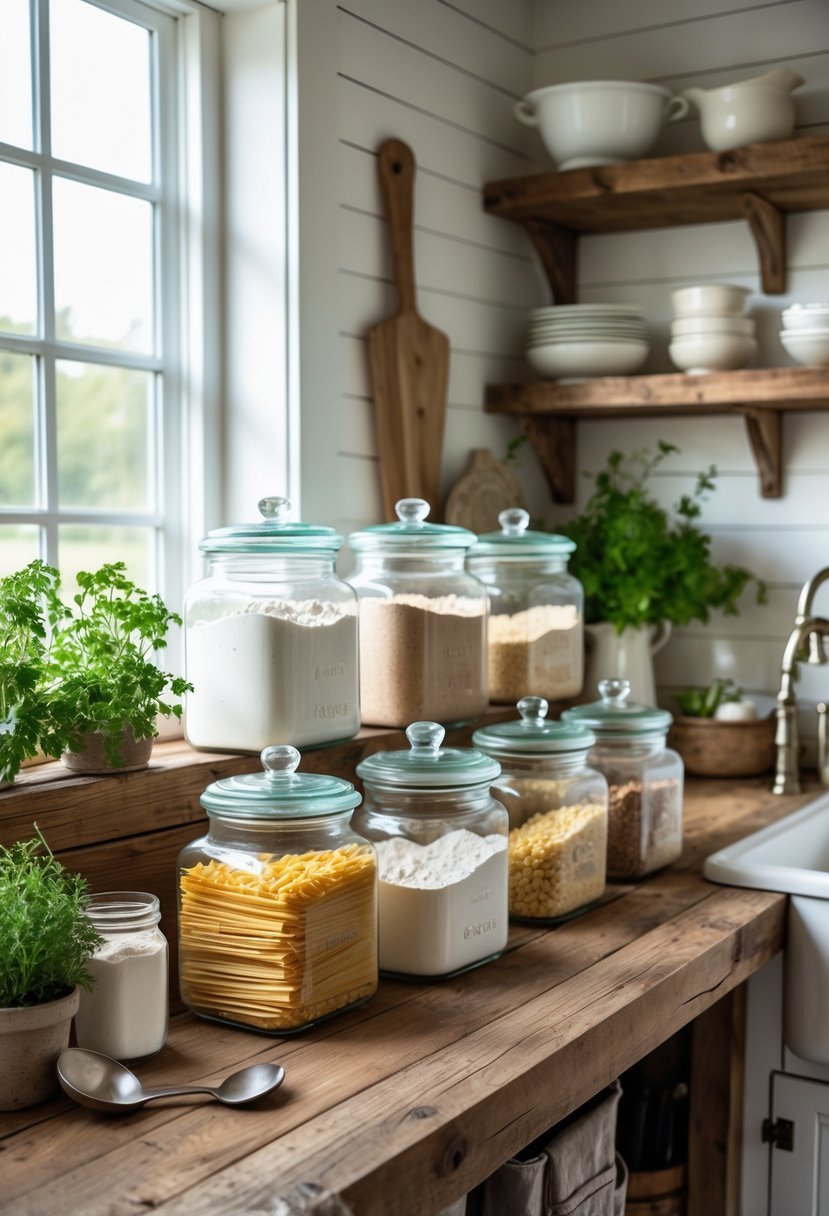
I often use mason jars for storage in my farmhouse kitchen. They are practical and add a rustic touch that fits perfectly with the farmhouse aesthetic.
Mason jars work well for organizing dry goods like spices, grains, and coffee. Their clear glass lets me see contents at a glance, making it easier to stay organized.
Beyond the pantry, I use them to hold utensils, kitchen tools, and even small plants, which brings warmth and charm to the space.
16) Copper cookware display
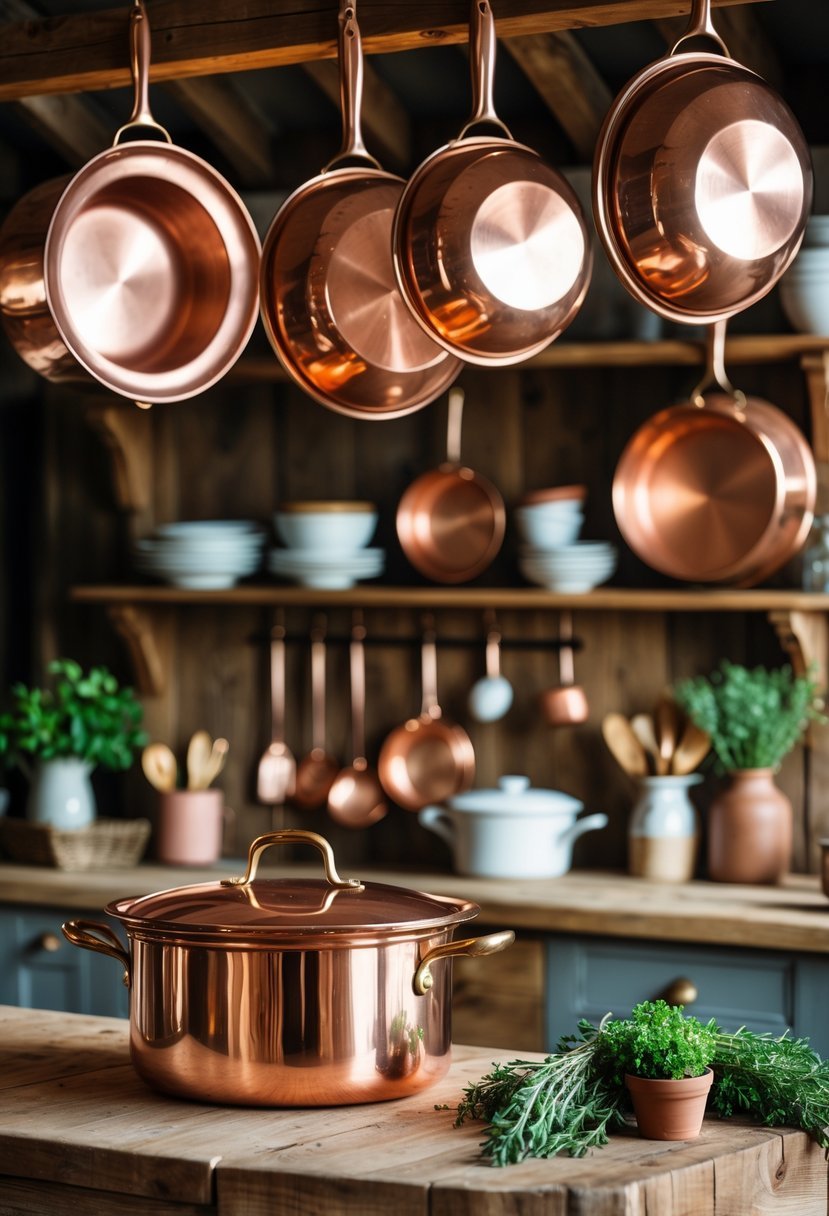
I find copper cookware adds a warm, timeless touch to farmhouse kitchens. Displaying pots and pans on rustic wooden racks or in glass cabinets combines practicality with style.
In my kitchen, copper pendant lights create a cozy atmosphere that complements the other warm tones. Exposed copper elements, like pipes or a copper-topped island, add subtle industrial charm without losing the farmhouse feel.
Using copper as decor goes beyond function. It brings character and a welcoming vibe that fits perfectly with farmhouse design principles.
17) Neutral color palette
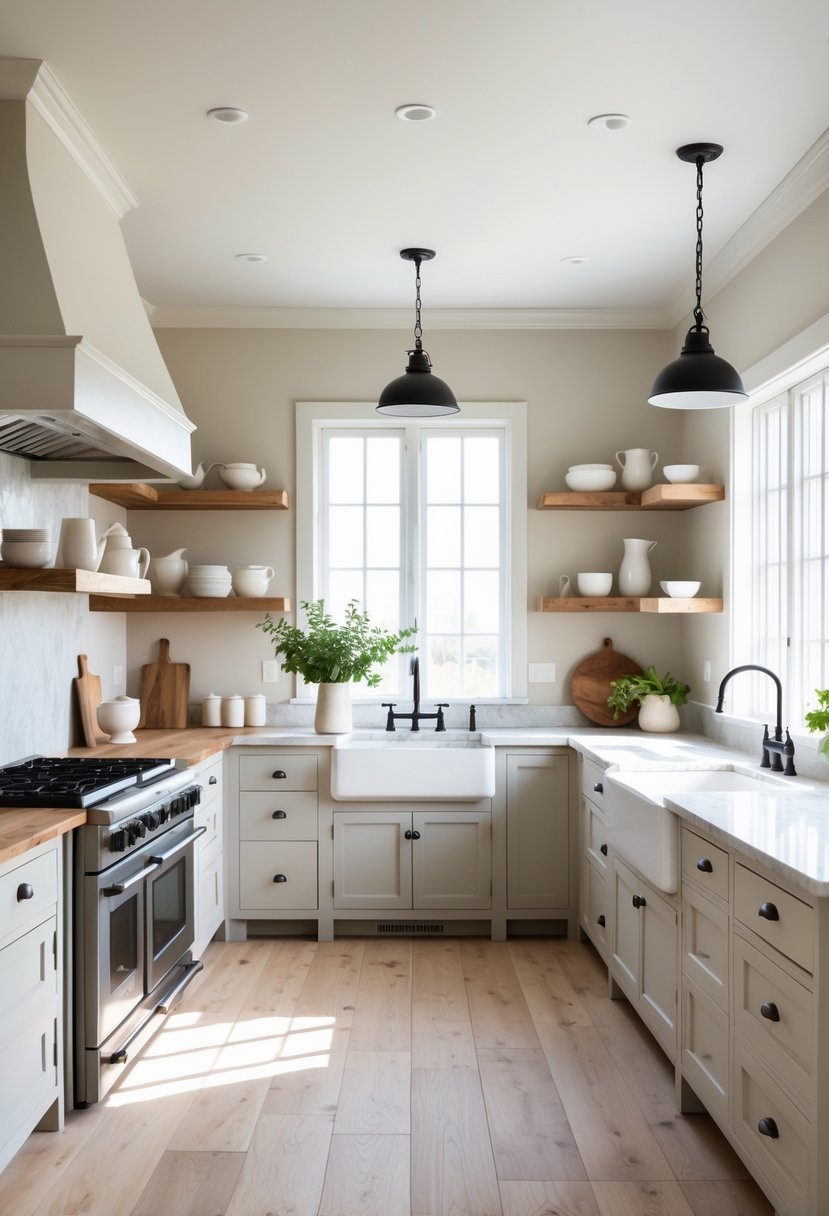
I find a neutral color palette essential for farmhouse kitchens. Using shades like creams, soft taupes, grays, and whites creates a calm, inviting space.
These colors form a versatile backdrop that highlights natural materials like wood and stone. Layering different neutral tones prevents the design from feeling flat or dull.
It adds subtle depth and warmth. Neutrals also allow for easy incorporation of accent colors if I want to refresh the look without major changes.
Choosing a neutral palette makes the kitchen feel timeless. It balances rustic charm with modern simplicity, which suits the farmhouse style perfectly.
18) Farmhouse-style open layout
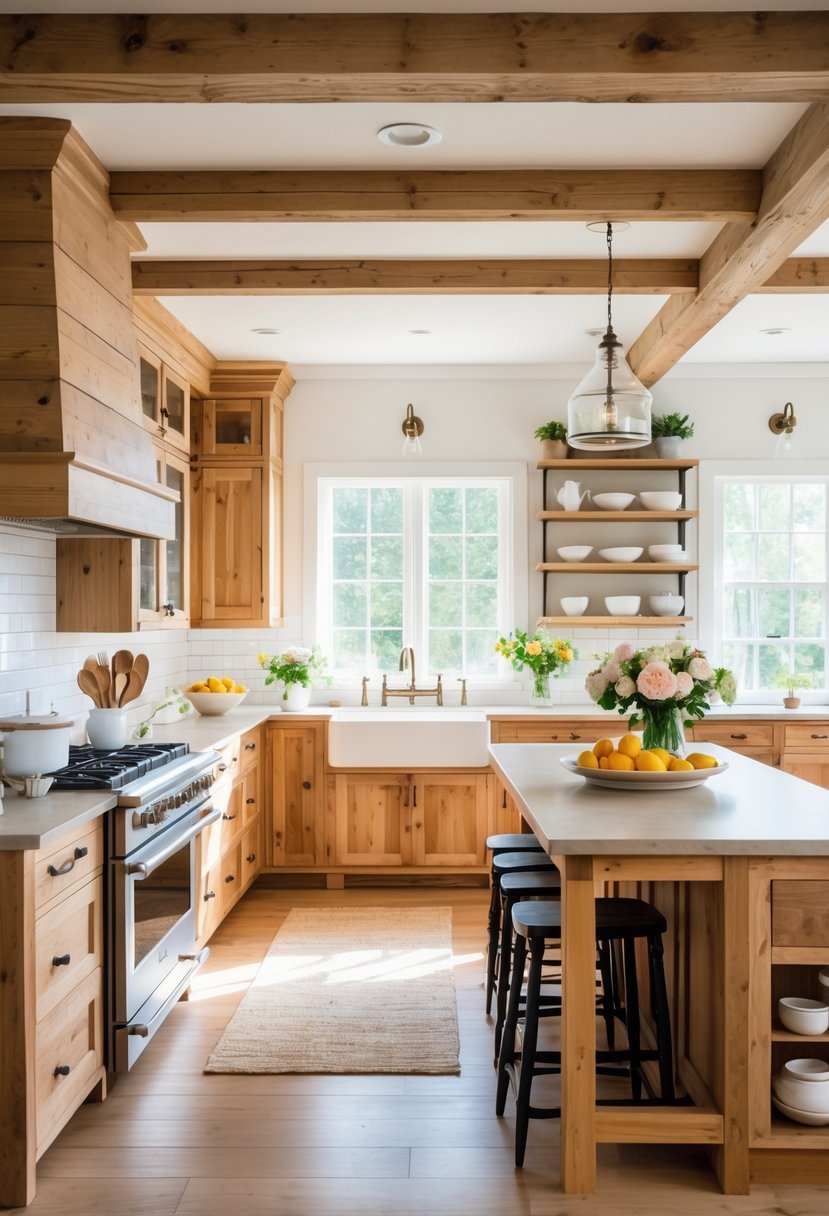
I prefer a farmhouse-style open layout because it enhances the sense of space and natural light in the kitchen. This design prioritizes large windows and minimal walls, making the area feel airy and inviting.
The open layout encourages easy movement and creates a seamless flow between cooking, dining, and living areas. It’s practical for gatherings and keeps the kitchen connected to the rest of the home.
Combining open shelving or simple cabinetry with this layout supports both function and the classic farmhouse aesthetic. It balances rustic charm with modern convenience.
19) Woven wicker baskets
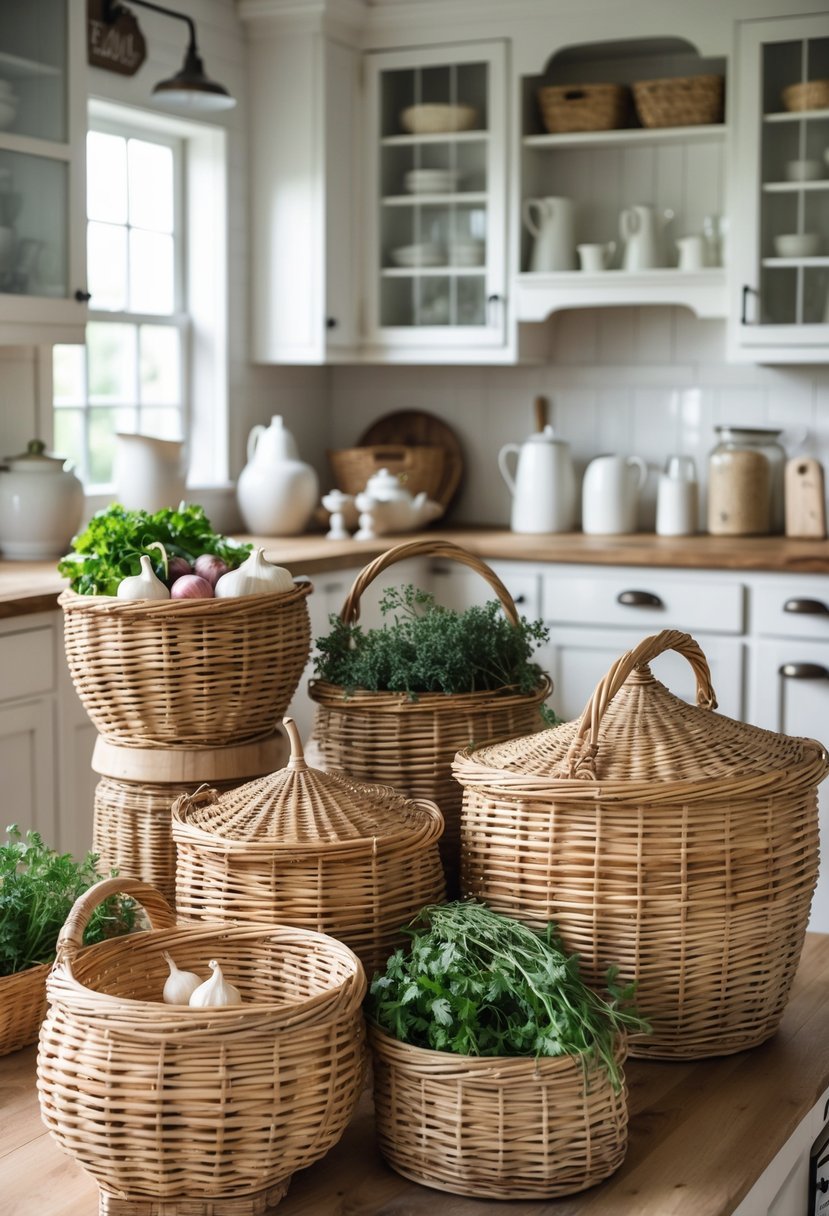
I find woven wicker baskets to be one of the most practical and stylish additions to a farmhouse kitchen. They add texture and warmth, bringing a natural, rustic feel without overwhelming the space.
In my kitchen, I use large wicker baskets to store blankets. Smaller ones are perfect for fresh produce or kitchen towels.
Wicker baskets also pair well with various farmhouse elements, from wooden shelves to vintage accents. Their durability means they last for years with proper care.
Conclusion
As we have explored through these 21 examples, the farmhouse kitchen is less about following a strict set of rules and more about creating a feeling. Whether you incorporate industrial lighting fixtures, open shelving, or a massive butcher-block island, the goal is to build a space that feels welcoming and unpretentious. We hope these farmhouse kitchen design ideas have inspired you to mix the old with the new. Now, it’s time to roll up your sleeves and start designing a space where family memories are made.