10 Best Carpet for Basement Ideas for Durable and Stylish Flooring
Choosing the right carpet for a basement can be challenging due to factors like moisture, cooler temperatures, and potential water intrusion. I want to help you find options that suit these unique conditions while providing comfort and durability.
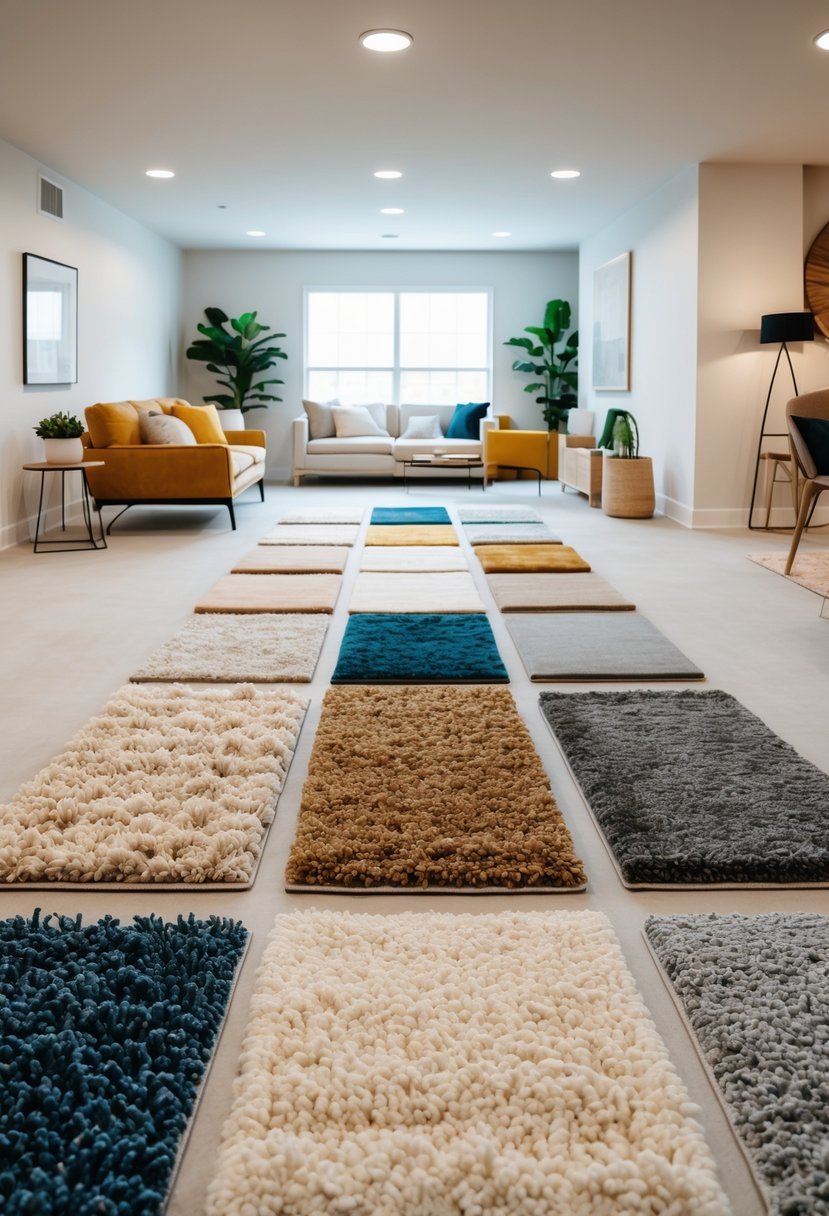
With the right carpet, basements become more inviting and functional, whether for relaxation, work, or play.
Table of Contents
1) Low-pile nylon carpet for moisture resistance
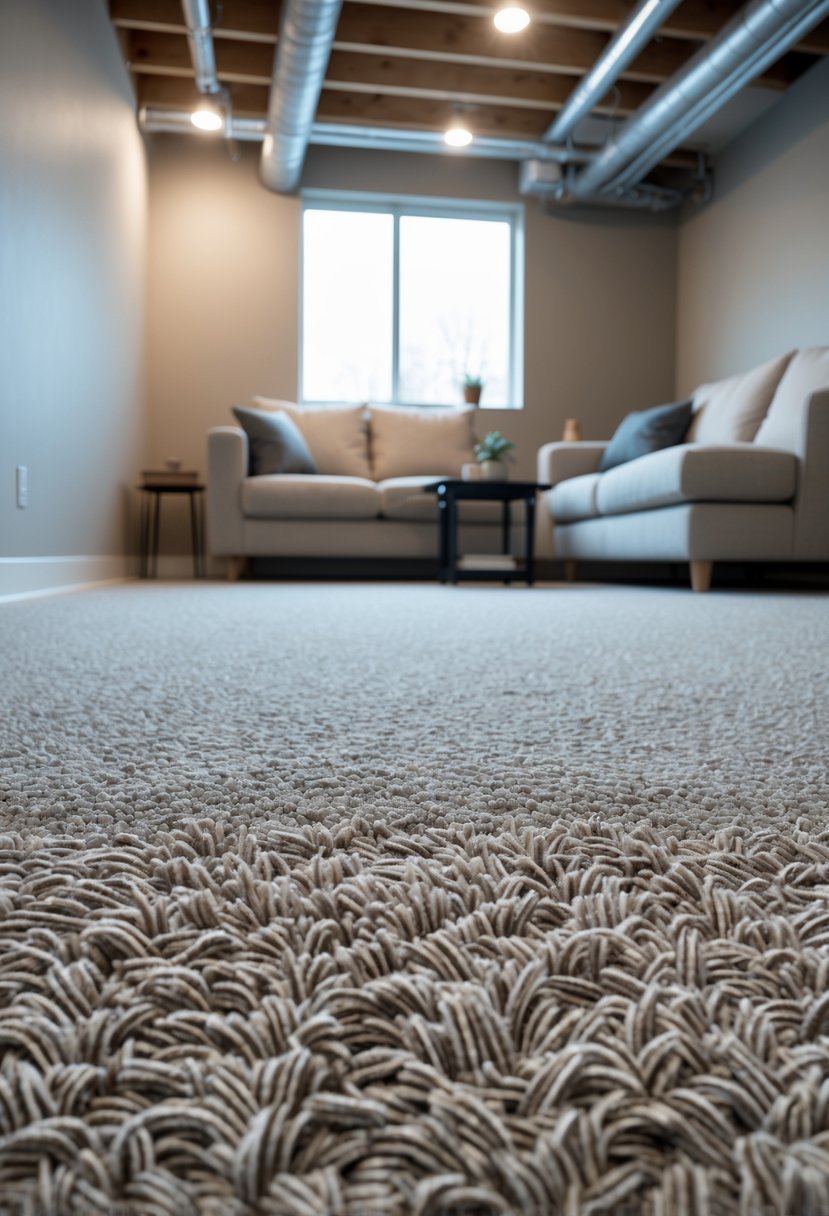
I prefer low-pile nylon carpet in basements because it handles moisture better than plush options. The short fibers don’t trap water, making it easier to maintain and less likely to develop mold.
Nylon is durable and resists stains, which is crucial in a basement environment. It also dries faster than some other fibers, reducing the risk of mildew buildup.
For moisture resistance, the carpet backing and padding also matter. I usually pair nylon carpet with a moisture barrier or synthetic underlay to protect against dampness from the floor below.
This combination offers a practical, long-lasting flooring choice for basements.
2) Carpet tiles for easy replacement and installation
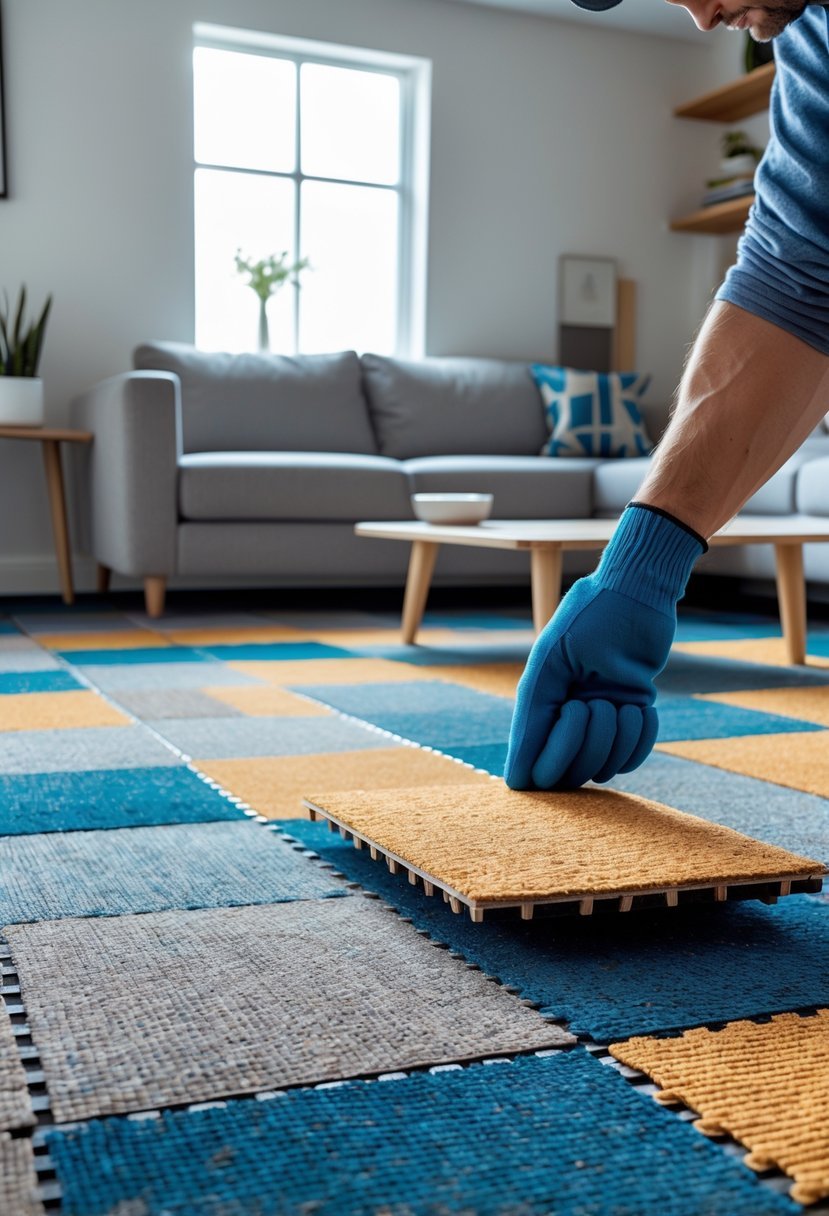
I prefer carpet tiles for basements because they offer straightforward installation. Typically, you just need to clean the flat surface, peel the backing, and stick the tile in place.
This process saves time, especially compared to traditional wall-to-wall carpet installation. Another advantage is how simple it is to replace damaged tiles.
If one section stains or wears out, I can swap out just that tile rather than redoing the entire floor. This makes maintenance more manageable and cost-effective over time.
Carpet tiles also provide design flexibility. I can mix patterns or colors to suit my style while ensuring the tiles hold up against basement moisture and temperature changes.
3) Wool carpet for natural insulation and durability
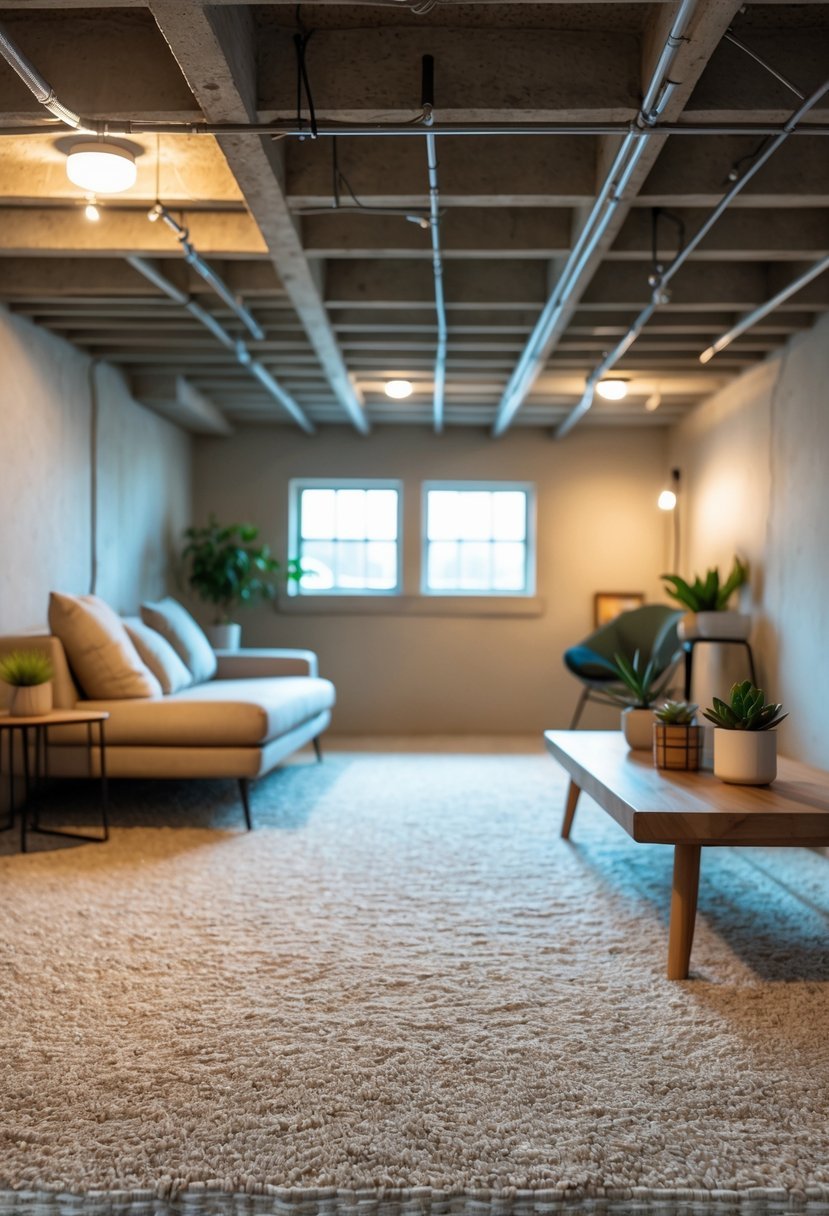
I recommend wool carpet when looking for natural insulation and long-lasting durability in a basement. Wool traps heat well, keeping floors warm even in cooler, below-grade environments.
This natural fiber feels soft underfoot, adding comfort to often chilly basement spaces. Wool’s durability is notable; it resists wear even in moderate traffic.
However, I consider moisture carefully since wool absorbs dampness, which can lead to maintenance challenges in humid basements. Using a proper moisture barrier and dehumidifier can help maintain its condition.
For a blend of resilience and warmth, I often suggest wool-polyester mixes, which balance the benefits of wool with improved moisture resistance.
4) Polypropylene carpet for stain and mildew resistance
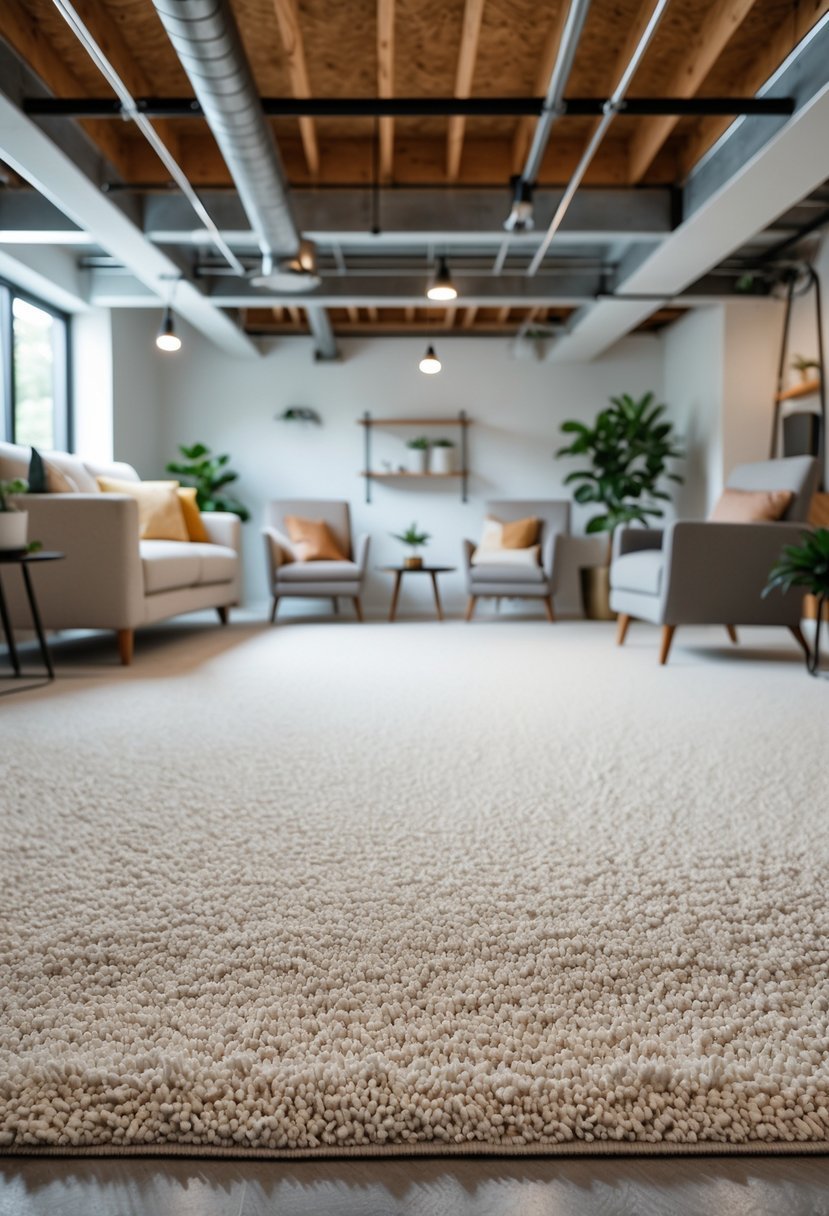
I often recommend polypropylene carpet for basements because of its stain and mildew resistance. This material naturally repels water, which helps prevent mold growth in damp environments.
Polypropylene is affordable and durable, making it a practical choice for areas that may get wet or dirty. It resists many common stains, though it can struggle with oily substances.
While it works well in basements, I wouldn’t suggest it for high-traffic rooms due to potential crushing under heavy use. Still, its easy maintenance and moisture resistance make polypropylene a solid option for basement floors.
5) Berber carpet style for hiding stains and wear
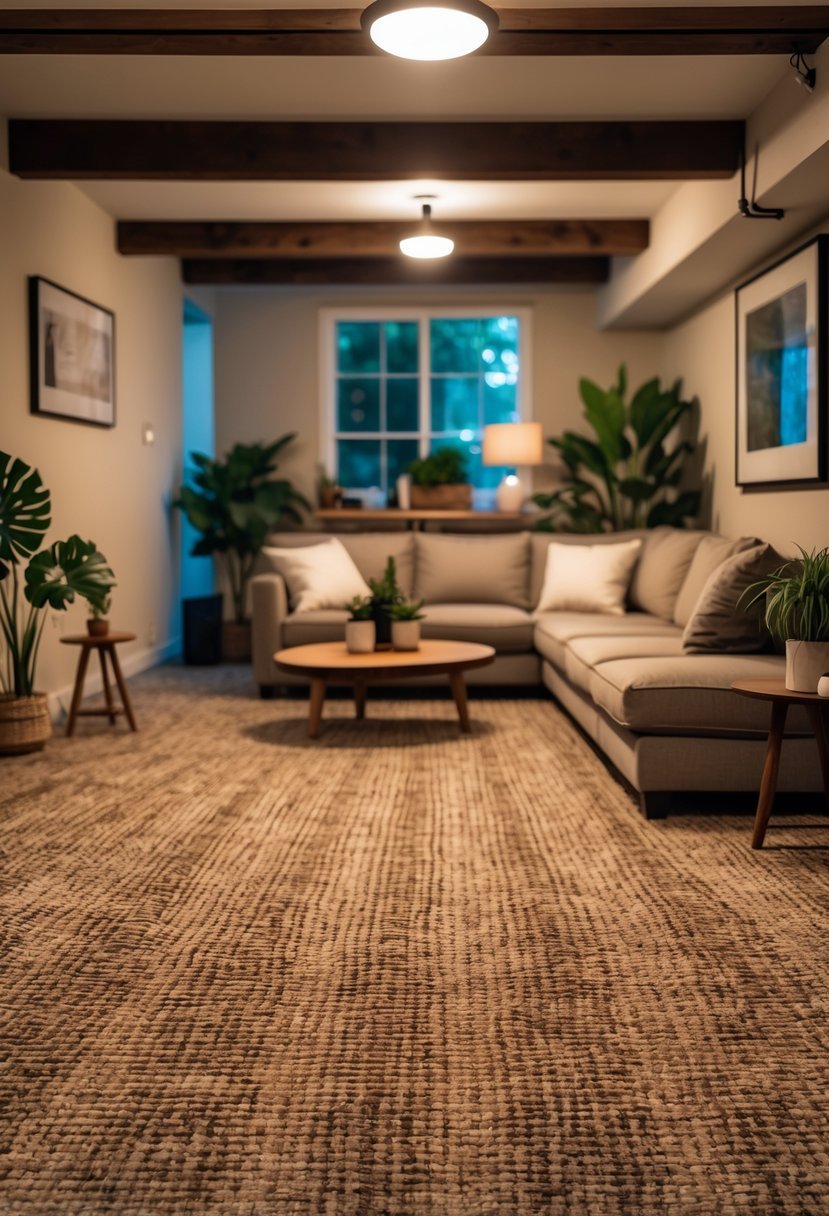
I find Berber carpet to be a practical choice for basements because its looped texture is naturally durable. The dense loops resist crushing, making it suitable for areas with frequent foot traffic.
One of the biggest advantages for me is how well the flecked pattern conceals stains and dirt. Unlike solid colors, Berber’s multitone design helps hide wear, which keeps the carpet looking cleaner for longer.
Berber carpets often come in stain-resistant fibers like nylon or solution-dyed polyester. This adds extra protection against spills, which is important in basement spaces where moisture might occasionally be an issue.
6) Cut-pile carpet for softness and comfort
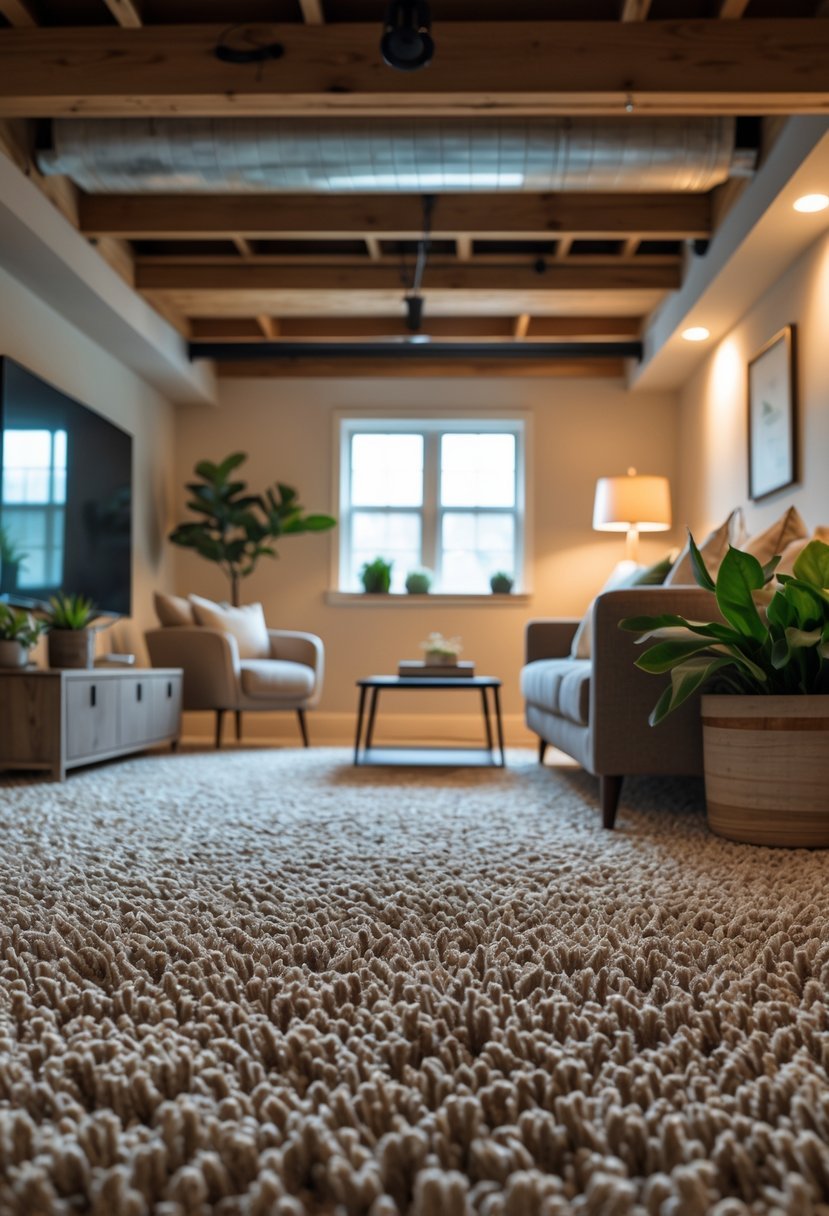
I recommend cut-pile carpet when comfort is a priority. Its fibers are sheared, creating a smooth, soft surface that feels pleasant underfoot.
This makes it ideal for basements where warmth and coziness matter. Cut-pile carpets also have a plush texture that adds a welcoming touch to the space.
I find styles like Saxony particularly appealing because they balance softness with durability. However, moisture control is still essential in basements, so pairing cut-pile carpet with a moisture-resistant padding is wise.
The softness can enhance a basement used as a living area or playroom. It transforms a cold concrete floor into a comfortable, inviting spot without sacrificing style.
7) Use a quality moisture barrier underlay
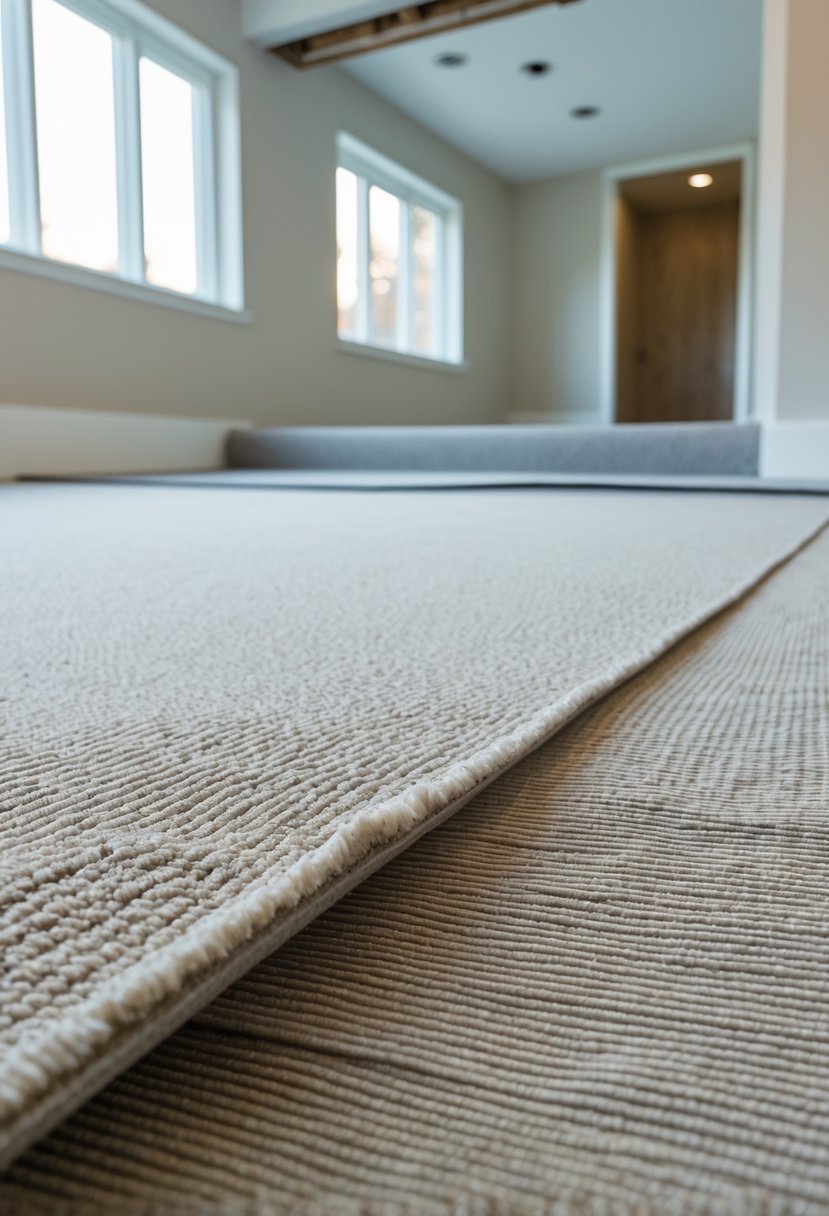
I always recommend installing a moisture barrier underlay when carpeting a basement. This layer helps prevent moisture from seeping through the concrete floor and damaging the carpet.
Without it, carpets can become damp, leading to mold or mildew growth. A good moisture barrier underlay also adds comfort and insulation.
It keeps the carpet warmer and helps maintain a consistent temperature in the basement. I look for underlays designed specifically for below-grade spaces to ensure durability and effectiveness.
Proper installation is important as well. The underlay should cover the entire floor and fit tightly to avoid gaps where moisture can enter.
8) Choose light colors to brighten basement spaces
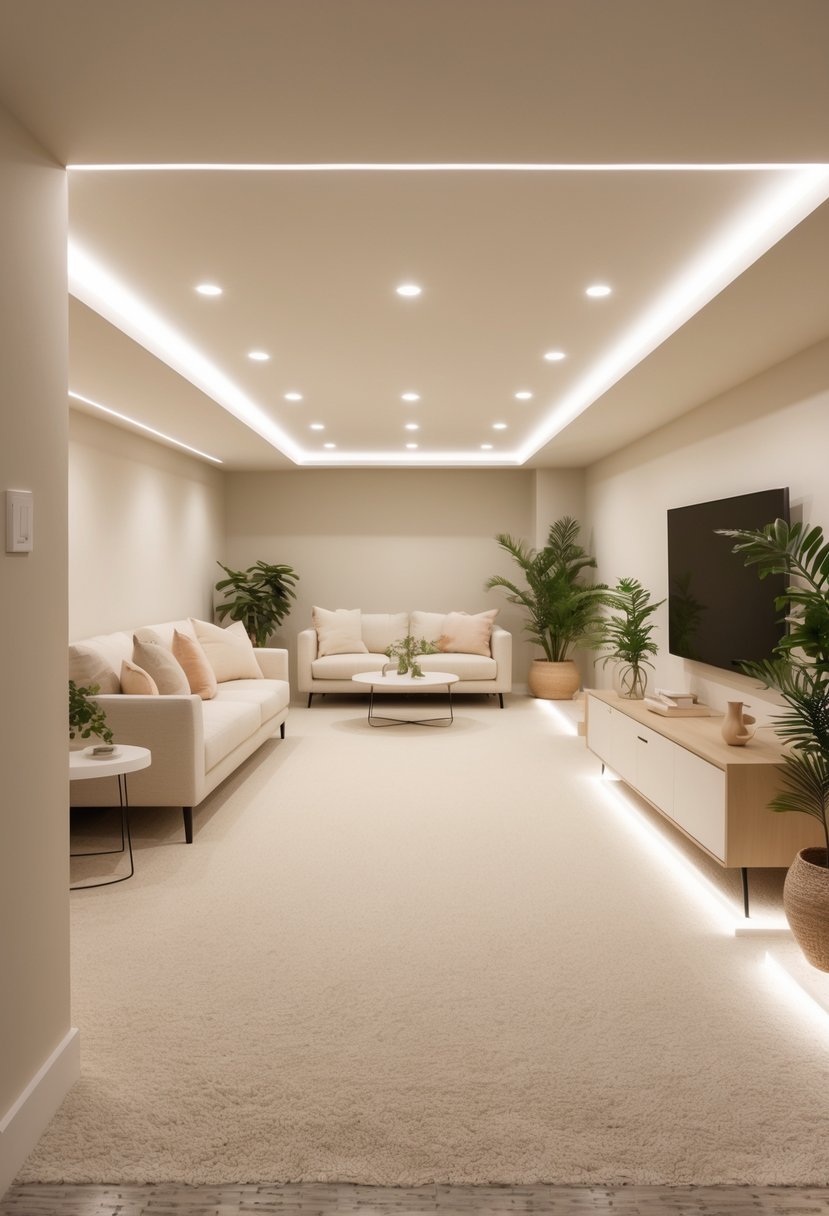
I recommend using light carpet colors to improve the brightness in basement rooms. Basements often lack natural light, so pale shades like beige, light gray, or soft taupe can help reflect the available light and make the space feel less confined.
Light colors also create a neutral backdrop that works well with various furniture styles and wall colors. They can subtly warm up the room without overwhelming it.
When selecting a light carpet, consider durability and moisture resistance. Lighter colors may show dirt more easily, so choosing a stain-resistant material can keep the basement looking fresh longer.
9) Select carpets with antimicrobial treatments
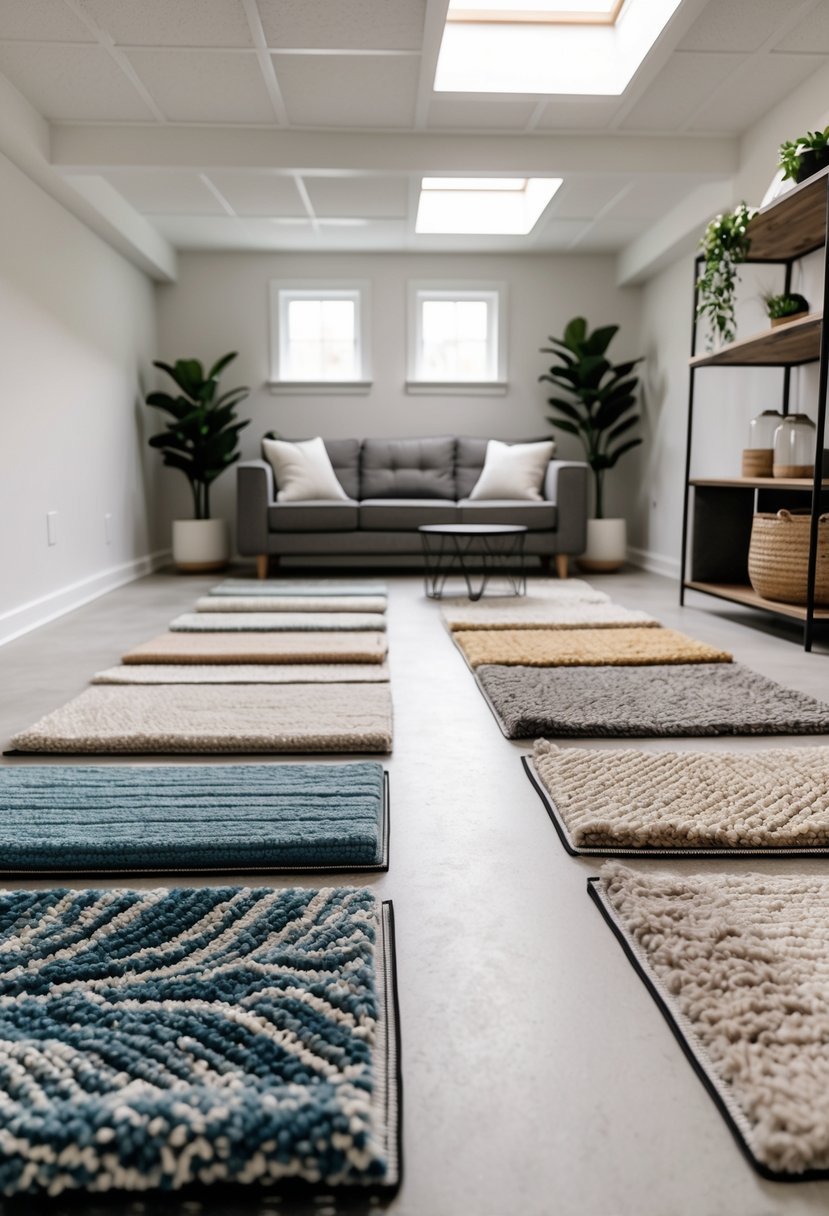
I recommend choosing carpets with antimicrobial treatments for basement spaces. These treatments help prevent mold, mildew, and bacteria growth, which are common issues in areas prone to moisture.
Carpets treated with antimicrobial agents maintain better air quality and reduce odors, making the basement more comfortable. This choice also helps protect the carpet fibers and extends their lifespan.
When shopping, look for carpets with labels indicating antimicrobial protection. This feature adds value, especially in basements where humidity and dampness can be persistent problems.
10) Install carpet with professional-grade adhesives
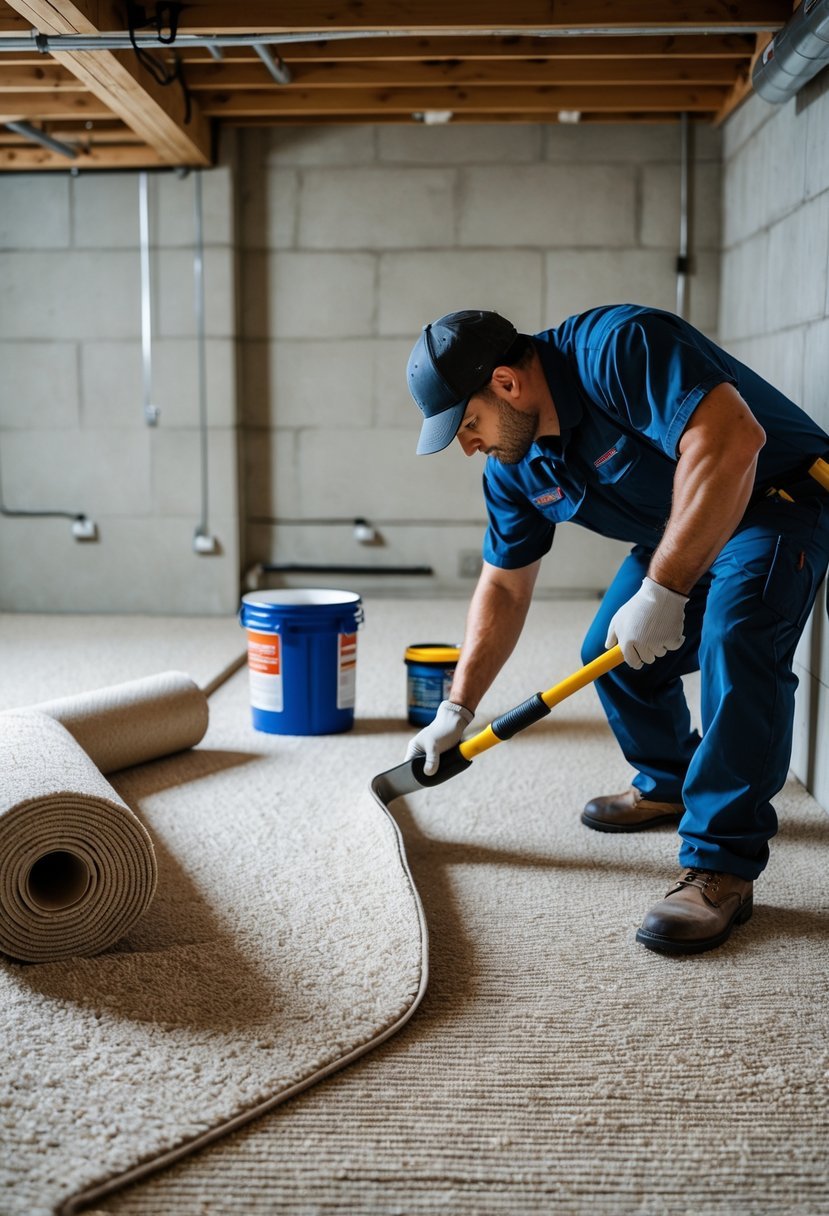
I recommend using professional-grade adhesives when installing carpet in a basement to ensure a secure and lasting bond. Basements often experience moisture issues, so a strong adhesive helps keep the carpet in place and prevents lifting or warping.
These adhesives are designed to work with moisture-resistant carpet pads and engineered carpet systems. This makes them suitable for handling the basement’s unique environment.
Using glue-down methods also reduces the risk of mold and mildew growth beneath the carpet. It limits spaces where moisture can accumulate.
Proper adhesive installation demands careful surface preparation and even application. The result is a durable floor that withstands basement conditions better than loose-lay or tack-down options.