10 Bathroom Wooden Floor Ideas for Stylish and Durable Spaces
Wood flooring in bathrooms has become a practical and stylish option, thanks to advancements in water-resistant materials and sealants.
Incorporating wood can add warmth and texture to a space that often feels cold or sterile.
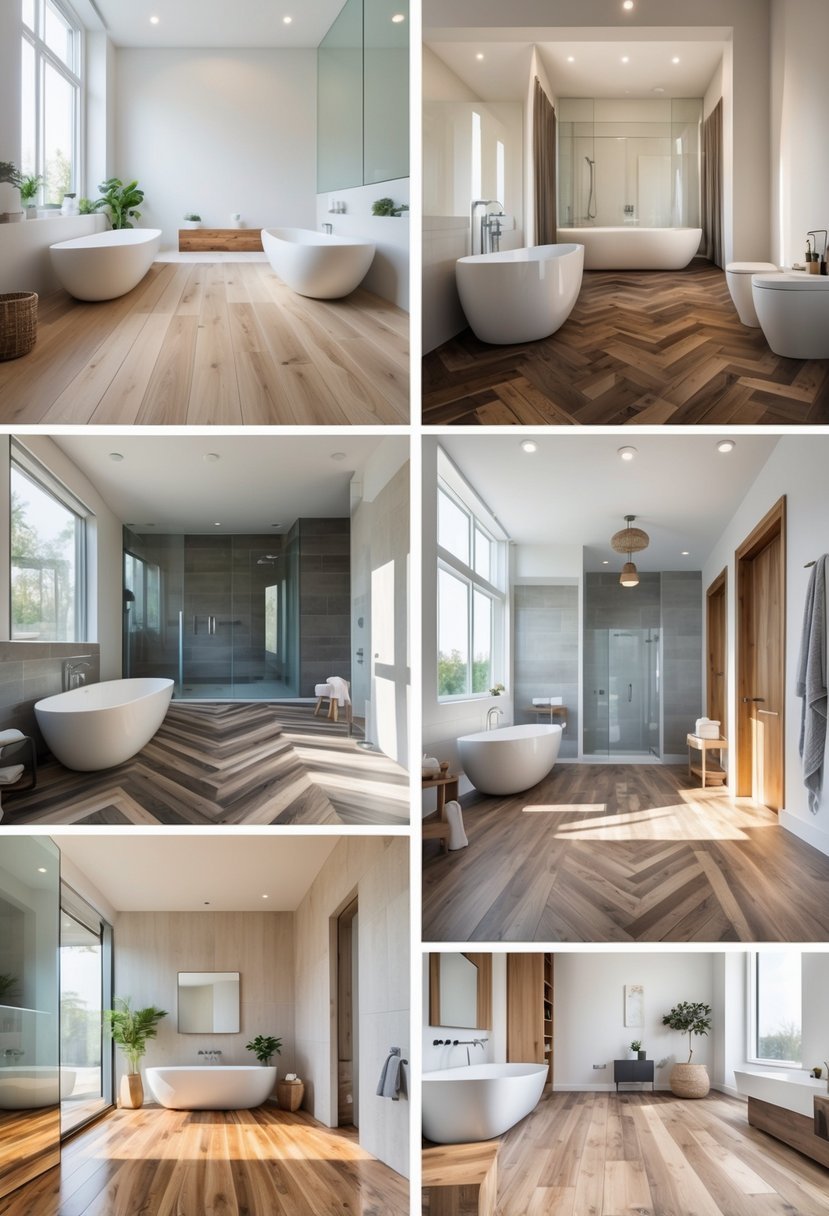
The key benefit of wooden floors in bathrooms is that they offer a unique blend of natural beauty and durability suited for moisture-prone areas.
Throughout the article, I’ll share ten ideas that showcase different wood types, finishes, and installation styles to inspire your bathroom design.
Table of Contents
1) Light Blonde Oak for a Bright, Airy Feel
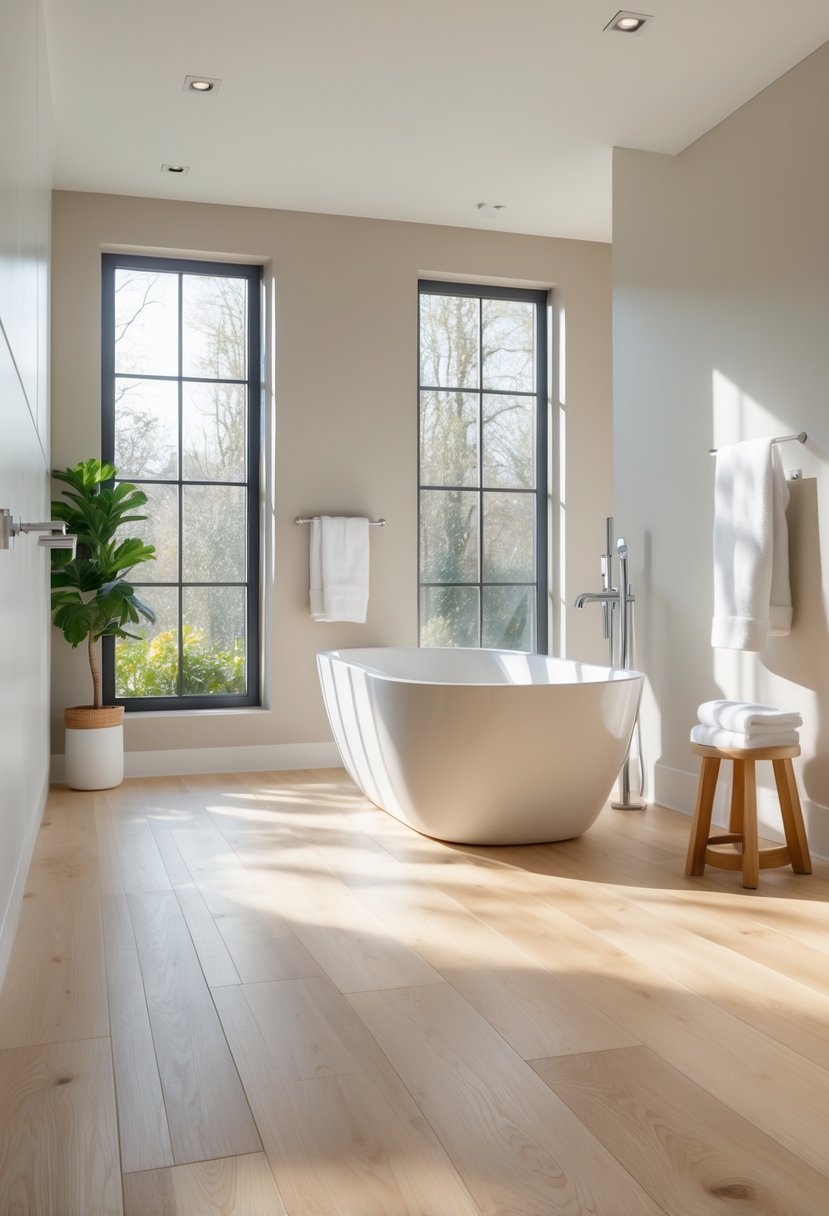
I find light blonde oak an excellent choice for bathroom floors when aiming for a bright, open atmosphere.
Its pale tones reflect natural light, which helps smaller spaces feel larger and less confined.
The warmth of blonde oak adds subtle elegance without overwhelming the room.
It works well with various styles, from modern to Scandinavian, creating a clean and inviting look.
Pairing this wood with neutral or earthy tones enhances the space’s freshness.
It also complements both natural and artificial lighting, maintaining a consistent bright feel throughout the day.
2) Reclaimed Wood Planks for Rustic Charm
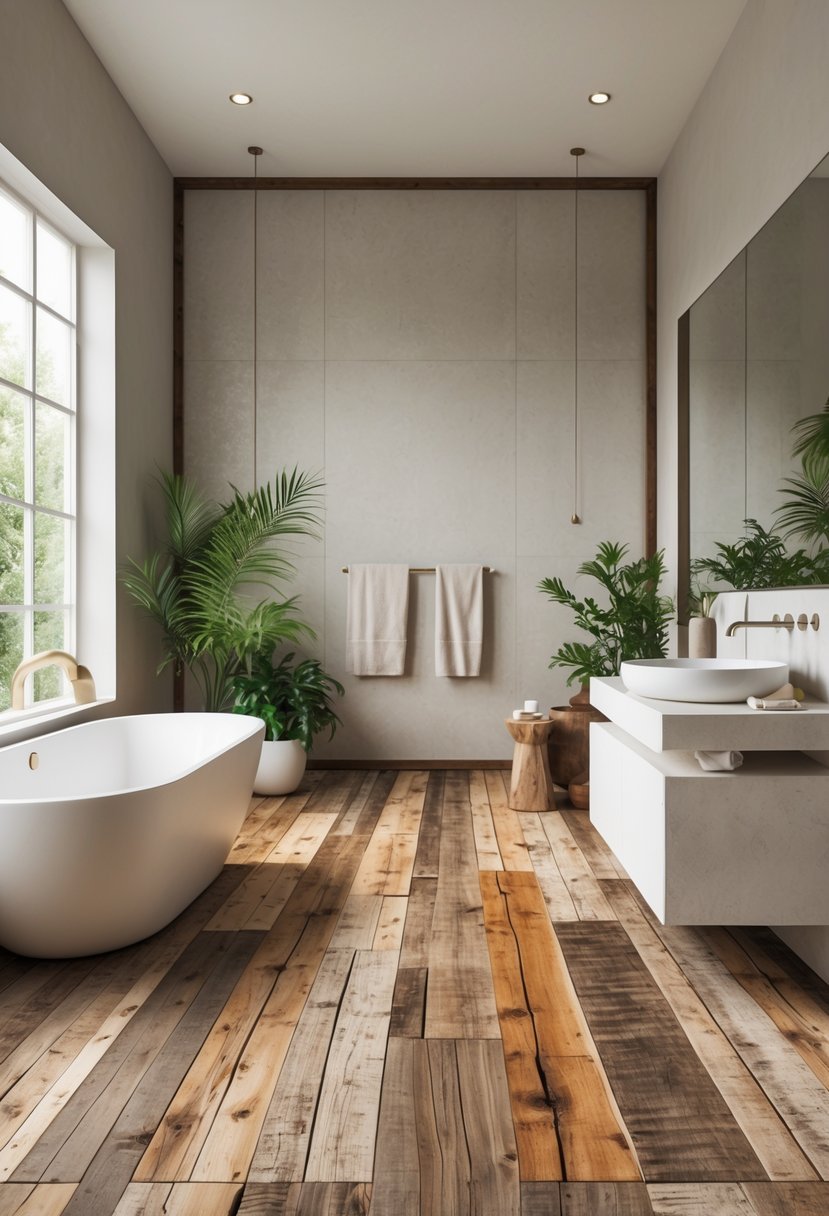
I find reclaimed wood planks an excellent choice for adding rustic charm to a bathroom.
Each plank has a unique history, bringing natural variations in grain and texture that give the floor character.
Using reclaimed wood is also environmentally responsible.
It reduces waste and lessens the demand for new timber.
To protect the wood from moisture, I recommend applying a high-quality waterproof finish, which ensures durability without losing the authentic, weathered look.
Reclaimed wood complements both rustic and industrial styles well.
Its natural imperfections enhance the aesthetic, making the floor a focal point.
3) Ebony-Stained Hardwood for Modern Elegance
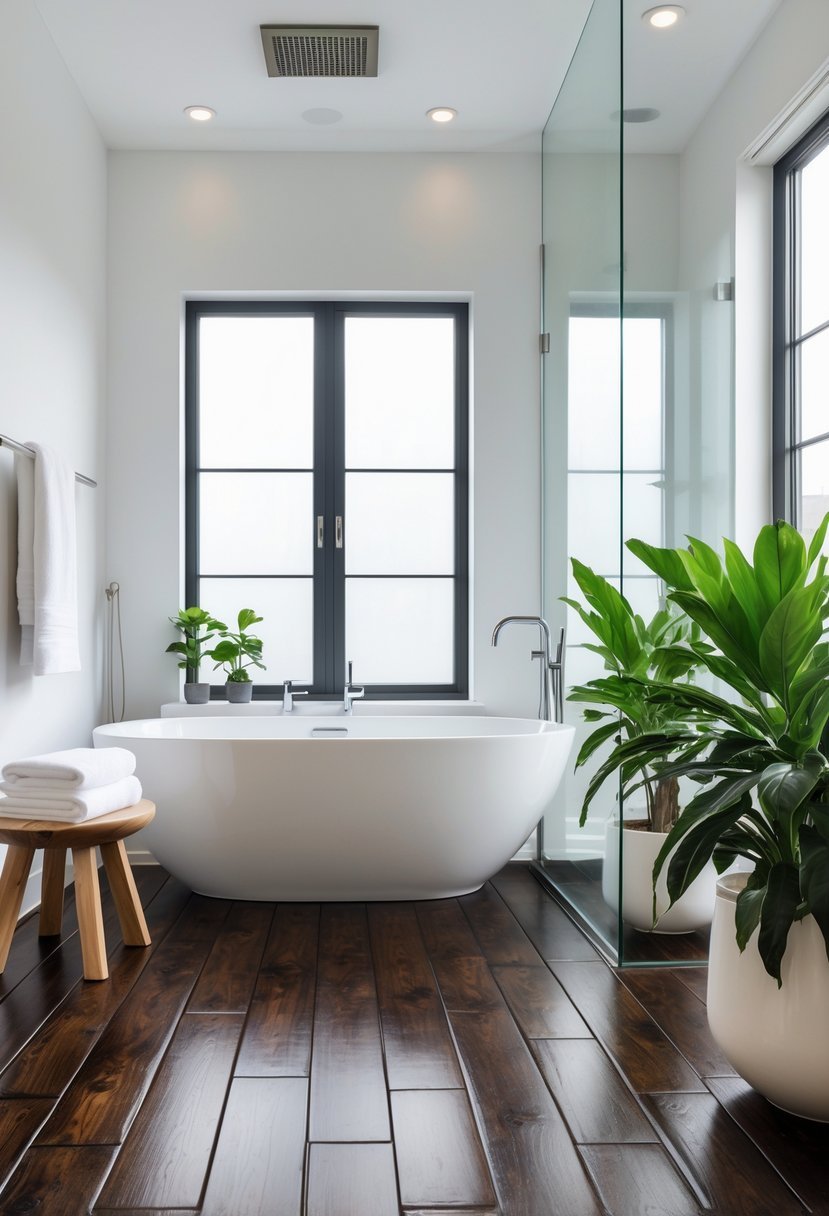
I find ebony-stained hardwood to be a powerful choice for bathroom floors when aiming for a modern, elegant look.
Its deep, rich black tones contrast beautifully with lighter fixtures and walls, adding depth without overwhelming the space.
Thanks to advances in waterproof finishes, ebony hardwood can withstand bathroom humidity while maintaining its striking color.
The natural grain still shows through the dark stain, providing texture and sophistication.
This flooring works well in both minimalist and bold designs.
It creates a refined backdrop that elevates the entire room.
4) Bamboo Flooring for Eco-Friendly Durability
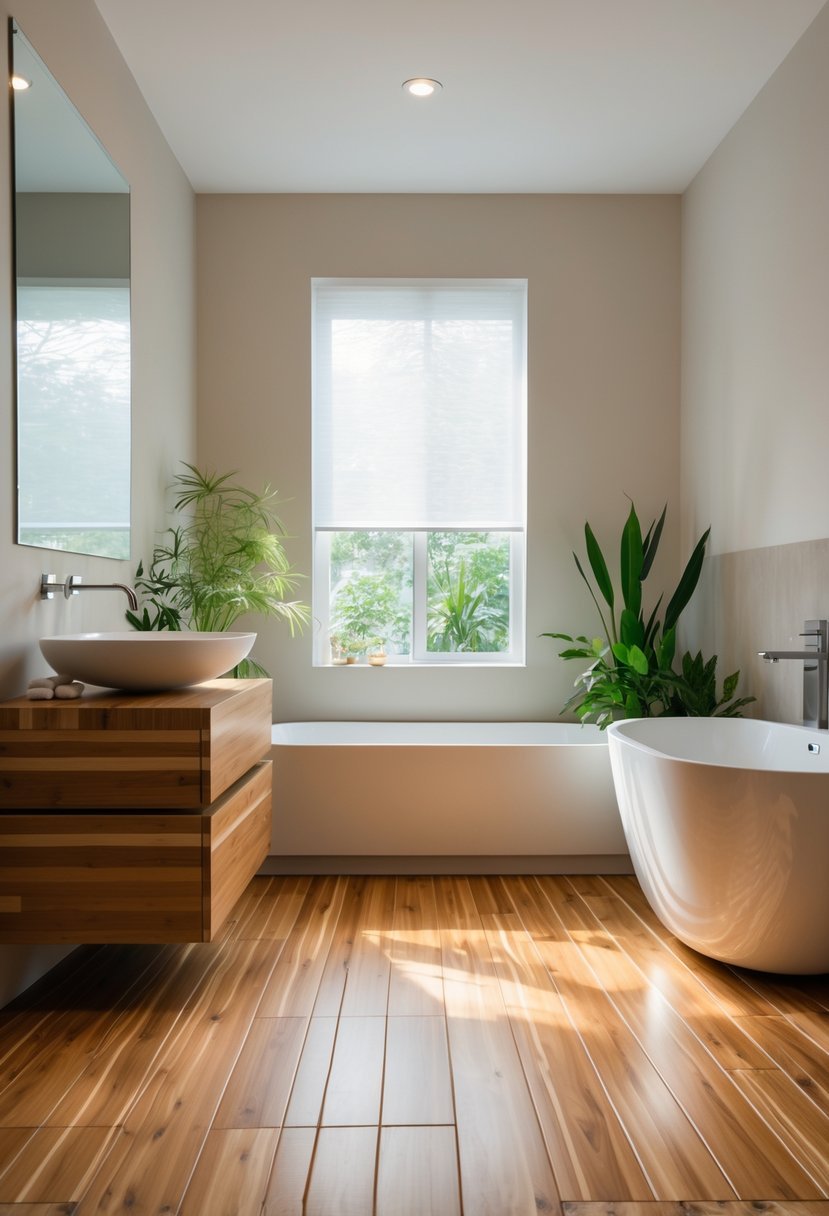
I appreciate bamboo flooring for its balance of durability and eco-friendliness.
It is a fast-growing plant, making it a sustainable choice compared to traditional hardwood.
This natural material can handle moisture better than many wood options, which is crucial in a bathroom environment.
Bamboo offers a clean, modern look that fits various design styles.
Advances in waterproofing methods now make bamboo more resistant to humidity and water exposure.
This makes it a practical option without sacrificing style or environmental responsibility.
5) Waterproof Luxury Vinyl Wood Look Tiles
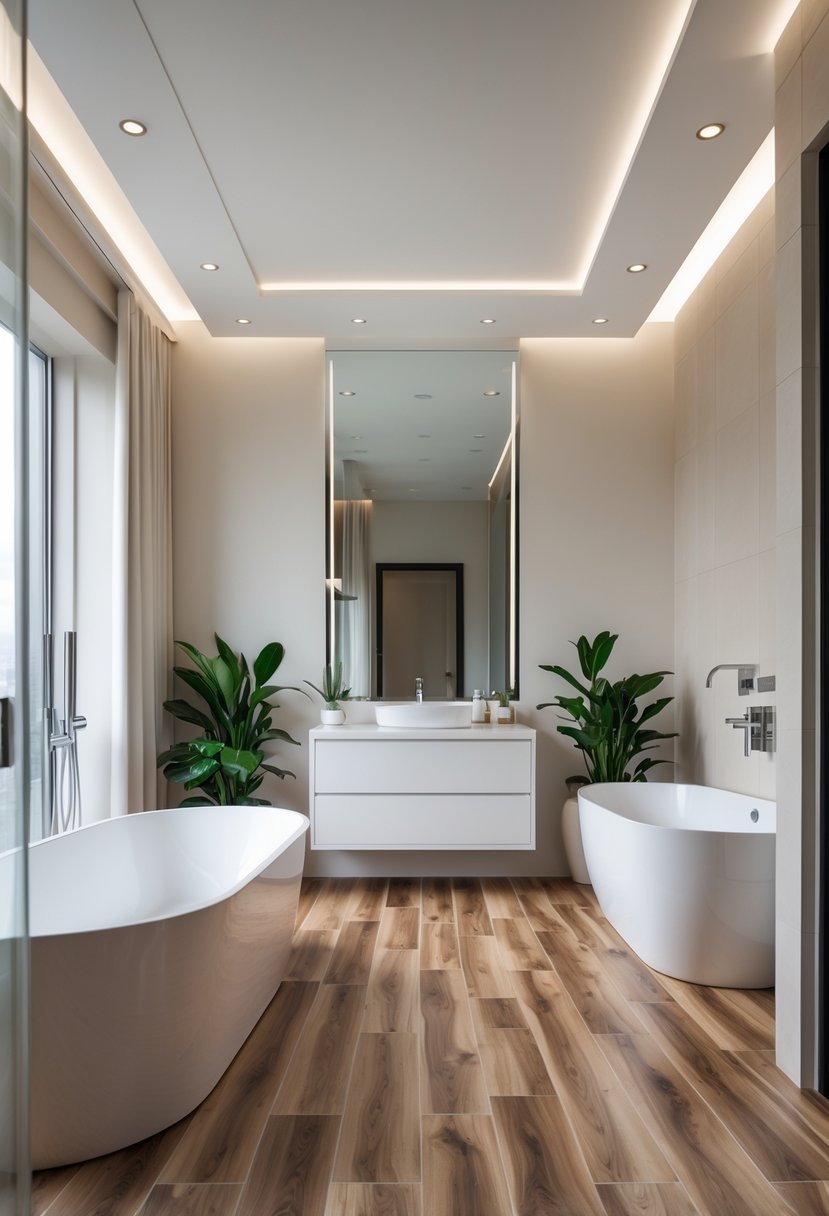
I appreciate waterproof luxury vinyl wood look tiles for bathrooms because they combine style with practicality.
These tiles replicate the warmth and texture of natural wood without the risks associated with moisture.
The waterproof feature ensures durability in wet environments like bathrooms, preventing warping or damage.
Installation is often straightforward, and maintenance requires little effort compared to real wood.
The variety of tones and finishes available allows me to match almost any decor style.
These tiles offer a reliable, comfortable underfoot feel and long-term value.
6) Matte Finish White Oak for a Serene Atmosphere
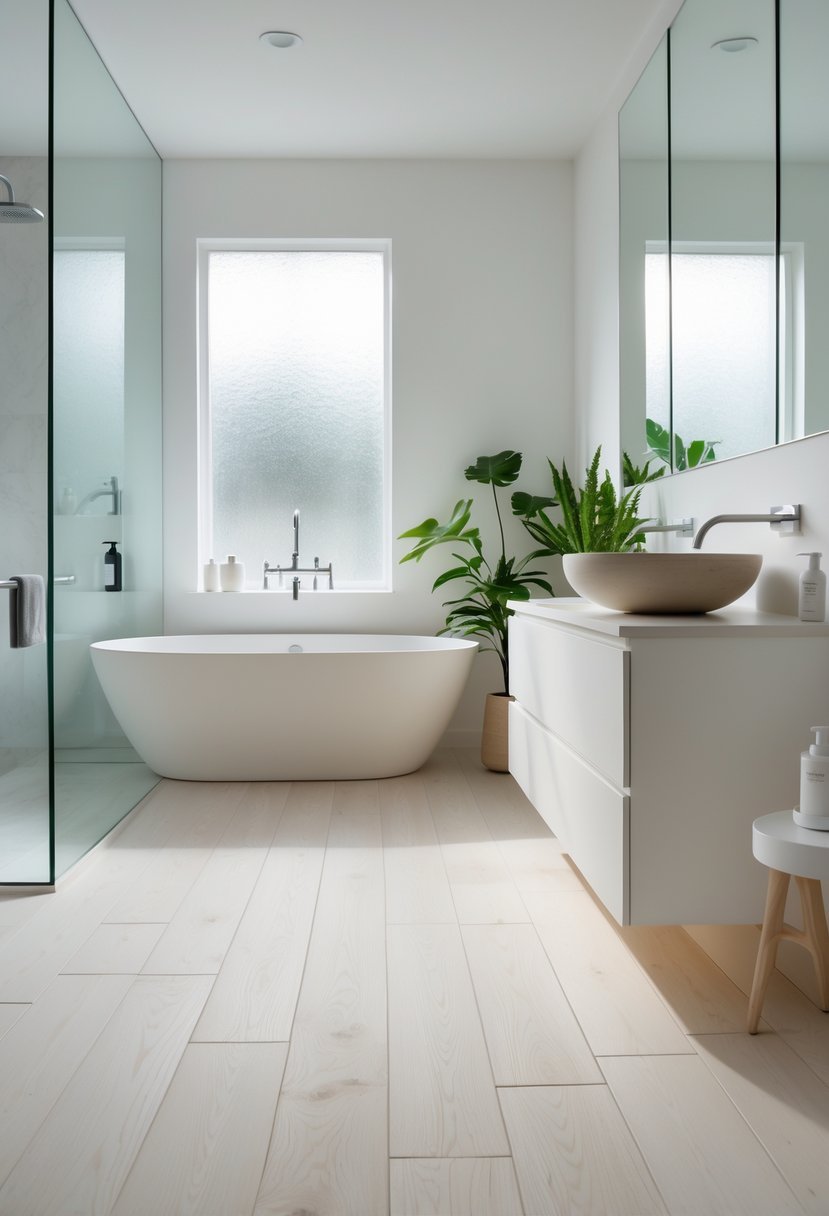
I find matte finish white oak flooring creates a calm and inviting backdrop in the bathroom.
The subdued sheen highlights the natural grain without reflecting too much light, which helps maintain a soft, tranquil feel.
This type of finish resists scratches and reduces visible wear, making it practical for moisture-prone spaces.
It’s also low-maintenance compared to glossier options, blending aesthetics and function.
Using matte white oak pairs well with neutral tones and natural materials like stone or wicker.
It brings subtle warmth without overpowering the room.
7) Wide-Plank Pine for Warmth and Texture
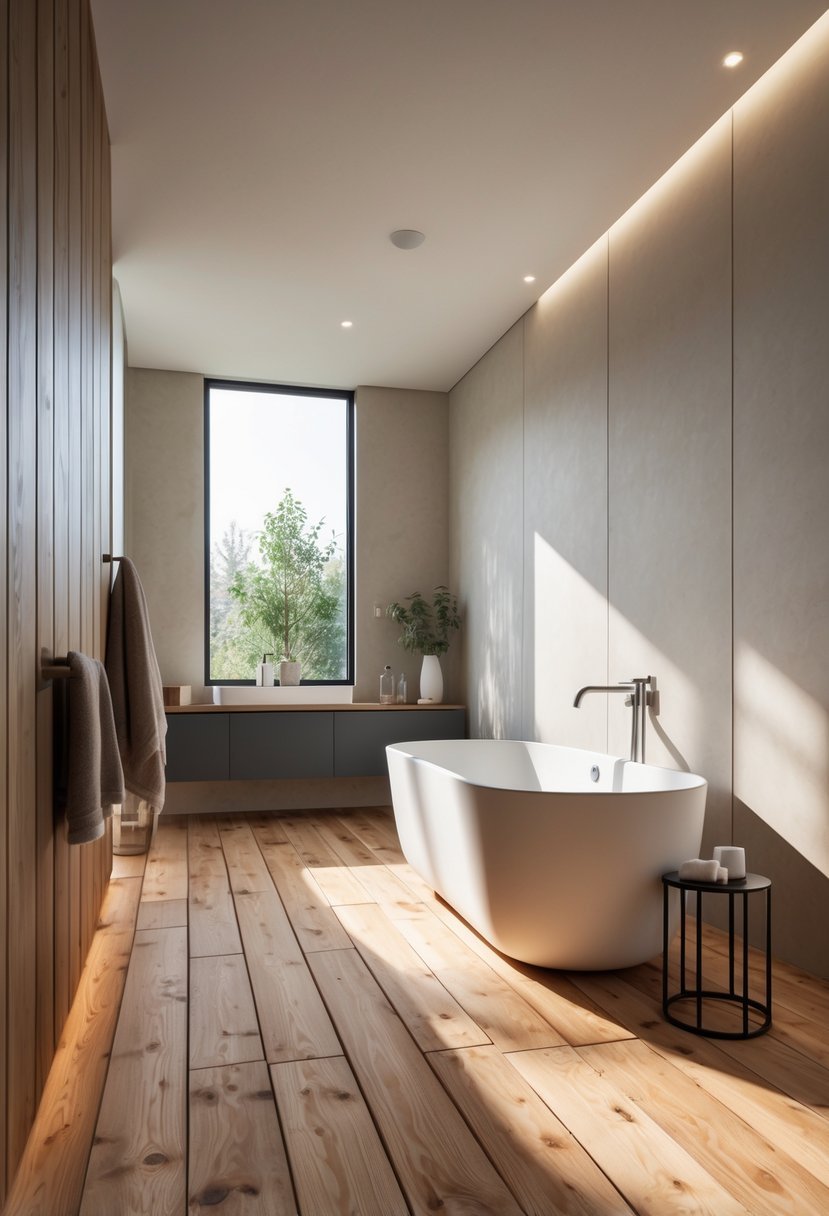
I find wide-plank pine flooring adds a natural warmth that changes the entire feel of a bathroom.
The broader boards bring out the wood’s grain and knots, creating a textured surface that catches the eye.
This style also helps the room feel larger.
The seamless lines between wide planks reduce visual clutter, giving the bathroom a more open and cohesive look.
Pine, being softwood, is easier to work with and can be finished in various ways to suit different styles.
With proper sealing, it withstands moisture better, making it a viable option for bathrooms where durability matters.
8) Hickory with Natural Knots as a Focal Point
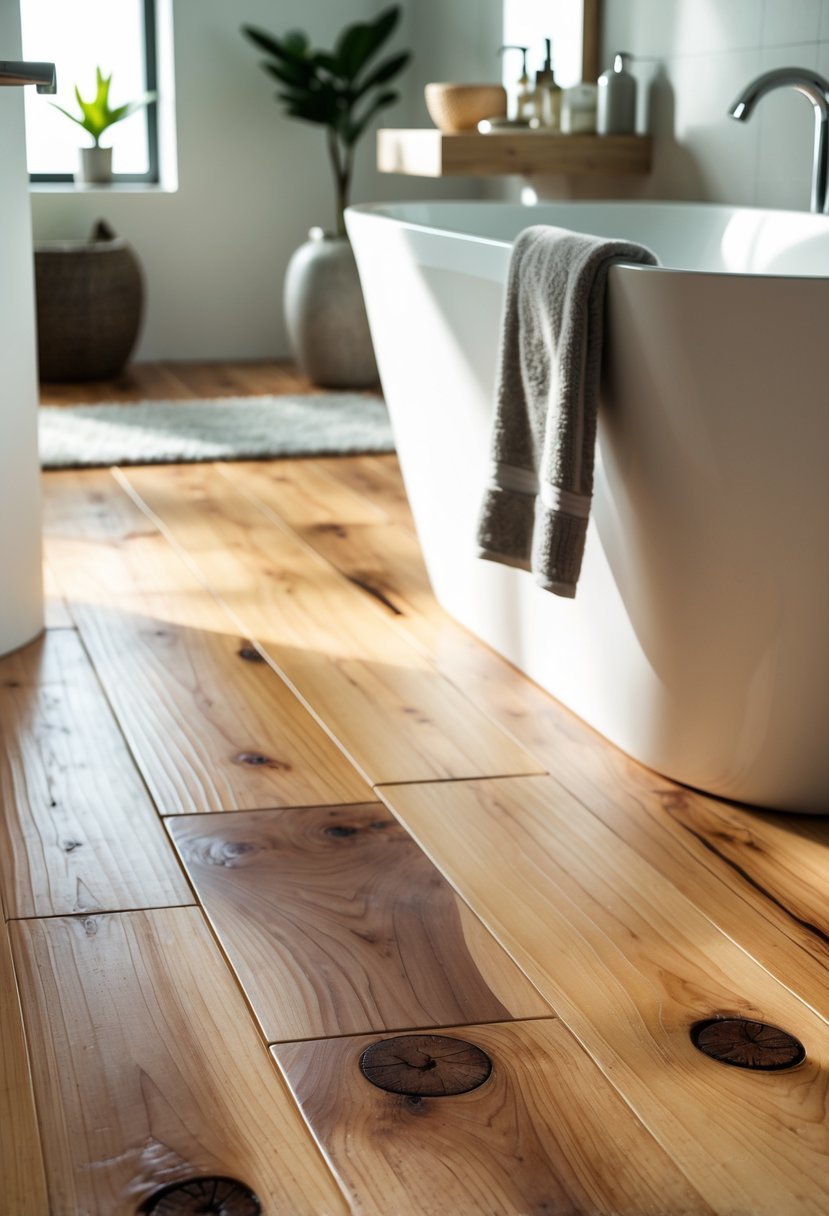
I appreciate how hickory flooring with natural knots adds character to a bathroom space.
The knots create visual interest without overwhelming the room.
Using this wood as a focal point draws attention to the floor’s unique texture.
It works well with minimalist or rustic decor styles, balancing warmth and subtle complexity.
Sealing the wood properly is key to protecting those natural features from moisture and wear.
This type of hickory offers durability while maintaining an organic, authentic look.
9) Porcelain Wood-Look Tiles for Moisture Resistance
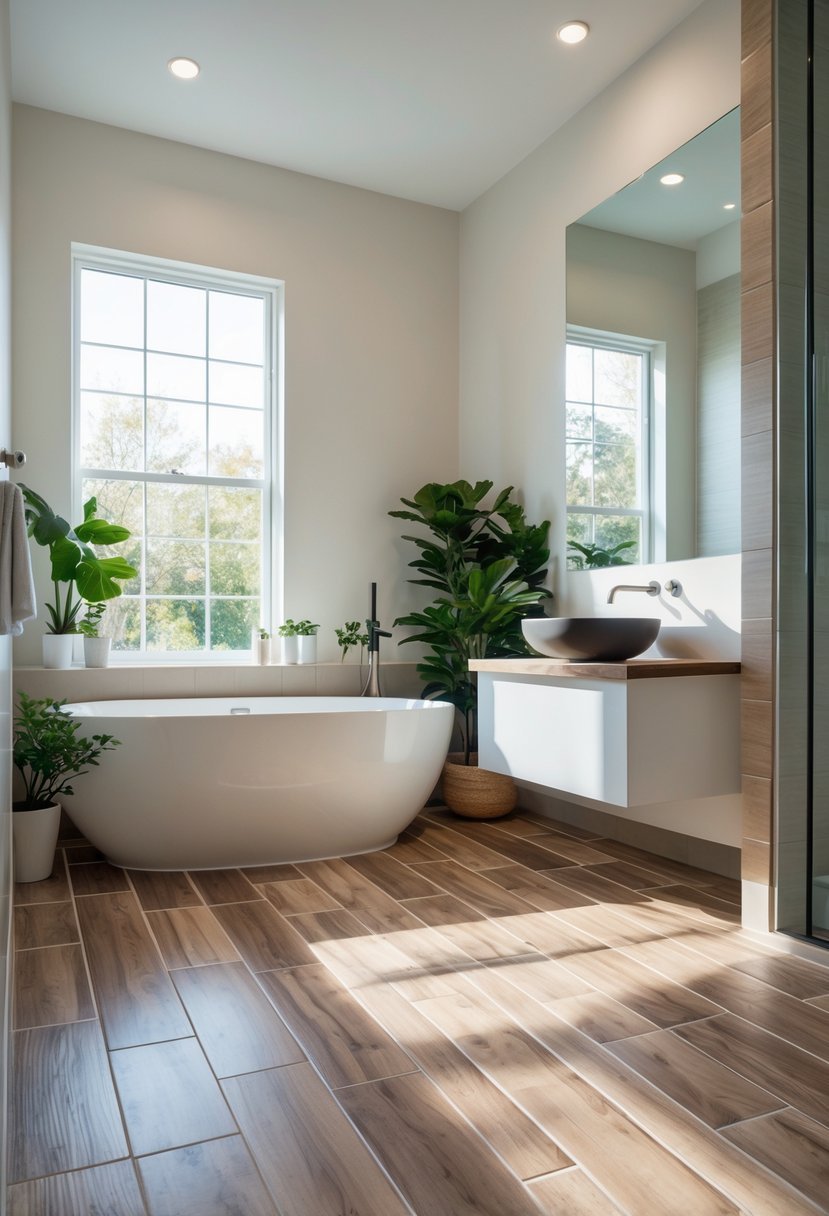
I prefer porcelain wood-look tiles when moisture resistance is a priority.
These tiles combine the natural warmth of wood with the durability of porcelain.
They handle wet environments much better than real wood, making them ideal for bathrooms.
The tile’s surface can mimic wood grain, texture, and color with impressive realism.
They come in various plank sizes and finishes, allowing me to tailor the look to my bathroom’s style.
Porcelain is easy to clean and maintain, which is a big advantage.
Choosing porcelain wood-look tiles gives me confidence that my floors will resist warping, cracking, or mold caused by moisture.
10) Distressed Walnut for Character and Depth
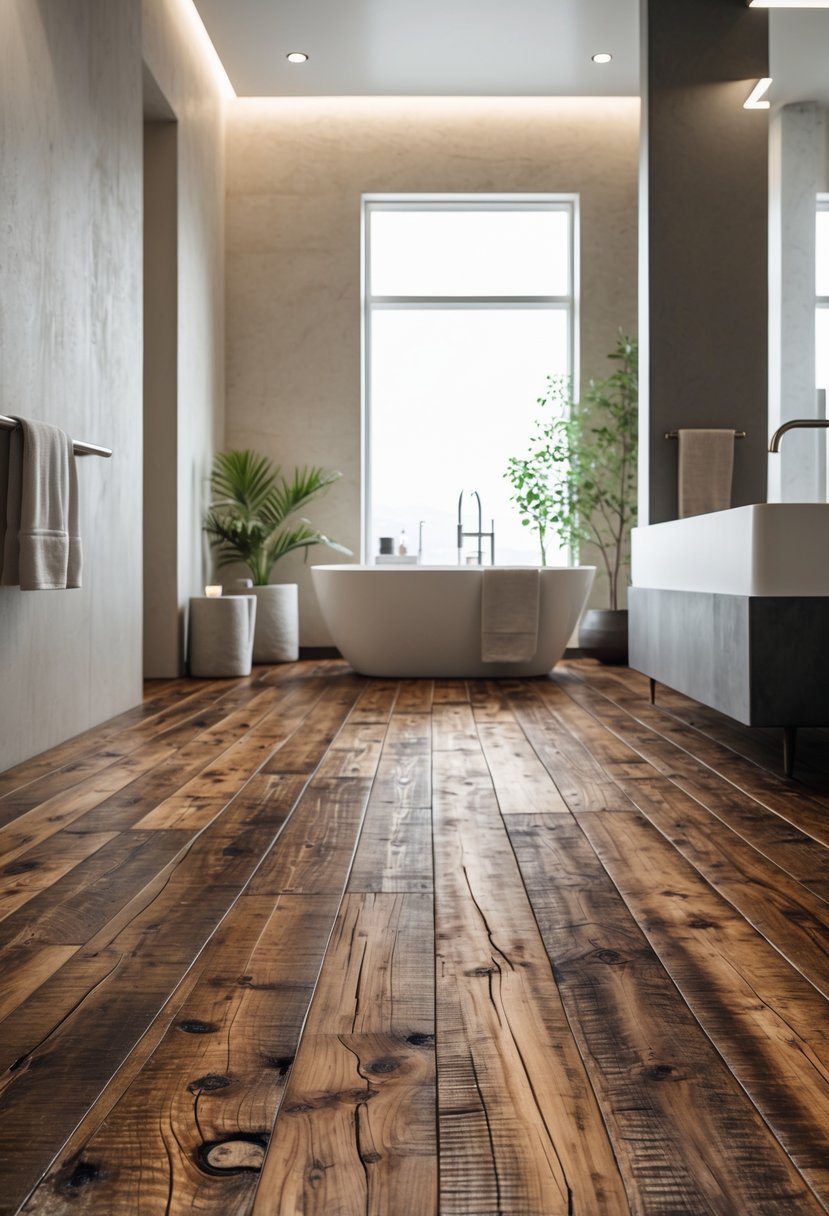
I find distressed walnut flooring adds a unique sense of character and depth to a bathroom. The natural imperfections and intentional aging process bring warmth without overwhelming the space.
This style works especially well if you want a rustic or vintage feel. The worn texture of distressed walnut contrasts nicely with modern fixtures.
It balances softness and structure, giving the room a lived-in yet sophisticated vibe. Walnut’s rich tones enhance the wood’s natural grain, making each plank stand out.
I also appreciate how durable walnut can be with proper sealing. It handles moisture better than many expect, making it suitable for bathroom floors where occasional dampness is a concern.