21 Traditional Kitchen Design Ideas Perfect for Classic Homes
In a world constantly chasing the latest sleek, ultra-modern trends, there is something deeply comforting about the classics. A traditional kitchen doesn’t mean outdated or old-fashioned; rather, it celebrates a timeless aesthetic defined by architectural details, warm color palettes, and a sense of history.
Whether you love the look of ornate crown molding, the warmth of natural wood islands, or the sparkle of a vintage chandelier, traditional design brings a level of sophistication that never goes out of style. If you are planning a remodel that prioritizes elegance and warmth, look no further. Here are 21 traditional kitchen design ideas to inspire your dream culinary space.
Traditional kitchen design remains a popular choice for many who appreciate timeless style and functional spaces. Its lasting appeal lies in combining classic elements with practical layouts that suit everyday living.
These kitchens often feel warm and inviting. They create a comfortable atmosphere.
If you’re looking to create a kitchen that balances elegance and usability, these 19 traditional design ideas offer reliable inspiration. They highlight key features like wood finishes, thoughtful storage, and harmonious color schemes to help you achieve a space that feels both classic and livable.
Table of Contents
1) Warm wooden cabinetry
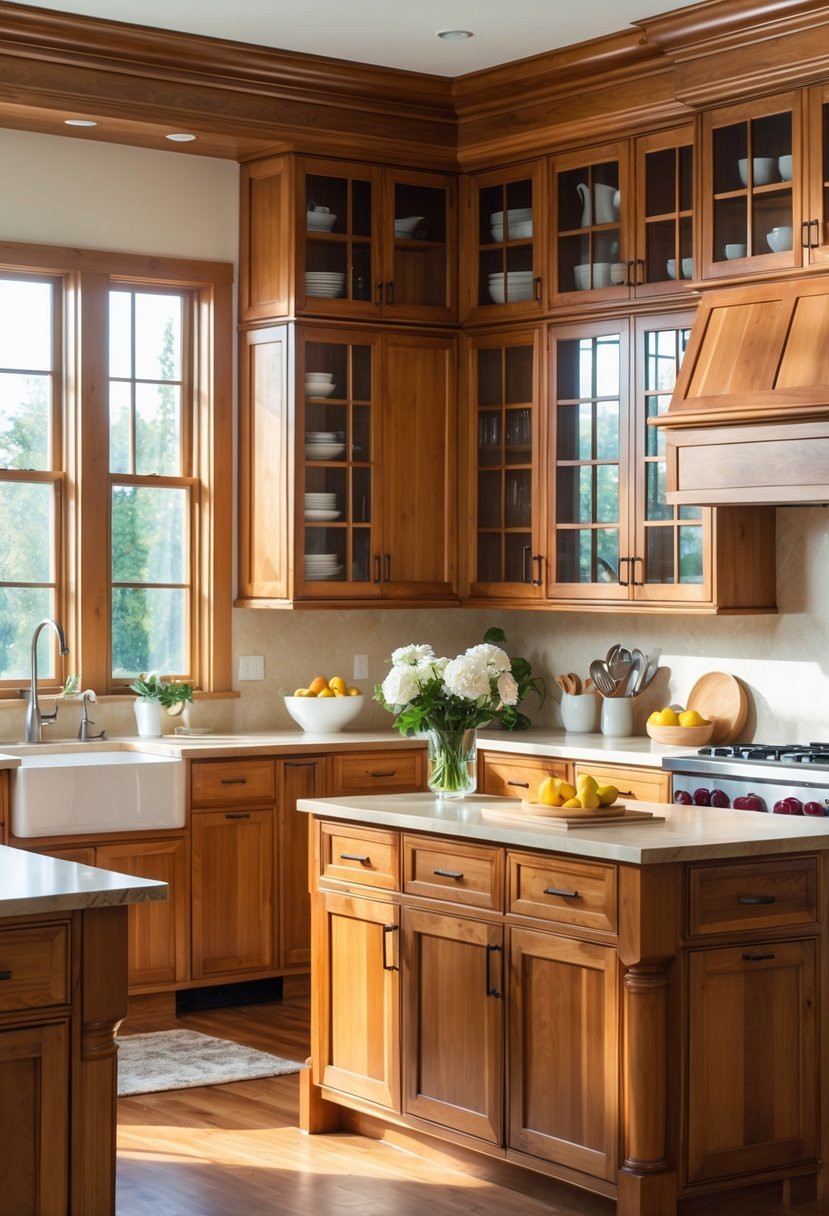
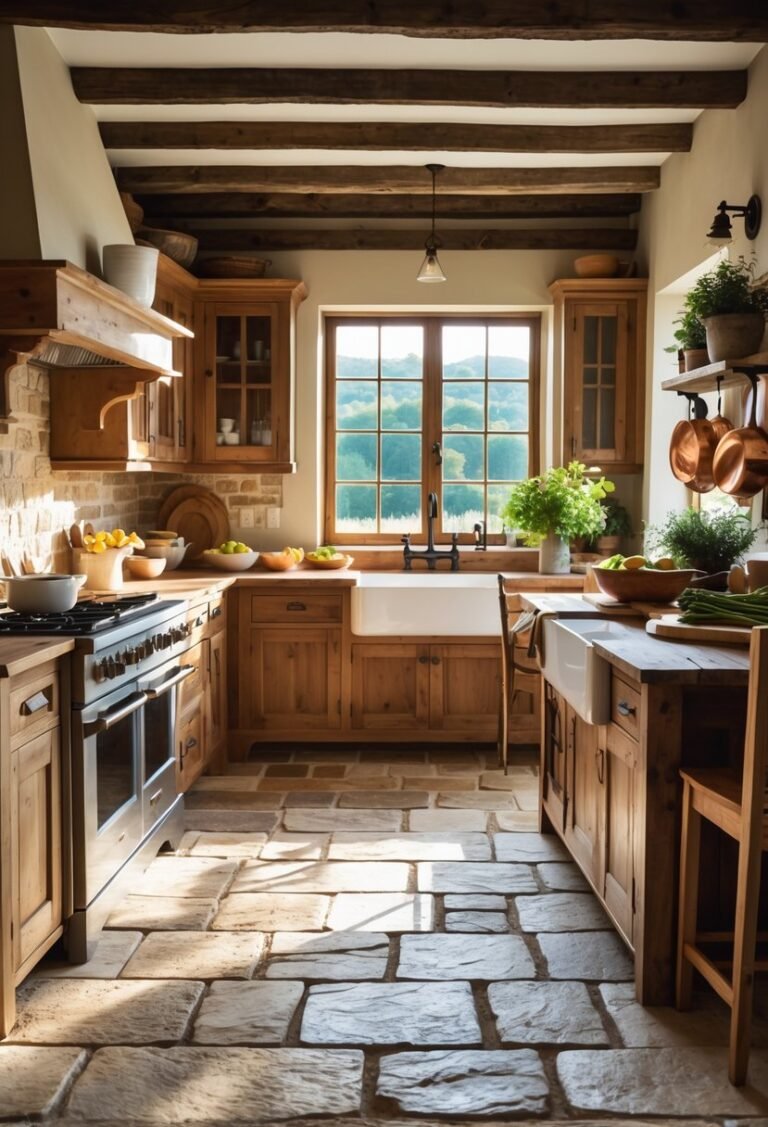
Warm wooden cabinetry is a cornerstone in traditional kitchen design. It adds a sense of timeless elegance that feels both inviting and durable.
Choosing wood tones carefully is important. Light woods can brighten a space, while darker woods bring richness and depth.
Both options work well with classic details like raised panels and crown molding. Wood cabinets also provide versatility.
They blend effortlessly with other materials such as stone countertops or metal hardware. This helps create a balanced and cohesive look in the kitchen.
2) Elegant granite countertops
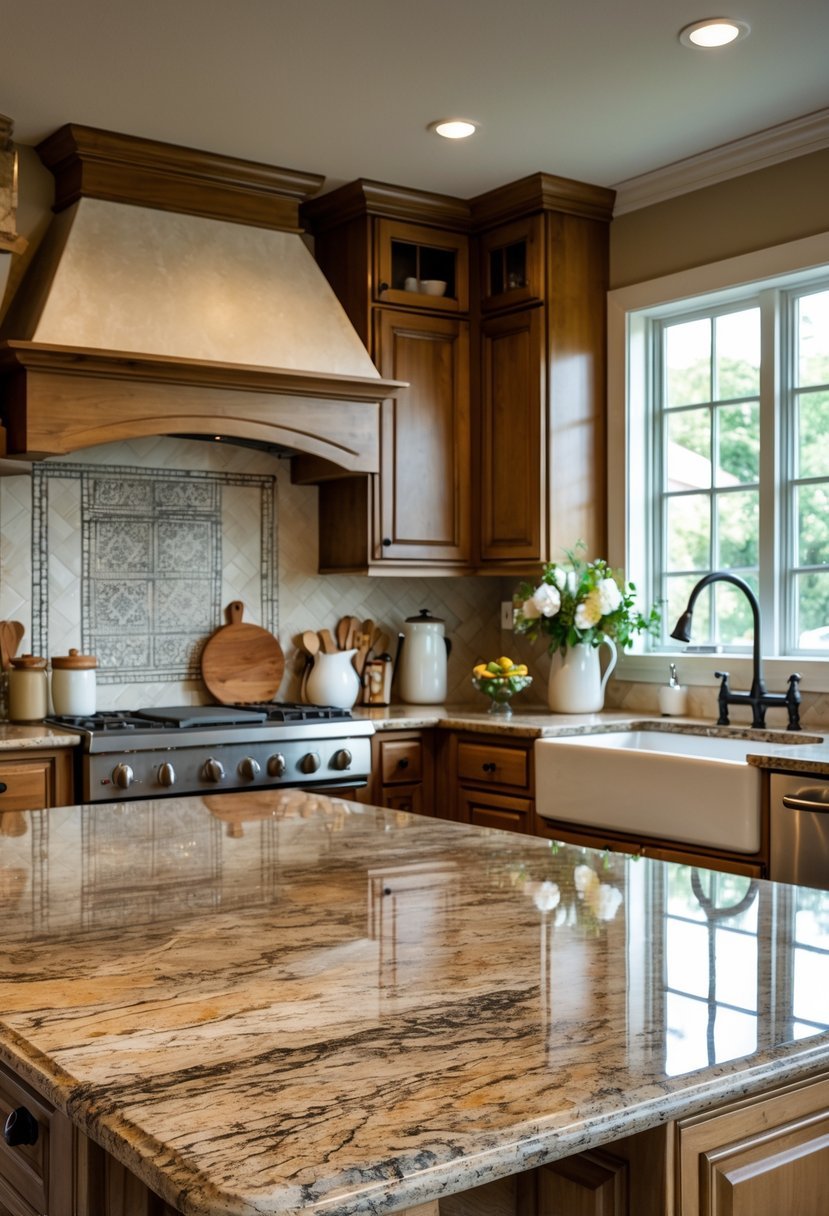
Granite countertops bring a sense of timeless elegance to traditional kitchens. The natural stone offers durability and a variety of color options that complement classic wood cabinetry beautifully.
Choosing granite allows you to combine function with style. Its resistance to heat and scratches makes it practical for daily cooking.
The veining patterns and finishes add character to the space. Brown granite, in particular, offers warm, earthy tones that pair well with rustic elements and metal accents.
3) Intricate crown molding
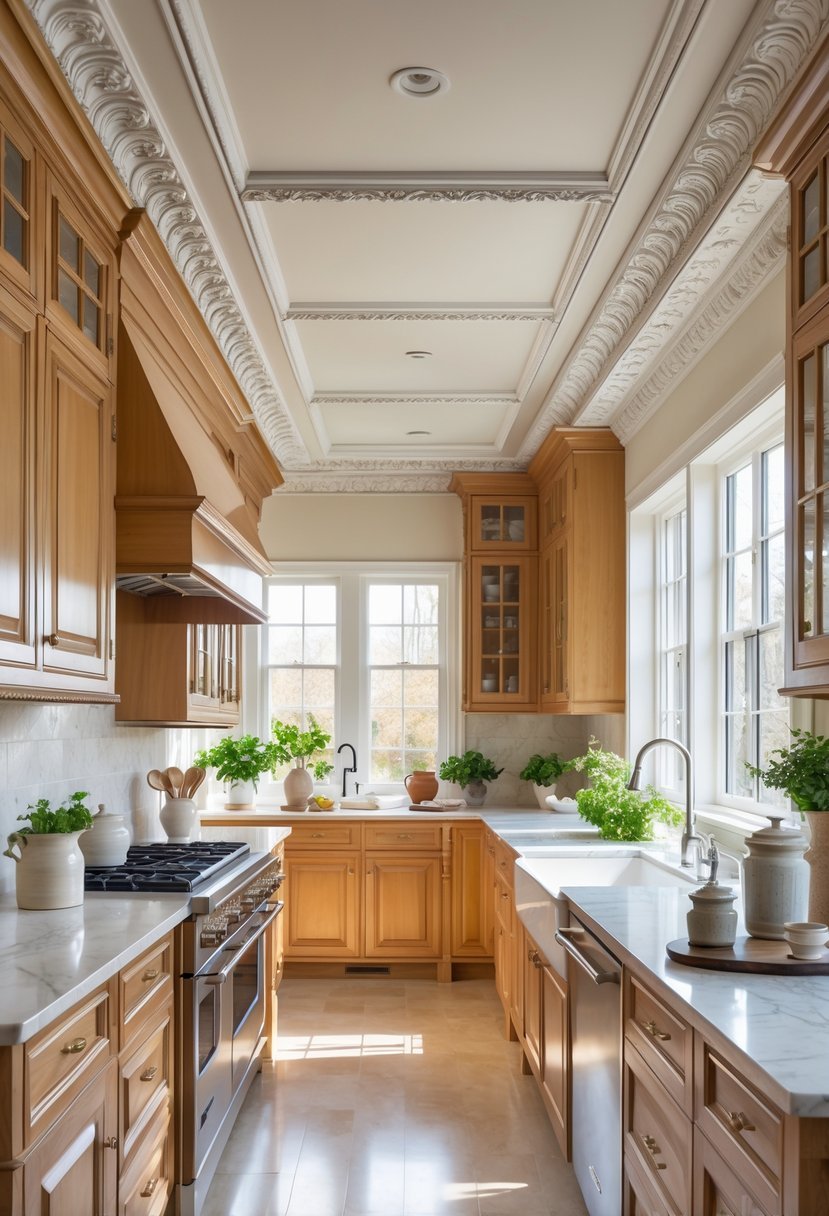
Intricate crown molding adds classic detail and sophistication to a traditional kitchen. Patterns like dentil molding or rope detailing create depth and interest along cabinet tops or ceiling edges.
Choosing the right molding profile is key. It should complement the cabinetry without overwhelming the space.
Wood is often a preferred material because it can be crafted with fine details and finished to match warm tones typical of traditional designs. This type of molding ties together decorative elements, making the room feel thoughtfully designed.
4) Pendant lighting fixtures
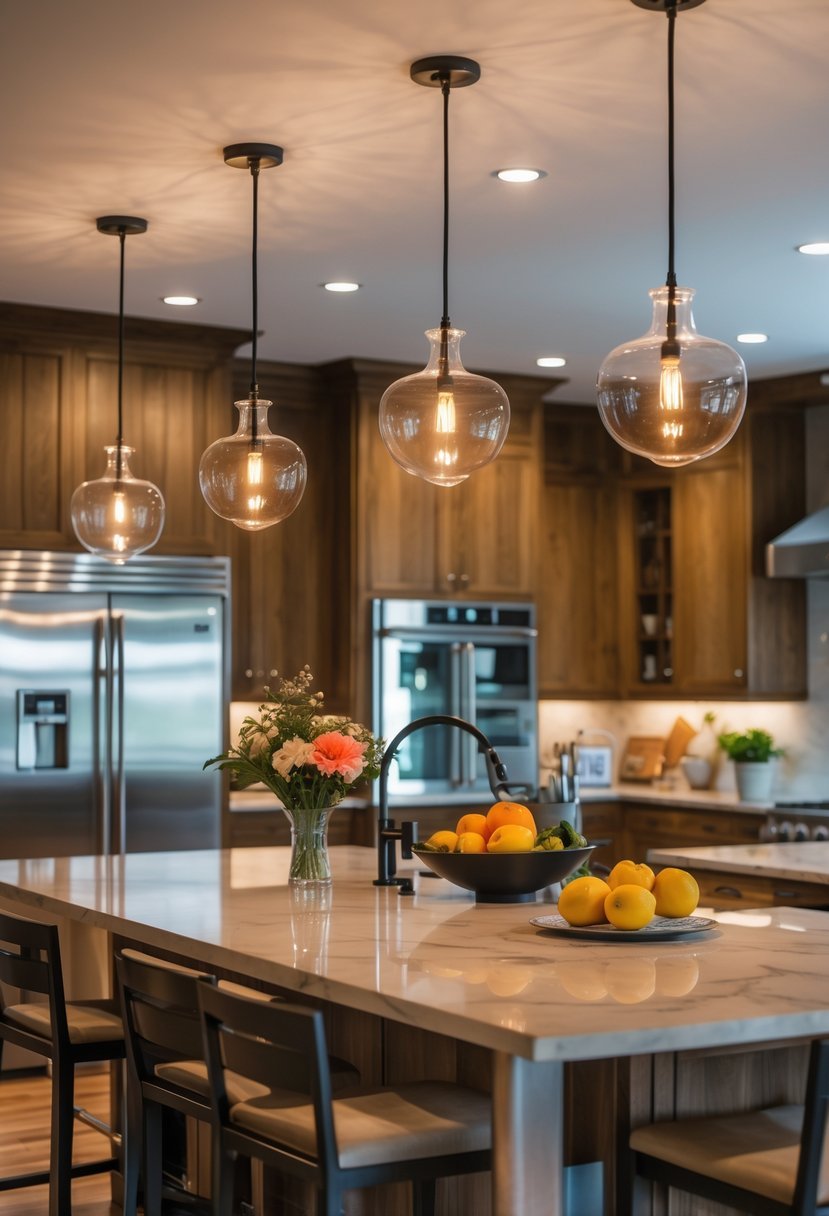
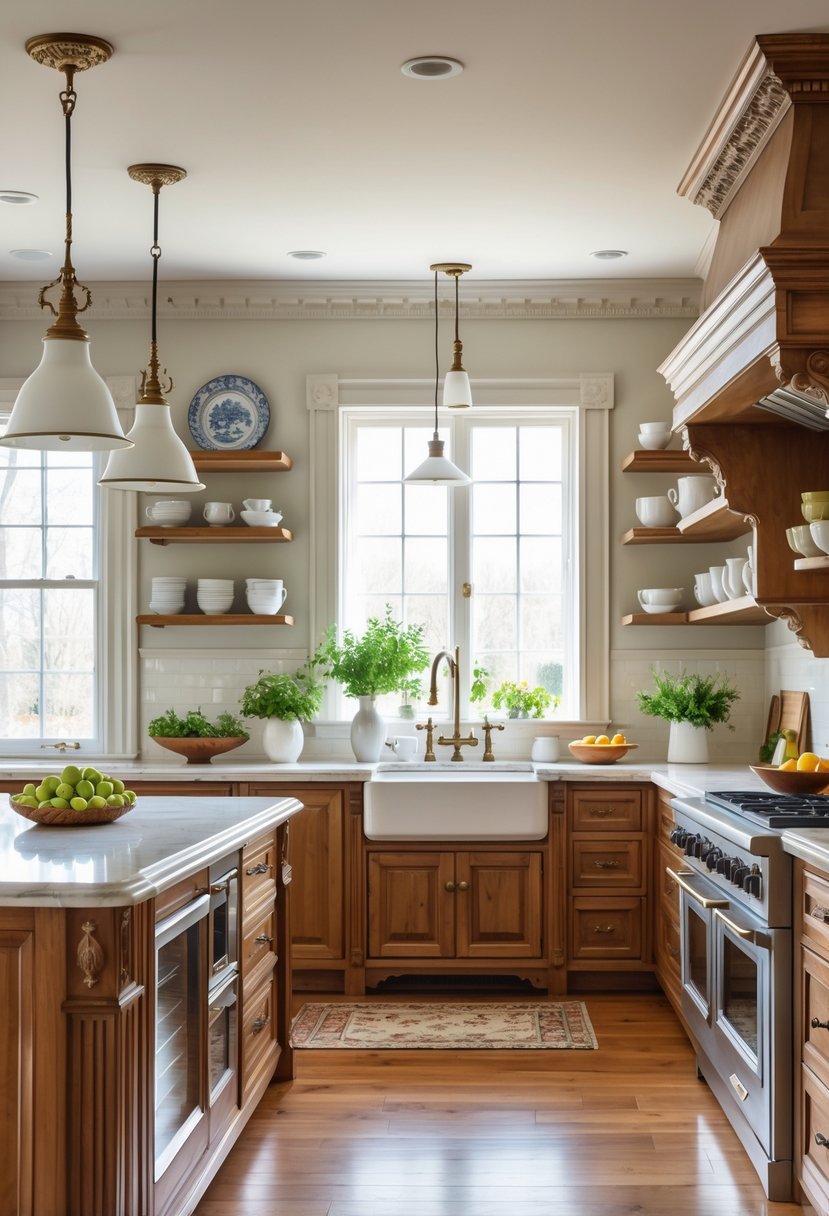
Pendant lighting fixtures are essential in traditional kitchen design for their balance of style and function. They can highlight key areas like islands or dining spaces while adding architectural interest.
Choosing pendants with classic materials like metal or glass fits well with traditional aesthetics. Fixtures that offer warm, diffused light create a welcoming atmosphere.
Pendant lights also help fill empty space and draw attention to kitchen features. Adjustable heights add versatility for different tasks.
5) Classic subway tile backsplash
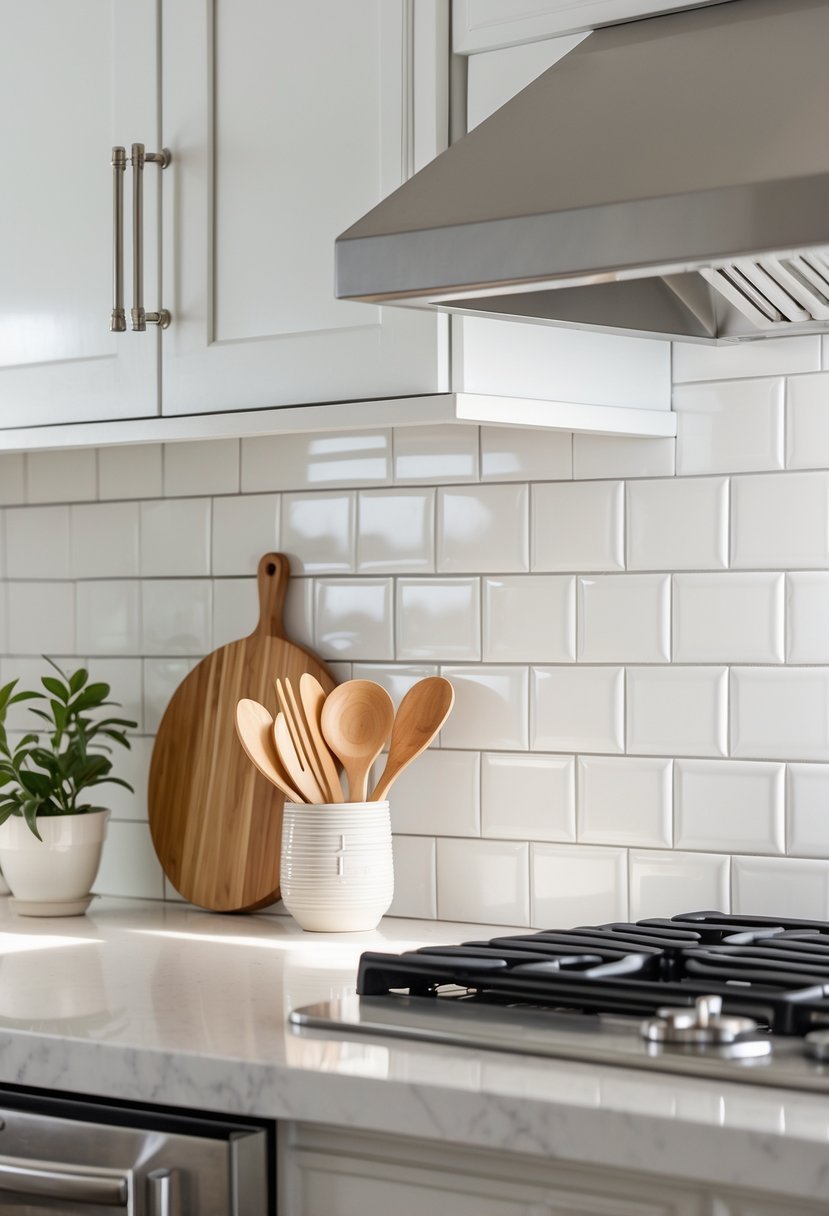
Classic subway tile offers a clean, timeless look for a traditional kitchen backsplash. Its simple rectangular shape and glossy finish reflect light, helping the space feel brighter and more open.
Subway tile’s origin in early 20th-century train stations gives it lasting appeal. It pairs well with many color schemes and materials, especially wood and natural tones.
Using contrasting grout can highlight the tile’s pattern and add subtle texture. This backsplash style is both practical and stylish, fitting well in kitchens that value durability and easy maintenance.
6) Decorative corbels
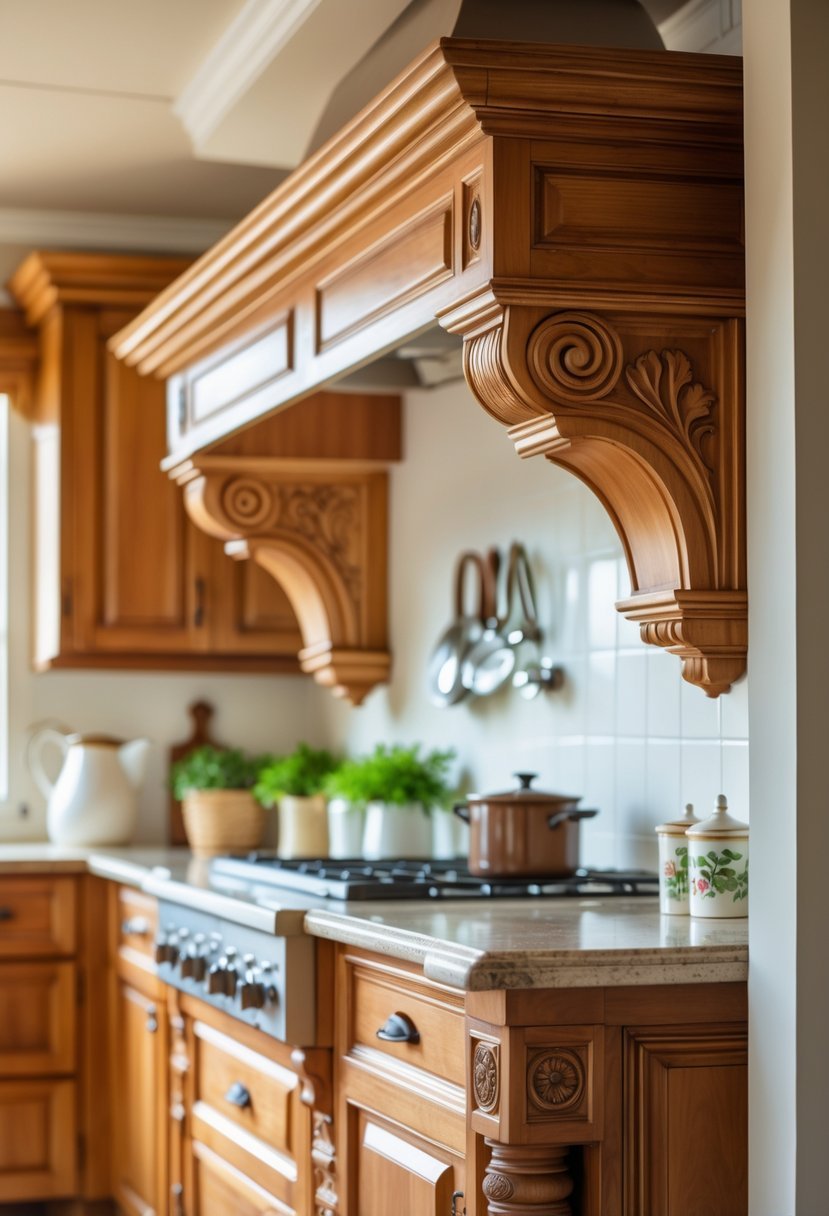
Decorative corbels are an excellent way to add subtle elegance to a traditional kitchen. They support countertops or shelves and introduce architectural interest.
Corbels made from wood or metal can complement various traditional styles. Their detailed craftsmanship brings warmth and character to kitchen islands or cabinetry.
Corbels that blend rustic appeal with timeless design enhance the overall space without overwhelming it. They give the kitchen a polished, classic look.
7) Antique brass hardware
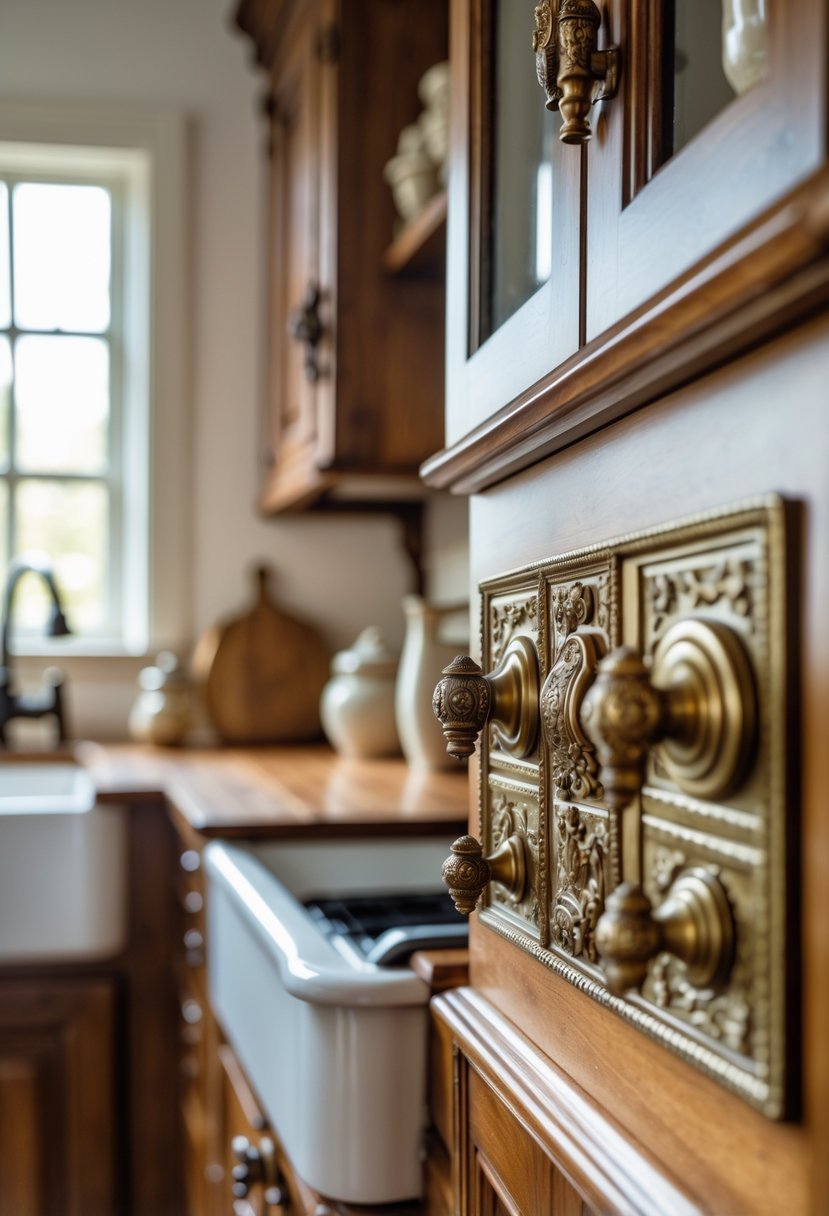
Antique brass hardware adds warmth and character to a traditional kitchen. Its rich, muted gold tone creates a subtle vintage appeal.
When paired with white or cream cabinetry, antique brass pulls and knobs bring timeless elegance. They complement natural wood countertops or farmhouse sinks.
Antique brass hardware offers versatility. It works well with both minimalist and ornate cabinet designs, tying a kitchen’s details together thoughtfully.
8) Butcher block island countertop
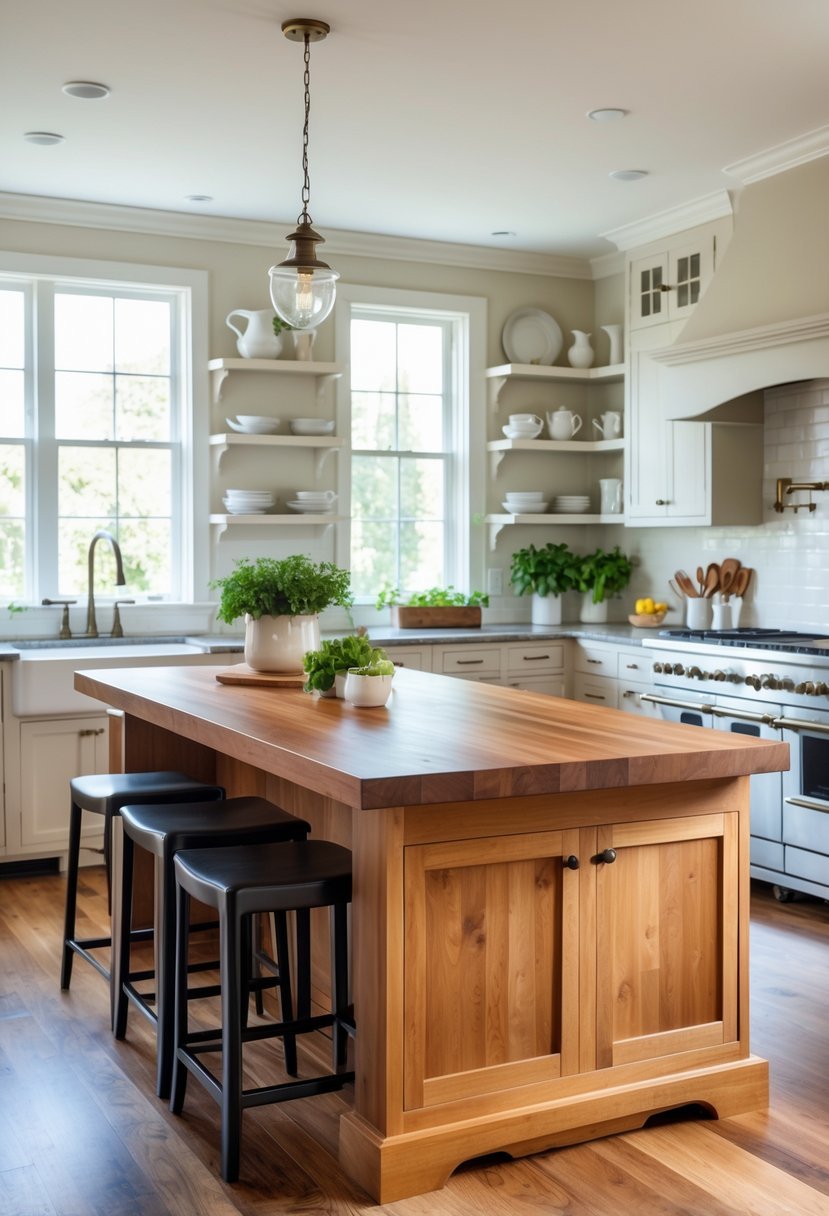
Butcher block countertops add warmth and texture to a traditional kitchen. The natural wood surface creates a timeless look that balances function and style.
A butcher block island is practical for food prep with its durable, easy-to-maintain surface. It introduces rustic charm without overwhelming the overall design.
Choosing butcher block can be cost-effective compared to stone options. It pairs nicely with other countertop materials for subtle contrast.
The tactile quality of wood adds an inviting element. It makes the kitchen feel cozy and grounded.
9) Glass-front cabinet doors
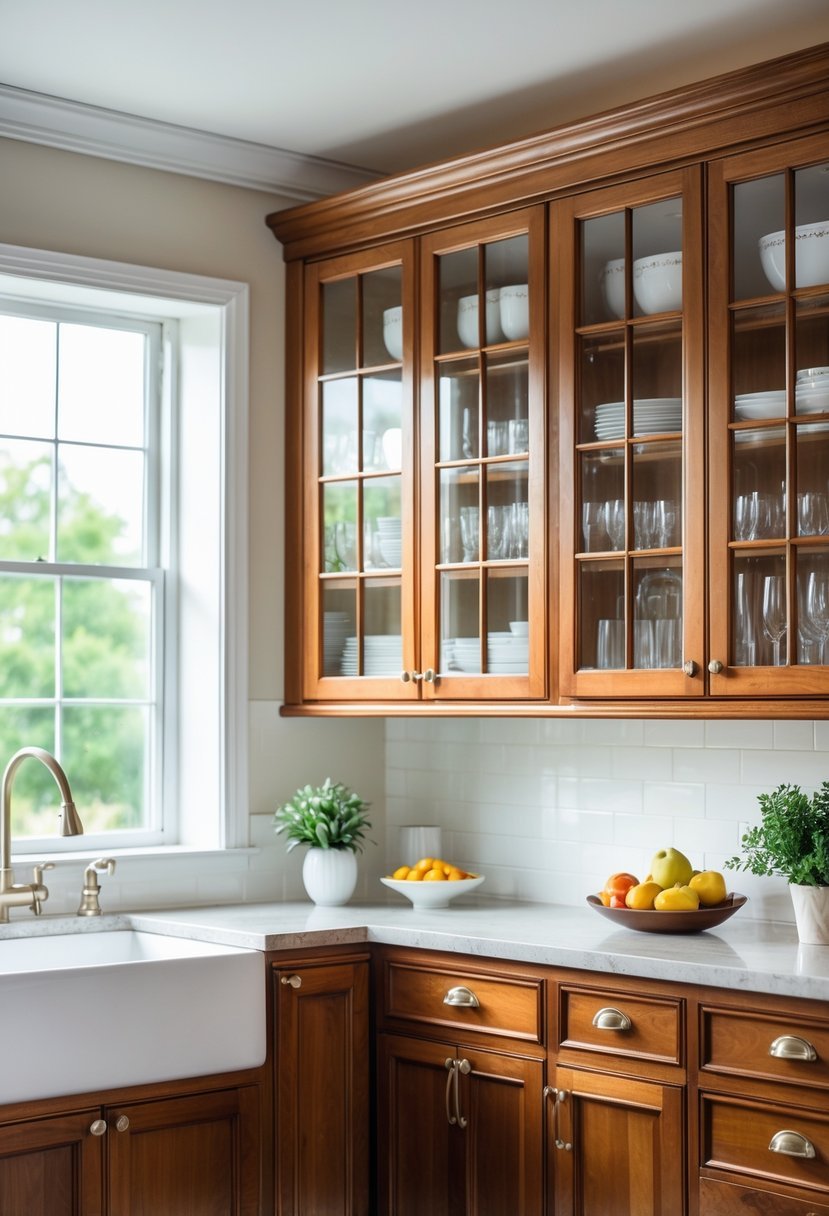
Glass-front cabinet doors add a timeless touch to traditional kitchens. They break the solid visual mass of cabinetry and create a sense of openness.
Glass fronts allow you to showcase favorite dishware without cluttering the space. The style of glass—clear, frosted, or beveled—can influence the kitchen’s overall feel.
Pairing glass with wood frames keeps warmth and character in the design. Glass-front cabinets also improve light flow, making the kitchen feel brighter and more inviting.
10) Open shelving with vintage accents
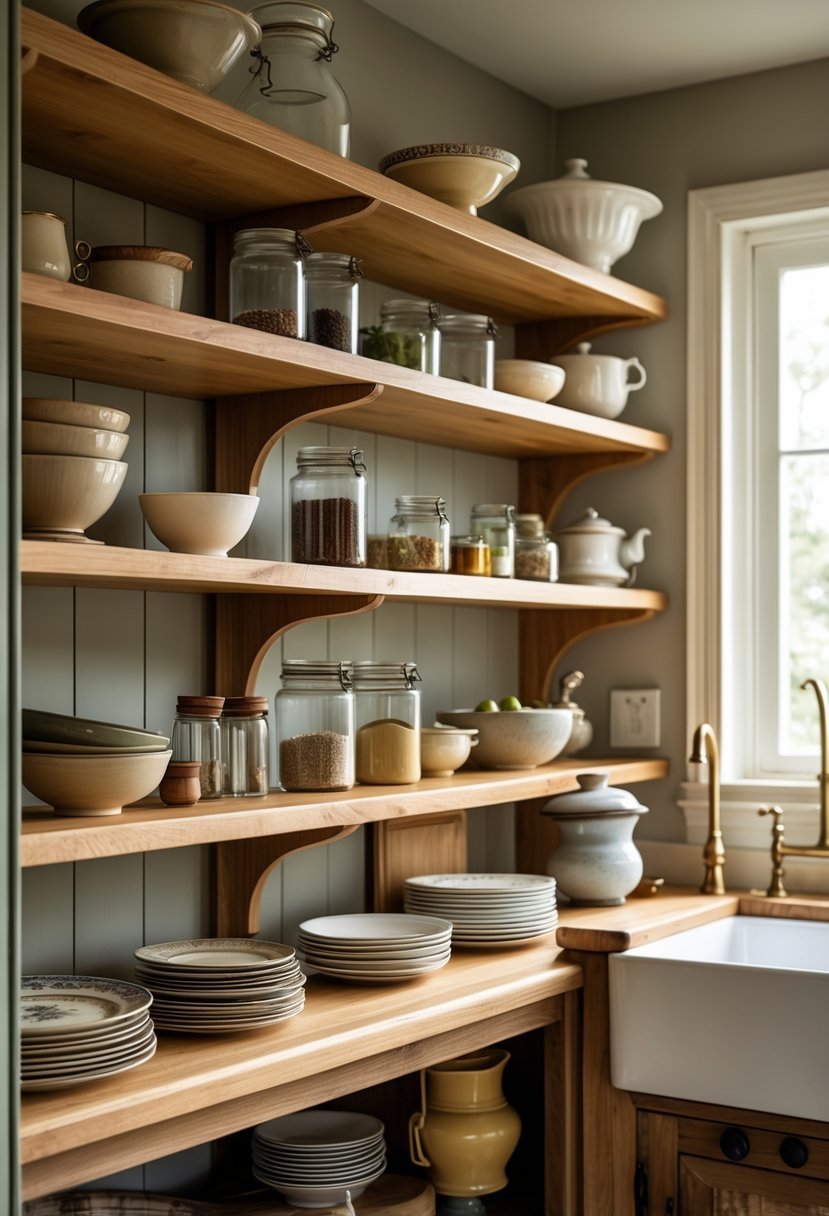
Open shelving is a practical way to showcase vintage kitchen pieces. It allows display of charming ceramics, old-fashioned glassware, or copper cookware without clutter.
Wooden shelves with a weathered or rustic finish add authenticity. These shelves bring warmth and connect the vintage accents to a traditional kitchen vibe.
Open shelving creates an airy feeling and lets your curated vintage items become a focal point. This blend of function and style fits well with classic kitchen designs.
11) Farmhouse-style apron sink
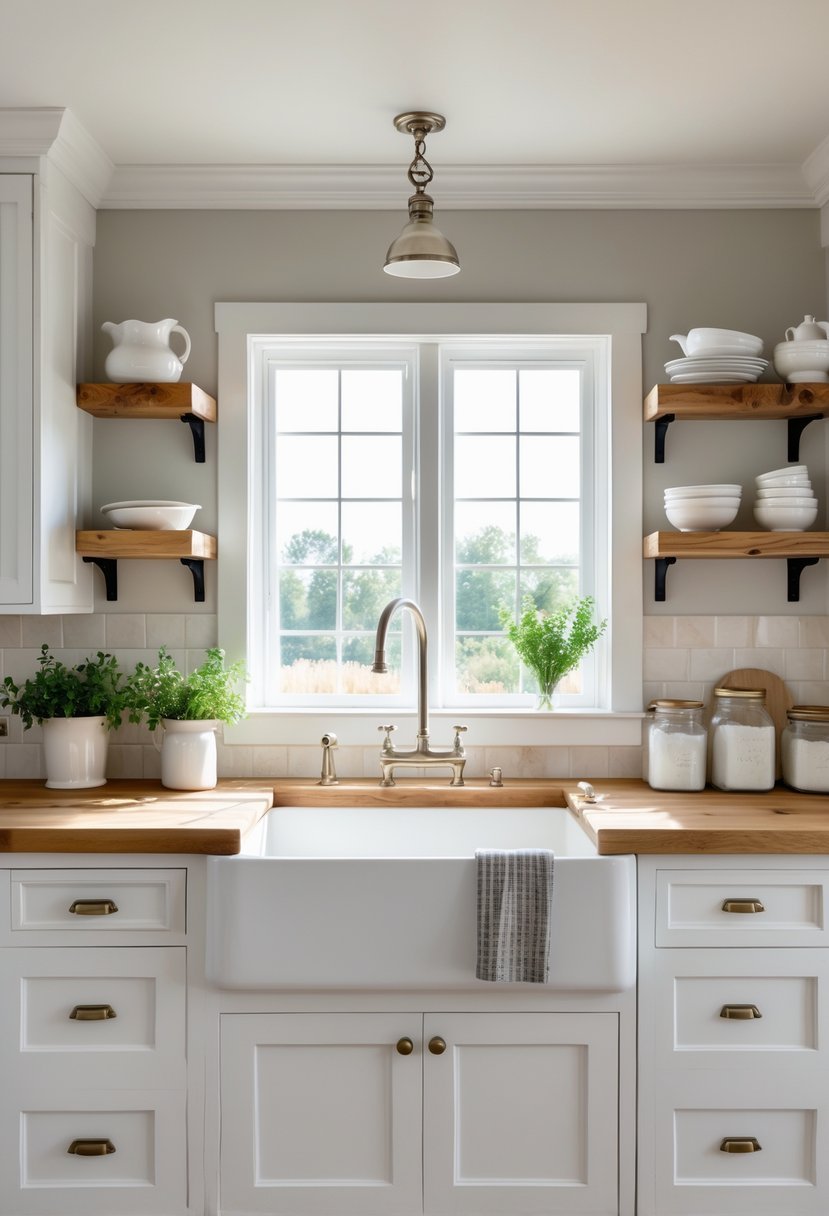
The farmhouse-style apron sink adds both charm and practicality to a traditional kitchen. Its deep basin is ideal for handling large pots and pans.
The apron front, which extends slightly beyond the cabinet edge, creates a distinctive look that blends timeless design with functional space. This style can complement various materials, from fireclay to stainless steel.
Installing this sink can refresh a kitchen’s appearance without drastic remodeling. It suits both rustic and modern elements.
12) Detailed raised-panel doors
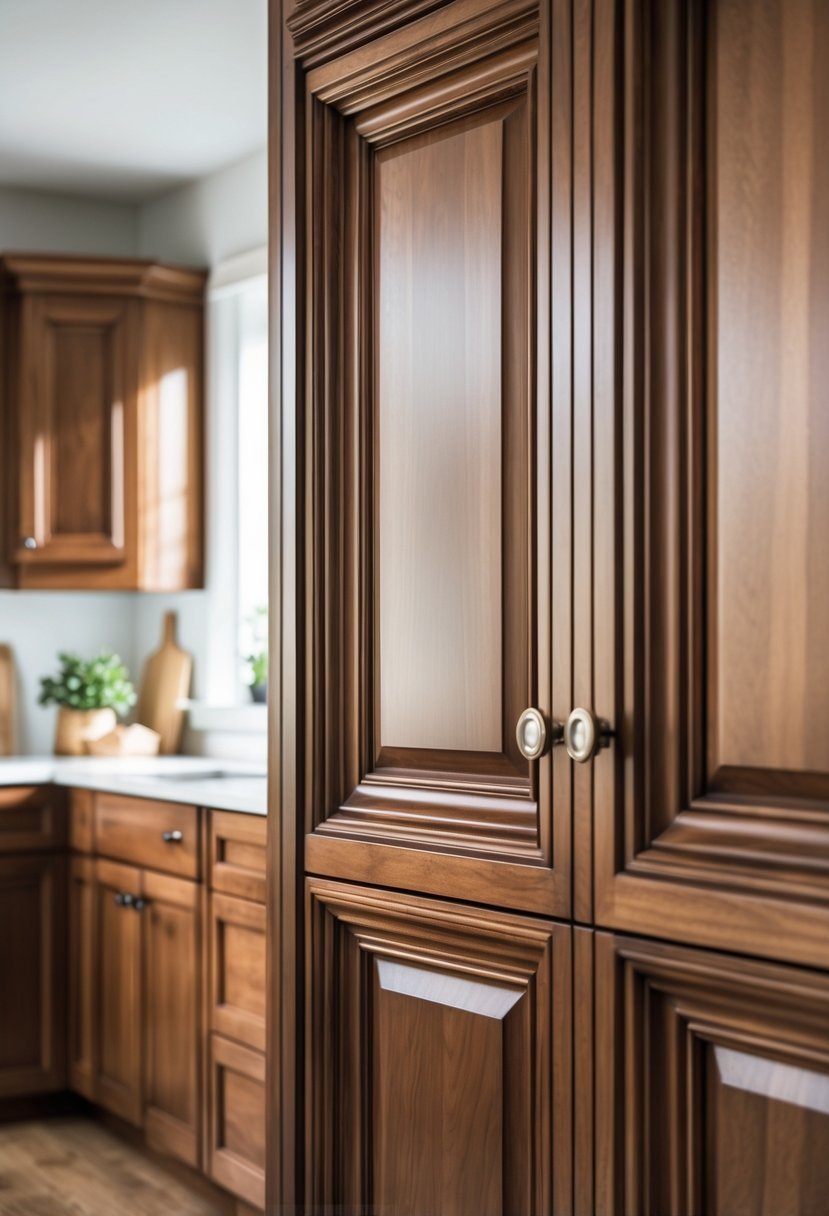
Detailed raised-panel doors are essential for traditional kitchen designs. Their craftsmanship adds depth and a refined look to cabinetry.
These doors often feature decorative molding and carefully shaped panels, which create visual interest. The raised central panel contrasts with the frame, drawing attention to quality and detail.
This style offers flexibility. Whether paired with classic wood finishes or painted surfaces, raised panels maintain a sense of sophistication.
13) Neutral color palette with soft accents
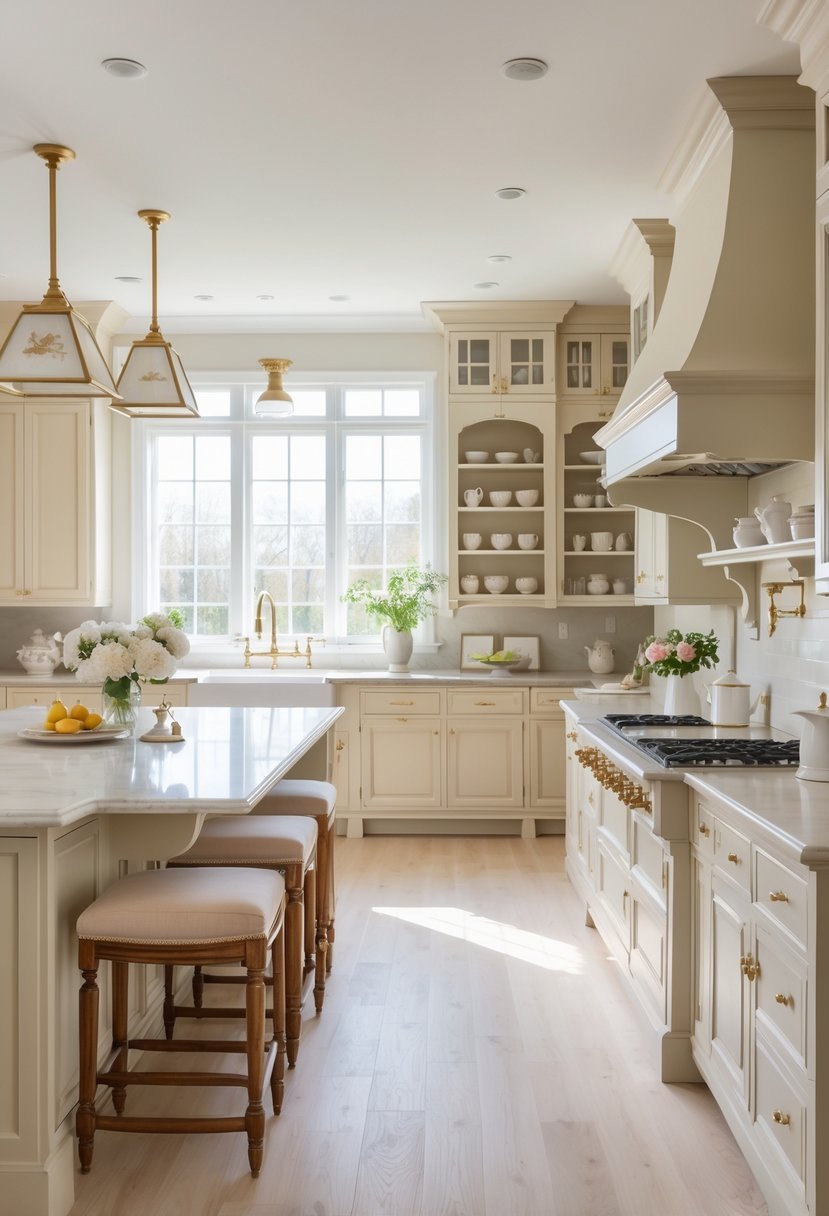
A neutral color palette creates a timeless and calming foundation for any traditional kitchen. Using shades like soft grays, warm beiges, and creamy whites helps the space feel inviting.
Adding soft accents, such as brass fixtures or subtle patterned textiles, introduces warmth and personality. These touches complement the neutrals and keep the kitchen from feeling too sterile.
Incorporating natural materials—wood finishes or marble veining—adds texture and depth. This combination maintains the classic look while allowing the kitchen to feel fresh and functional.
14) Built-in cabinetry for storage
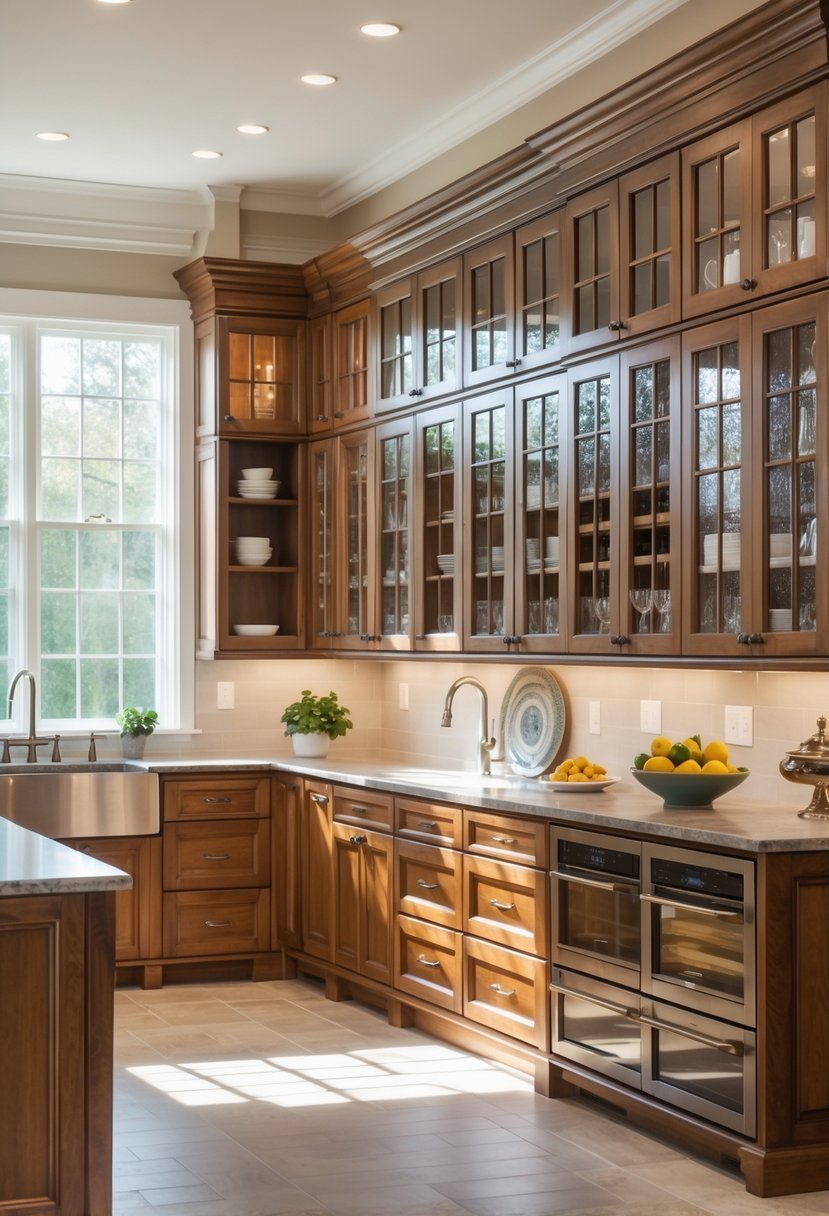
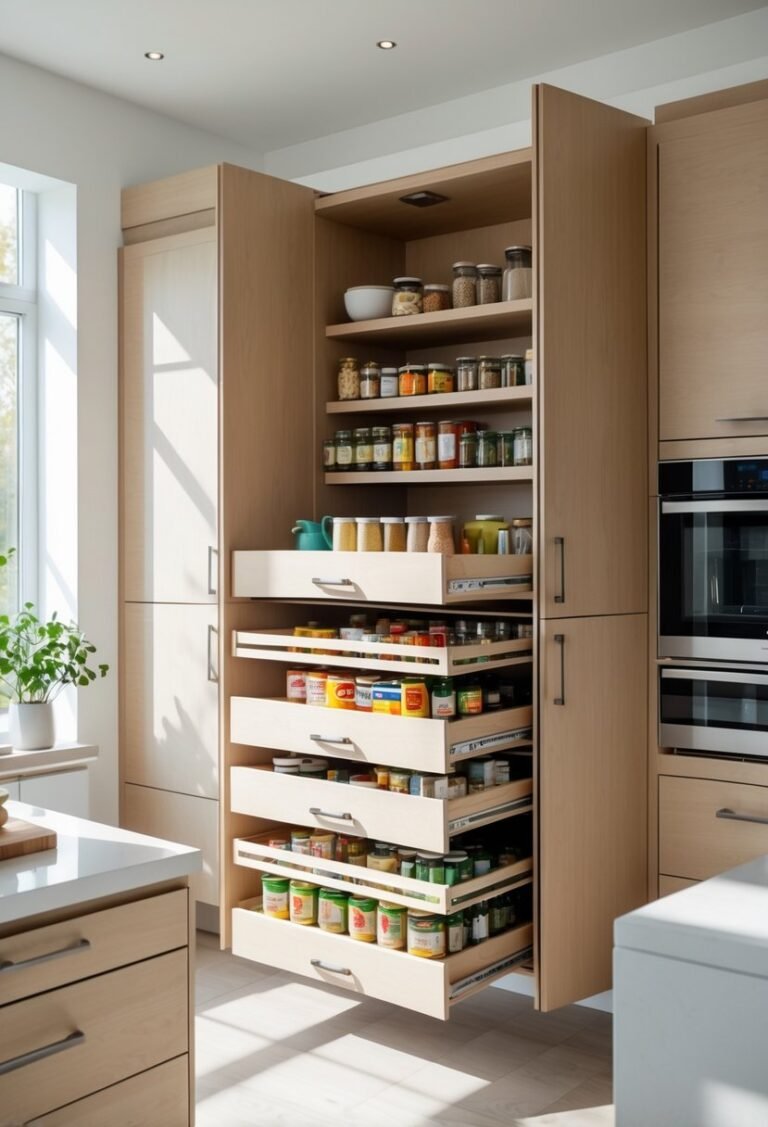
Built-in cabinetry is a practical choice for maximizing kitchen storage. It uses vertical space efficiently, offering more room without crowding the floor.
These cabinets create a seamless look that feels both custom and timeless. Solid wood with classic details like soft arches and inset doors adds warmth and character.
Built-in units help keep the kitchen organized by providing designated spaces for cookware and pantry items. This approach balances style with everyday functionality.
15) Traditional patterned floor tiles
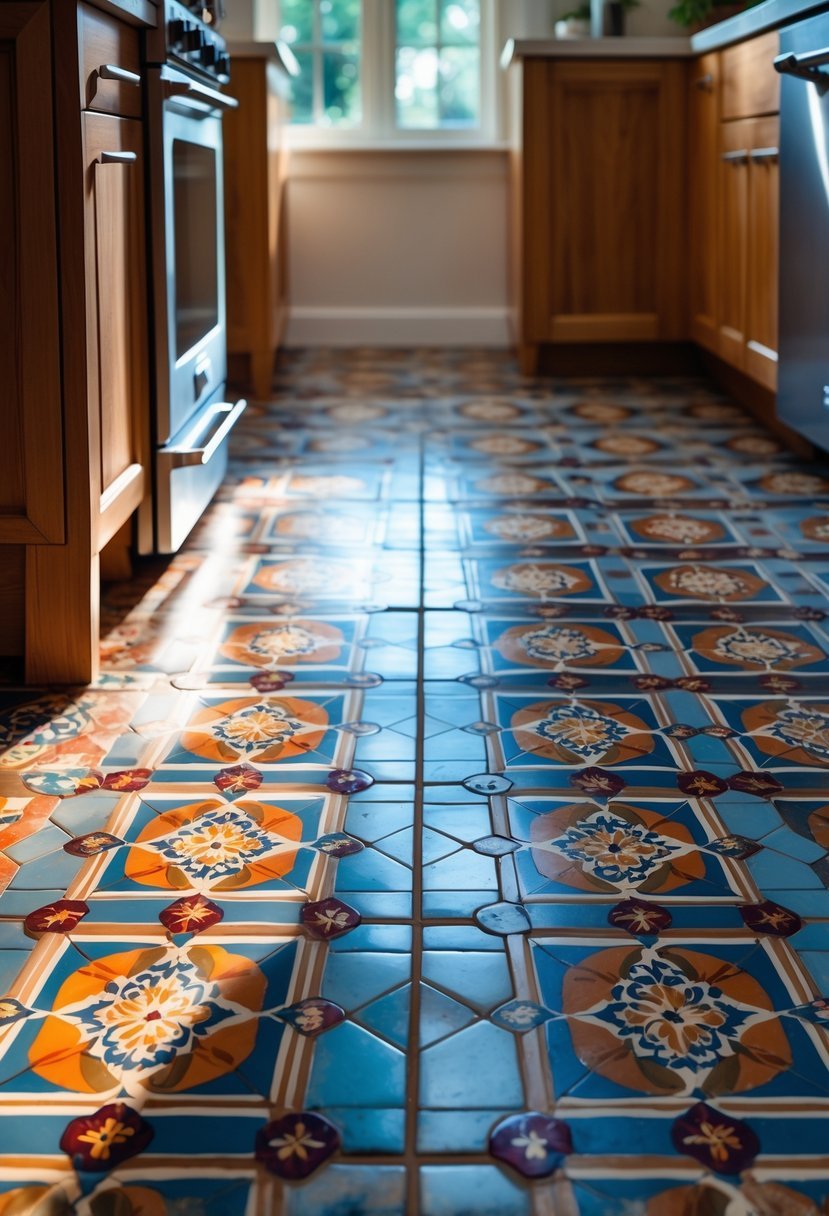
Traditional patterned floor tiles add character and depth to a kitchen. They can create a timeless look without overpowering the space.
These tiles often feature classic motifs or geometric designs, which work well in kitchens aiming for a cozy, inviting atmosphere. Choosing neutral tones in patterned tiles provides a subtle backdrop while allowing other elements like cabinets or countertops to stand out.
Patterned floors aren’t just decorative; they’re durable and help define the room’s overall style.
16) Beadboard wall panels
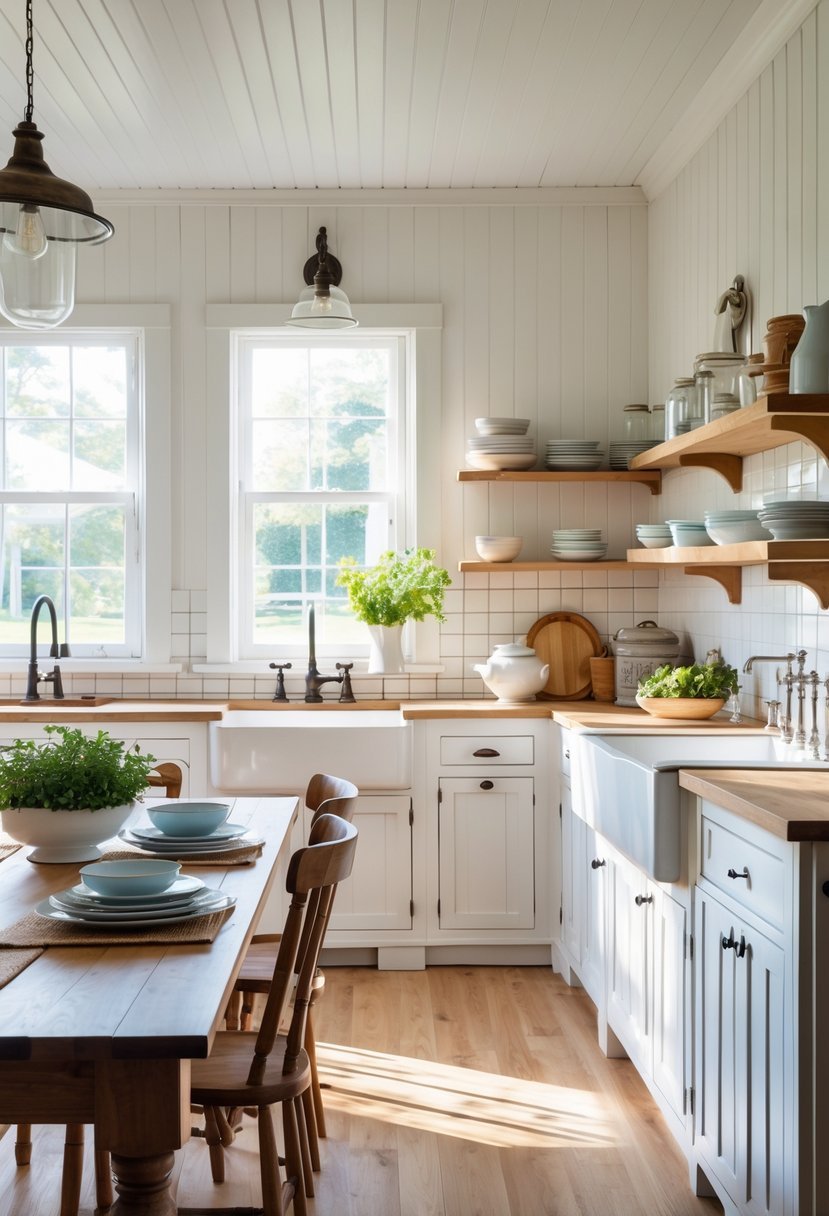
Beadboard wall panels are a timeless choice for traditional kitchens. Their vertical lines add subtle texture and can make walls appear taller.
Beadboard works well not only on walls but also as a backsplash, offering both style and protection from kitchen splashes. Classic white or soft neutral shades maintain a cozy, inviting atmosphere.
Though traditionally linked to cottage or farmhouse styles, beadboard can also complement more modern settings with wider panels or bold paint colors. It’s a simple way to add character without overwhelming a space.
17) Coffered ceiling details
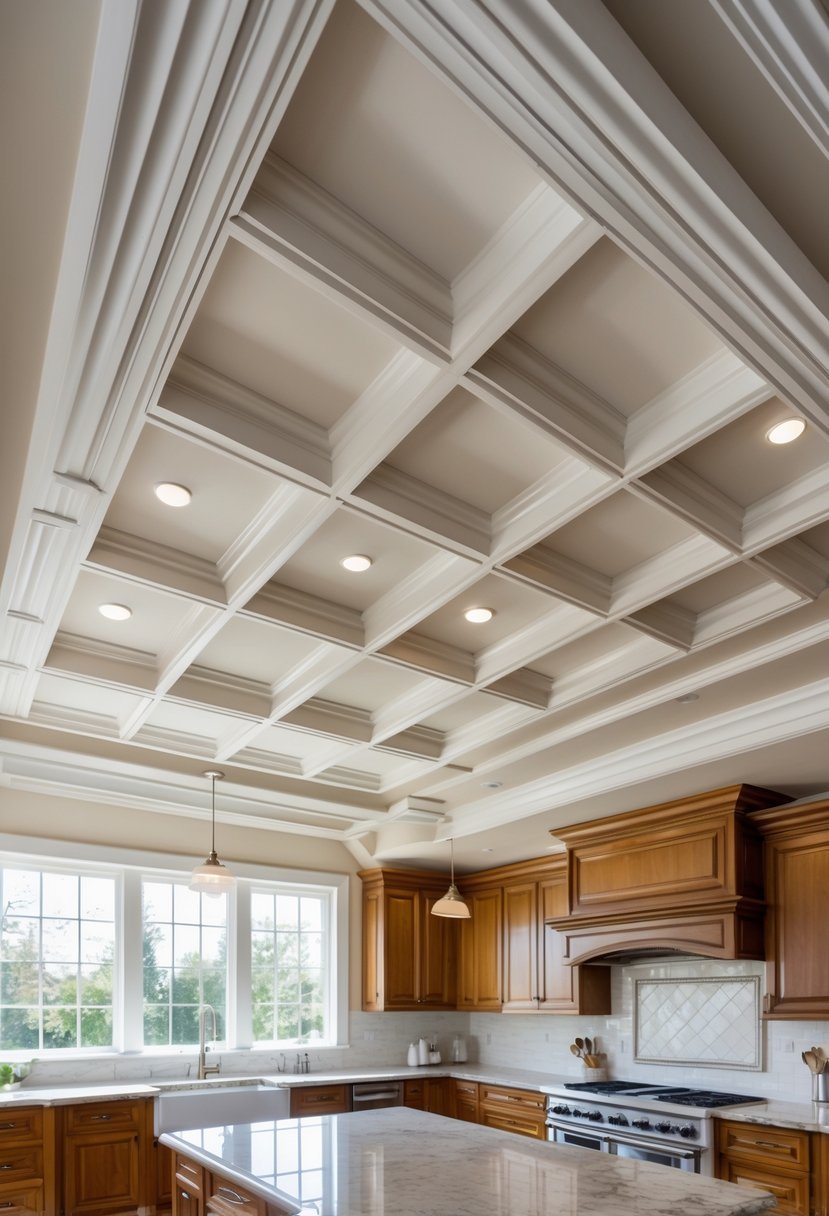
I appreciate how coffered ceilings add depth and character to a traditional kitchen. These ceilings feature recessed panels framed by beams, creating a structured and elegant look.
Choosing materials like wood or plaster allows me to match the coffered ceiling with the kitchen’s overall style. The beams can be natural wood tones or painted to complement cabinets and countertops.
Coffered ceilings provide a subtle architectural detail without overpowering the room’s design. This detail elevates a kitchen by adding visual interest to the fifth wall—the ceiling.
18) Banded kitchen rugs
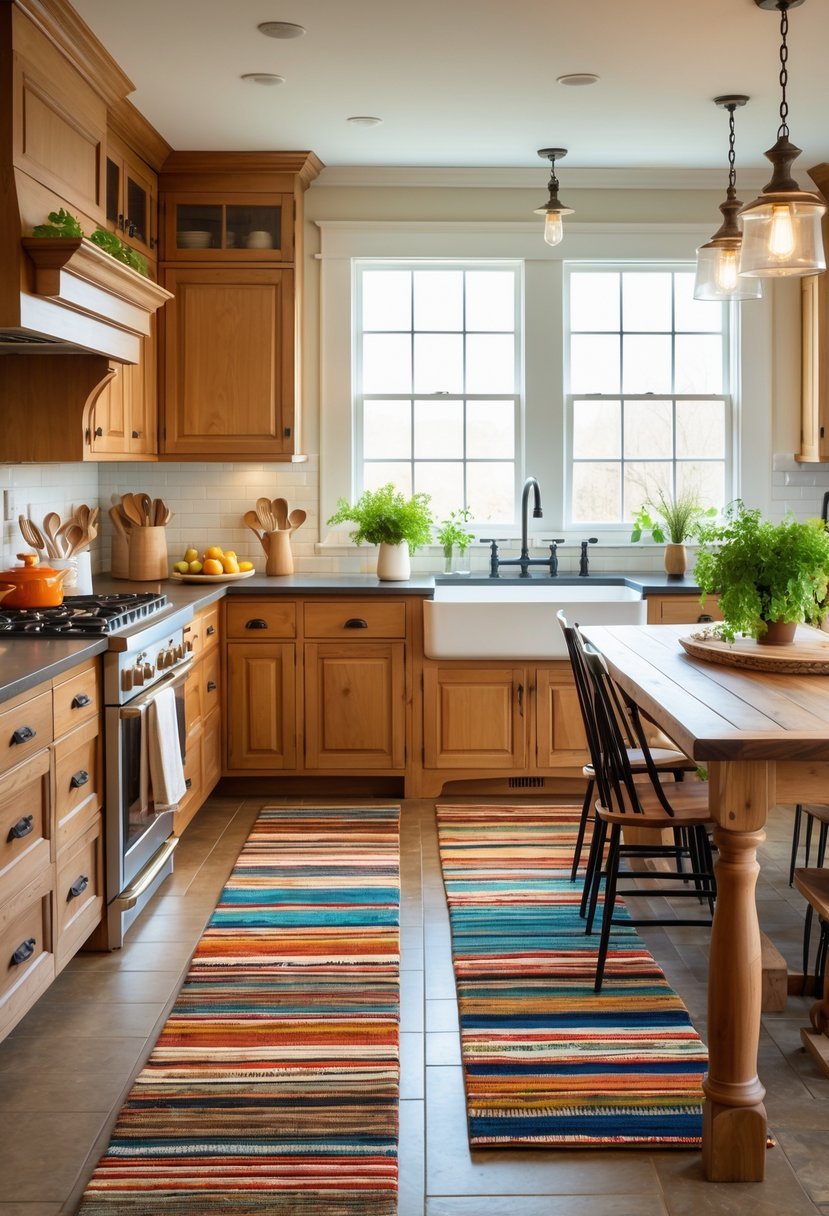
I appreciate banded kitchen rugs for their clean, structured look. The simple stripes or bands frame the rug, which creates a sense of order and symmetry in traditional kitchens.
These rugs often feature classic colors like navy, cream, or burgundy, which complement wood cabinetry and vintage fixtures.
Banded rugs add subtle interest without overwhelming the space. They ground the kitchen area, especially in rooms with ample natural light or neutral tones.
Functionally, they are easy to place near sinks or workstations because their design hides dirt and wear well. A banded rug balances style with practical use in any traditional kitchen.
19) Classic chandelier lighting
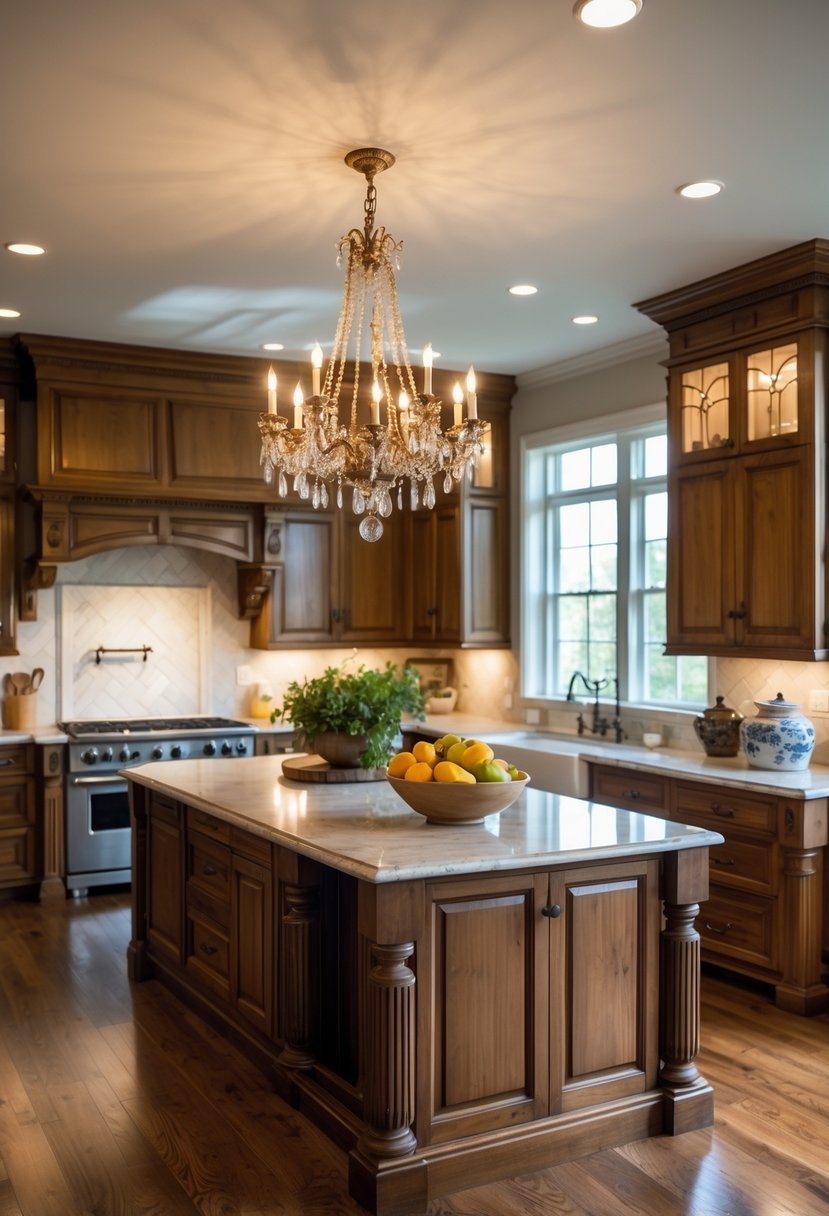
A classic chandelier instantly raises the style of a traditional kitchen. Crystal or antique brass fixtures bring elegance without overwhelming the space.
Choosing the right size and height is key. Chandeliers are usually positioned above a kitchen island or dining table to provide focused, ambient light.
Layering chandelier lighting with sconces or pendants adds depth. This helps balance function and form.
Conclusion
As we have explored in these 21 examples, traditional kitchen design is far from one-dimensional. It offers a rich spectrum of styles, from the rustic charm of farmhouse details to the refined luxury of marble countertops and glass-front cabinetry. The beauty of this design philosophy lies in its ability to feel “lived-in” and welcoming from day one. We hope these ideas have helped you pinpoint exactly which classic elements speak to you. Now, all that is left is to pick your palette, choose your hardware, and create a kitchen that will remain stylish for decades to come.