17 Kitchen Pop Ceiling Design Ideas for Modern Homes
When designing a kitchen, we usually obsess over cabinets, countertops, and backsplashes—but what about the view from above? The ceiling is often the most underutilized surface in interior design, frequently left plain and uninspired. However, in modern homes, the POP (Plaster of Paris) false ceiling has emerged as a game-changer. It is no longer just a practical solution for hiding unsightly HVAC ducts or electrical wiring; it is a powerful architectural element that defines the entire mood of your cooking space.
A well-designed POP ceiling can visually separate the kitchen from the dining area in an open-plan layout, provide housing for ambient and task lighting, and add a layer of sophistication that standard paint simply cannot achieve. Whether you are looking for a sleek, recessed “cove” design to create a floating effect or a geometric pattern to add drama, the options are limitless.
If you are ready to stop ignoring the “fifth wall,” we have compiled 17 Kitchen Pop Ceiling Design Ideas ranging from minimalist luxury to intricate classics. Let’s explore how you can take your kitchen design to new heights—literally.
I’ve noticed that kitchen ceilings are often overlooked in design, despite their potential to transform the entire space. POP ceiling designs offer a versatile way to add style, elegance, and functionality without a complete renovation.
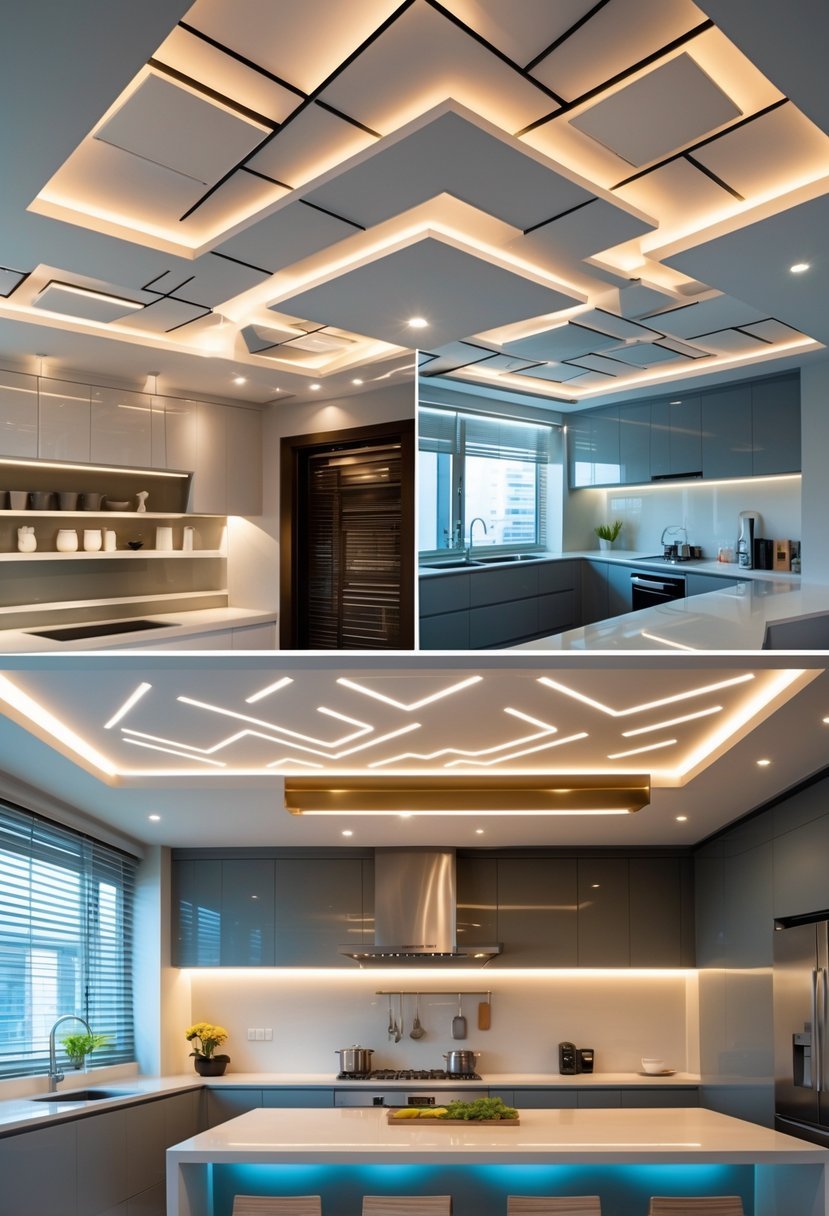
These designs can enhance lighting, improve acoustics, and add a modern touch to your kitchen environment. Whether you prefer minimalist styles or bold patterns, exploring different POP ceiling ideas can help you create a more personalized and attractive cooking area.
Table of Contents
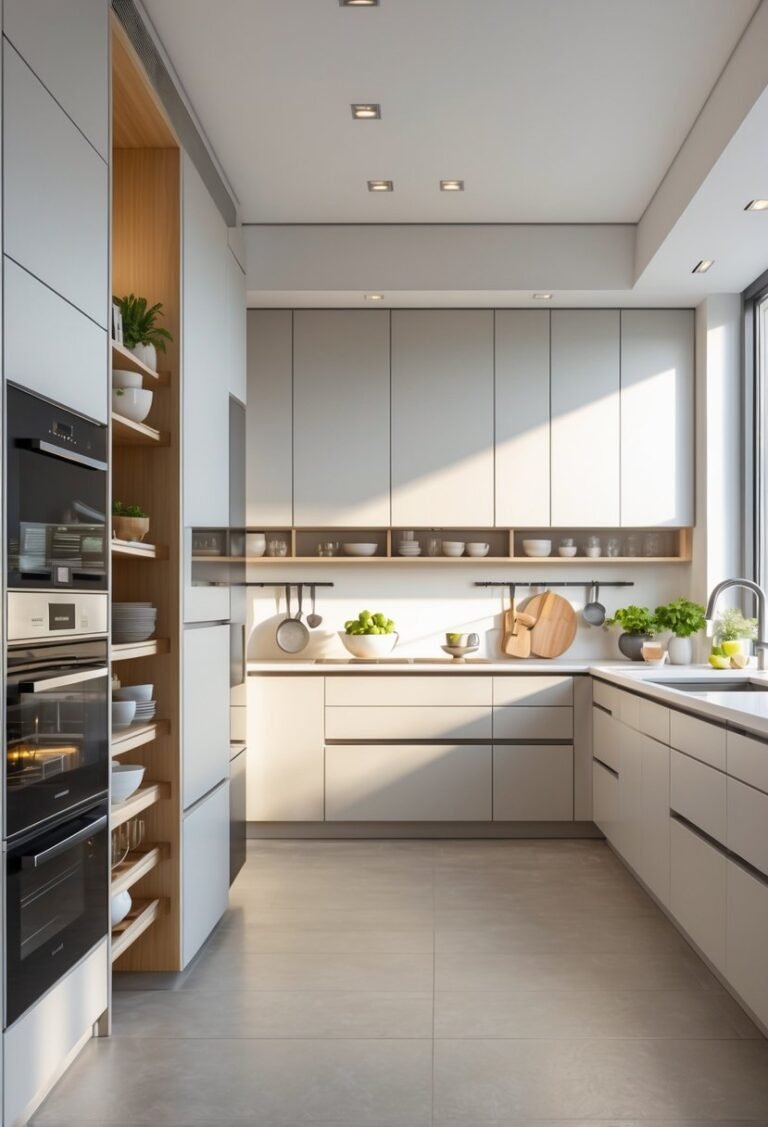
1) False ceiling with recessed LED lighting
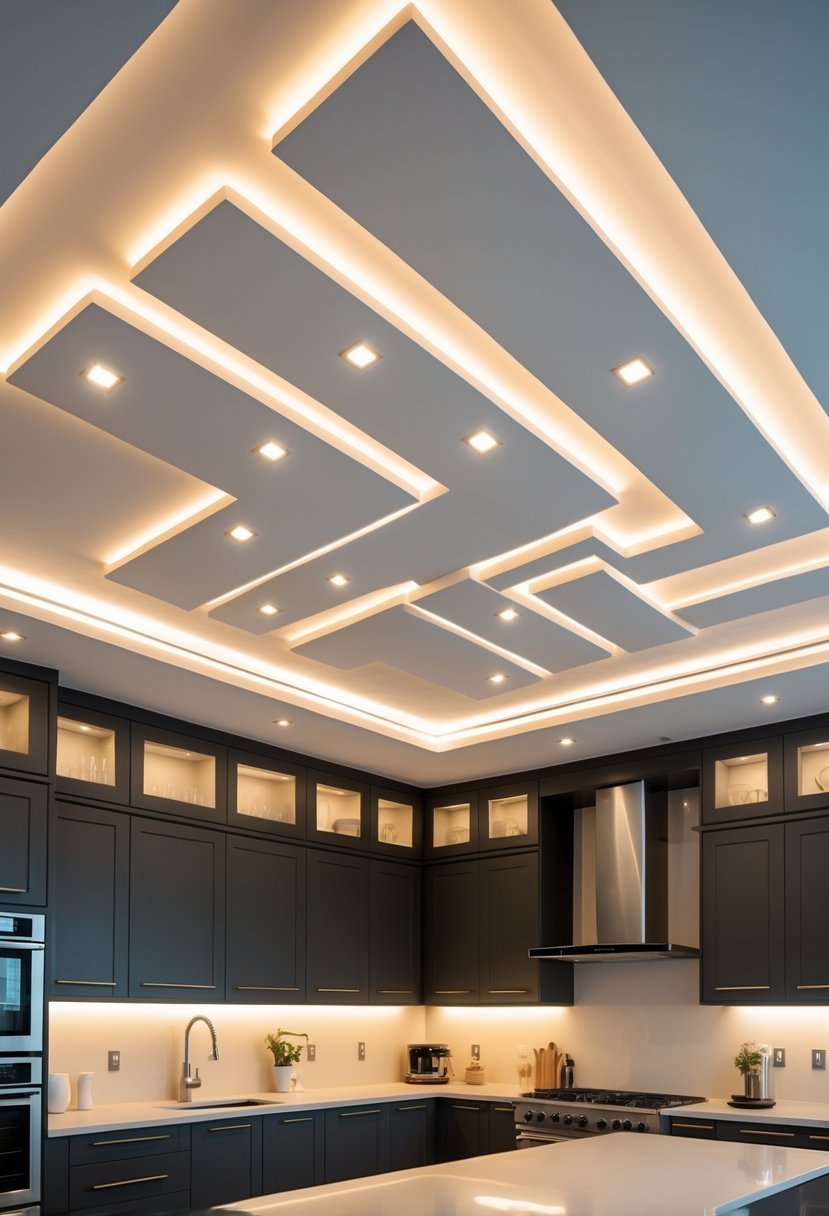
I find recessed LED lighting in a false ceiling to be one of the most effective ways to create a clean and minimalist look in the kitchen. The lights are embedded into the ceiling, so they don’t intrude on the space or visual flow.
This design approach offers a smooth, seamless appearance that enhances modern kitchen aesthetics. It also provides balanced lighting without harsh shadows, ideal for cooking and food preparation.
In my experience, combining recessed LEDs with layered POP ceilings adds subtle depth and sophistication. It’s a practical solution that keeps the ceiling design simple yet stylish.
2) Curved POP ceiling design
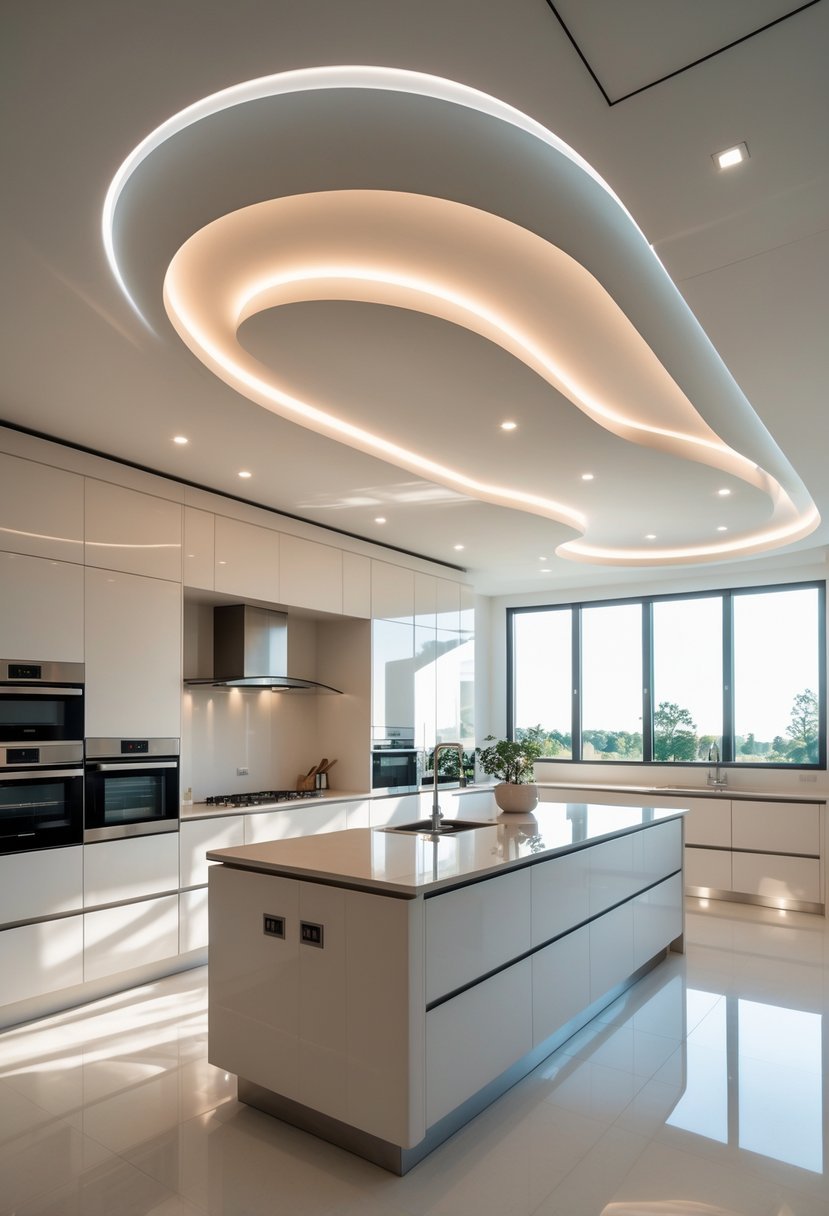
I find curved POP ceiling designs offer a subtle elegance that enhances any kitchen space. The gentle curves create a smooth flow, giving the room a sense of movement without being overwhelming.
This design works well when you want to add sophistication while maintaining simplicity. It also allows for creative lighting arrangements that can highlight the curvature and improve the overall ambiance.
Curved ceilings can soften the sharp angles typically found in kitchens, providing a more inviting atmosphere. For me, this style balances functionality and aesthetics effectively.
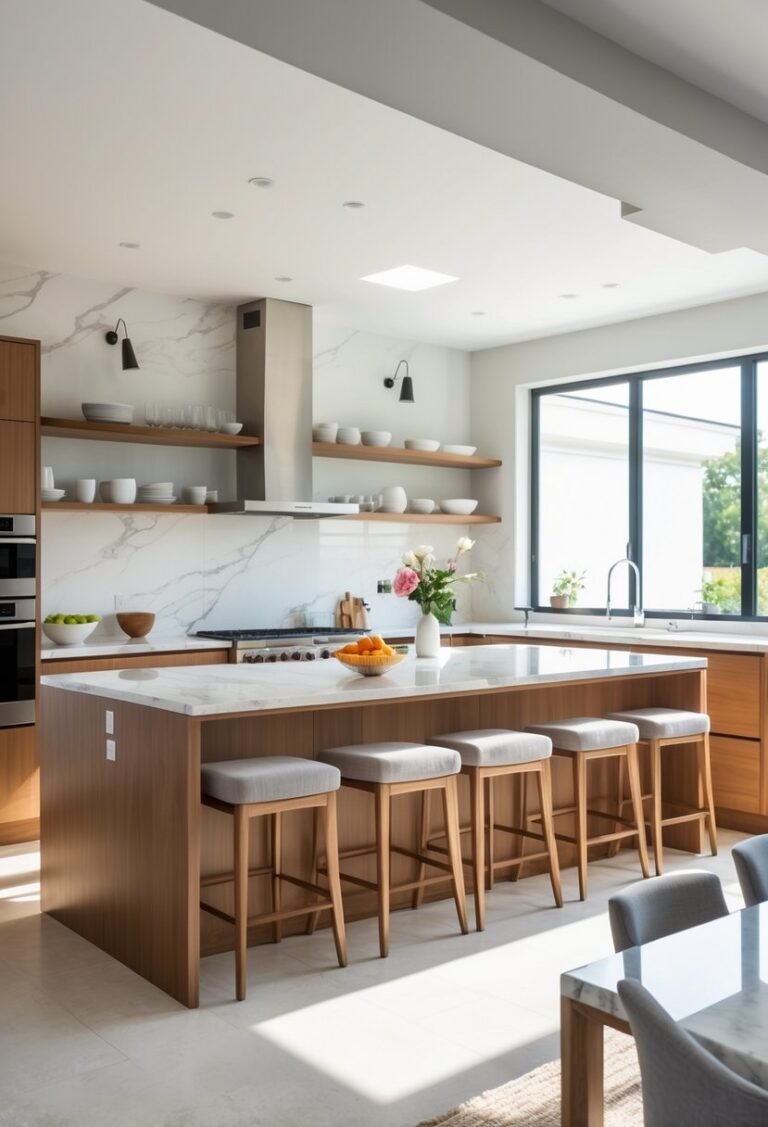
3) Tray ceiling with indirect lighting
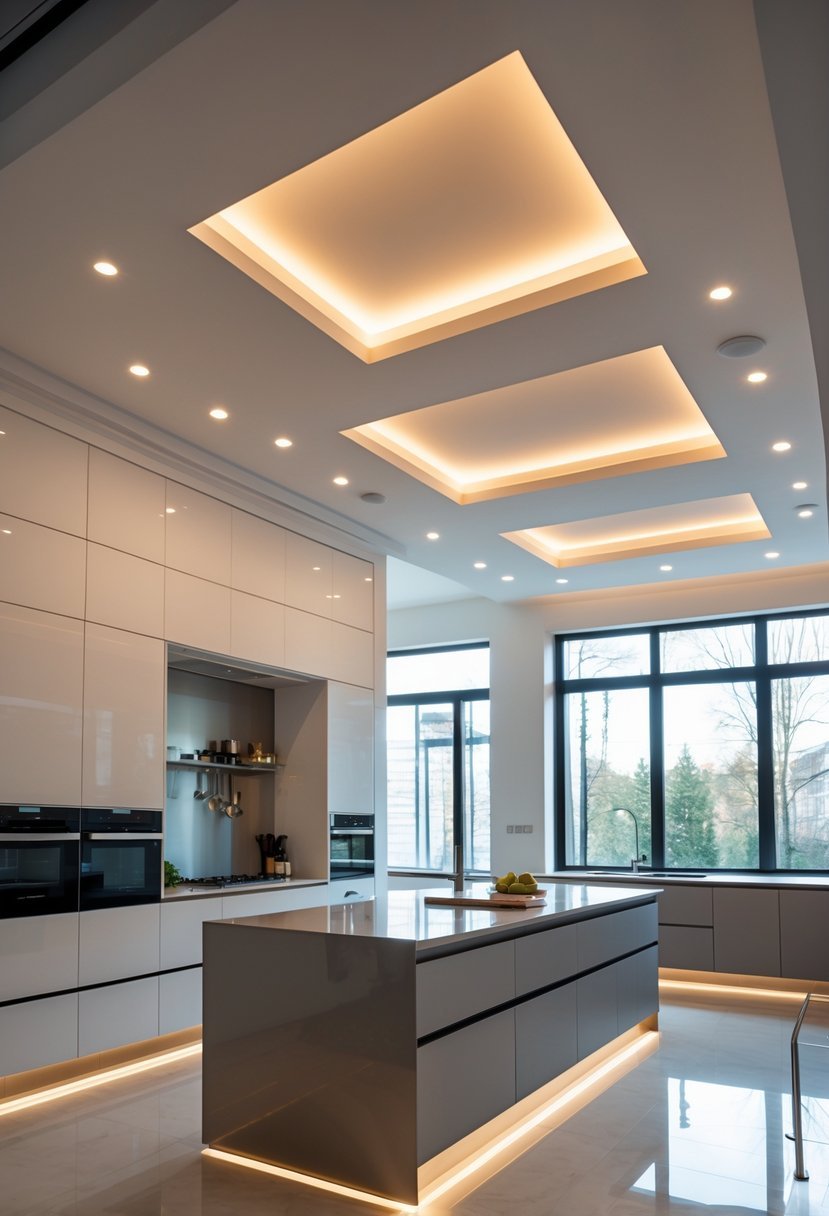
I find tray ceilings paired with indirect lighting create a sophisticated, layered effect in the kitchen. The recessed LED strips hidden within the tray cast a soft glow that enhances the ceiling’s architectural depth without overwhelming the space.
This design brings a modern feel while maintaining subtlety. It balances function and style by providing ambient lighting that complements task lighting, such as pendant lamps over an island.
In my experience, combining the indirect lights with clean, simple lines keeps the ceiling looking sleek. This approach prevents the design from becoming too busy and lets the light do the work in elevating the kitchen’s atmosphere.
4) Textured POP ceiling to mask imperfections
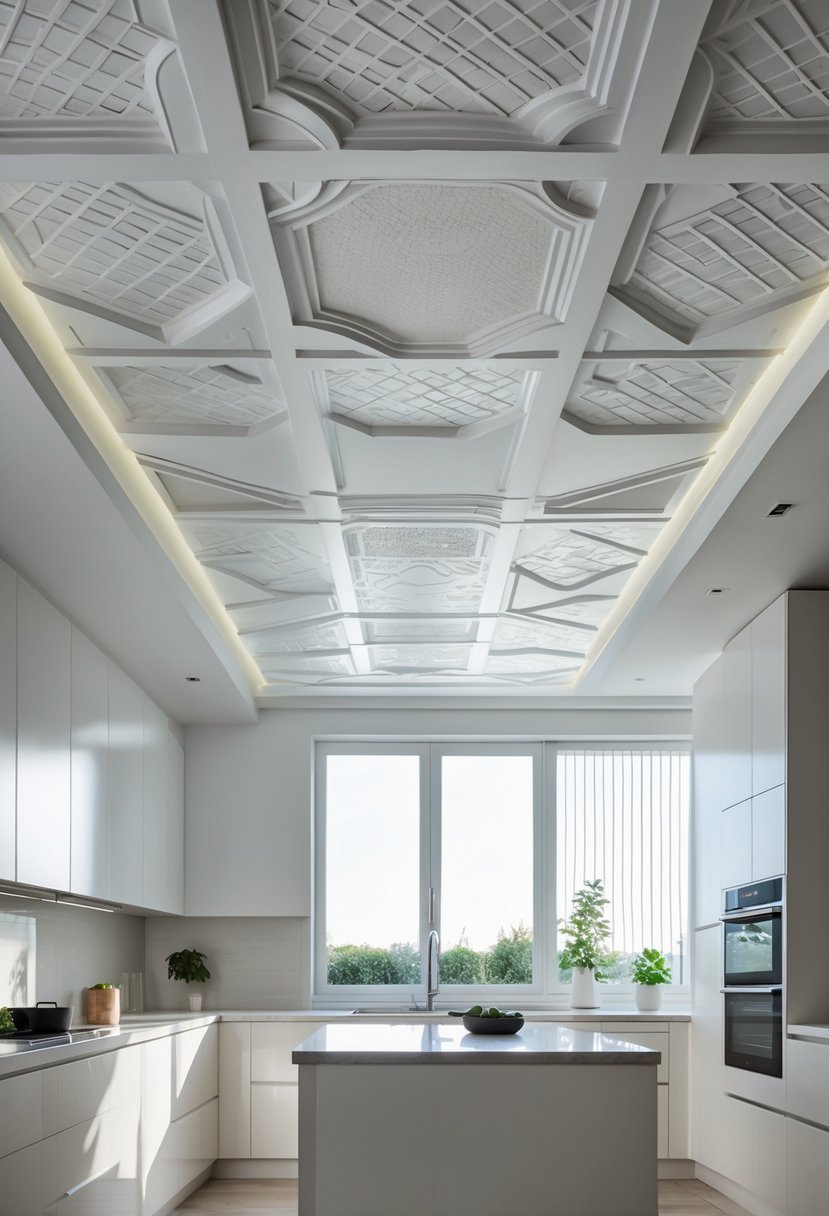
I find textured POP ceilings especially useful when the kitchen ceiling has minor flaws. The surface texture helps hide cracks, uneven patches, or small dents without needing extensive repairs beforehand.
This approach saves time and effort during installation, making it practical for older homes or renovation projects. Textured finishes also add subtle depth and character to the ceiling, enhancing the kitchen’s visual interest without overwhelming the space.
By choosing the right texture, I can maintain a clean look while concealing imperfections effectively. It’s a smart way to improve both function and style in a kitchen ceiling.
5) Geometric pattern ceiling design
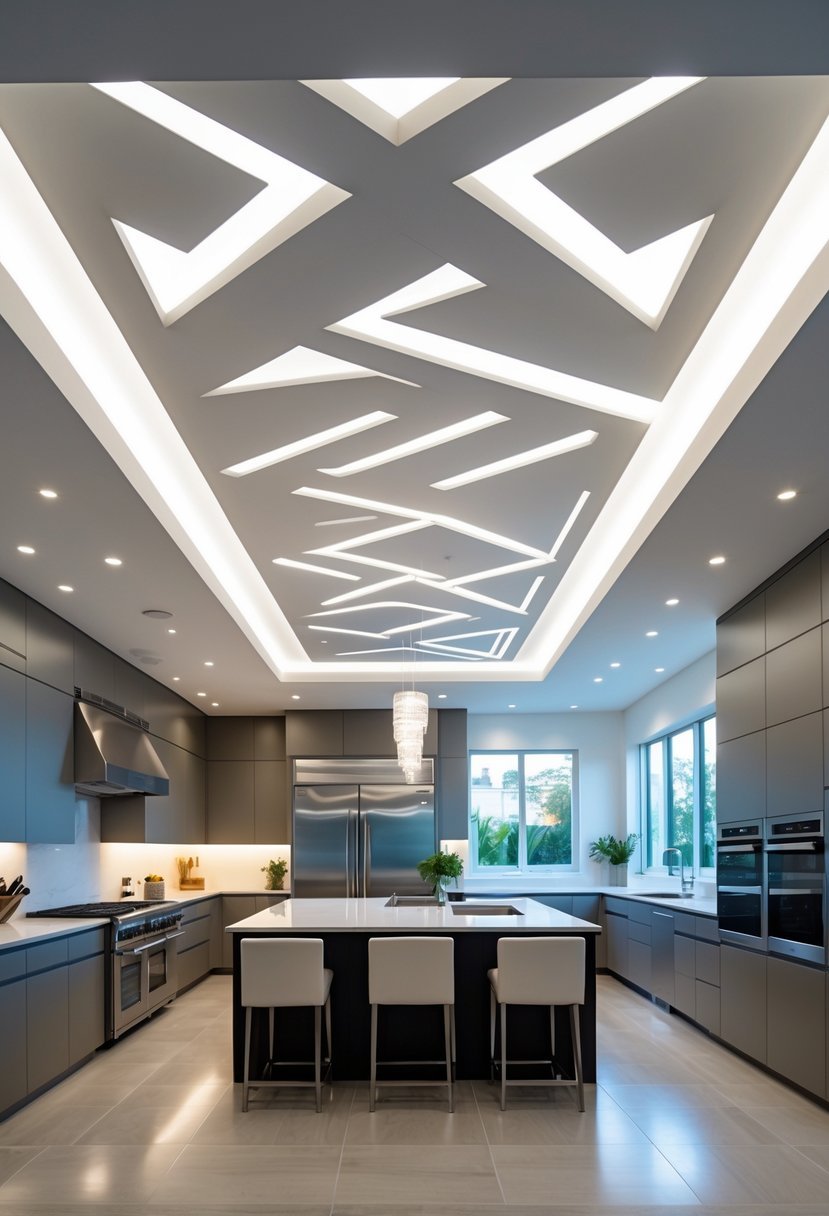
I find geometric patterns offer a clean, modern touch to kitchen POP ceilings. Shapes like squares, triangles, and hexagons create a sense of order while adding visual interest.
Using sharp lines and repeated patterns can make the ceiling feel more structured. It also helps define the space without overwhelming it.
I often recommend pairing these designs with subtle lighting. Spotlights or recessed lights enhance the 3D effect and bring out the depth of the shapes.
Geometric ceilings work well in contemporary kitchens or those with minimalist décor. They add character in a restrained and stylish way.
6) Wooden panel effect with POP
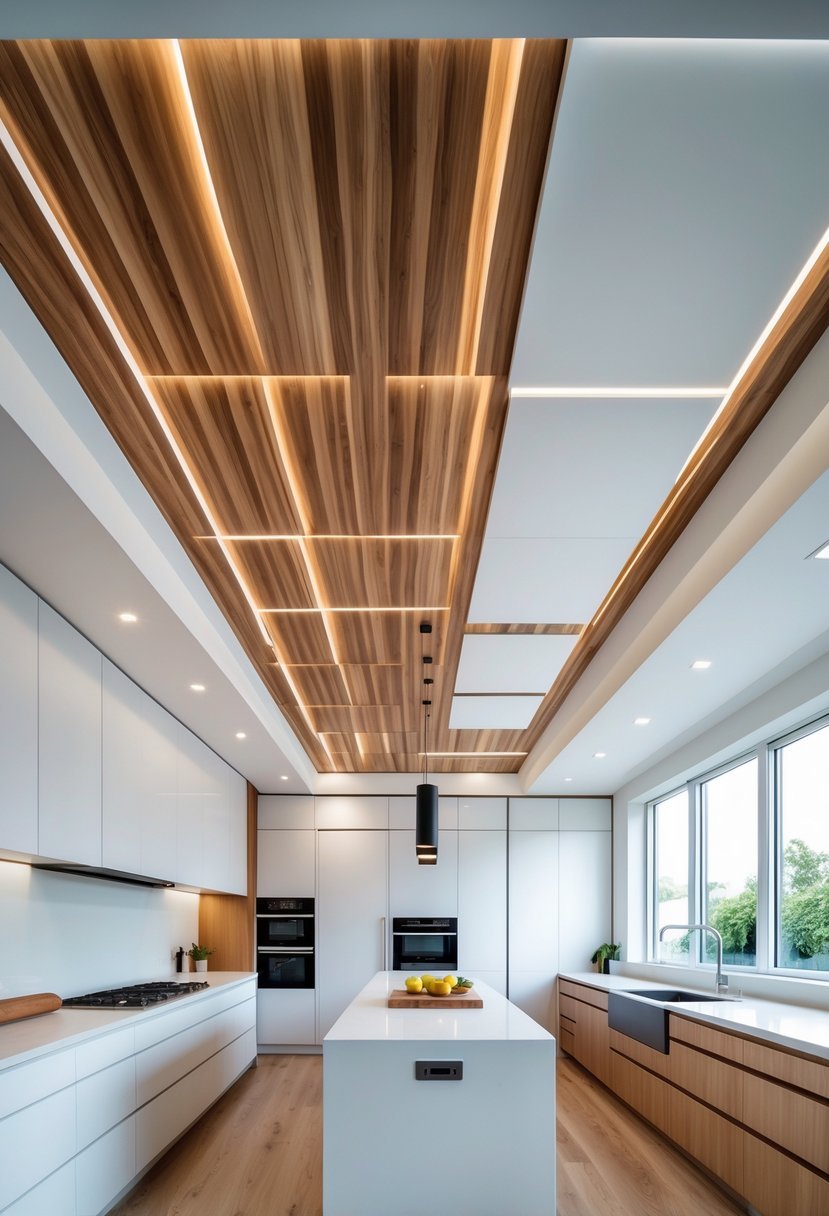
I find the wooden panel effect combined with POP ceilings creates a balanced and modern look. Using POP to mimic wooden panels allows you to maintain the warmth of wood without the maintenance challenges.
This design is practical for kitchens with natural wood flooring or cabinets. By adding white or light-colored POP panels shaped like wood planks, you create depth and texture while keeping the ceiling sleek and clean.
Lighting can accentuate this effect well. Recessed lights or LED strips highlight the lines of the panels, enhancing the overall visual appeal. This method is also cost-effective compared to using actual wood on the ceiling.
7) Minimalist flat POP ceiling
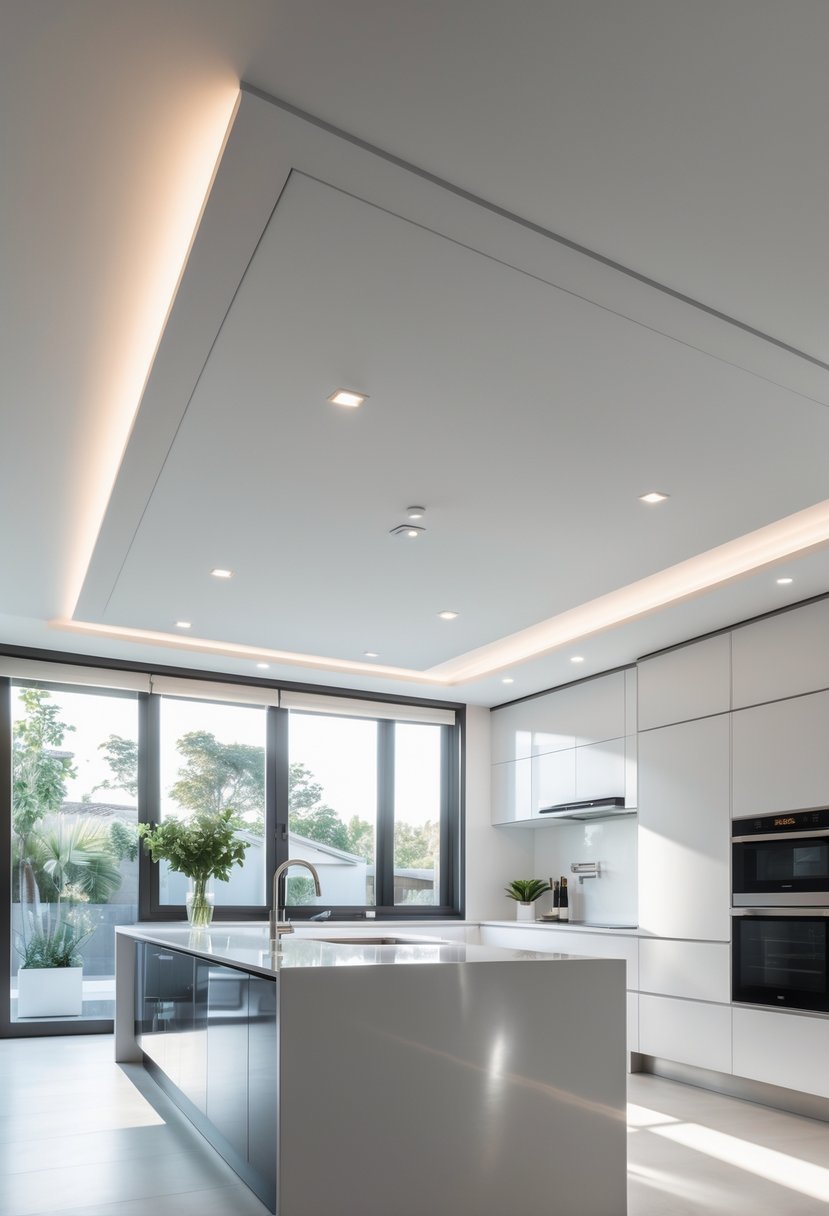
I prefer a minimalist flat POP ceiling for kitchens that value simplicity and clean lines. The smooth, untextured surface creates a sleek look without drawing too much attention.
Hidden lighting strips can be integrated seamlessly, adding subtle illumination and enhancing the kitchen’s atmosphere. This design is practical, making the space feel larger and more open.
Because it avoids complex shapes, it’s easier to maintain and clean. I find that this style suits modern kitchens well, especially those with low ceilings where less ornamentation works best.
8) Layered POP ceiling with contrasting colors
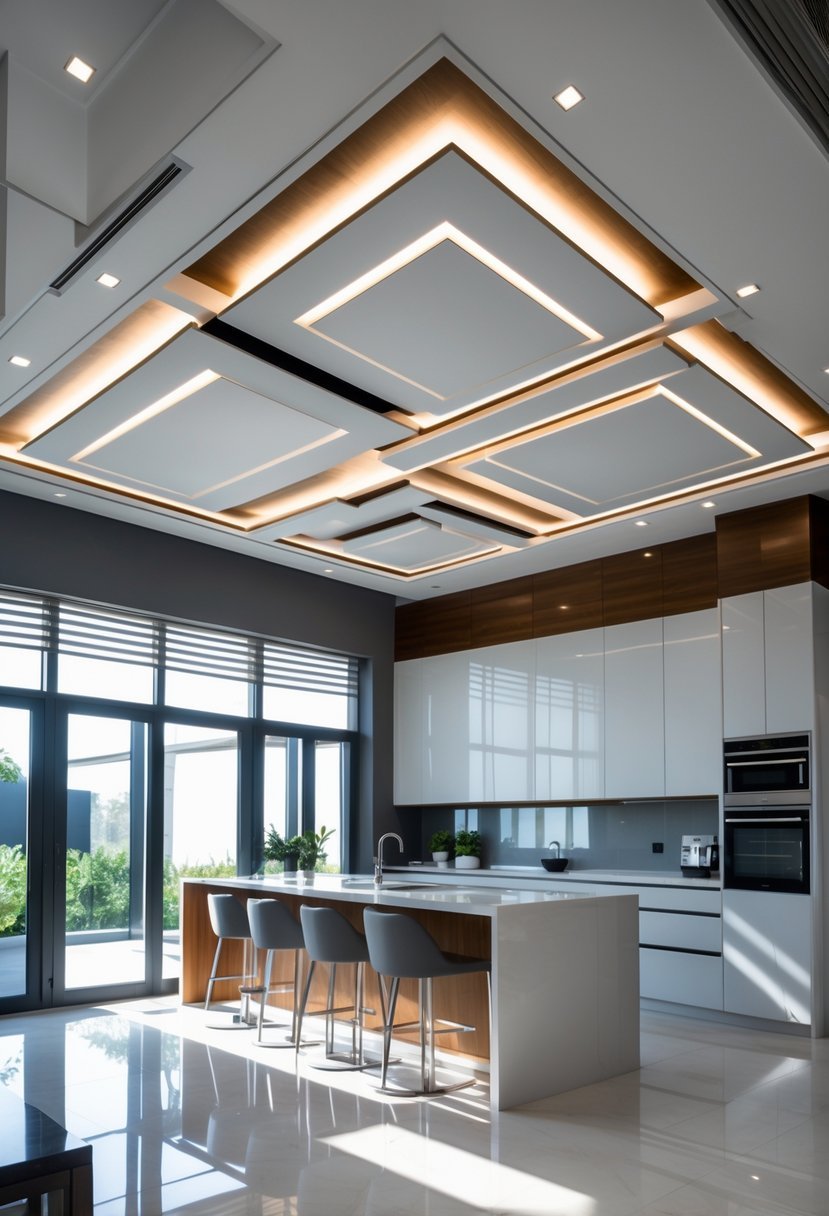
I find layered POP ceilings to be an excellent way to add depth and character to a kitchen. By using two or more contrasting colors, the layers stand out clearly, creating a visually interesting effect without overwhelming the space.
In my experience, combining a neutral base with bolder accent colors works well. For example, a white main layer paired with a wooden or darker colored secondary layer adds warmth and dimension.
This approach also allows me to highlight architectural elements or lighting features within the layers. It’s a practical way to enhance both style and functionality in the kitchen ceiling design.
9) POP ceiling with embedded spotlights
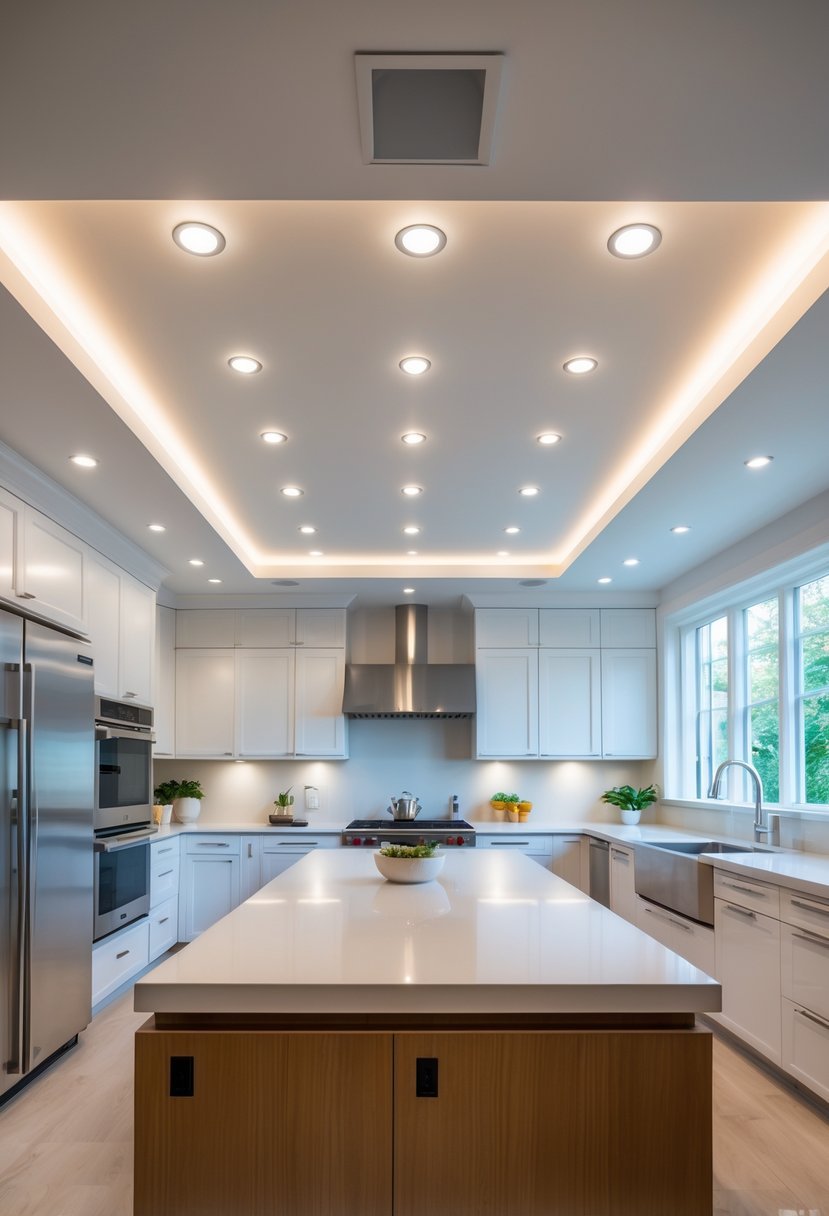
I find that a POP ceiling with embedded spotlights offers a clean, modern look while providing focused lighting exactly where it’s needed. The spotlights can be strategically placed to illuminate work areas like the countertop or sink, enhancing functionality.
This design keeps the ceiling surface smooth and uncluttered, which makes the kitchen appear more spacious. I appreciate how the embedded lights blend seamlessly with the POP ceiling, avoiding bulky fixtures.
Using spotlights also allows for flexibility in lighting intensity. You can highlight certain zones or create ambient light by selecting dimmable options. This approach balances style and practicality effectively.
10) Circular false ceiling design
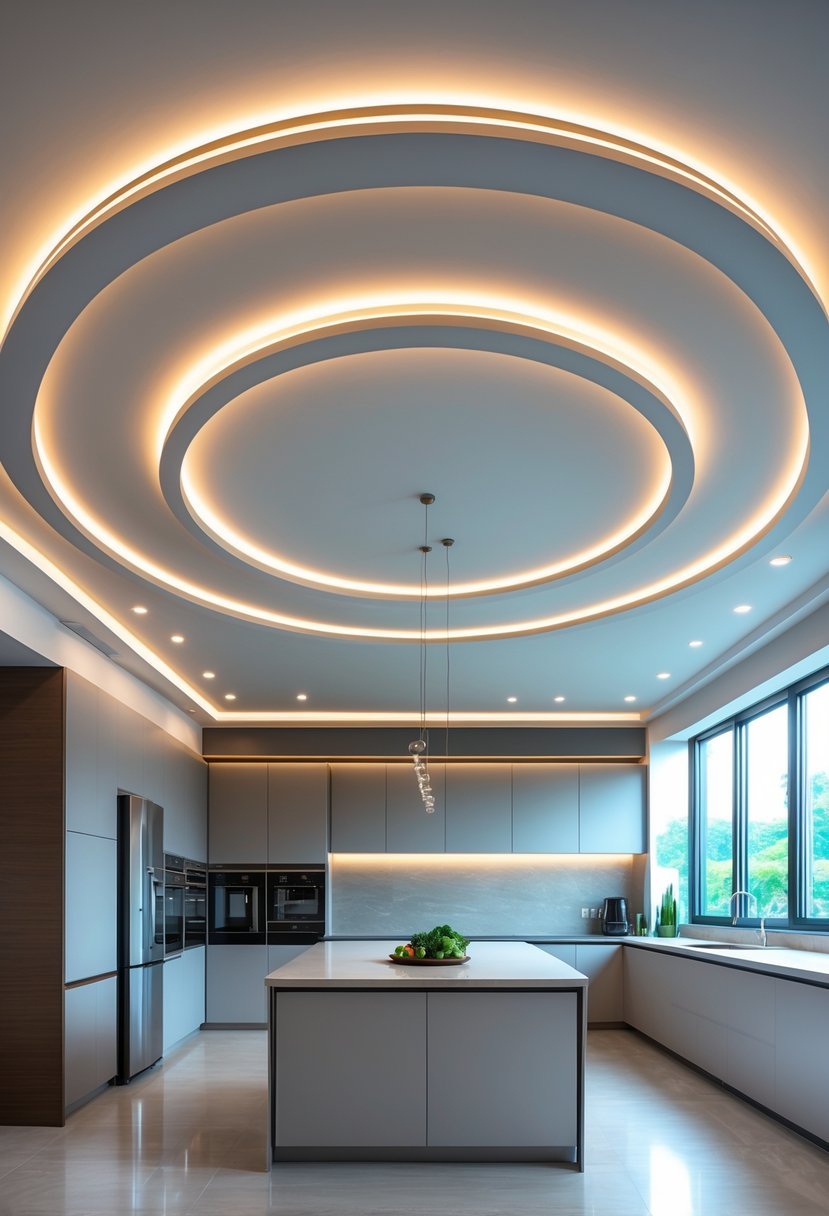
I find circular false ceiling designs to be an elegant choice for kitchens. Their smooth, rounded shape softens sharp angles found in cabinets and countertops, creating a balanced look.
In my experience, adding spotlights around the circle enhances both style and functionality. The lighting highlights the ceiling’s curves and provides focused illumination for cooking tasks.
A circular design often has a sleek POP finish, which adds subtle texture without overwhelming the space. It pairs well with modern kitchen interiors, blending simplicity with sophistication.
Choosing this design can help define an open-plan kitchen, giving it a sense of structure without heavy division. For a clean, contemporary vibe, a circular false ceiling is a practical and stylish option.
11) POP cornices with decorative molding
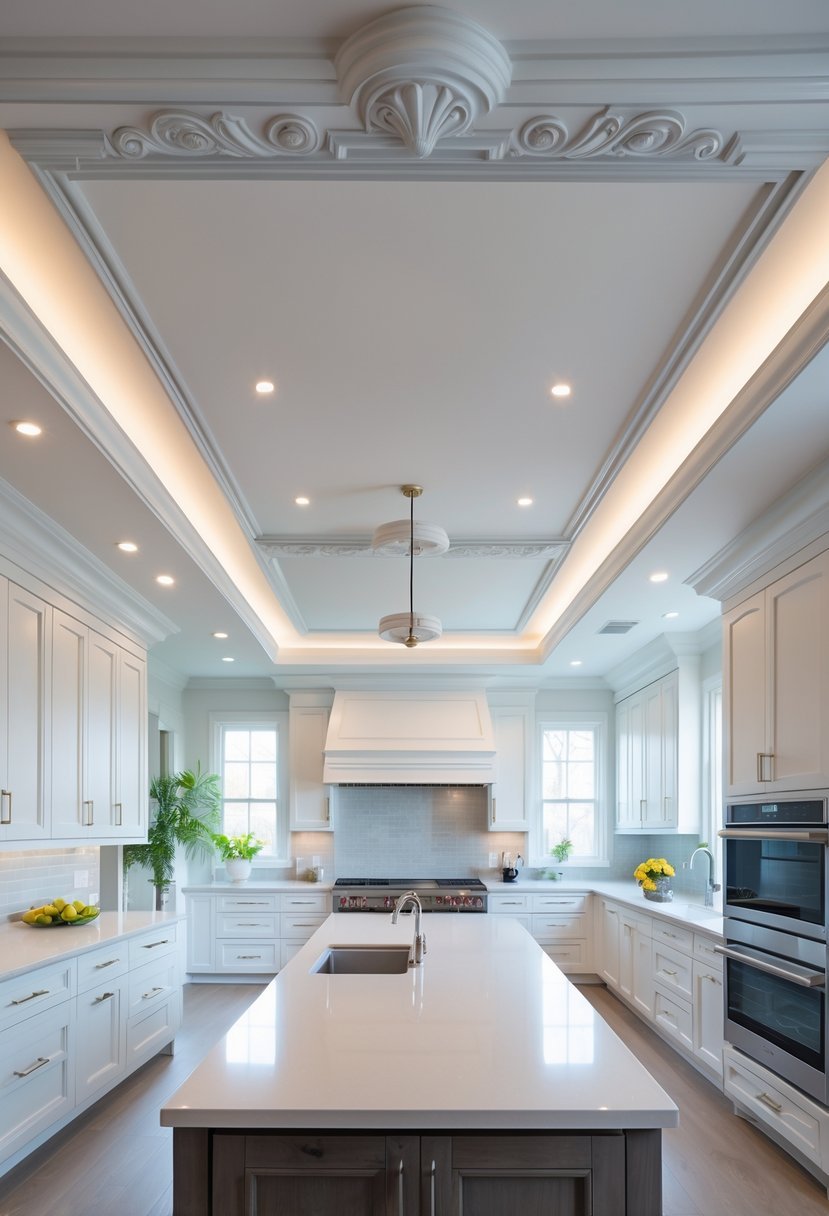
I find that POP cornices with decorative molding add a refined touch to kitchen ceilings. These cornices create a smooth transition between the wall and ceiling while introducing subtle elegance through detailed patterns.
Using plaster of Paris allows for intricate designs that blend well with various kitchen styles. The molding can range from simple curves to more elaborate motifs, depending on the room’s character.
In my experience, these cornices not only enhance the visual appeal but also help conceal imperfections at the junctions. They offer a classic yet versatile option for kitchens aiming for a polished, cohesive look.
12) False ceiling with integrated ventilation slots
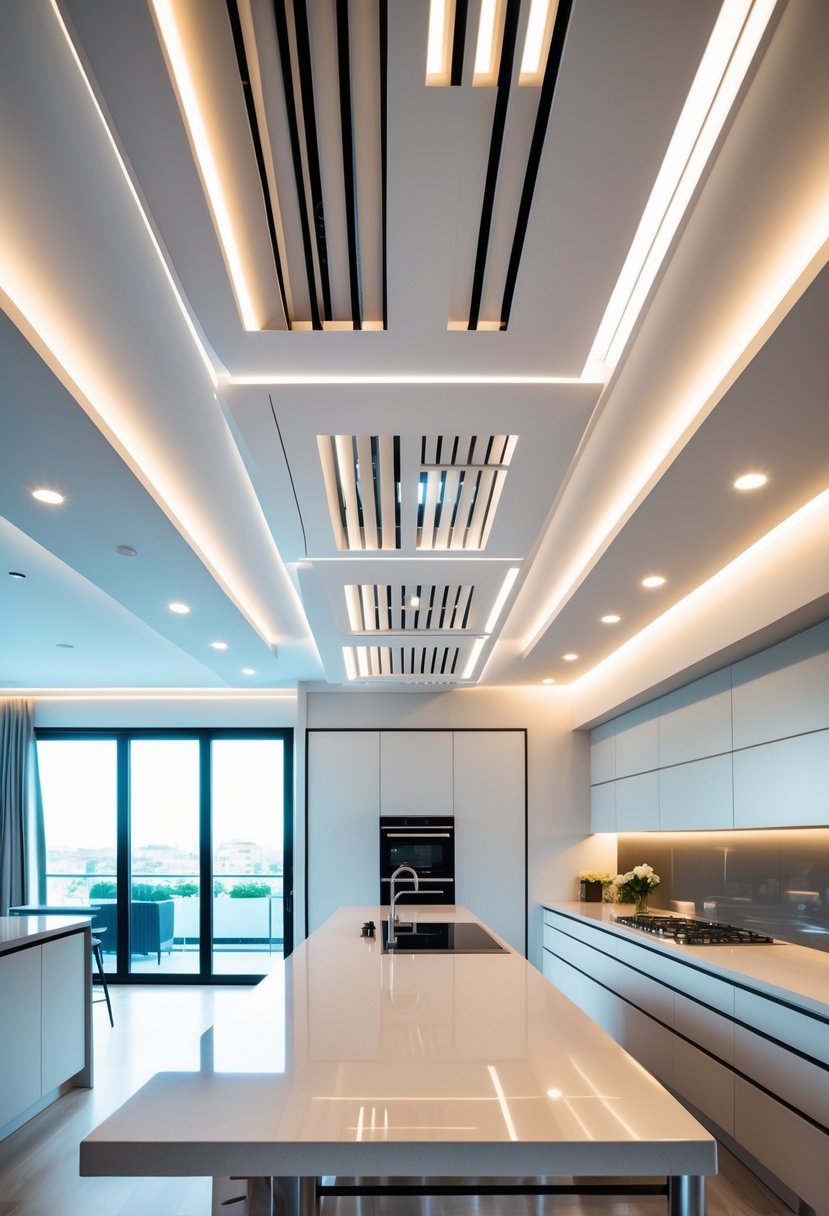
I find that integrating ventilation slots into a kitchen pop false ceiling enhances both functionality and design. These slots allow for better air circulation, reducing heat and cooking odors without compromising the ceiling’s clean look.
In my experience, the ventilation slots can be subtle, aligned with the ceiling’s lines, or designed as part of a pattern. This approach keeps the ceiling visually appealing while serving a practical purpose.
Integrating ventilation also helps in managing kitchen humidity. It complements task lighting and other ceiling features, making the cooking space more comfortable and efficient.
13) POP arches for kitchen entryways
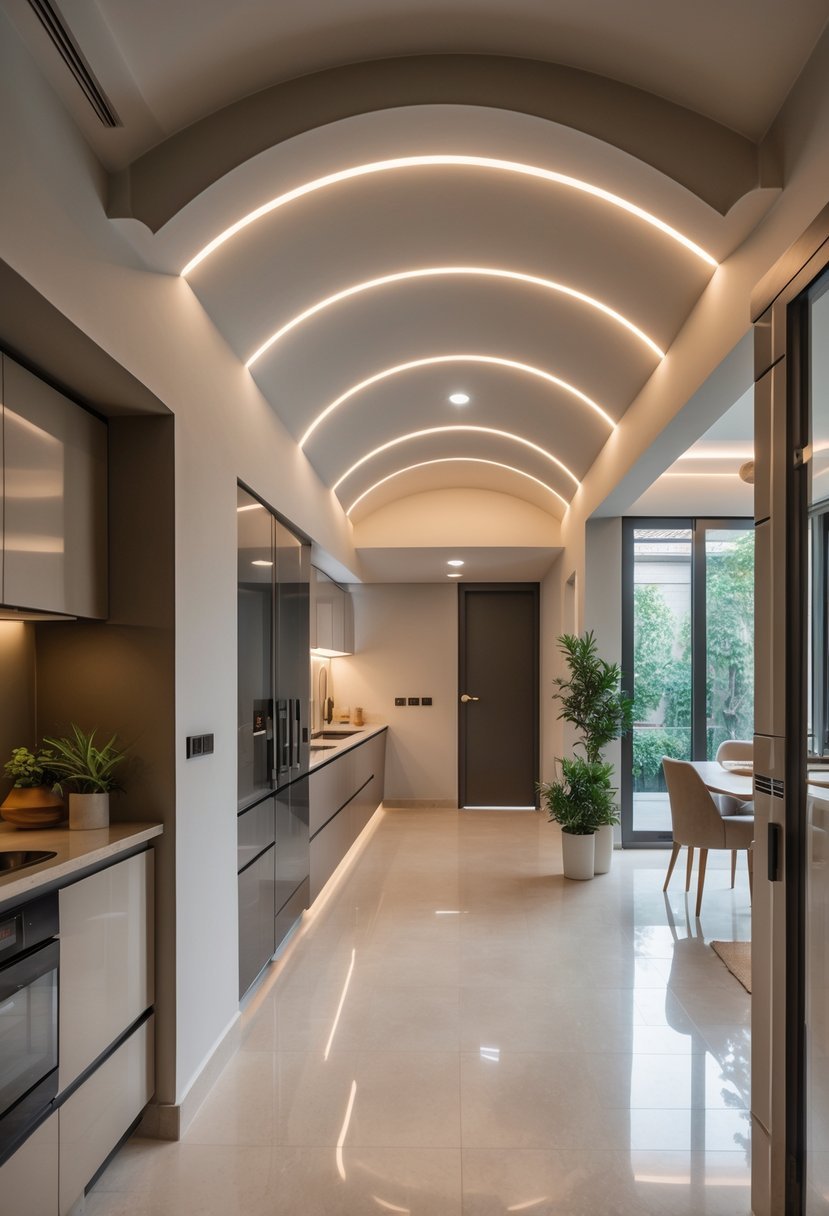
I find POP arches a practical way to add character to kitchen entryways. They create a smooth transition between spaces while bringing an elegant touch.
The design options range from simple curved arches to more detailed patterns. This versatility allows me to match the arch to the kitchen’s overall style, whether modern or traditional.
Besides aesthetics, POP is lightweight and easy to install. It also resists heat well, which suits the kitchen environment. This makes POP arches both functional and visually appealing.
14) Symmetrical ceiling and wall coordination
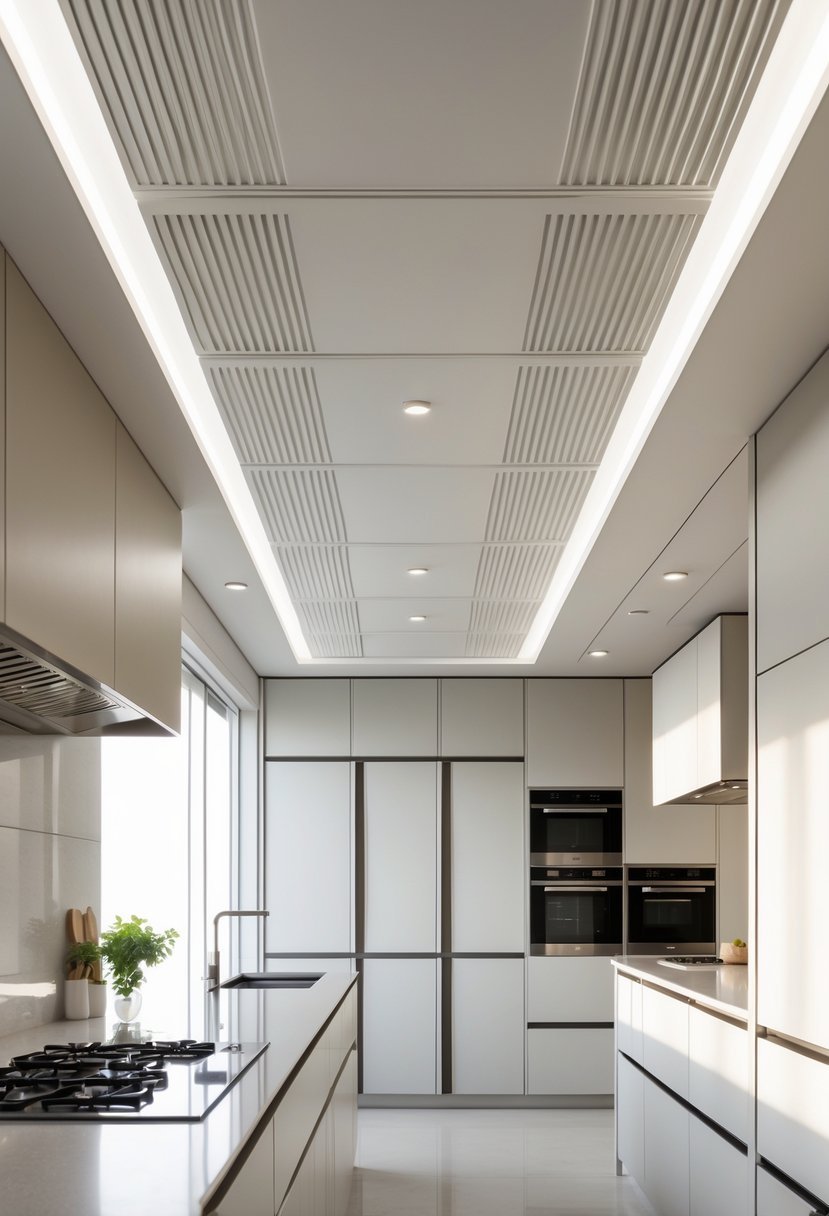
I find that creating symmetry between the ceiling and walls brings balance to a kitchen space. When the patterns and colors on the POP ceiling reflect or complement those on the walls, the room feels more cohesive.
For example, if the walls have wooden textures, I often use white or neutral POP panels on the ceiling to highlight the natural material. This contrast helps to accentuate both features without overwhelming the space.
Symmetrical coordination also works well with lighting. Placing lights evenly along the POP ceiling design can emphasize the harmony between ceiling and walls, enhancing the overall atmosphere. This approach keeps the kitchen looking clean and well thought out.
15) POP ceiling with hidden cabinets
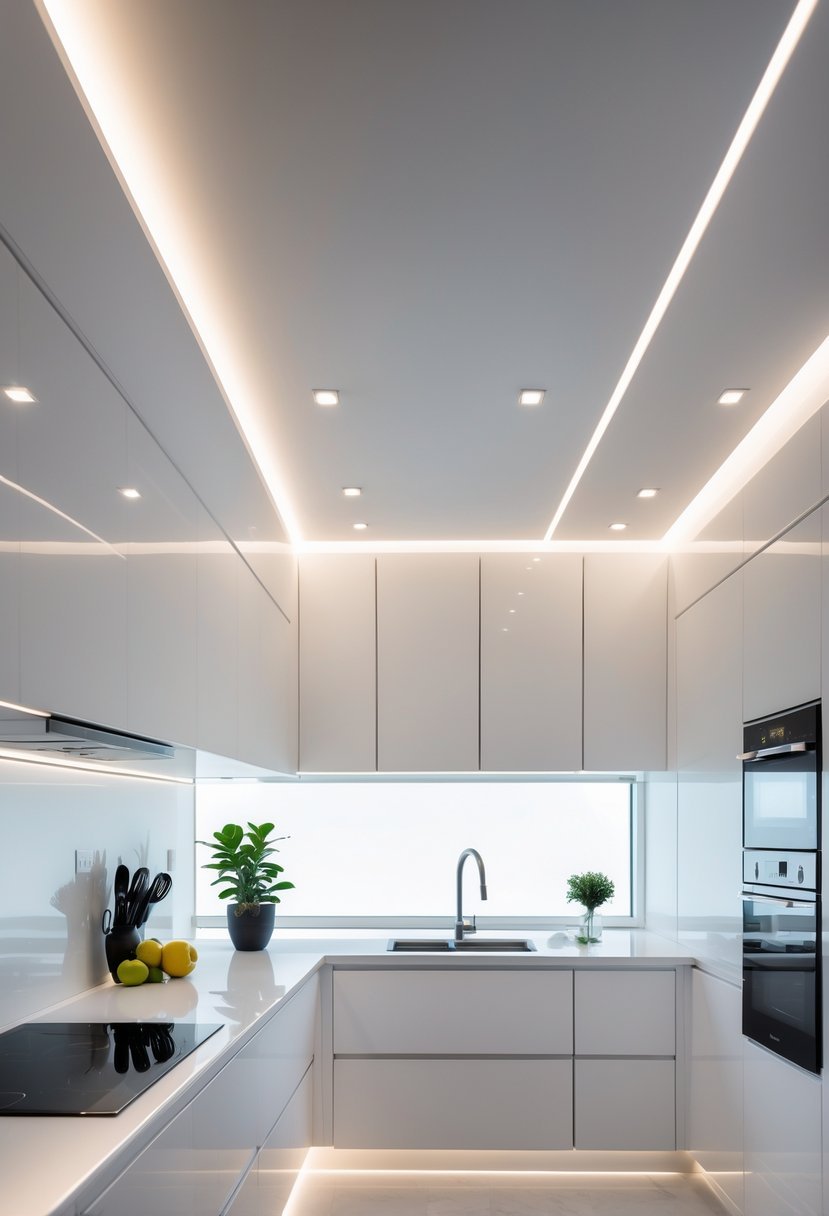
Integrating hidden cabinets into a POP ceiling design adds both style and functionality. This approach maximizes kitchen storage while maintaining a clean ceiling surface.
The hidden cabinets blend seamlessly into the ceiling structure. This makes the space look less cluttered.
Lighting can be cleverly incorporated around these cabinets to highlight their presence. This does not disrupt the minimalist look.
16) False ceiling with acoustic panels
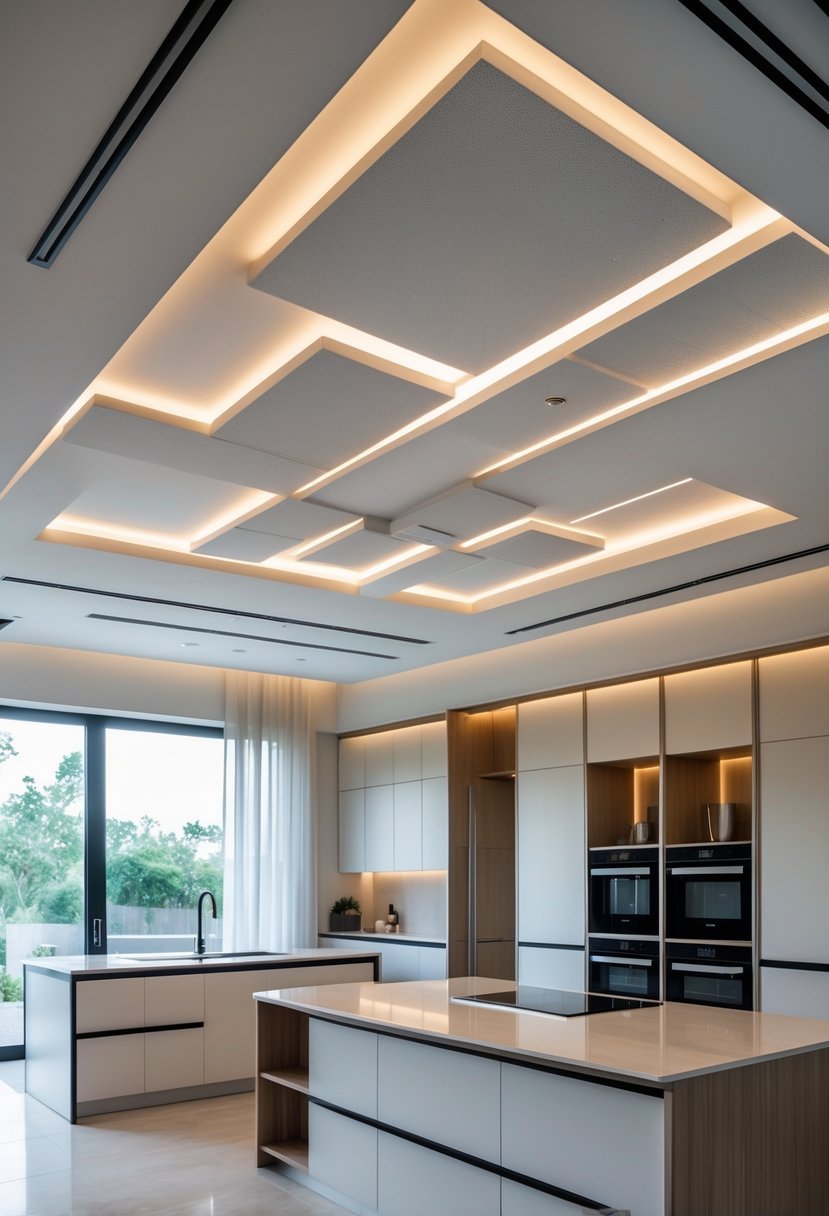
Incorporating acoustic panels into a false ceiling is an effective way to control sound in the kitchen. These panels reduce noise and add a subtle texture to the ceiling surface.
Using patterned acoustic tiles within the POP framework combines style and function. It helps create a quieter cooking environment.
The design options range from simple, sleek panels to more decorative patterns. This allows customization of the look while improving acoustics.
17) Kitchen island lighting in POP ceiling
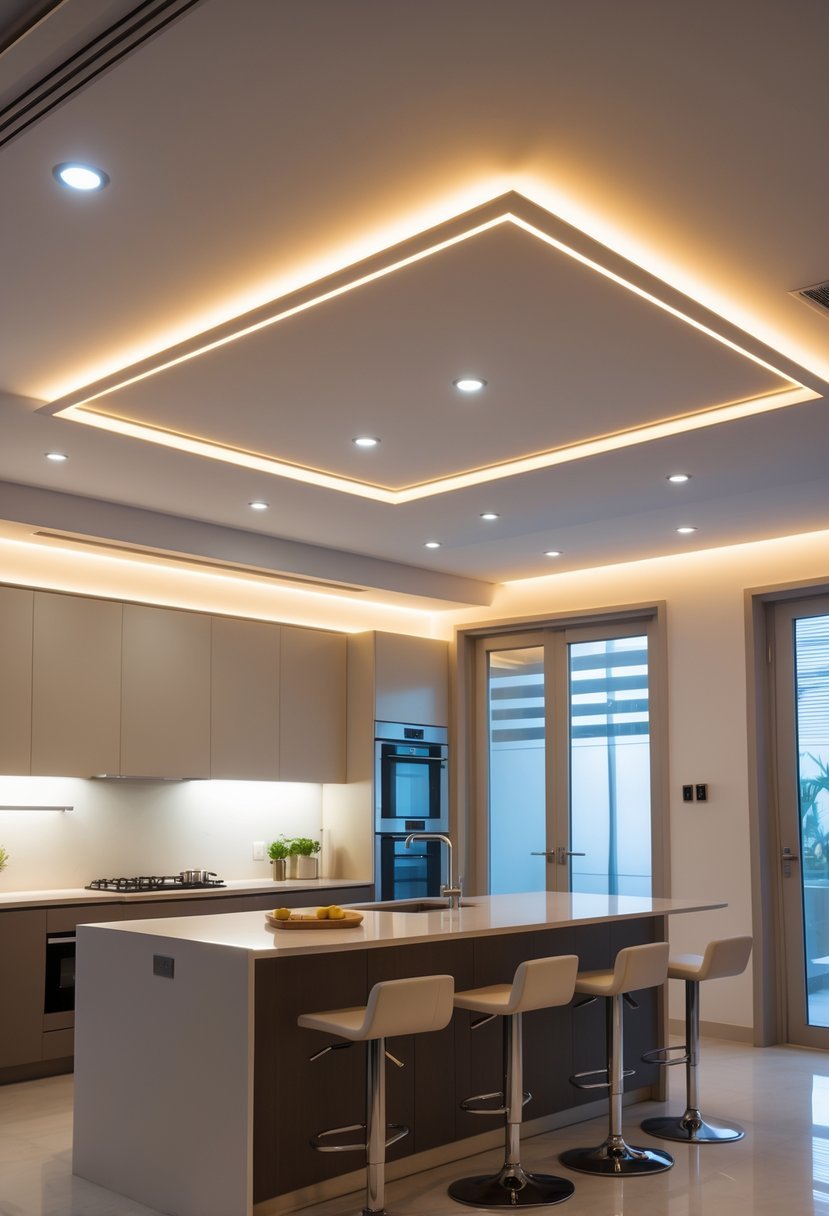
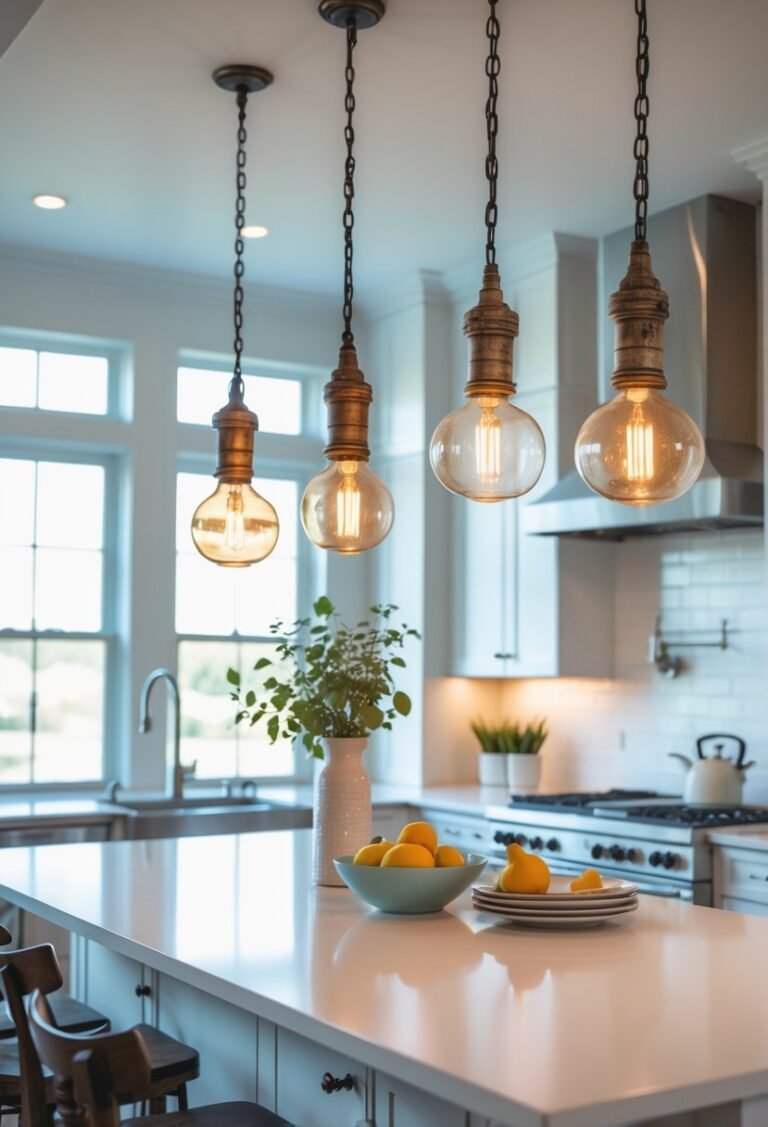
Integrating kitchen island lighting within a POP ceiling offers a sleek, seamless look. The recessed or pendant lights embedded in the POP design create focused illumination exactly where it’s needed.
This helps maintain a clean ceiling surface without clutter. Choosing the right fixtures is crucial.
I often recommend linear or cluster pendant lights to enhance both functionality and style. The POP ceiling allows me to customize lighting placement precisely over the island.
This highlights the workspace and adds ambiance. Incorporating dimmable LED lights into the POP ceiling offers control over brightness.
It’s practical for adjusting mood and task lighting throughout the day.
Conclusion
Your kitchen deserves to be stunning from top to bottom. As we have seen through these 17 designs, a POP ceiling is more than just a decorative add-on; it is a functional asset that enhances lighting distribution and spatial perception. Whether you fell in love with a circular drop ceiling to highlight a kitchen island or a simple tray ceiling to add depth to a compact galley, the right choice can make your kitchen feel larger, brighter, and more cohesive.
Before you finalize your design, remember to consider your ceiling height and lighting plan. A complex, multi-layered design works wonders in high-ceilinged rooms, while cleaner, peripheral designs are best for maintaining an airy feel in smaller spaces. Ultimately, the goal is to create a ceiling that complements your cabinetry rather than competing with it.
By investing in the ceiling, you are investing in the atmosphere of the busiest room in your house. It’s time to turn that blank white canvas into a masterpiece.