17 Kitchen Pantry Design Ideas for Efficient Storage Solutions
Is your pantry a functional powerhouse, or a black hole where snacks go to disappear? For years, the pantry was treated as a dark, hidden closet—a place to shove cereal boxes and oversized appliances out of sight. But thanks to the rise of home organization trends, the modern pantry has stepped into the spotlight. In 2025, a well-designed pantry is arguably the ultimate kitchen luxury, blending high-efficiency storage with showroom-worthy aesthetics.
Whether you have a sprawling walk-in butler’s pantry or a slim reach-in cabinet, the goal remains the same: accessibility and order. A great pantry design doesn’t just look good on social media; it streamlines your cooking process, minimizes food waste, and maximizes every square inch of vertical space.
If you are tired of knocking over spice jars to find the pasta sauce, you’ve come to the right place. We have gathered 17 Kitchen Pantry Design Ideas that range from clever pull-out systems for tight spaces to stunning shelving displays that deserve to be seen. Let’s open the door to a more organized life.
A well-designed kitchen pantry can make a significant difference in how efficiently your kitchen operates. It offers a dedicated space to store food, cookware, and essentials, helping reduce clutter and keep everything within easy reach.
I’ve gathered 17 kitchen pantry design ideas that cater to various styles and spaces. Whether you have a compact kitchen or a large walk-in pantry, these ideas aim to help you create a practical and stylish storage solution tailored to your needs.
Table of Contents
1) Walk-in pantry with adjustable shelving
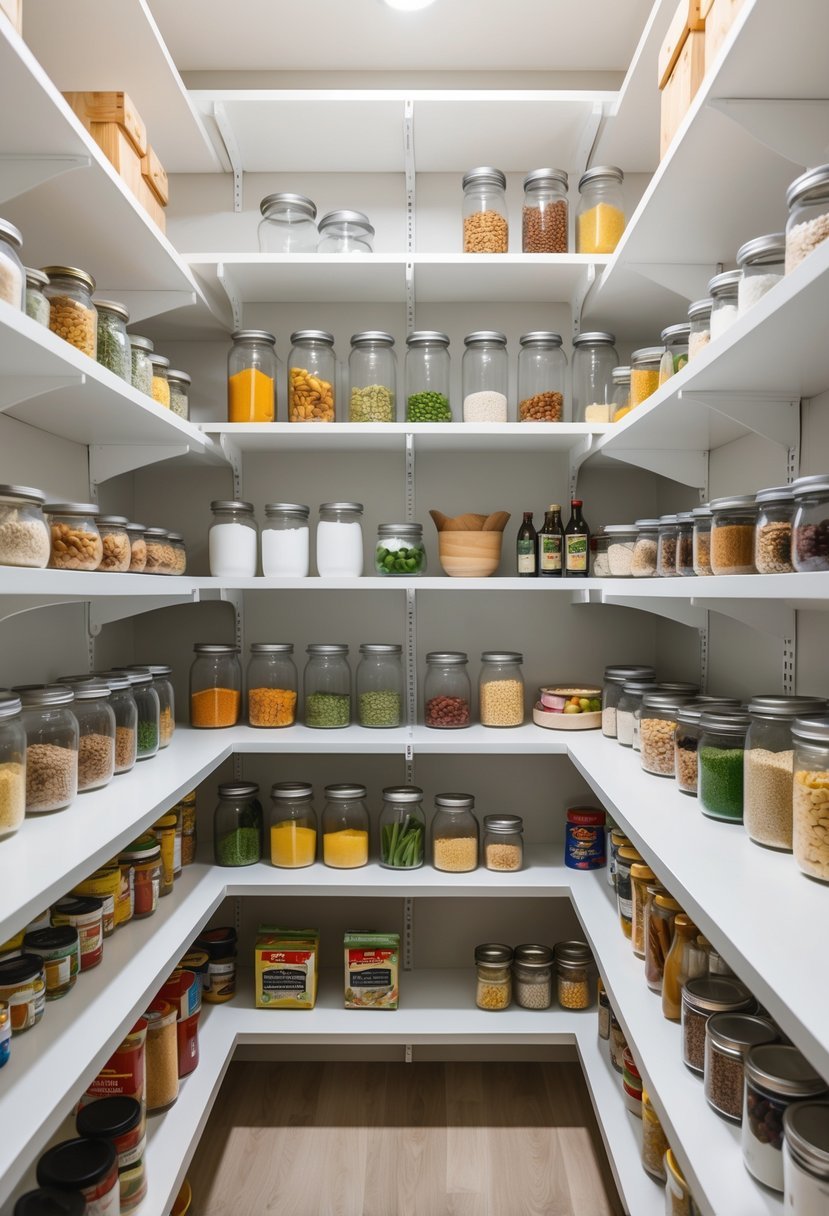
I find walk-in pantries with adjustable shelving to be incredibly practical. Being able to change shelf heights lets me store items of various sizes efficiently.
This flexibility means I can easily fit tall cereal boxes or bulky appliances without wasting space. It also helps keep everything organized since I can arrange shelves based on current needs.
Adjustable shelving makes the pantry adaptable over time. As my kitchen storage changes, I can rearrange shelves instead of remodeling the entire space.
2) L-shaped pantry layout for corner spaces
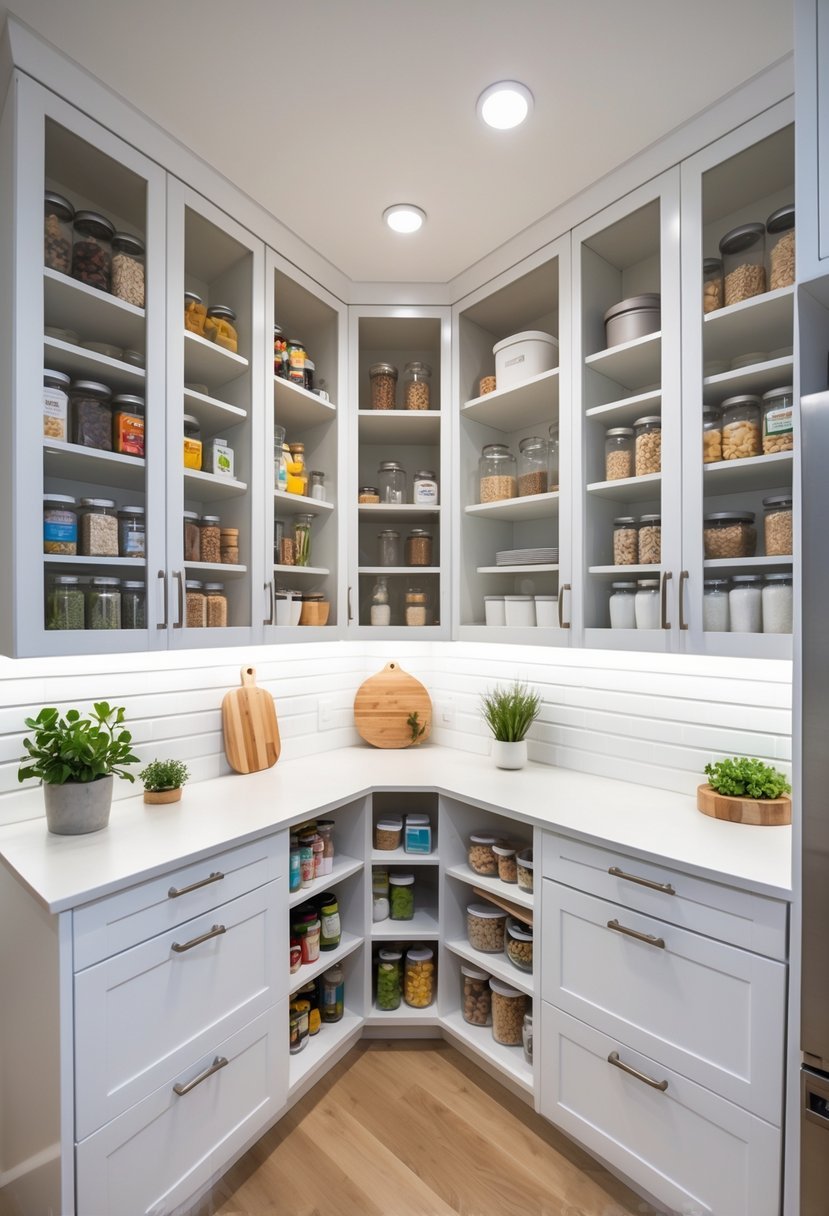
I find L-shaped pantries ideal for utilizing corner spaces efficiently. This layout fits neatly into kitchen corners, turning often-wasted space into valuable storage.
The dual walls offer deep shelving, allowing me to organize items while keeping everything within easy reach. It also helps maintain a tidy kitchen without feeling cramped.
I recommend customizing shelves to suit different needs, from tall cereal boxes to small spice jars. This design adapts well to both compact kitchens and larger spaces that need extra storage.
3) Built-in pantry cabinets with pull-out drawers
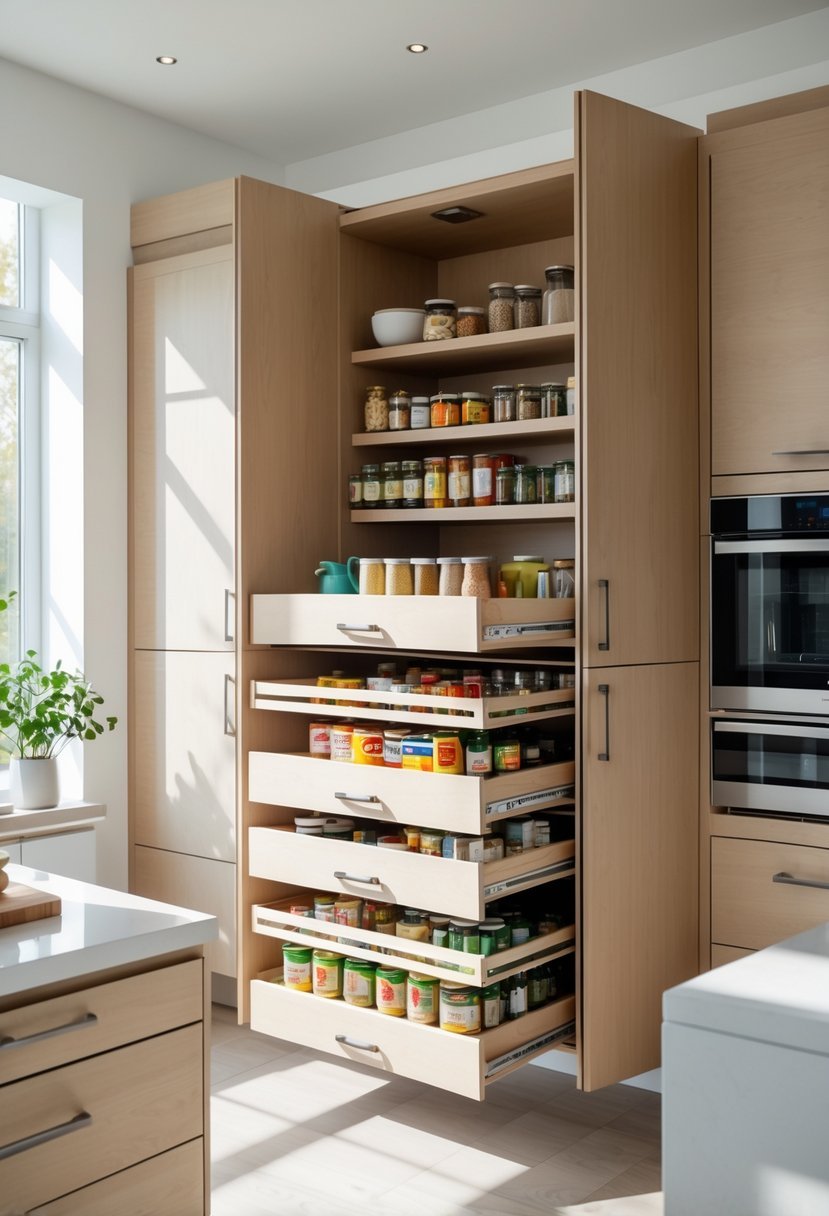
I prefer built-in pantry cabinets with pull-out drawers because they combine accessibility with organized storage. These drawers let me reach items at the back without digging through clutter.
Custom designs let me adjust shelves and drawers to fit my needs precisely. This flexibility means I can store everything from canned goods to small appliances in one place.
The smooth slides and sturdy frames add durability to the pantry. I find that this setup makes cooking more efficient because everything is visible and easy to access.
Using pull-out drawers in built-ins maximizes narrow spaces, often overlooked in kitchen design. It’s a practical solution for both small and large kitchens.
4) Glass-front pantry doors for easy visibility
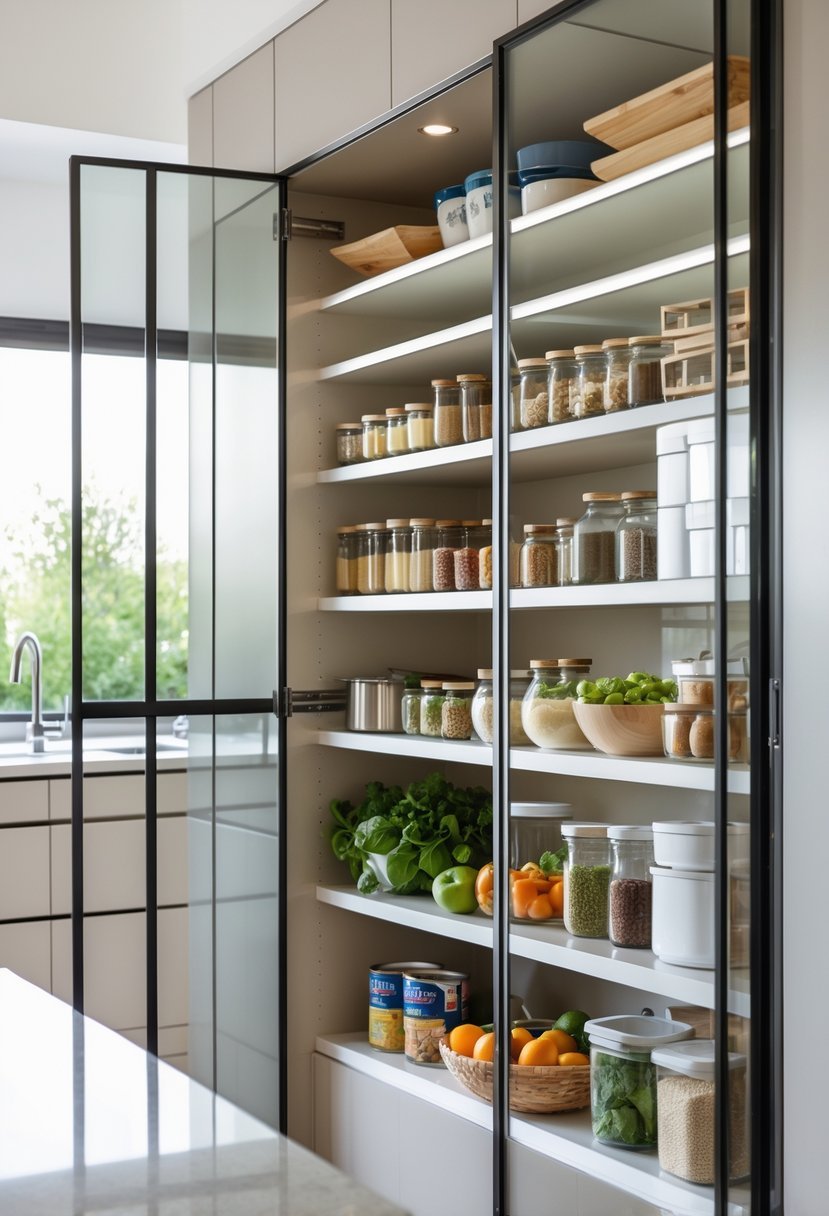
I find glass-front pantry doors practical because they let me see what’s inside without opening the door. This visibility helps me quickly locate items and plan my shopping.
Choosing clear or frosted glass affects privacy and style. Clear glass shows everything, while frosted glass offers some concealment without losing light.
Glass doors can blend with various kitchen designs. Whether modern or traditional, they add a subtle touch of elegance while improving functionality.
I also appreciate how glass doors can make a pantry feel more open, helping smaller kitchens look less cramped. They balance visibility with aesthetics effectively.
5) Freestanding pantry cabinet with vintage style
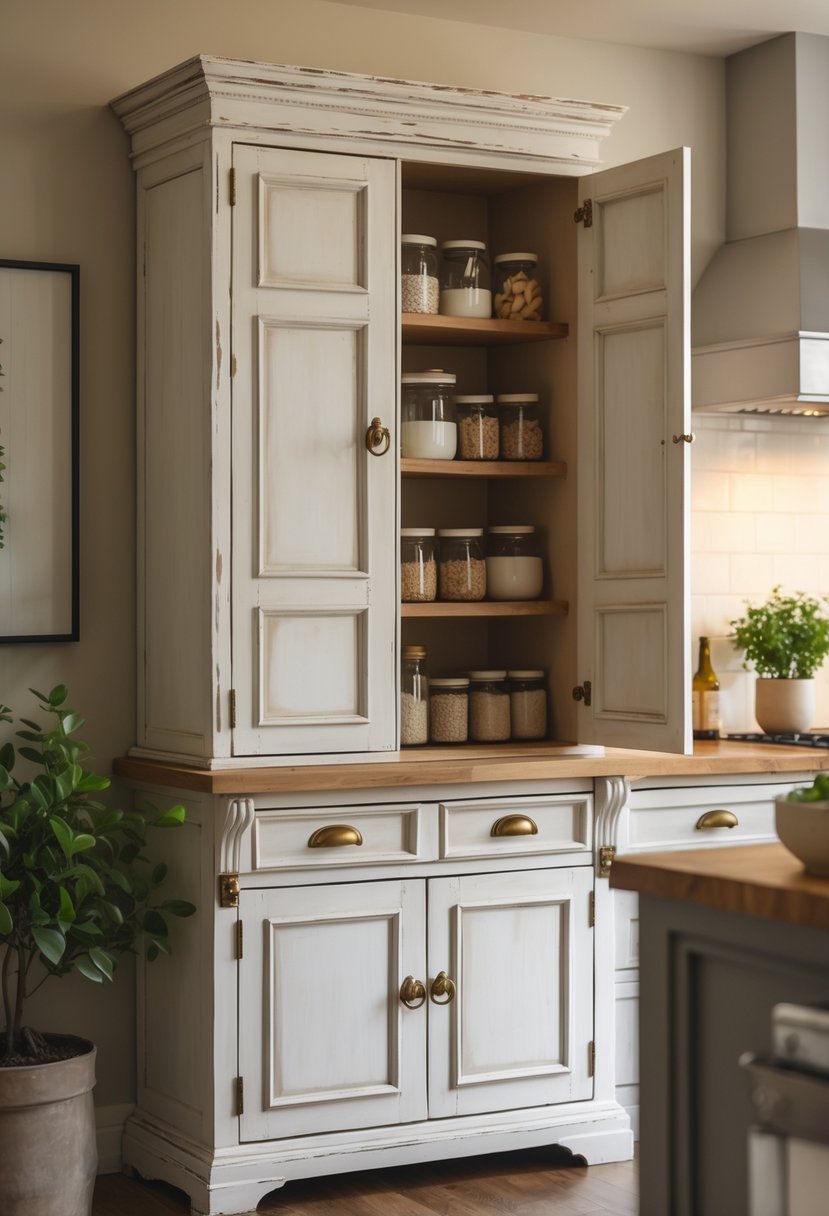
I find that a freestanding pantry cabinet with vintage style adds character to any kitchen. These cabinets often feature antique finishes, barn doors, or metal hardware that create a nostalgic yet functional space.
The design blends well with rustic or farmhouse decor, but it can also stand out in modern kitchens by adding warmth. Ample storage is a key benefit, allowing me to organize dry goods, cookware, and small appliances without cluttering countertops.
Choosing a vintage-style pantry cabinet offers flexibility since it doesn’t require built-in installation. This means I can rearrange or replace it easily if my kitchen layout changes.
6) Open shelving pantry for quick access
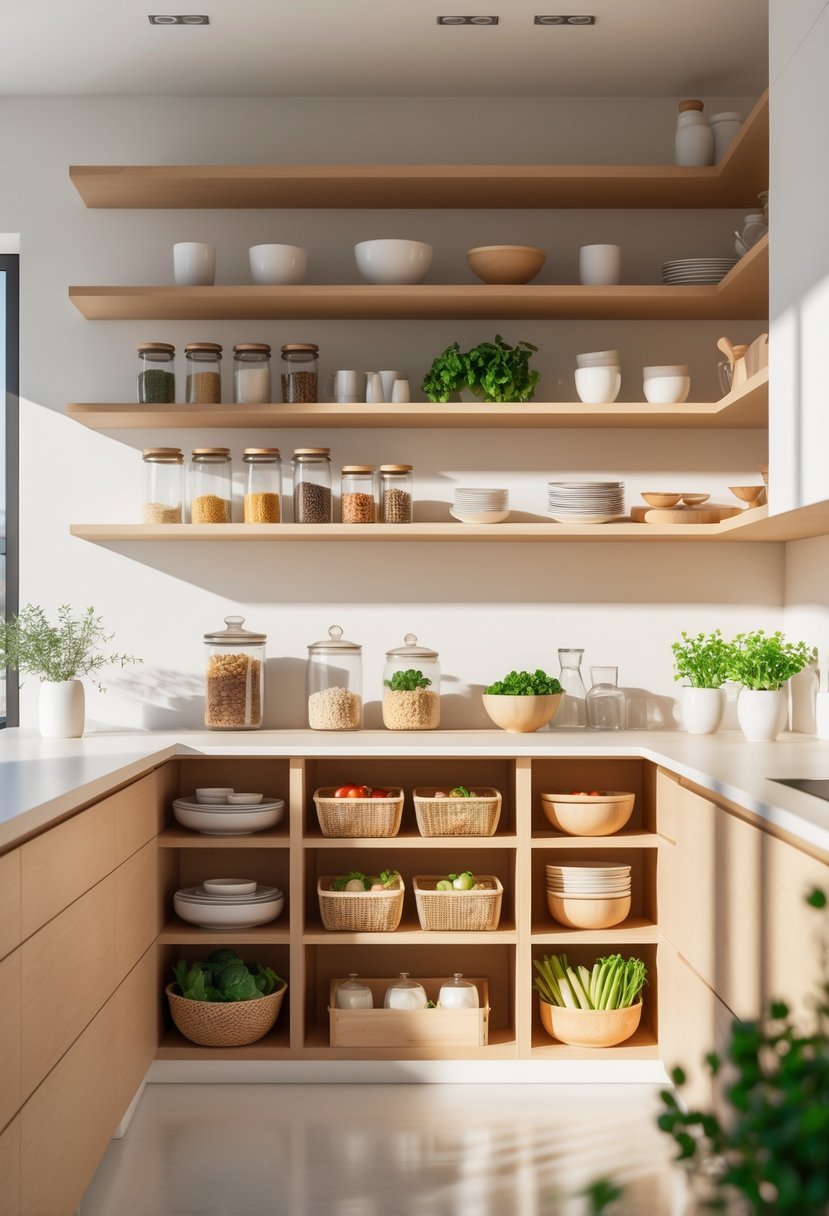
I find open shelving pantries incredibly practical for everyday use. Items are always visible and easy to grab, which saves time during busy cooking sessions.
With open shelves, there’s no need to open multiple doors or search through clutter. I keep frequently used ingredients and tools within arm’s reach, making the kitchen workflow smoother.
They also create a more open, airy feel in the kitchen. However, maintaining neatness is important to avoid a messy appearance.
I organize my shelves with baskets and clear containers for both function and style.
7) Pantry with integrated appliance garage
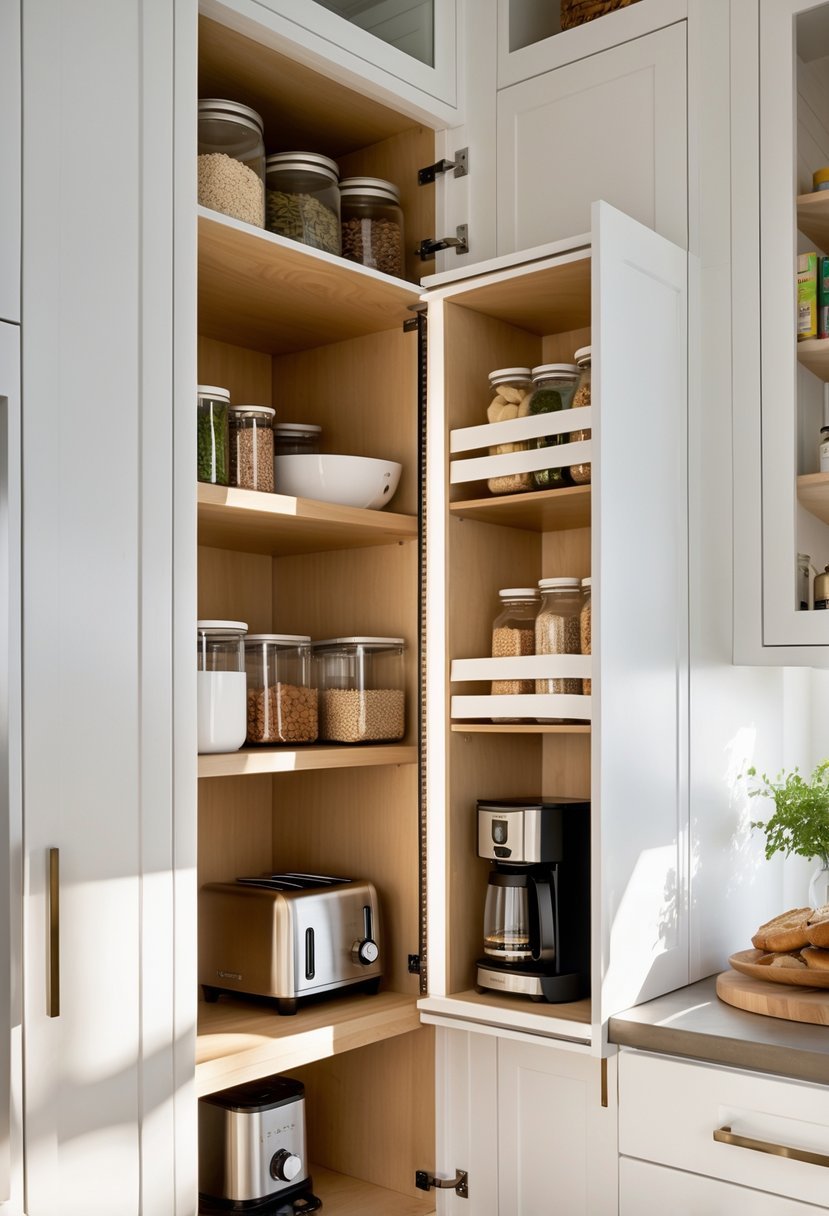
I find that a pantry with an integrated appliance garage offers a practical way to keep my kitchen organized. It provides dedicated storage for appliances like toasters or coffee makers, keeping countertops clear and clutter-free.
The design blends appliances smoothly into cabinetry, often with pocket doors or pull-out shelves. This setup helps maintain a clean, streamlined look while making appliances easily accessible when needed.
In my experience, ensuring there are enough outlets inside the garage is essential for convenience. This design works well in kitchens where space and aesthetics both matter.
8) Pull-out spice racks for organized storage
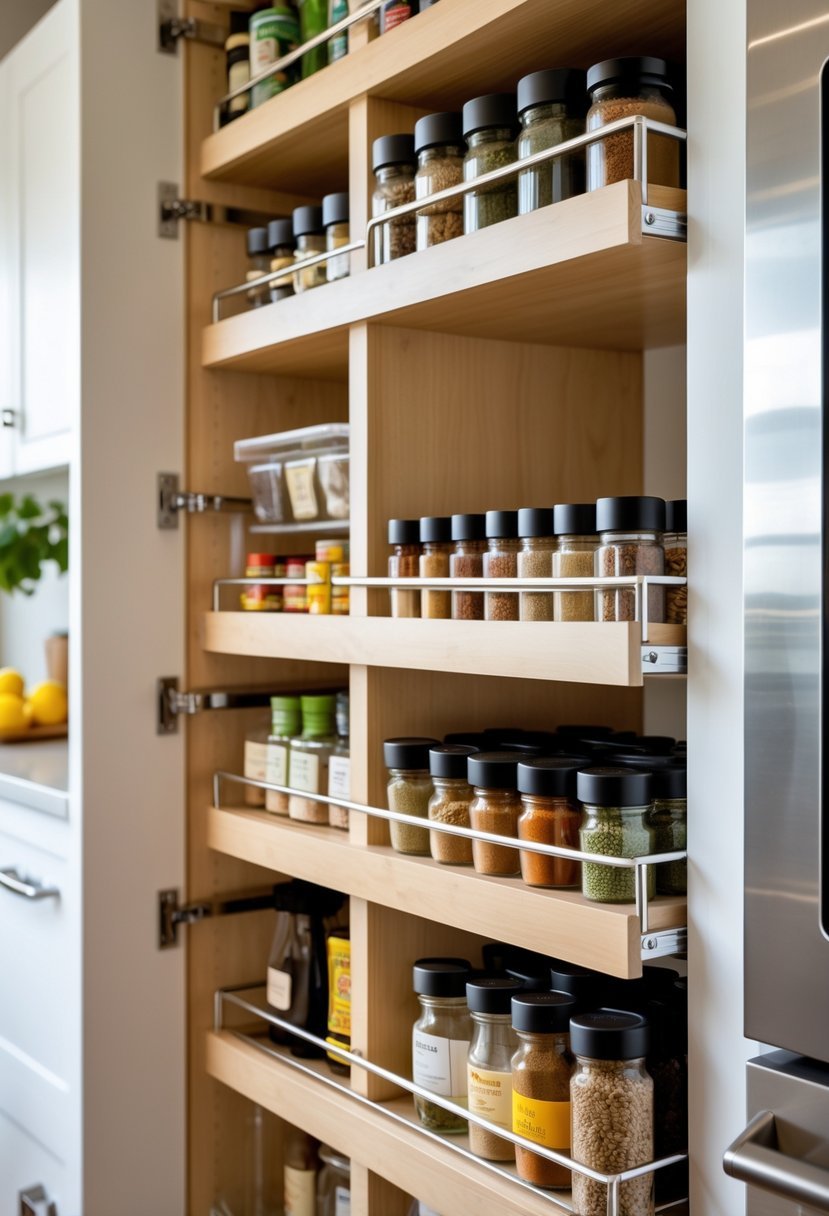
I find pull-out spice racks to be one of the most efficient ways to keep spices organized and within easy reach. These racks fit neatly inside cabinets, saving counter and drawer space while providing clear visibility of all your spices.
The sliding mechanism allows me to access every bottle smoothly without having to dig through clutter. Many designs feature adjustable shelves or tiered levels, which help maximize storage in small spaces.
Choosing materials like wood or metal adds durability and a clean look. Installing a pull-out spice rack improved my kitchen’s flow and made cooking more efficient by reducing the time spent searching for ingredients.
9) Lazy Susan trays in corner cabinetry
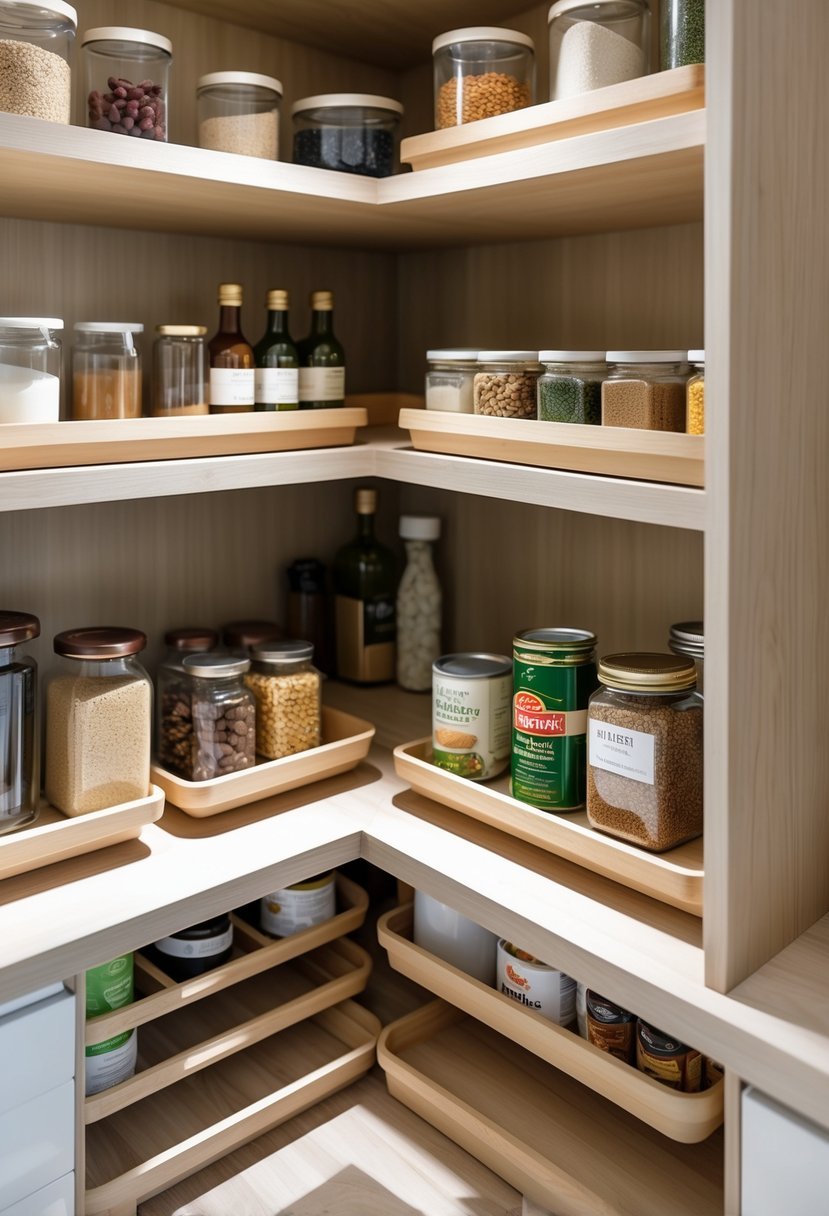
I find Lazy Susan trays highly effective for corner cabinets where space is often hard to reach. These rotating trays allow me to access items stored deep inside without having to move everything around.
Installing a Lazy Susan turns an awkward corner into organized storage. It works well for pantry essentials like spices, cans, and small containers.
Choosing high-quality hardware ensures smooth rotation and long-lasting use. The circular design also helps maximize every inch of available space.
10) Pantry with labeled clear storage containers
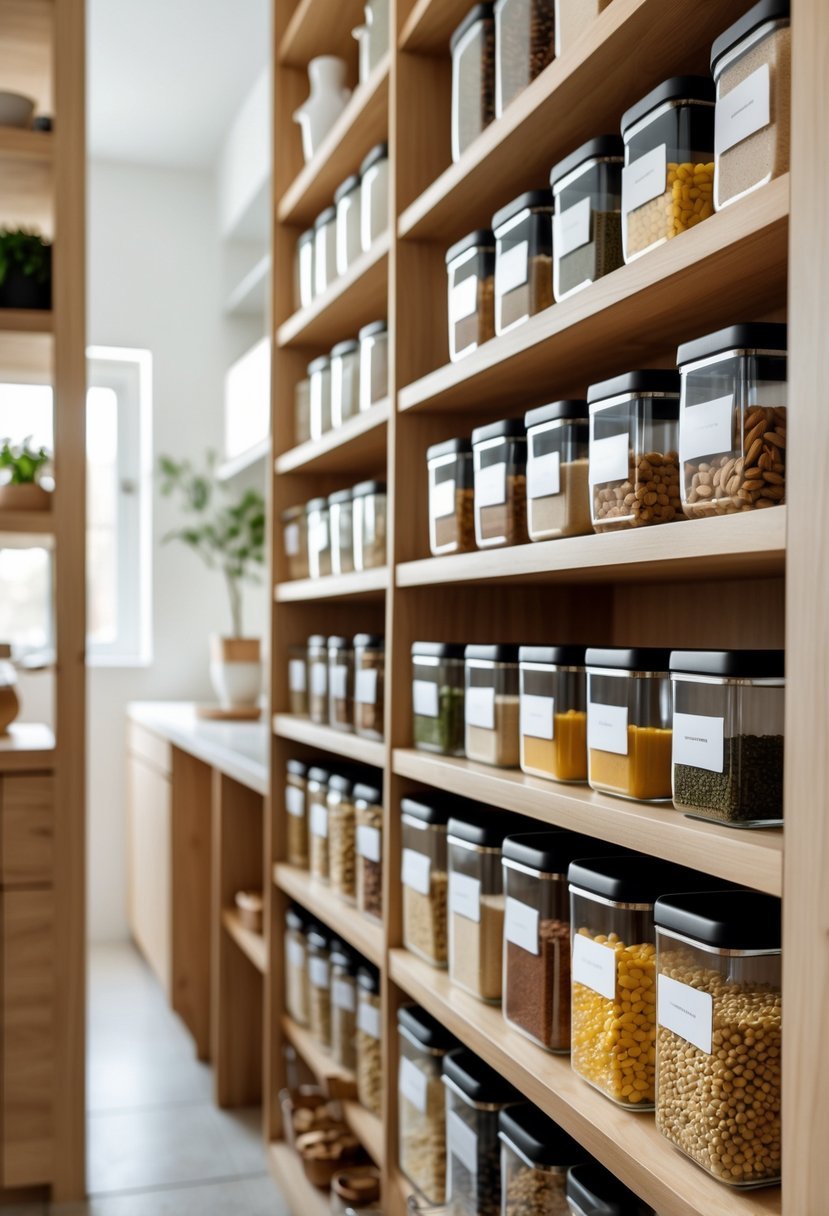
I find that using clear storage containers in my pantry brings both order and simplicity. The transparency lets me see what’s inside quickly, reducing the time spent searching for items.
Labeling these containers adds another layer of efficiency. It keeps everything unmistakably organized, especially when multiple similar items are stored together.
I prefer removable labels so I can easily update them as needed. This method also makes it easier to maintain a clean, professional look.
Clear containers with neat labels help eliminate clutter and make the pantry feel more spacious and accessible to everyone in my household.
11) Pantry with under-cabinet lighting
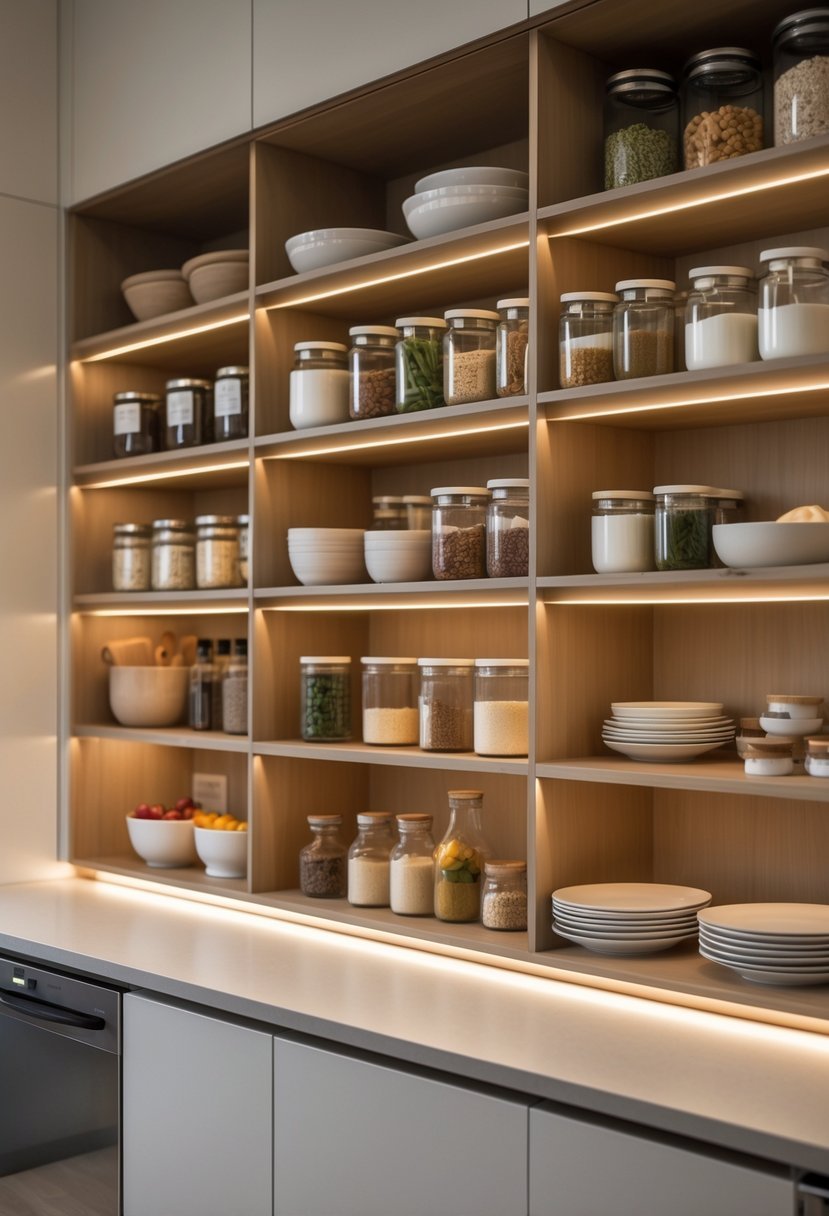
I find that under-cabinet lighting in a pantry significantly improves visibility. It brightens dark corners and makes it easier to locate items quickly.
This lighting option works well with sleek cabinetry and can highlight organized shelves or pull-out drawers. Soft, warm lights also create an inviting atmosphere without overwhelming the space.
In my experience, installing LED strips under cabinets is both practical and energy-efficient. It adds functionality while maintaining a clean, modern look.
I recommend considering adjustable brightness settings. This allows you to customize the light depending on the time of day or task at hand.
12) Sliding barn door pantry entry
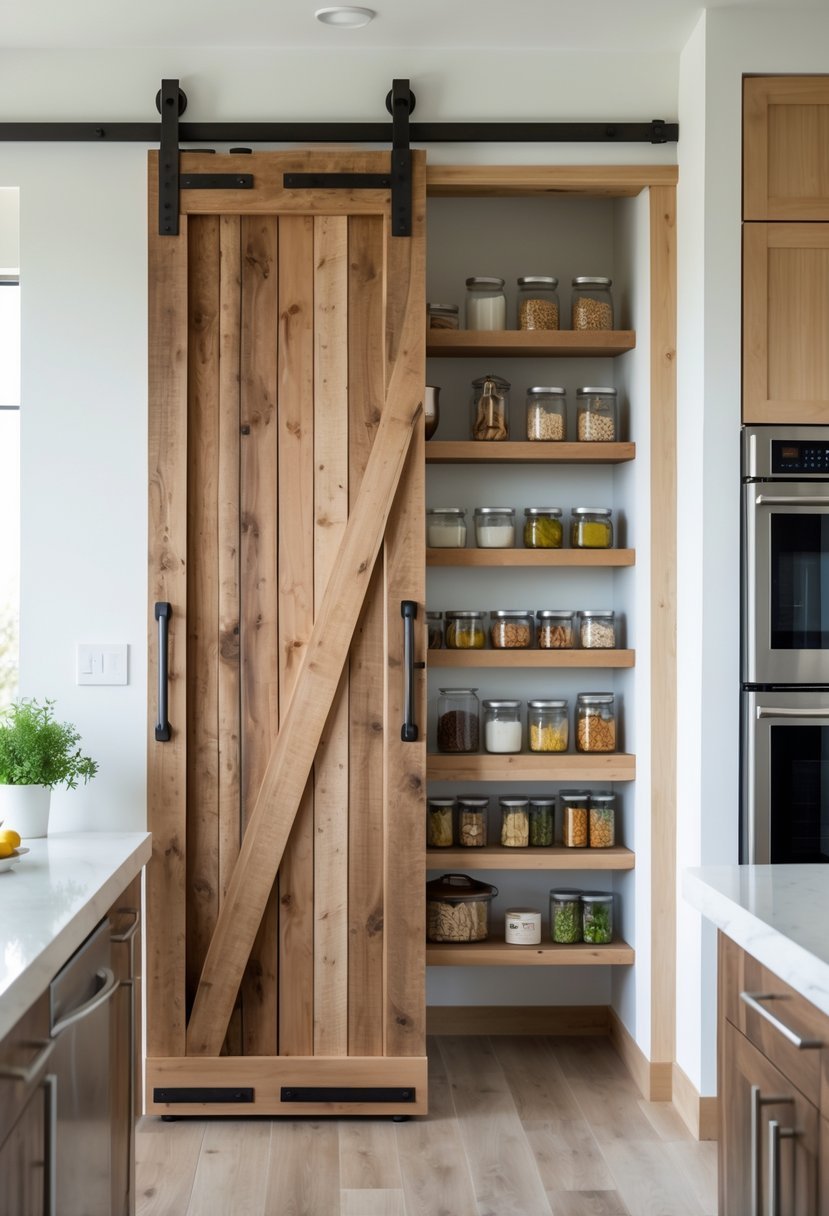
I find sliding barn doors to be a practical and stylish choice for pantry entries. They save floor space compared to traditional swing doors, which is important in smaller kitchens.
The rustic look of barn doors adds character, but you can also choose sleek finishes for a modern touch. I like that they come in various materials and colors, making it easy to match your kitchen style.
Installation requires enough wall space for the door to slide. If that’s limited, bi-fold barn doors are a good alternative.
13) Pantry with wire baskets for produce storage
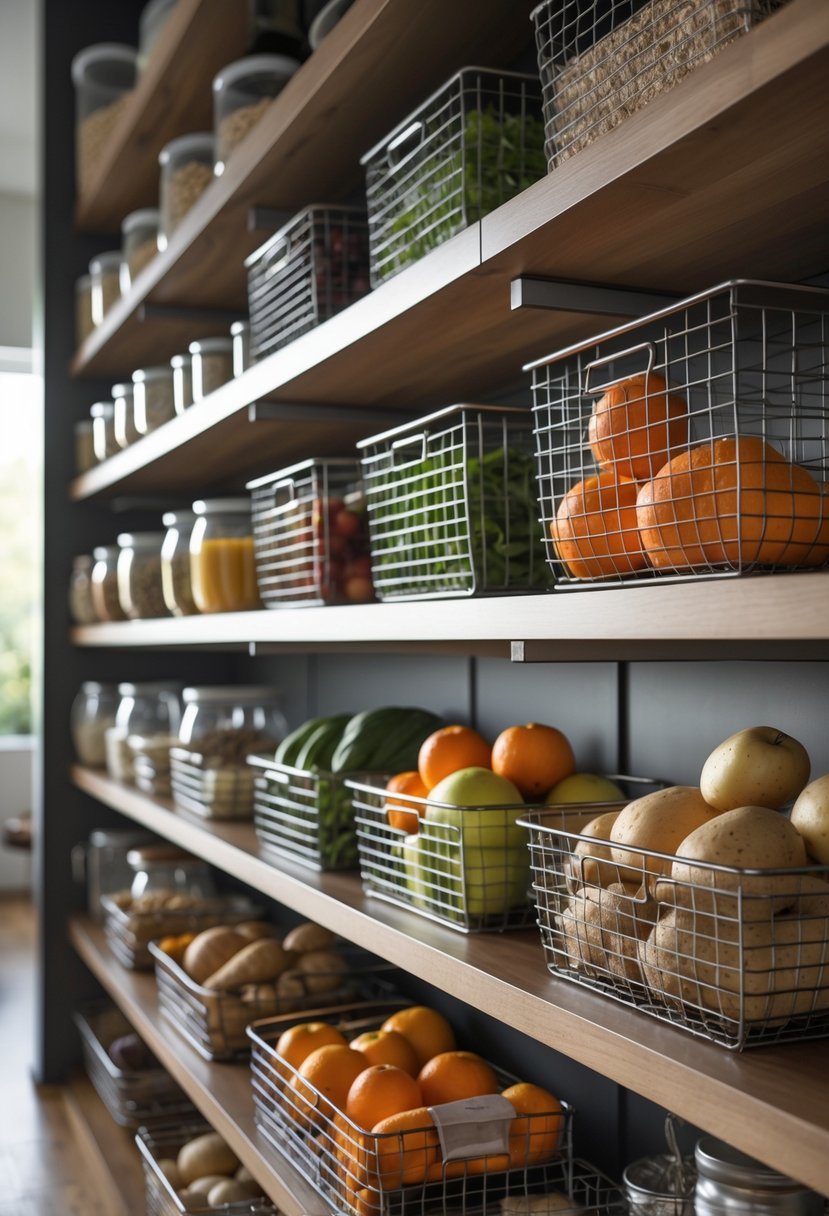
I use wire baskets in my pantry because they offer excellent airflow, which helps keep produce fresh longer. These baskets are versatile—I’ve mounted some on the wall and placed others on shelves to optimize space.
Wire baskets also make it easy to see and access fruits and vegetables without rummaging through clutter. I find that hanging baskets free up shelf space and create a clean, organized look.
The durability of wire baskets means they hold up well over time, even with heavier items like onions and potatoes.
14) Floor-to-ceiling pantry shelves
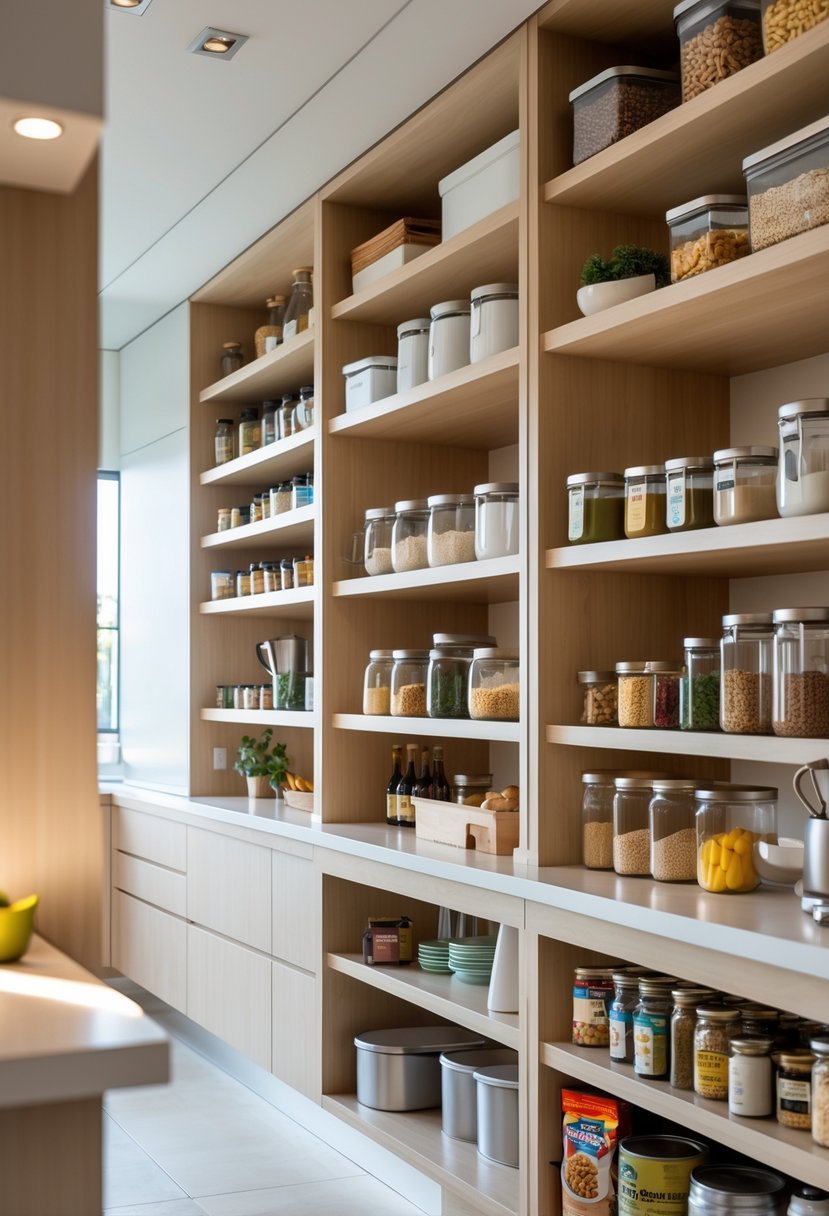
I find floor-to-ceiling pantry shelves to be one of the most efficient ways to maximize kitchen storage, especially in smaller spaces. These shelves use the full height of the wall, giving you ample room to store dry goods, cookware, and kitchen essentials without wasting vertical space.
The design also allows for better organization since everything is visible and easily accessible. I recommend adjustable shelves within these units to customize the space based on your needs.
Integrating pull-out shelves or baskets can improve functionality, making it easier to reach items stored at higher levels without strain.
15) Pantry with chalkboard or whiteboard door
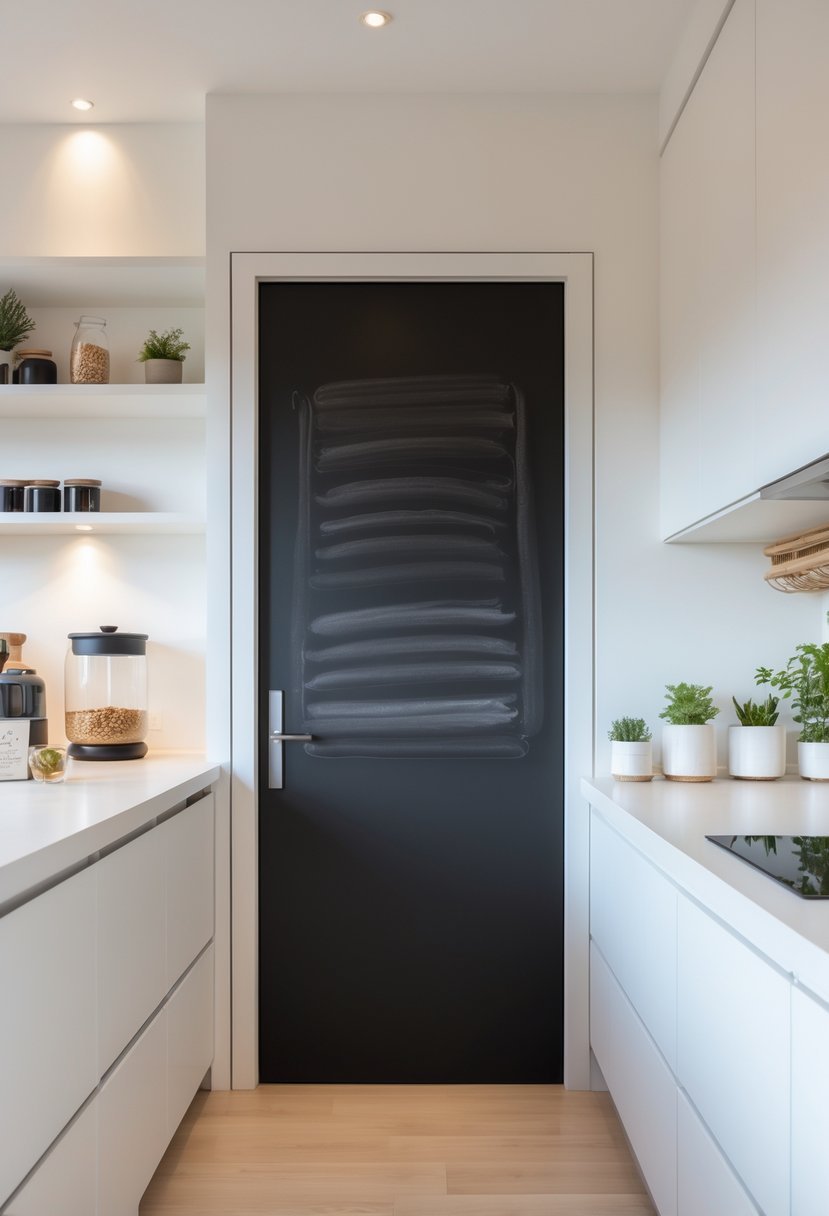
I find pantry doors with chalkboard or whiteboard surfaces highly practical. They turn an ordinary door into a functional space for notes, grocery lists, or meal plans.
Such doors offer versatility and blend easily with various kitchen styles. They work well in both modern and rustic settings, depending on the frame and door material used.
Using chalkboard or whiteboard surfaces creates an interactive spot that improves kitchen organization without clutter.
16) Pantry with moisture control vents
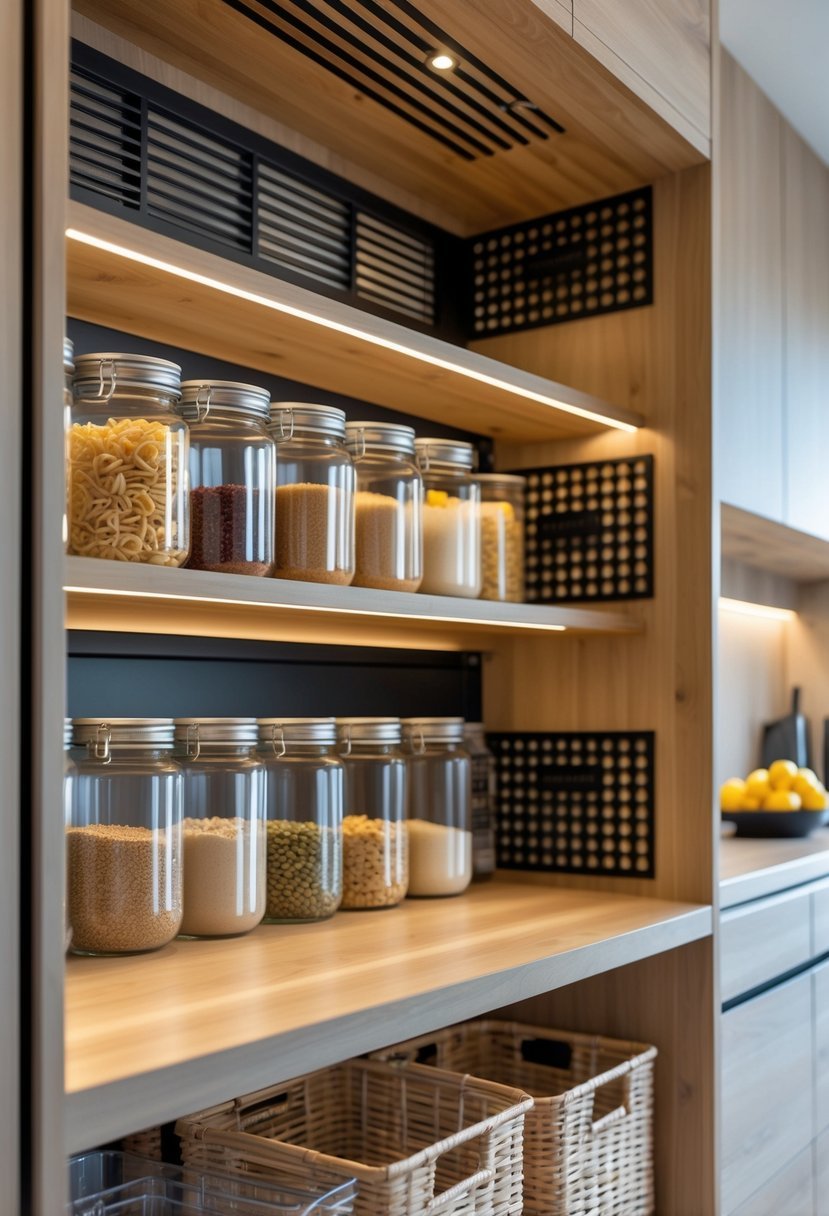
I find that adding moisture control vents to a pantry is essential in preventing dampness. Moisture buildup can spoil food and cause unpleasant odors.
In my experience, installing small vent fans or integrating passive air vents into the pantry design improves airflow without requiring major renovations. This keeps the stored items dry and fresh longer.
I also make sure the vents are placed to allow continuous air circulation while keeping dust and pests out.
17) Pantry featuring deep drawers for bulk items
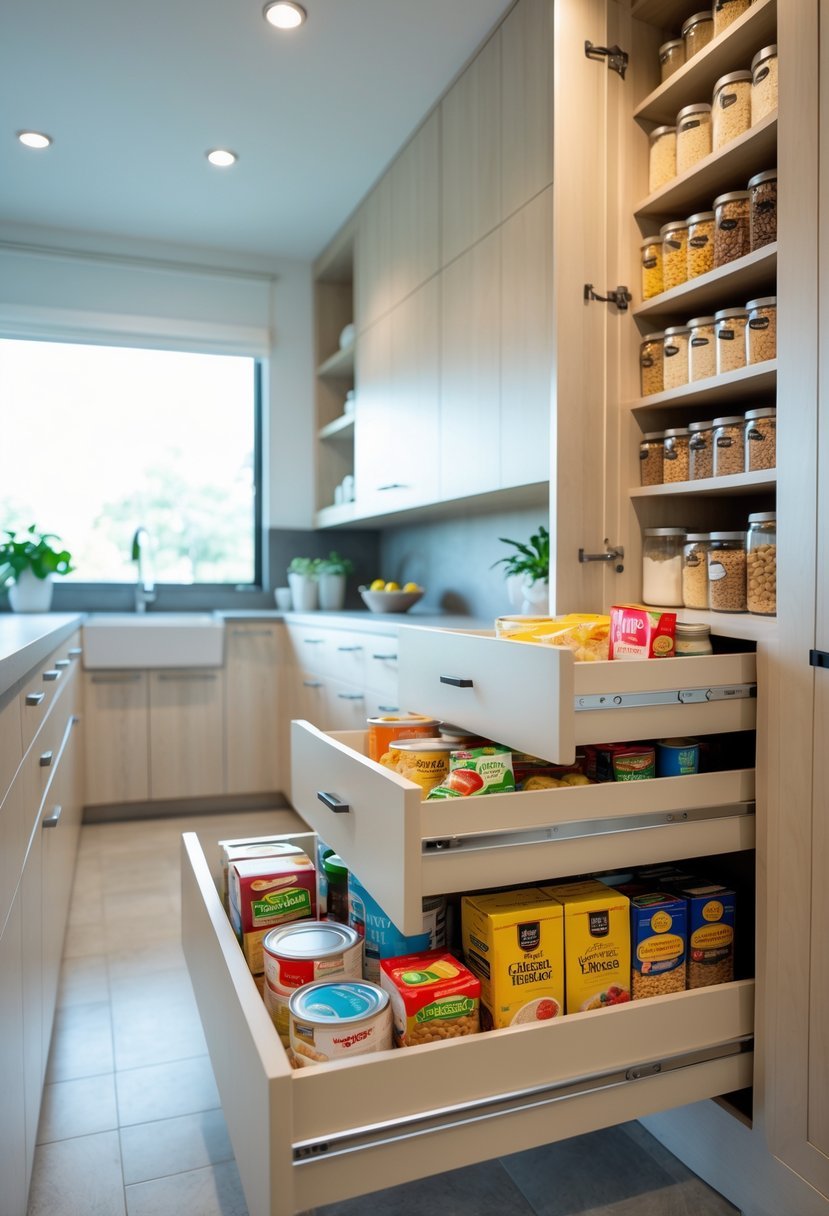
I find deep drawers ideal for storing bulk pantry items like large bags of flour, rice, or cereal boxes. They make accessing heavy or oversized products easier without having to move other things around.
These drawers help maximize vertical space and keep everything organized. With dividers or bins inside, I can separate different bulk goods and avoid clutter.
Deep drawers also maintain a clean look by hiding bulky items out of sight. This keeps my pantry neat.
Conclusion
A great pantry isn’t just about storage; it’s about sanity. As we’ve explored with these 17 ideas, the perfect pantry is one that works for your specific lifestyle. It shouldn’t just be a pretty display of matching jars; it should be a system that makes grabbing a quick snack or preparing a gourmet meal effortless. Whether you opted for a bold pop of color on the shelving, installed motion-sensor lighting, or utilized the back of the door for extra storage, the success of your design lies in customization.
Remember, organization is a journey, not a destination. As your family grows or your cooking habits change, your pantry should evolve with you. By implementing even just a few of these design strategies—like zoning your goods or investing in adjustable shelving—you can turn a source of daily frustration into one of the most satisfying parts of your home.